Introdução
Polycystic Ovary Syndrome, commonly known as PCOS, affects millions of women worldwide and often brings visible skin and hair-related concerns that influence daily confidence. One of the most common symptoms is excessive facial and body hair growth caused by hormonal imbalance and increased androgen activity. Many women spend years trying to manage unwanted hair through shaving, waxing, or tweezing, only to experience recurring irritation, ingrown hairs, and uneven skin texture. As aesthetic technology continues to evolve, diode laser hair reduction has become an increasingly discussed option among women looking for non-invasive approaches that support smoother-looking skin and more comfortable long-term hair management. Modern diode laser systems now play a growing role in contemporary MedSpa environments because they combine precision-focused laser technology with advanced skin-conscious treatment concepts.
1. Understanding Why PCOS Causes Excess Hair Growth
Hormonal imbalance linked to PCOS affects more than reproductive health. It can also influence hair follicles, sebaceous gland activity, and overall skin appearance. Because of this connection, many women actively search for aesthetic technologies that align with both skin management and personal confidence goals.
1.1 What Is PCOS and How Does It Affect Hormones
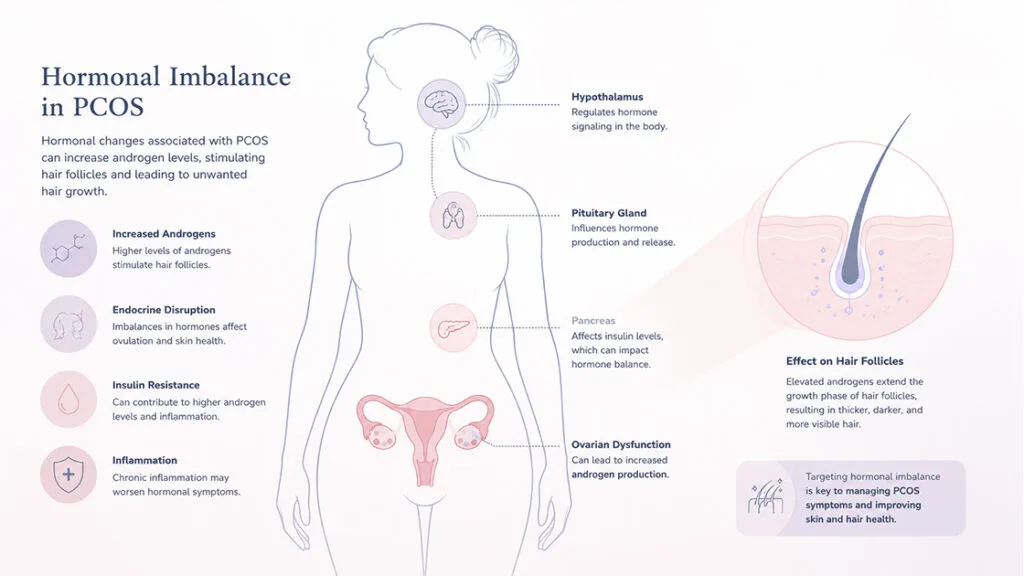
Polycystic Ovary Syndrome is an endocrine condition commonly associated with elevated androgen levels. Although women naturally produce androgens in small amounts, hormonal imbalance may increase their activity and stimulate excessive hair growth in androgen-sensitive areas. The chin, upper lip, neck, abdomen, chest, and jawline often become the most noticeable regions.
At the same time, PCOS may influence insulin regulation and inflammatory responses within the body. These hormonal fluctuations can prolong the anagen phase of hair growth, allowing terminal hairs to become darker, coarser, and more visible. In many cases, women also experience acne flare-ups, excessive oil production, and skin sensitivity alongside unwanted hair growth. Because these symptoms often occur together, aesthetic discussions around PCOS now frequently include both hair management and skin appearance concerns.
1.2 Why Facial Hair Growth Is Common in Women with PCOS
Facial hair growth represents one of the most emotionally challenging symptoms associated with PCOS. Increased androgen activity stimulates hair follicles in areas where women typically expect minimal visible hair growth. Over time, fine vellus hairs may gradually transform into thicker terminal hairs with deeper pigmentation.
Many women attempt to manage facial hair through daily grooming routines. However, frequent shaving, waxing, and tweezing can irritate delicate facial skin and contribute to chronic inflammation. Some individuals also develop folliculitis, razor bumps, or post-inflammatory hyperpigmentation after repeated hair removal. These concerns often encourage women to explore modern diode laser technology as part of a more advanced and skin-conscious approach to long-term hair management.
1.3 The Emotional Impact of Unwanted Hair Growth
Excess facial hair can significantly influence emotional well-being and self-confidence. Women with visible chin hair or upper lip hair may feel uncomfortable during social interactions, professional meetings, or close-up photography. In many situations, grooming routines become part of everyday stress management rather than simple beauty maintenance.
Modern digital culture has also increased awareness of facial details and skin texture. High-definition cameras, video conferencing platforms, and social media content often place additional focus on appearance-related concerns. As a result, many women actively seek aesthetic solutions that support smoother-looking skin and more refined facial appearance. The growing popularity of non-invasive laser aesthetics reflects a broader shift toward confidence-focused beauty technology.
1.4 Why Traditional Hair Removal Methods Often Cause Skin Problems
Traditional hair removal methods may provide temporary results, but they often create additional skin challenges over time. Shaving repeatedly across hormonally active areas can damage the skin barrier and increase irritation. Waxing may remove hair temporarily, yet it can also trigger redness and sensitivity around inflamed follicles.
Women with PCOS frequently experience ingrown hairs because coarse hairs may curve back into the follicle during regrowth. This process can contribute to inflammation, uneven skin tone, and visible dark spots. Continuous friction from razors or waxing strips may also disrupt the epidermal barrier, making skin more reactive to environmental stressors. These ongoing concerns help explain why diode laser hair reduction continues gaining attention in modern aesthetic skincare conversations.
2. Why More Women Are Searching for Non-Invasive Hair Reduction Options
The beauty industry has shifted toward personalized, low-downtime aesthetic technology. Instead of relying solely on temporary grooming methods, many women now search for solutions that fit naturally into long-term skincare and wellness routines.
2.1 The Rise of Hormonal Skincare Discussions on Social Media
Conversations surrounding hormonal acne, PCOS, and facial hair have become increasingly visible across online beauty communities. Influencers, skincare educators, and wellness creators now openly discuss endocrine-related skin concerns that many women previously avoided discussing publicly.
This cultural shift has encouraged more consumers to search for information about advanced laser aesthetics and diode laser hair reduction technology. Online discussions often highlight concerns related to inflammation, coarse hair growth, and post-shaving skin irritation. As awareness grows, women increasingly view laser-based aesthetic technology as part of a broader self-care and skin management routine rather than simply a cosmetic trend.
2.2 Growing Interest in Low-Downtime Beauty Technology
Busy lifestyles have significantly influenced consumer preferences within the aesthetic industry. Many individuals prefer treatments that integrate smoothly into work schedules, fitness routines, and social activities without requiring extended recovery periods.
Non-invasive diode laser systems align with this modern demand because they focus on precision-based light technology rather than aggressive surgical procedures. Advanced diode laser platforms often incorporate skin-focused cooling systems and targeted wavelength delivery designed to support skin comfort during aesthetic procedures. As a result, many consumers now associate diode laser technology with convenience, efficiency, and modern beauty maintenance.
2.3 Why Skin Comfort Matters for Women with Sensitive or Inflamed Skin
Women with PCOS often experience skin sensitivity alongside excessive hair growth. Frequent shaving or waxing can intensify redness, follicular irritation, and uneven skin texture. Consequently, many individuals prioritize skincare approaches that support skin comfort while addressing visible hair concerns.
Modern diode laser technology has become increasingly associated with skin-conscious aesthetic treatment concepts. Many advanced systems use selective photothermolysis principles, allowing laser energy to target melanin within hair follicles while minimizing unnecessary impact on surrounding tissue. This focus on controlled energy delivery aligns with the growing demand for more refined and personalized skincare experiences.
3. How Diode Laser Technology Became Part of the Conversation Around PCOS
As laser-based aesthetics continue evolving, diode laser systems have become widely recognized within professional beauty environments. Their growing visibility reflects broader consumer interest in non-invasive aesthetic technologies designed for modern skin management.
3.1 What Diode Laser Technology Means in Modern Aesthetic Treatments
Diode laser technology refers to advanced laser systems that use concentrated light wavelengths to target melanin within hair follicles. In aesthetic settings, wavelengths such as 808nm and multi-wavelength configurations are commonly discussed because they support selective interaction with pigmented follicular structures.
This process relies on selective photothermolysis, a principle in which laser energy focuses on melanin while preserving surrounding tissue as much as possible. Modern diode laser systems often include integrated sapphire cooling technology designed to support skin comfort throughout the treatment experience. Because many consumers now prioritize both performance and skin-conscious care, diode laser technology continues gaining popularity within contemporary aesthetic clinics.
3.2 The Difference Between Diode Laser Technology and Traditional Hair Removal Methods
Traditional grooming methods remove hair only at the surface level, which means regrowth typically occurs quickly. In contrast, diode laser technology focuses on the follicular structure beneath the skin surface. This distinction has contributed to growing interest in laser-based hair reduction systems among consumers seeking more advanced beauty technology.
Modern diode laser systems also emphasize precision and adaptability. Multi-wavelength platforms may support treatment flexibility across different skin tones and hair textures, making them increasingly relevant within personalized skincare conversations. Furthermore, advanced cooling mechanisms help support skin comfort during procedures, which appeals to individuals concerned about irritation or sensitivity.
3.3 Why Women with PCOS Are Interested in Skin-Friendly Laser Solutions
Women managing PCOS often seek aesthetic technologies that fit into broader wellness and skincare routines. Instead of relying on repetitive shaving or waxing cycles, many consumers now explore diode laser hair reduction as part of a more consistent approach to skin maintenance.
In addition, aesthetic awareness surrounding skin texture and follicular appearance has increased significantly in recent years. Women dealing with visible facial hair frequently search for beauty technologies associated with smoother-looking skin and refined facial appearance. Diode laser systems align with this demand because they combine advanced optical engineering with modern non-invasive aesthetic concepts.
3.4 Common Areas Women Focus on for Hair Management
The chin and upper lip remain among the most commonly discussed treatment areas for women with PCOS because these regions directly affect facial appearance during everyday interactions. Jawline hair also receives considerable attention due to its visibility under makeup and bright lighting conditions.
Beyond the face, many women focus on the abdomen, chest, neck, and arms. Hormonal hair growth in these areas often creates additional grooming challenges and skin sensitivity. As a result, aesthetic consumers increasingly explore diode laser technology as part of comprehensive skin and hair management routines designed around convenience and long-term maintenance.
4. Lifestyle Challenges Women with PCOS Commonly Face
Excess hair growth influences far more than outward appearance alone. Many women experience emotional, social, and lifestyle-related challenges connected to ongoing hair management and skin irritation.
4.1 Facial Hair and Workplace Confidence
Professional environments often increase awareness of facial appearance. Office lighting, virtual meetings, and close interpersonal communication can make facial hair more noticeable, especially in high-definition video settings. Many women feel pressure to maintain constant grooming routines before work-related interactions.
At the same time, repeated shaving may create visible redness or uneven texture that affects confidence throughout the day. Because appearance and self-presentation remain closely connected in many professional settings, women increasingly explore advanced aesthetic technologies that support smoother-looking skin and simplified grooming habits.
4.2 Social Anxiety and Self-Image Concerns
Visible facial hair may influence self-esteem and social comfort in subtle but meaningful ways. Some women avoid close-up photographs, bright lighting, or spontaneous social situations due to concerns about visible stubble or skin irritation.
Social media culture has also intensified focus on facial smoothness and skin texture. Beauty trends frequently emphasize flawless skin and refined facial appearance, which may heighten emotional sensitivity among women dealing with PCOS-related hair growth. Consequently, many individuals now view aesthetic laser technology as part of a broader confidence and self-care journey.
4.3 Skin Irritation Caused by Frequent Shaving or Waxing
Repeated shaving creates continuous friction against the epidermis, especially in areas with coarse terminal hair growth. This irritation may contribute to redness, ingrown hairs, follicular inflammation, and visible textural irregularities over time.
Waxing may also aggravate sensitive skin, particularly when hormonal imbalance already affects inflammatory responses. Women prone to post-inflammatory hyperpigmentation sometimes notice dark marks following repeated grooming. These skin concerns often motivate consumers to search for more advanced hair management technologies associated with smoother skin appearance and reduced surface irritation.
4.4 Why Many Women Seek More Consistent Beauty Routines
Consistency has become a major priority in modern skincare culture. Many women prefer beauty routines that feel manageable and integrated into long-term self-care habits rather than temporary corrective measures.
Diode laser technology increasingly fits within this lifestyle preference because it reflects broader trends toward streamlined aesthetic maintenance and personalized beauty solutions. Consumers now value technologies that align with convenience, skin-conscious care, and modern wellness routines. This shift continues shaping the growing popularity of non-invasive laser aesthetics across MedSpa and beauty environments.
5. The Growing Popularity of Diode Laser Technology in Modern MedSpa Settings
The modern aesthetic industry continues evolving alongside changing consumer expectations. Advanced laser systems now play an important role in personalized beauty environments focused on comfort, technology, and long-term skin management.
5.1 Why Non-Surgical Beauty Technology Continues to Trend
Many consumers prefer non-surgical aesthetic approaches that allow them to maintain active lifestyles without major disruption. This trend has increased interest in advanced laser systems designed around convenience and minimal downtime.
Diode laser technology reflects this industry movement because it combines precision-focused optical engineering with modern non-invasive treatment concepts. As more consumers search for skin-conscious beauty technology, aesthetic clinics continue incorporating advanced diode laser systems into their service offerings.
5.2 How Diode Laser Technology Fits Into Personalized Skincare Conversations
Personalized skincare has become one of the most influential trends in the beauty industry. Consumers increasingly recognize that skin tone, hair texture, and hormonal conditions vary significantly between individuals.
Modern diode laser systems often support customizable treatment parameters designed around these differences. Multi-wavelength configurations and integrated cooling technologies contribute to more tailored aesthetic experiences. This adaptability helps explain why diode laser platforms continue gaining attention within advanced skincare discussions and MedSpa environments.
5.3 The Connection Between Skin Appearance and Daily Confidence
Skin appearance often affects emotional comfort during social interactions, workplace communication, and everyday routines. Smooth-looking skin and refined texture can influence the way individuals perceive themselves throughout daily life.
For women managing PCOS-related hair growth, aesthetic technology may become part of broader self-care habits focused on appearance and confidence. Many consumers now approach laser aesthetics as a form of long-term beauty maintenance rather than isolated cosmetic treatment. This evolving perspective continues shaping demand for modern diode laser solutions.
5.4 Future Trends in Hormonal Beauty and Advanced Laser Technology
The future of aesthetic technology increasingly emphasizes personalization, skin compatibility, and advanced optical engineering. Hormonal beauty concerns such as PCOS-related hair growth are becoming more openly discussed, encouraging greater awareness of specialized skincare technologies.
Diode laser systems will likely remain an important part of modern aesthetic conversations as consumers continue seeking non-invasive approaches connected to convenience and skin-conscious care. Innovations involving cooling technology, multi-wavelength systems, and precision-based laser delivery may further influence the future direction of advanced hair management aesthetics.
FAQ
Is excessive hair growth always related to PCOS?
No. Genetics, hormonal imbalance, medications, and other endocrine conditions may also contribute to excessive facial or body hair growth.
Why do women with PCOS often experience ingrown hairs?
Hormonal hair tends to grow thicker and coarser, which may increase the likelihood of hairs curling back into the follicle after shaving or waxing.
What makes diode laser technology popular in aesthetic skincare?
Many consumers associate diode laser systems with non-invasive beauty technology focused on precision, skin comfort, and modern hair management.
Which areas are most commonly affected by PCOS-related hair growth?
The chin, upper lip, jawline, neck, abdomen, chest, and arms are among the most commonly discussed areas.
Why are hormonal beauty topics becoming more visible online?
Social media platforms and skincare communities have encouraged more open discussions about hormonal wellness, facial hair, and self-confidence.
Conclusão
PCOS-related excess hair growth affects much more than physical appearance alone. For many women, it influences confidence, emotional comfort, skincare habits, and daily routines. As modern aesthetic technology continues evolving, diode laser hair reduction has become increasingly connected to conversations surrounding non-invasive beauty care and personalized skin management. The growing popularity of advanced diode laser systems reflects broader consumer interest in precision-focused aesthetics, skin-conscious treatment concepts, and long-term grooming convenience. Today, more women are approaching hormonal beauty concerns through the lens of self-care, modern skincare technology, and confidence-focused wellness.
References
- Polycystic Ovary Syndrome (PCOS)
https://www.womenshealth.gov/a-z-topics/polycystic-ovary-syndrome - Hirsutism Overview
https://my.clevelandclinic.org/health/diseases/14523-hirsutism - Laser Hair Removal FAQs
https://www.aad.org/public/cosmetic/hair-removal/laser-hair-removal-faqs - PCOS and Facial Hair
https://www.healthline.com/health/pcos/facial-hair - Understanding Hormonal Imbalance and Hair Growth
https://www.medicalnewstoday.com/articles/pcos-facial-hair