Introdução
Post-inflammatory hyperpigmentation (PIH) is a common skin condition resulting from trauma, acne, eczema, or other inflammatory events. It appears as dark spots or uneven pigmentation, causing both cosmetic concern and psychological impact. Traditional topical treatments often show limited results, especially in darker skin types. Fractional laser therapy has emerged as a highly effective, non-invasive method to target pigment irregularities, stimulate skin remodeling, and improve overall complexion. Understanding its mechanisms and benefits can help patients achieve safer, more predictable outcomes.
1. What Is Post-Inflammatory Hyperpigmentation
PIH occurs when skin responds to inflammation by producing excess melanin, leading to dark spots.
1.1 Causes of PIH
Inflammatory skin conditions such as acne, eczema, burns, or physical trauma can trigger overproduction of melanin in the basal layer of the epidermis. UV exposure can further exacerbate pigmentation. PIH is more common in Fitzpatrick skin types III–VI, making prevention and early treatment crucial.
1.2 Symptoms and Impact
PIH typically manifests as brown, blue-gray, or red spots depending on skin tone and the type of inflammation. While not physically harmful, PIH can significantly affect self-esteem and cause patients to seek cosmetic interventions.
2. Fractional Laser Technology
Fractional lasers deliver microbeams of light to the skin, creating controlled micro-injuries while leaving surrounding tissue intact.
2.1 How Fractional Lasers Work
The micro-injuries stimulate the skin’s natural healing response, promoting collagen production and epidermal turnover. For PIH, fractional lasers target melanin-laden cells and accelerate their removal, leading to a more even skin tone.
2.2 Types of Fractional Lasers
Common types include CO₂ fractional lasers and erbium:YAG lasers. CO₂ lasers penetrate deeper, suitable for more severe pigmentation and texture irregularities. Erbium lasers are gentler and ideal for superficial pigmentation with minimal downtime.
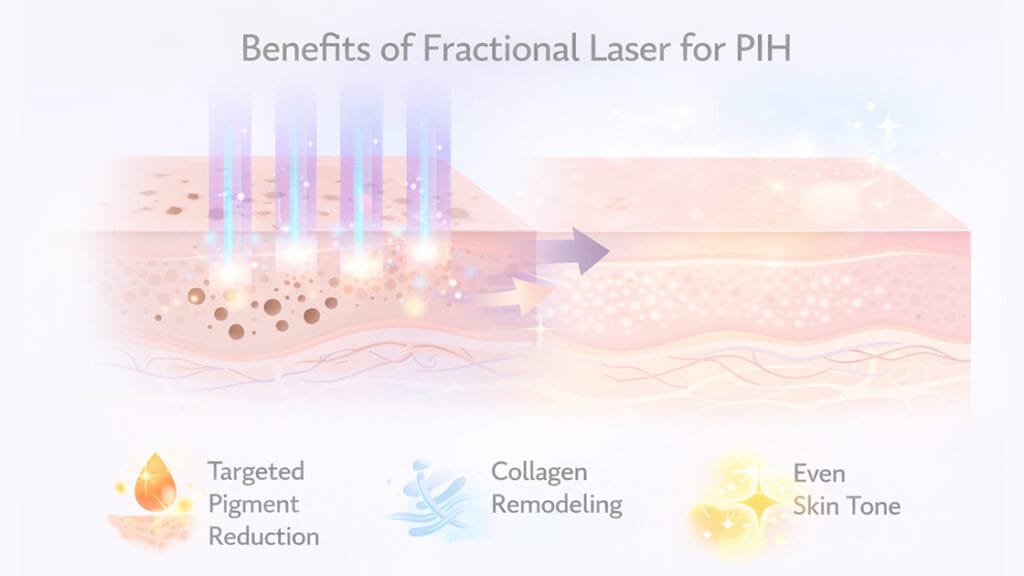
3. Benefits of Fractional Laser for PIH
Fractional laser therapy offers multiple advantages for patients with post-inflammatory hyperpigmentation.
3.1 Targeted Pigment Reduction
Fractional lasers precisely target areas of excess melanin without affecting surrounding skin. This minimizes the risk of further pigmentation or hypopigmentation and ensures more uniform results.
3.2 Collagen Remodeling and Skin Texture Improvement
Beyond pigment reduction, fractional laser stimulates collagen synthesis, improving skin texture, reducing fine lines, and enhancing overall skin radiance.
3.3 Reduced Risk of Scarring
Since only microzones of the skin are treated, the procedure lowers the risk of scarring and promotes faster healing compared to traditional ablative laser methods.
4. Treatment Protocol and Expectations
Understanding the treatment process helps patients manage expectations and optimize results.
4.1 Typical Treatment Sessions
Most patients require 3–6 sessions spaced 4–6 weeks apart. Each session typically lasts 20–40 minutes depending on the size and severity of pigmentation.
4.2 Pre- and Post-Treatment Care
Pre-treatment involves avoiding sun exposure, applying topical agents as prescribed, and ensuring no active skin infections. Post-treatment care focuses on gentle cleansing, sun protection, and moisturizing to support healing and pigment resolution.
4.3 Safety Considerations
Fractional lasers are generally safe for most skin types. However, dark skin types may require lower energy settings to reduce the risk of post-inflammatory hyperpigmentation exacerbation. A qualified dermatologist or licensed practitioner should always perform the treatment.
5. Complementary Approaches
Combining fractional laser therapy with other strategies can enhance outcomes.
5.1 Topical Lightening Agents
Ingredients such as hydroquinone, niacinamide, or azelaic acid can support pigment reduction and maintain results between sessions.
5.2 Sun Protection
UV exposure can worsen PIH. Broad-spectrum sunscreens and physical barriers are essential to prevent recurrence.
5.3 Lifestyle and Skincare Habits
Avoiding skin trauma, harsh exfoliation, and aggressive treatments can minimize new hyperpigmentation. Proper hydration and a balanced diet support skin health and recovery.
FAQ
Q1: Is fractional laser therapy painful?
Most patients experience mild discomfort or a tingling sensation, which is manageable with topical anesthetics or cooling devices.
Q2: How soon will results appear?
Improvement is gradual; patients usually notice changes after 2–3 sessions, with optimal results after completing the full course.
Q3: Can all skin types undergo fractional laser treatment?
Yes, but settings should be adjusted for darker skin tones to minimize the risk of post-inflammatory hyperpigmentation.
Q4: Are there any side effects?
Common temporary effects include redness, swelling, and minor peeling. Rarely, hypo- or hyperpigmentation may occur if the protocol is not tailored correctly.
Q5: How long do results last?
Results can be long-lasting with proper sun protection and skincare; new pigmentation may develop if the underlying triggers persist.
Conclusão
Fractional laser therapy represents a safe and effective solution for post-inflammatory hyperpigmentation, offering precise pigment targeting, skin texture improvement, and minimal downtime. When combined with proper pre- and post-care, sunscreen, and adjunctive topical treatments, it provides a comprehensive approach to achieving a more even, radiant complexion. This therapy empowers patients to address the cosmetic concerns of PIH while minimizing risks and optimizing skin health.
References
Manuskiatti, W., & Fitzpatrick, R. E. “Treatment of Postinflammatory Hyperpigmentation With Fractional Lasers.” Dermatologic Surgery, 2010.
https://doi.org/10.1111/j.1524-4725.2010.01571.x
Chan, H. H. L., et al. “Safety and Efficacy of Fractional Laser in Asian Skin.” Lasers in Surgery and Medicine, 2012.
https://doi.org/10.1002/lsm.22001
Gold, M. H., & Goldman, M. P. “Fractional CO₂ Laser for Skin Rejuvenation and Pigmentary Disorders.” Journal of Cosmetic and Laser Therapy, 2013.
https://doi.org/10.3109/14764172.2013.779537
Hantash, B. M., & Bedi, V. “Fractional Photothermolysis: Basic Concepts and Clinical Applications.” Seminars in Cutaneous Medicine and Surgery, 2007.