Introdução
You run your hand along your upper arm and feel it—a rough, bumpy texture that no amount of moisturizer seems to fix. Keratosis pilaris, often called “chicken skin,” affects millions of women who feel self-conscious wearing sleeveless tops, tank tops, or swimsuits. The tiny red or brown bumps may be harmless, but the frustration of trying scrub after scrub without real relief is exhausting. Laser therapy offers a gentle, non‑invasive way to help smooth the skin‘s texture and reduce the visible bumps, so you can finally feel confident showing your arms again without reaching for another harsh exfoliant.
1. Understanding Keratosis Pilaris and Why It Affects So Many Women
Keratosis pilaris is one of the most common skin conditions dermatologists see, yet many women have no idea what causes those stubborn bumps on their upper arms. Understanding the condition helps explain why traditional scrubs and lotions often fall short and why a different approach—like laser therapy—deserves attention.
1.1 Defining Keratosis Pilaris (KP) and Its Appearance
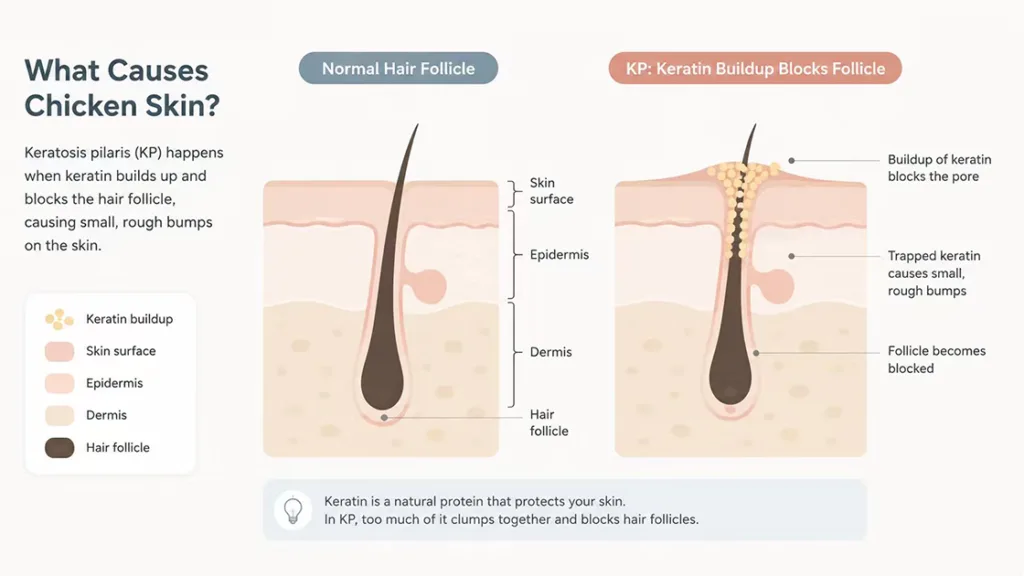
Keratosis pilaris is a genetic disorder of keratinization of the hair follicles. In simple terms, a protein called keratin builds up around each hair follicle, forming tiny, rough plugs that block the pore. These plugs create the classic “chicken skin” texture—small, hard bumps that can be flesh‑colored, red, or brown. KP most commonly appears on the outer upper arms, but it can also show up on thighs, cheeks, and buttocks. Women experience it just as often as men, but the cosmetic concern tends to be higher because exposed arms are a major focus of warm‑weather fashion.
1.2 Why KP Is So Common and Often Runs in Families
Keratosis pilaris is extremely widespread. The condition affects up to 50–80 percent of adolescents and roughly 40 percent of adults. If you have KP, you are far from alone. Genetic predisposition plays a major role—50 to 70 percent of affected individuals have a family history, and the condition often follows an autosomal dominant inheritance pattern. This means if one of your parents has KP, you have a high chance of having it too. The condition frequently worsens during dry winter months when skin loses moisture and improves naturally in summer humidity.
1.3 The Emotional Toll of Visible Bumpy Skin on Upper Arms
While keratosis pilaris poses no physical harm, its appearance on exposed areas like the upper arms can cause real emotional distress. Many women avoid sleeveless dresses, swimsuits, or even short sleeves because they feel self‑conscious. The bumps look like permanent goosebumps or a persistent rash, and strangers sometimes ask questions that deepen the embarrassment. This psychosocial burden is real. The desire to hide arms can limit clothing choices, affect social comfort, and even influence body image. Understanding that KP is a common genetic trait—not poor hygiene or something you caused—is the first step toward managing it without shame.
2. Why Traditional Scrubs and Lotions Often Leave Women Frustrated
If you have KP, you have probably tried many creams, scrubs, and home remedies. Some provide temporary smoothing, but the bumps almost always return. Knowing why these traditional methods have limits clarifies why laser therapy offers a meaningful alternative.
2.1 The Limits of Topical Exfoliants and Moisturizers
Standard treatments for KP include moisturizers containing urea, lactic acid, glycolic acid, or salicylic acid, which help loosen dead skin cells and soften the keratin plugs. Many women find temporary relief when using these products consistently. However, because KP stems from a genetic tendency toward hyperkeratinization, the buildup resumes as soon as you stop the creams. Topical products must be applied daily, sometimes twice daily, to maintain even modest results. The texture may improve temporarily, but the bumps rarely disappear completely. For women seeking lasting smoothness rather than a perpetual skincare routine, this limitation feels deeply frustrating.
2.2 The Risk of Over‑Exfoliation and Skin Irritation
In an effort to smooth bumpy skin, many women scrub their arms aggressively with loofahs, brushes, or harsh physical exfoliants. This approach often backfires. Over‑exfoliation strips the skin‘s protective barrier, leading to redness, irritation, and even increased inflammation around the hair follicles. Chemical exfoliants like glycolic acid can also cause stinging, peeling, or sun sensitivity when overused. The delicate skin on the upper arms does not respond well to constant abrasion. A gentler method that works with the skin’s natural healing process rather than fighting against it would be far more sustainable for long‑term comfort.
2.3 Why KP Is Manageable but Not “Curable”
It is important to understand that keratosis pilaris cannot be eliminated permanently. The condition results from an inherited genetic tendency, and no therapy currently changes that genetic programming. What treatments can do is help manage the visible bumps and roughness so that your skin feels smoother and looks less noticeable. Some people see natural improvement as they age, but for many adults, KP persists for decades. This is exactly where laser therapy fits into the picture—not as a permanent “fix,” but as an effective tool to help reduce the texture and appearance of bumps when topical products are not enough.
3. How Terapia laser Helps Smooth KP Without Harsh Scrubs
Laser technology has emerged as a promising option for people who have tried topical treatments without achieving the results they want. Different types of lasers target different aspects of KP, from pigmentation to redness to the keratotic bumps themselves.
3.1 What Laser Technology Does for Bumpy Skin
Specific wavelengths of laser energy can penetrate the skin and interact with the hair follicles where keratin builds up. Lasers such as the Nd:YAG and fractional CO2 have been studied for their ability to improve the appearance of KP. The Nd:YAG laser has yielded consistently favorable outcomes in clinical evaluations. Fractional CO2 laser helps address keratotic papules and hyperpigmentation. The laser creates microscopic treatment zones that encourage the skin‘s natural renewal process, smoothing the surface texture over time. This approach requires no scrubbing, no daily cream application, and no ongoing maintenance beyond periodic sessions.
3.2 How Laser Therapy Addresses Bumps, Redness, and Pigmentation
KP involves more than just bumpy texture. Many women also experience perifollicular redness (erythema) around each bump, as well as post‑inflammatory hyperpigmentation that leaves dark spots after bumps heal. Different lasers target these different components. The Nd:YAG laser works well for both pigmented lesions and follicular prominence. Fractional CO2 laser appears particularly effective for keratotic papules and hyperpigmentation, while the redness component may respond better to other wavelengths. Combining laser types can produce additive effects, addressing both the bumpy texture and the discoloration simultaneously. This versatility makes laser therapy a comprehensive option for women with mixed KP features.
3.3 What Clinical Evidence Says About Laser Therapy for KP
Multiple clinical studies support the use of laser therapy for keratosis pilaris. A systematic review confirmed that the Nd:YAG laser yields consistently favorable outcomes, while CO2 laser also shows efficacy. A comparative clinical trial found that fractional CO2 and Q‑switched Nd:YAG laser are both safe and effective for treating KP, improving both pigmentation and follicular prominence. Ongoing research is also exploring the 1927‑nm Thulium laser for KP, a non‑ablative fractional laser that creates microscopic treatment zones in the skin to improve symptoms without significant damage to surrounding tissue. This growing body of evidence shows that laser therapy represents a viable option for those seeking more effective KP management.
4. The Laser Advantage Over Harsh Scrubbing and Constant Creams
Laser therapy offers a fundamentally different approach to managing keratosis pilaris. Instead of daily friction and chemical exfoliation, it works with the skin‘s biology to achieve smoother texture without constant effort.
4.1 No More Daily Scrubbing or Product Application
One of the biggest frustrations with traditional KP care is the endless routine. You must exfoliate regularly, apply creams containing urea or lactic acid twice daily, and avoid behaviors that dry out the skin, like long hot showers. Miss a few days, and the bumps return. Laser therapy does not require this daily commitment. After a course of treatments, many women notice their skin stays smoother for extended periods without the need for constant product use. This freedom from the daily skincare grind is a major advantage for busy women who want results without dedicating significant time and mental energy to managing their arms.
4.2 A Gentle Approach That Avoids Skin Barrier Damage
Physical exfoliation with loofahs, brushes, or gritty scrubs creates micro‑tears in the skin‘s surface. Over time, this damage can weaken the skin barrier, leading to increased sensitivity, dryness, and even worsening of the condition. Chemical exfoliants, while effective at loosening keratin plugs, can cause irritation, stinging, and increased sun sensitivity. Laser therapy delivers controlled energy to targeted depths without abrading the surface. The treatment stimulates the skin’s own renewal processes from within, avoiding the trauma associated with harsh scrubbing. For women with sensitive skin that reacts poorly to topical acids and aggressive exfoliation, this gentleness is essential.
4.3 Long‑Term Texture Improvement Without Constant Upkeep
Traditional KP management requires continuous effort. Stop using the cream, and the bumps reappear. Stop exfoliating, and the roughness returns. Laser therapy works differently. By addressing the structural components of KP—the keratin plugs and follicular prominence—it helps create lasting improvement in skin texture. Many women find that after completing a recommended course of laser sessions, their arms remain significantly smoother even with minimal maintenance. Occasional touch‑up sessions can help sustain results, but the burden of daily product application and physical scrubbing diminishes substantially. This shift from constant management to periodic treatment changes the experience of living with KP from frustrating to manageable.
5. Building a Sustainable KP Management Plan With Laser Therapy
Successfully managing keratosis pilaris requires patience and a realistic approach. Laser therapy works best as part of a thoughtful plan that respects your skin‘s needs and fits your lifestyle.
5.1 Determining Whether Laser Therapy Is Right for Your KP
Laser therapy is not for every case of KP, nor is it always the first step. Women with mild KP often achieve satisfactory improvement with consistent use of topical moisturizers and gentle chemical exfoliants. However, if you have tried these approaches for several months without meaningful results, or if the redness and bumps cause significant cosmetic concern, laser therapy may be worth considering. The best candidates for laser KP treatment are those with persistent bumps, noticeable redness, or post‑inflammatory pigmentation that does not respond well to creams. A consultation with a qualified dermatologist or laser specialist helps determine which laser type suits your skin type and KP features.
5.2 Combining Laser Sessions With Gentle Skincare Habits
Even with laser therapy, maintaining gentle skincare habits supports your results. Use mild, soap‑free cleansers and avoid very hot water when showering, as heat strips natural oils from the skin. Apply a basic moisturizer regularly, especially after bathing, to keep the skin hydrated. Sun protection is also important, as treated skin may be more sensitive to UV exposure. These simple habits do not require the intense effort of daily exfoliation, but they help maintain the smoother texture that laser therapy provides. The combination of periodic laser sessions and gentle daily care creates a sustainable long‑term strategy.
5.3 Managing Expectations: What Laser Therapy Can and Cannot Do
Keratosis pilaris has no permanent cure, and laser therapy does not change that fundamental reality. What laser therapy can do is help reduce the visibility of bumps, smooth the skin texture, and lighten residual hyperpigmentation from healed bumps. Most women see noticeable improvement after a series of treatments, with results lasting for months. However, some bumps may persist, and periodic maintenance sessions may be needed. Understanding this distinction—between managing and eradicating—helps you approach laser therapy with realistic hope rather than disappointment. A gradual, consistent improvement in how your arms look and feel is the goal, not instant perfection.
FAQ
Q1: Does laser therapy for KP hurt?
Most patients describe the sensation as a quick snap or mild pinch. No anesthesia is usually needed for superficial treatments.
Q2: How many sessions will I need to see smoother arms?
Most women undergo a series of treatments spaced several weeks apart. Visible improvement often appears after a few sessions.
Q3: Can I combine laser therapy with my regular moisturizer?
Yes. Gentle moisturizing supports overall skin hydration and can be continued alongside laser treatments.
Q4: Will laser therapy lighten the dark spots left by healed KP bumps?
Yes. Certain lasers, like the Nd:YAG and fractional CO2 laser, help improve both active bumps and residual hyperpigmentation.
Q5: Is laser therapy safe for all skin types?
Many laser types are safe for a range of skin tones, but darker skin requires special caution to avoid pigment changes. A professional consultation is essential.
Conclusão
The “chicken skin” on your upper arms does not have to control what you wear or how you feel about your body. Keratosis pilaris is a common genetic trait, not a reflection of your skincare habits or hygiene. While no therapy permanently erases this condition, laser therapy offers a gentle, non‑invasive way to help smooth bumpy texture, reduce redness, and lighten residual spots—without the daily frustration of harsh scrubs and endless creams. You deserve to feel confident in a sleeveless top, and with the right management approach, smoother arms can become your new normal.
References
Back2HealthTN. Laser Therapy for Keratosis Pilaris.
Medimarket. Skin Smoothing Laser Treatments.
THOR Photomedicine. Photobiomodulation for Dermatological Conditions.
Dynamic Chiropractic. Laser Options for Common Skin Concerns.
https://dynamicchiropractic.com
Johns Hopkins Medicine. Laser Research in Dermatology.