Introdução
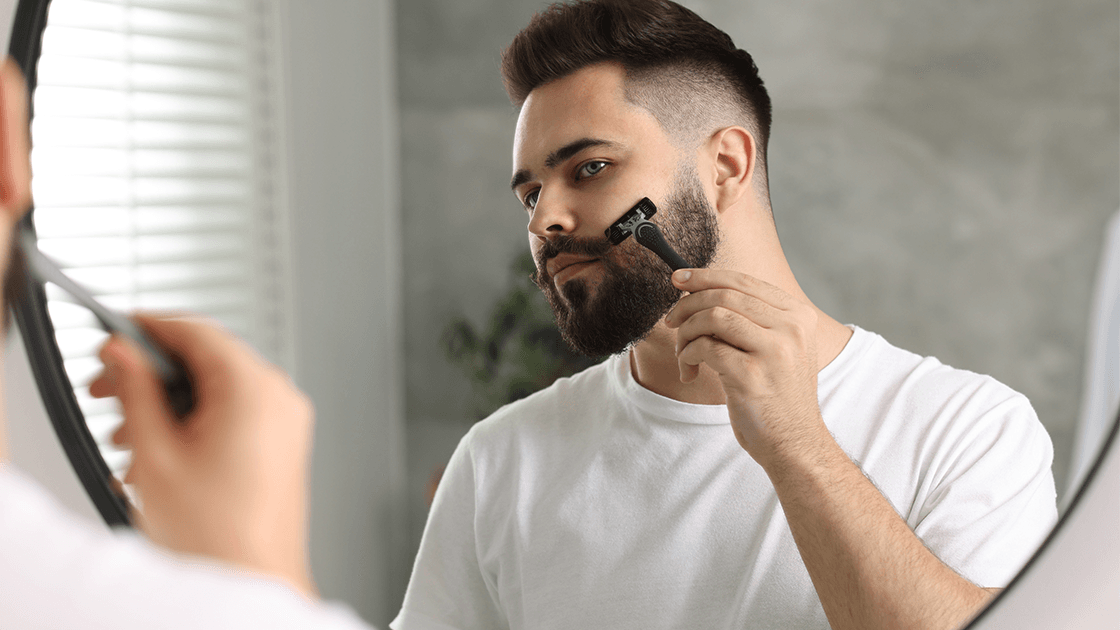
For many men, shaving is a routine part of personal grooming. However, frequent shaving can become frustrating when it repeatedly causes razor irritation, shaving bumps, ingrown hairs, or visible redness around the beard and neck area. These problems can be especially noticeable for men whose jobs require a consistently clean-shaven appearance, including professionals in corporate environments, hospitality, aviation, fitness, sales, and other customer-facing roles. Laser hair reduction offers a different approach by targeting hair follicles rather than repeatedly cutting hair at the skin surface. Modern diode laser systems can use carefully controlled energy, long pulse widths, targeted treatment areas, and integrated cooling to support longer-term hair reduction while improving treatment comfort. For men who are tired of managing recurrent facial hair problems through constant shaving, understanding how laser-based grooming works can help them make more informed decisions about professional hair management.
1. Why Frequent Shaving Can Become a Grooming Problem
The first step in understanding laser hair reduction is recognizing why repeated shaving can create ongoing skin concerns. The problem is not simply the act of removing hair; it is also the repeated friction, cutting, and regrowth that occur when the same area is shaved again and again.
1.1 The Daily Cycle of Shaving and Skin Irritation
Shaving cuts hair close to the surface of the skin, which means the process has to be repeated as new growth becomes visible. For men with fast-growing or coarse facial hair, this can create a frequent grooming cycle involving shaving, short-term smoothness, visible regrowth, and another round of shaving.
Repeated contact between a razor and the skin can contribute to irritation, especially when shaving involves multiple passes over the same area. The neck can be particularly challenging because hair may grow in different directions, making it difficult to achieve an even result without additional strokes.
Razor irritation may appear as redness, burning, small bumps, or temporary sensitivity. In some individuals, recurring shaving can also contribute to ingrown hairs and pseudofolliculitis barbae, a condition associated with hairs growing back into the skin after shaving or other hair-removal practices.
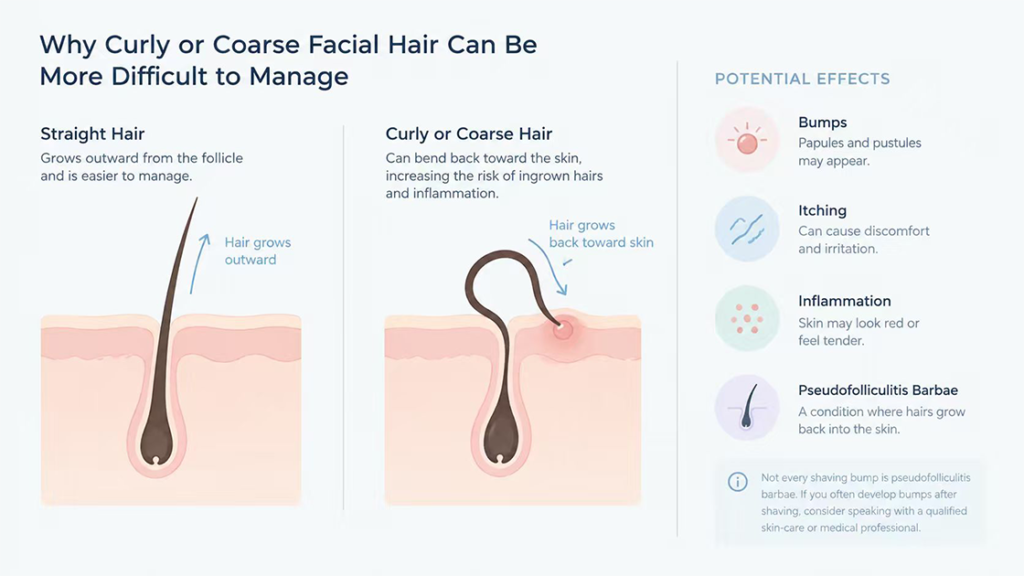
1.2 Why Curly or Coarse Facial Hair Can Be More Difficult to Manage
Hair texture and growth direction can affect how the skin responds to shaving. Curly or tightly curled hair may bend back toward the skin as it grows, increasing the possibility of inflammatory bumps in the beard area.
Pseudofolliculitis barbae is particularly associated with shaving in people who have tightly curled or coarse hair. It can produce papules, pustules, itching, discomfort, and changes in skin appearance around the beard distribution.
This does not mean that every shaving bump represents pseudofolliculitis barbae. However, men who repeatedly develop bumps after shaving may benefit from discussing the pattern with a qualified skin-care or medical professional instead of treating each episode as ordinary razor burn.
2. How Laser Hair Reduction Changes the Grooming Approach
Rather than repeatedly cutting visible hair at the skin surface, laser hair reduction focuses energy on the hair follicle. This creates a fundamentally different approach to managing unwanted facial hair.https://www.rheinlasers.com/
2.1 From Surface Shaving to Follicle-Targeted Hair Reduction
Laser hair reduction works through selective absorption of light by pigment in the hair. The hair converts the absorbed energy into heat, which can damage structures within the follicle and reduce future hair growth.
Professional diode laser systems can use an approximately 810nm wavelength to penetrate toward the hair follicle while targeting melanin within the hair. Long pulse widths can help deliver energy over a controlled period, while practitioners can adjust treatment parameters according to the treatment area, hair characteristics, and skin type.
The objective is not to make the skin temporarily hair-free in the same way as shaving. Instead, practitioners generally use a treatment series to achieve progressive hair reduction because hair follicles move through different growth phases.
This distinction is important for men considering laser hair reduction. The goal is long-term management of unwanted hair rather than simply replacing one daily shaving session with another short-term grooming method.
2.2 Why Facial Hair Requires Careful Treatment Planning
The beard area is not a simple flat treatment zone. Facial hair varies in density across the cheeks, jawline, chin, upper lip, and neck. Some areas may contain dense terminal hairs, while others may have finer or more widely distributed growth.
A professional treatment plan therefore needs to consider the desired grooming pattern as well as the characteristics of the hair and skin. A man seeking complete beard reduction has a different goal from someone who only wants to reduce neck hair or maintain a cleaner beard line.
An appropriately trained professional who can select suitable parameters should also perform laser treatment. The American Academy of Dermatology notes that laser hair removal can treat facial and body hair, while emphasizing the importance of professional experience with different skin tones and treatment settings.
3. Where Laser Grooming Can Make the Biggest Difference
For men who shave frequently, not every area needs the same approach. Identifying the areas that repeatedly cause irritation can make a grooming plan more targeted.
3.1 Beard Lines and the Neck
The neck is one of the most frustrating areas for men who maintain a clean-shaven appearance. Hair can grow in multiple directions, and repeated shaving may make it difficult to keep the area consistently smooth without irritation.
Practitioners can direct laser hair reduction toward unwanted neck and beard-area hair, helping reduce the amount of hair that needs to be shaved over time. This can be particularly relevant for men whose primary concern is not removing every facial hair but reducing the dense growth that makes daily grooming difficult.
They can also define the treatment area according to the desired appearance. For example, some men may want to reduce neck hair while maintaining a natural beard outline, while others may seek broader facial hair reduction.
3.2 Upper Lip, Chin, and Jawline
The upper lip, chin, and jawline often contain some of the most visible facial hair. Because these areas are highly noticeable, uneven regrowth can quickly affect a person’s overall grooming appearance.
Laser hair reduction may be used for these facial areas when the goal is longer-term reduction of unwanted hair. However, facial hair can respond differently from hair on other parts of the body, and hormonal factors can influence future regrowth.
For that reason, expectations should remain realistic. A professional may recommend a series of treatments and later maintenance rather than suggesting that one session will permanently eliminate all facial hair.
3.3 Areas That Must Stay Consistently Groomed for Work
Certain professions place greater emphasis on facial presentation. Sales professionals, hotel and restaurant employees, real estate agents, fitness trainers, consultants, and other customer-facing workers may prefer a consistently neat appearance throughout the workweek.
For these men, the value of laser grooming is not simply cosmetic. Reducing the frequency of shaving may make daily grooming easier to manage, particularly when shaving repeatedly produces irritation or bumps.
The same principle can apply to men who participate in professional photography, media work, public speaking, or other situations where facial appearance is regularly visible under bright lighting or high-resolution cameras.
4. Making Laser Hair Reduction More Comfortable
Comfort is an important part of facial laser treatment because the beard area can contain dense hair and sensitive skin. Modern systems therefore combine targeted energy delivery with cooling and treatment-control features.
4.1 Cooling Can Help Manage Treatment Sensation
Professional diode laser systems may incorporate contact cooling into the treatment handpiece. Sapphire-based cooling systems can rapidly cool the skin surface while energy is delivered to the targeted hair follicles.
This approach can help reduce the sensation associated with heat delivery and may make treatment more comfortable. Cooling can also play an important role in protecting the skin surface during treatment.
The exact sensation varies between individuals and treatment areas. Men with dense beard growth may experience more noticeable sensations than someone receiving treatment over a smaller area with finer hair.
4.2 Different Treatment Areas May Require Different Coverage
Facial grooming often involves both small and relatively broad areas. The upper lip, chin, and individual beard-line sections require precision, while larger regions such as the neck or body may benefit from broader coverage.
Modern professional systems can offer different spot sizes or handpiece configurations for different treatment areas. A smaller treatment spot can provide targeted coverage, while a larger rectangular spot can help cover broader regions more efficiently.
This flexibility matters when a treatment plan combines several facial or body areas rather than focusing on one small region.
4.3 Skin Tone and Hair Characteristics Matter
Laser energy interacts with melanin, so skin tone and hair color are important considerations when selecting treatment parameters. The appropriate wavelength, pulse duration, energy level, and cooling strategy can vary according to the individual.
Research on laser hair reduction in skin of color has emphasized the importance of wavelength selection, treatment parameters, pulse duration, and cooling when working with higher levels of epidermal melanin.
This is especially relevant for men with darker skin who experience shaving-related bumps or pigmentation changes. A suitable professional assessment should take skin tone and previous skin reactions into account rather than applying identical settings to every client.
5. Building a Smarter Grooming Routine
Laser hair reduction works best when it is viewed as part of a structured grooming strategy rather than a quick replacement for a razor. Understanding the treatment process, setting realistic expectations, and paying attention to skin response can all contribute to a more practical approach.
5.1 Think in Terms of Hair Growth Cycles
Hair does not grow at exactly the same rate throughout the body. Individual follicles move through different growth phases, and laser treatment is generally more effective when the target hair is in an appropriate active growth stage.
Because of this, professional laser hair reduction typically requires multiple sessions rather than one treatment. The exact schedule depends on the treatment area, hair characteristics, skin type, and the protocol selected by the professional.
Over a series of treatments, the objective is progressive reduction rather than immediate total removal.
5.2 Reduce the Need for Repeated Shaving
One of the practical reasons men consider laser hair reduction is the possibility of reducing how often they need to shave. This can be especially relevant for men who shave almost every day because of work requirements.
If hair growth becomes finer or sparser over time, the daily grooming routine may become less demanding. For men who experience shaving-related bumps, reducing the amount of hair that needs to be repeatedly cut may also help reduce one of the triggers associated with recurring irritation.
However, practitioners should not present laser treatment as a guaranteed solution for every type of facial skin problem. Pseudofolliculitis barbae, acne, folliculitis, pigmentation, and other conditions can have different causes and may require separate management.
5.3 Know When Facial Bumps Need More Than Grooming Changes
Patients should not automatically treat persistent or painful bumps as a cosmetic issue. Recurrent inflammation, pus-filled lesions, significant discoloration, scarring, or symptoms that continue despite changes in shaving habits may require professional evaluation.
Laser hair reduction can be part of a broader strategy for people whose symptoms closely relate to hair removal, but it does not address every underlying skin condition.
For men with persistent pseudofolliculitis barbae, dermatology literature describes laser hair reduction as a potential long-term management option, while also noting that recurrence and maintenance treatment can occur.
5.4 Set Realistic Expectations for Long-Term Hair Management
People best understand laser hair reduction as a process. Hair may gradually become less dense and finer after multiple sessions, but results vary according to hair color, skin characteristics, hormonal factors, treatment parameters, and the area they treat.
The goal may also differ from person to person. One man may want a completely clean-shaven appearance, while another may simply want to reduce dense neck hair or make beard maintenance easier.
A personalized plan is therefore more useful than a one-size-fits-all promise.
Frequently Asked Questions
Can laser hair reduction help men who experience shaving bumps?
It may help when shaving and recurring hair growth contribute to the problem. Reducing hair growth can reduce the need for repeated shaving, which is an important factor in pseudofolliculitis barbae for some individuals.
Is laser hair reduction suitable for beard and neck hair?
Yes. Practitioners can use professional laser hair reduction on facial areas including the beard, chin, upper lip, jawline, and neck. They should adjust the treatment plan to the desired grooming pattern and individual hair and skin characteristics.
How does diode laser hair reduction work?
A diode laser delivers light that is absorbed by pigment in the hair. The resulting thermal effect can damage targeted follicular structures and reduce future hair growth. Multiple sessions are generally needed because hair follicles have different growth cycles.
Can laser hair reduction completely remove a man’s beard?
Results vary. Professional laser treatment is generally intended to achieve long-term hair reduction rather than guarantee complete permanent removal of every facial hair. Facial hair can also be influenced by hormonal factors.
Is laser treatment painful on the beard area?
People can experience different sensations during treatment. Modern professional systems may use integrated cooling to reduce the sensation of heat and improve comfort. Dense hair areas may feel more noticeable than areas with finer hair.
Is laser hair reduction safe for darker skin?
Laser hair reduction can be performed on darker skin when an appropriate device, wavelength, treatment parameters, and professional expertise are used. Because darker skin contains more epidermal melanin, treatment planning and parameter selection are particularly important.
How many laser hair reduction sessions are needed?
There is no universal number for every person. Multiple sessions are usually necessary because hair follicles are active at different stages of the growth cycle. The appropriate schedule depends on the treatment area, hair growth, skin characteristics, and professional treatment protocol.
Should men stop shaving before laser hair reduction?
Preparation instructions vary according to the treatment protocol. A professional should provide specific guidance about shaving, sun exposure, skin products, and other preparation steps before treatment.
Conclusão
For men who shave frequently, recurring facial hair problems can become more than a simple grooming inconvenience. Razor irritation, ingrown hairs, shaving bumps, and uneven regrowth can make daily beard and neck maintenance frustrating, particularly for professionals who need a consistently groomed appearance.
Laser hair reduction provides a different approach by targeting hair follicles instead of repeatedly cutting hair at the skin surface. Professional diode laser technology, controlled pulse delivery, targeted treatment areas, and integrated cooling can support a more structured approach to long-term hair management. For men dealing with recurrent shaving-related concerns, the most useful goal is not an unrealistic promise of perfect skin, but a personalized strategy that may reduce unwanted hair, decrease the need for frequent shaving, and make everyday grooming easier.
References
Laser Hair Removal: A Review
https://pubmed.ncbi.nlm.nih.gov/23332016/
Review of Treatments for Pseudofolliculitis Barbae
https://pubmed.ncbi.nlm.nih.gov/36840647/
Lasers for Reduction of Unwanted Hair in Skin of Colour: A Systematic Review and Meta-Analysis
https://pubmed.ncbi.nlm.nih.gov/31587390/
American Academy of Dermatology – Laser Hair Removal: Overview
https://www.aad.org/public/cosmetic/hair-removal/laser-hair-removal-overview
Mayo Clinic – Laser Hair Removal
https://www.mayoclinic.org/tests-procedures/laser-hair-removal/about/pac-20394555