
소개
Tattoos are a popular form of self-expression, yet many individuals eventually consider removing or fading their body art. Advances in laser technology, particularly Pico laser systems, have transformed tattoo removal into a more efficient and precise process. Pico lasers operate with ultra-short pulses that break down tattoo pigments into tiny fragments, allowing the body’s natural immune system to clear them more effectively. This article explores the science behind Pico laser tattoo fading, the importance of color-specific strategies, and the biological mechanisms involved in achieving optimal results without unnecessary skin damage.
1. Understanding Pico Laser Technology
1.1 What Makes Pico Laser Unique
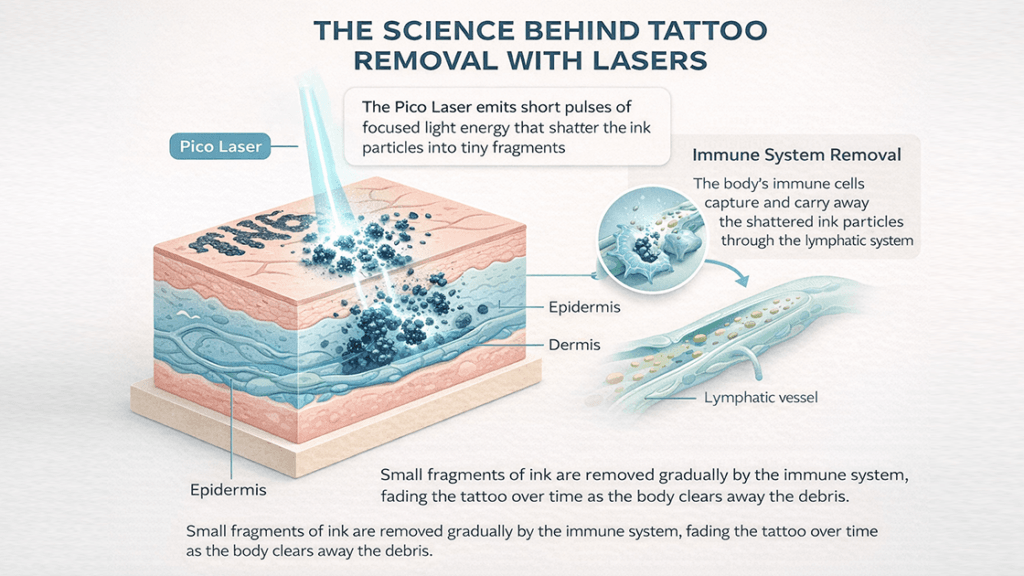
Pico lasers differ from traditional nanosecond lasers due to their picosecond pulse duration, which is a trillionth of a second. This extremely short pulse generates photomechanical energy, shattering pigment particles with minimal heat diffusion. As a result, Pico lasers reduce the risk of thermal damage to surrounding skin tissues, enabling safer treatment for a wider range of colors and skin types. The high precision allows for targeting both superficial and deep pigment deposits, making it an ideal solution for complex tattoo designs or previously resistant ink colors.
1.2 How Pico Lasers Interact with Tattoo Pigments
Tattoo pigments absorb laser energy at specific wavelengths. When exposed to Pico laser pulses, the ink fragments into microscopic particles that are subsequently removed by the body’s immune system. The process relies on selective photothermolysis, where each color absorbs energy differently based on its chemical composition. This principle allows practitioners to customize treatments by selecting the appropriate wavelength for each pigment color, optimizing fading efficiency while minimizing adverse effects.
1.3 Comparing Pico and Nanosecond Lasers
Nanosecond lasers were the standard for decades but rely primarily on thermal energy to break down ink, which can increase the risk of burns, scarring, and incomplete pigment removal. Pico lasers, by contrast, utilize photomechanical forces that are significantly more efficient at fragmenting stubborn pigments, especially greens, blues, and yellows. This efficiency reduces the number of sessions required for noticeable fading, providing a safer and more effective alternative for both amateur and professional tattoos.
2. Color-Specific Tattoo Strategies
2.1 Treating Black and Dark Inks
Black and dark blue inks are the most responsive to Pico laser treatment due to their strong light absorption across multiple wavelengths. These pigments break down rapidly into small fragments, which are naturally cleared by macrophages. However, variations in ink density, depth, and layering may affect response time. Proper wavelength selection and pulse duration are critical for targeting dense black ink while protecting surrounding skin, ensuring both effective fading and minimal post-treatment irritation.
2.2 Fading Red, Yellow, and Green Pigments
Red, yellow, and green inks are chemically more challenging. Red pigments generally respond to green and yellow wavelengths, while yellow is notoriously resistant and often requires multiple treatment modalities. Green inks require precise wavelength targeting to maximize fragmentation without damaging surrounding tissue. These color-specific considerations emphasize the importance of individualized treatment plans, as the body’s ability to eliminate pigment depends not only on laser technology but also on ink composition, depth, and skin type.
2.3 Multi-Colored Tattoo Approaches
Tattoos with multiple colors pose unique challenges, as each pigment absorbs laser energy differently. Practitioners often sequence treatments by targeting specific colors in each session, allowing the immune system to gradually clear fragmented pigments. This staged approach reduces the risk of hypopigmentation or hyperpigmentation and allows for careful monitoring of skin reaction. Understanding the physics of light absorption and pigment chemistry is crucial to achieving uniform fading while preserving the overall skin integrity.
3. Biological Mechanisms Behind Tattoo Fading
3.1 Photomechanical Fragmentation
Pico lasers produce ultra-short pulses that generate intense photomechanical shockwaves. These shockwaves break tattoo ink into particles small enough for phagocytosis. Unlike thermal destruction, this method preserves surrounding dermal structures, reducing inflammation and potential scarring. The efficiency of photomechanical fragmentation explains why Pico lasers are particularly effective on previously resistant colors and layered tattoos, making it a preferred option in modern dermatology and aesthetic medicine.
3.2 Immune System Role in Pigment Clearance
After ink fragmentation, macrophages and other immune cells engulf and remove pigment particles via lymphatic pathways. The speed and efficiency of this clearance depend on factors such as pigment size, immune function, and skin vascularity. While laser treatment initiates the process, the body’s natural immune response ultimately determines the rate and extent of fading. Optimizing this biological synergy is critical for achieving smooth, even results.
3.3 Factors Affecting Fading Efficiency
Several patient-specific factors influence tattoo removal outcomes. Skin type, ink depth, tattoo age, and prior treatments all affect pigment absorption and clearance. Additionally, lifestyle factors such as sun exposure, skin hydration, and overall immune health may impact healing and fading. Understanding these variables enables practitioners to create personalized protocols, improving both safety and efficacy in multi-session treatments.
4. Safety and Skin Integrity Considerations
4.1 Minimizing Skin Damage
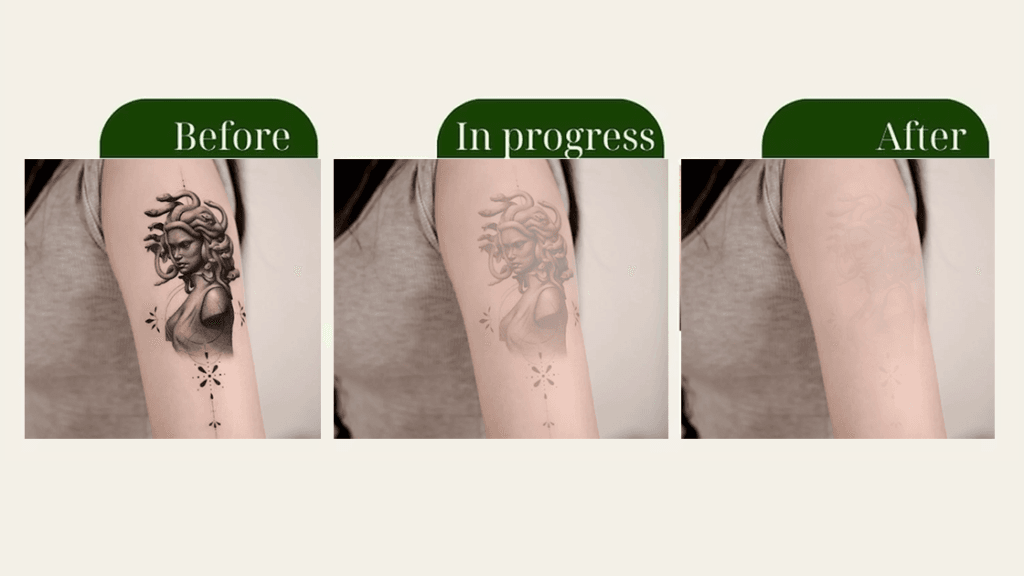
Pico lasers reduce heat accumulation, lowering the risk of burns and scarring. By adjusting pulse duration, energy density, and wavelength selection, practitioners can minimize epidermal injury while achieving maximal pigment fragmentation. Post-treatment skin care is equally important to maintain barrier function and reduce inflammation, ensuring optimal aesthetic outcomes.
4.2 Managing Side Effects
Common side effects include temporary redness, mild swelling, and slight blistering. Hypopigmentation and hyperpigmentation are less frequent with Pico lasers due to their precise energy delivery. Monitoring skin response between sessions and allowing adequate healing time are essential to prevent complications. Patient education on proper care further supports safety and effectiveness.
4.3 Long-Term Skin Health
Repeated treatments over time can improve skin texture, as laser-induced collagen remodeling contributes to dermal regeneration. While the primary goal is tattoo fading, secondary benefits include enhanced skin smoothness and tone. Maintaining a balance between sufficient energy delivery and skin protection ensures the long-term health and aesthetics of the treated area.
FAQ
Q1: Does Pico laser tattoo removal hurt?
Most patients feel mild discomfort or a snapping sensation, often tolerable without anesthesia.
Q2: How many sessions are typically needed?
The number varies depending on tattoo size, ink colors, and depth, usually between 4–10 sessions.
Q3: Can all colors be removed completely?
Black, blue, and red inks respond best; yellow and green may require more sessions or alternative methods.
Q4: Is there risk of scarring?
With proper Pico laser parameters and care, scarring risk is minimal.
Q5: How should skin be cared for after treatment?
Keep the area clean, avoid sun exposure, and follow practitioner’s recommendations to reduce inflammation and aid healing.
결론
Pico laser technology represents a significant advancement in tattoo fading, offering precise, color-specific treatments with minimal risk to surrounding skin. By leveraging ultra-short pulses and understanding pigment absorption, practitioners can effectively break down even challenging inks while supporting natural immune clearance. This method provides a safer, more efficient, and predictable approach to tattoo removal, benefiting both patients and aesthetic professionals seeking optimal outcomes.
References
Rhein Lasers. Tattoo Removal Treatments.
https://www.rheinlasers.com/treatments/tattoo-removal?utm_source=chatgpt.com
Habbema, L., et al. “Picosecond Laser Tattoo Removal: Clinical Review.” Dermatologic Surgery, 2020; 46(7): 923–932.
https://pubmed.ncbi.nlm.nih.gov/32357577/
Alabdulrazzaq, H., et al. “Advances in Multi-Colored Tattoo Removal.” Lasers in Surgery and Medicine, 2019; 51(4): 345–352.
https://pubmed.ncbi.nlm.nih.gov/30824786/
Ross, V., et al. “Laser-Tissue Interaction for Tattoo Removal: A Review.” Journal of Cosmetic Dermatology, 2018; 17(6): 1070–1077.