소개
You have spent hundreds of dollars on brightening serums. You apply them religiously every morning and night, wait weeks for results, and at the end of the season, your sunspots and melasma patches are still there — slightly lighter, maybe, but nowhere near gone. Meanwhile, a friend who tried laser pigmentation treatment saw dramatic improvement after just a few sessions. The difference is not about effort; it is about physics. Topical serums work on the skin‘s surface, slowly influencing melanin production. Laser energy, on the other hand, reaches deep into the skin where pigment actually forms. This article compares the two approaches — 12 weeks of daily serum use versus three laser sessions — so you can decide which path fits your skin goals and your patience level.
1. How Pigment Forms and Why Surface Creams Have Limits
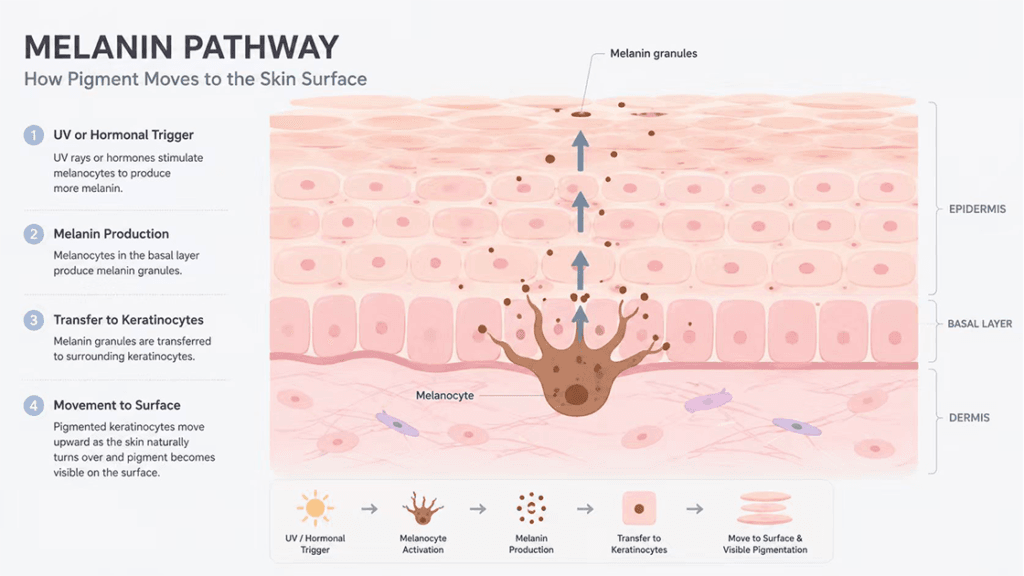
Hyperpigmentation — whether from sun exposure, hormonal changes, or post‑inflammatory marks — occurs when melanocytes produce excess melanin. The pigment then travels upward to the epidermis. Understanding this journey helps explain why topical products often fall short and where lasers excel.
1.1 The Biology of Melanin Production and Deposition
Melanin is produced by melanocytes located at the basal layer of the epidermis. When stimulated by UV light or hormones, these cells ramp up melanin synthesis. The pigment granules are then transferred to surrounding keratinocytes, where they remain until shed naturally. This process takes weeks. A spot you see on your skin today was actually produced weeks ago. Topical ingredients like vitamin C, kojic acid, and tranexamic acid work by interfering with melanin production at the cellular level. However, they must penetrate through multiple layers of dead skin cells to reach the basal layer. Even then, they can only slow down future pigment production; they cannot remove melanin that has already been deposited.
1.2 Why Most Brightening Serums Take Months to Show Subtle Changes
Clinical studies on brightening serums typically measure results after 8 to 12 weeks of twice‑daily application. The improvements are often modest — a 15‑30 percent reduction in pigmentation. The reason is that serums work through gradual inhibition of the tyrosinase enzyme. They do not break down existing pigment. So you are essentially waiting for your skin to naturally exfoliate away the darkened cells while preventing new melanin from forming. This process is slow because the skin‘s natural turnover cycle for a melanocyte to move from basal layer to surface takes about four to six weeks. For stubborn pigmentation like melasma or deep sunspots, the results are even slower and less predictable. Many users also experience irritation or rebound hyperpigmentation when they stop using the product.
1.3 The Role of Oxidation and Adherence in Long‑Term Serum Use
Another practical challenge with serums is product stability. Vitamin C, one of the most effective brightening agents, oxidizes quickly when exposed to air and light. An oxidized serum not only loses efficacy but may also irritate the skin. Similarly, users often skip days or apply unevenly, leading to patchy results. Even with perfect adherence, serums cannot reach pigment that lies deeper than the epidermis. Dermal melanin — often seen in deeper sunspots or in darker skin types — remains untouched by any topical agent. This is why many people with persistent hyperpigmentation eventually seek laser treatments.
2. How Laser Pigment Treatment Works and Why It Is Different
Laser therapy for pigmentation uses specific wavelengths of light that are selectively absorbed by melanin. The energy is delivered in ultra‑short pulses, shattering pigment particles without damaging surrounding tissue.
2.1 The Science of Selective Photothermolysis
Selective photothermolysis is the principle behind laser pigment removal. A laser wavelength is chosen that matches the absorption peak of melanin — typically 532nm for superficial pigmentation (like freckles and sunspots) and 1064nm for deeper pigment (like dermal melasma). When the laser pulse hits the skin, melanin absorbs the energy much more strongly than the surrounding water or hemoglobin. This rapid absorption creates a tiny shockwave that fragments the pigment particle into microscopic dust. The body‘s immune system then clears these fragments over several weeks. This process does not rely on skin turnover; it physically removes pigment from the tissue.
2.2 What Happens During a Typical Laser Session
In a laser pigmentation session, the area is cleansed and sometimes a topical numbing cream is applied. The practitioner selects the appropriate wavelength and energy settings based on skin type and pigmentation depth. The laser handpiece delivers quick pulses over each pigmented spot. Patients describe the sensation as a light snap or a rubber band flick. The entire session for a small area like a sunspot cluster may take only a few minutes. Immediately after treatment, the spots may appear darker or turn a charcoal gray. This is normal — the pigment has been fractured and is now more visible before it flakes off or fades. Over the next one to three weeks, the darkened spots gradually lighten and may completely clear.
2.3 Why Three Sessions Often Outperform Three Months of Serum
Most pigment laser protocols recommend three to six sessions spaced four to six weeks apart. By the third session, many patients see 70‑90 percent clearance of their targeted spots. The reason for this dramatic difference is simple: laser energy physically destroys the pigment, while serums only slow its production. Even if you stop laser treatments after three sessions, the cleared spots will not return unless new sun exposure triggers new pigment. With serums, stopping use allows melanin production to resume, and the spots slowly reappear. For people with busy lives, committing to three laser sessions is often easier than remembering to apply serum twice daily for 12 weeks.
3. Comparing the Two Approaches Side by Side
Both serums and lasers aim to reduce unwanted pigmentation, but they achieve this through fundamentally different mechanisms. Understanding the trade‑offs helps you choose the right tool for your situation.
| 기능 | 12 Weeks of Brightening Serum | 3 Laser Sessions |
| 메커니즘 | Inhibits melanin production | Physically fragments existing melanin |
| Speed of results | Gradual over months | Visible after 2-4 weeks per session |
| Depth of action | Epidermis only | Epidermis and dermis |
| Patient effort | Twice daily application | 3-6 clinic visits |
| Durability | Relies on continued use | Long‑lasting after full course |
| Side effects | Irritation, oxidation, uneven results | Temporary darkening, mild swelling, rare burns |
3.1 Speed of Visible Improvement
With a brightening serum, you are told to wait at least 8 weeks before expecting noticeable change. Even then, the improvement is often a gradual lightening rather than elimination. Laser treatment offers much faster feedback. After a single session, the targeted spots may darken for a few days — which can be unsettling — but then they begin to flake or fade. By week three, the difference is obvious. For those who want to see results before a summer vacation or a special event, laser therapy clearly wins on speed.
3.2 Depth of Pigment That Can Be Treated
Superficial freckles and light sunspots do respond to serums, especially when combined with strict sun protection. But dermal pigmentation — the stubborn brown patches of melasma or deep solar lentigines — is essentially untouchable by topical products. The melanin sits too deep for any cream to reach. Laser wavelengths, particularly 1064nm, can penetrate into the dermis and target these deep deposits. This is why melasma, which is notoriously difficult to treat with creams, often shows improvement with 1064nm laser protocols.
3.3 Consistency Burden and Real‑World Adherence
A twice‑daily serum routine sounds simple, but in real life, it is easy to skip nights when you are tired or mornings when you are rushing. Many people also stop using products after a few weeks when they do not see immediate change. The result is incomplete treatment. Laser sessions require deliberate appointments. Once you book them, you show up, and the treatment happens. There is no daily decision fatigue. For those who prefer a structured approach, laser therapy reduces the mental load of skincare.
4. Realistic Expectations for Laser Pigmentation Treatment
Laser therapy for pigmentation is not magic, but it is highly effective for the right candidates. Understanding what it can and cannot do helps you set reasonable goals.
4.1 What Laser Treatment Can Achieve
For superficial sunspots, freckles, and post‑inflammatory hyperpigmentation, a series of laser sessions can produce dramatic, long‑lasting clearance. Many patients achieve 70‑90 percent reduction in visible spots. For melasma, results are more variable, but many see significant lightening, especially with combination protocols that include strict sun protection and topical maintenance. The treated areas generally do not relapse unless significant UV exposure occurs. This durability makes laser therapy a strong investment.
4.2 What Laser Treatment Cannot Do
Laser therapy cannot prevent new pigmentation from forming if you continue to have unprotected sun exposure. It also cannot remove pigmentation that is entirely hormonal without addressing the underlying trigger. Some very deep or extensive lesions may require more than three sessions. Additionally, certain skin types are at higher risk for post‑inflammatory hyperpigmentation after laser treatment, so proper pre‑treatment assessment is essential. A qualified practitioner will set realistic expectations based on your skin type and pigmentation depth.
4.3 How to Maintain Results After Laser Sessions
Once you have completed your laser sessions, the key to keeping your skin clear is consistent sun protection. Broad‑spectrum sunscreen with SPF 30 or higher, worn daily, is non‑negotiable. Hats and sun avoidance during peak hours also help. Some practitioners recommend occasional maintenance sessions once or twice a year. With good habits, the results of laser pigmentation treatment can last for years.
5. Choosing the Right Path for Your Skin Goals
The best choice depends on your pigmentation type, your budget, and your tolerance for time and effort.
5.1 When Serums Are a Reasonable First Step
Serums make sense for very mild, superficial pigmentation in someone who already has a consistent skincare routine. They are also a good option for those who cannot tolerate any downtime or who are pregnant or breastfeeding. If you are patient, willing to use sun protection religiously, and not expecting dramatic change, a good brightening serum may be enough.
5.2 When Laser Sessions Are Worth the Investment
Deep sunspots, melasma that has not responded to creams, or any pigmentation that affects your confidence enough to make you hide your face with makeup — these are cases for laser treatment. The higher upfront cost is offset by faster, more reliable results. Three sessions can often provide years of clearance, making the per‑year cost surprisingly low.
5.3 The Combined Approach: Lasers for Clearing, Serums for Maintenance
Many people find that the most effective long‑term strategy is using laser therapy to clear existing pigmentation and then using a brightening serum to help prevent new spots from forming. The laser does the heavy lifting, removing pigment that serums could not touch. The serum then works at a lower, maintenance level to keep melanocyte activity in check. This combination respects both the power of light‑based therapy and the supportive role of topical ingredients.
FAQ
Q1: Will a brightening serum ever remove a sunspot completely?
Unlikely. Serums can lighten sunspots but rarely eliminate them entirely, because the pigment sits too deep for the serum to reach and break down.
Q2: How many laser sessions are typically needed for sunspots?
Most people see 70‑90 percent clearance after three to four sessions spaced four to six weeks apart.
Q3: Is laser pigmentation treatment safe for darker skin tones?
Yes, when using longer wavelengths like 1064nm and lower fluences. A skilled practitioner can treat darker skin types safely.
Q4: Can I use a brightening serum while undergoing laser treatments?
Yes. Many practitioners recommend using serums between laser sessions. Avoid applying them immediately before or after a session to prevent irritation.
Q5: How long do laser pigmentation results last?
Results can last for years if you practice consistent sun protection. New sun exposure will create new pigment, but the treated spots generally do not return.
결론
Twelve weeks of serum application versus three laser sessions — the choice comes down to how you value your time and how much patience you have for gradual change. Serums work slowly at the surface, requiring daily commitment for modest results. Laser therapy acts fast and deep, clearing stubborn pigment in a few appointments. Whichever route you choose, protecting your skin from the sun remains the most important step. Without sun protection, no treatment — serum or laser — will keep your skin clear for long.
References
Rhein Laser. Indications – Pigmented Lesions.
https://www.rheinlasers.com/treatments
American Society for Laser Medicine and Surgery. Laser treatment of pigmented lesions.
Healthline. How Long Does It Take for Hyperpigmentation to Fade?
National Center for Biotechnology Information. Laser therapy for melasma: a systematic review.
Verywell Health. Vitamin C Serum vs. Laser for Dark Spots.