소개
Facial redness and rosacea affect millions worldwide, causing not only physical discomfort but also emotional distress. Persistent redness, visible capillaries, and inflammatory bumps can impact confidence and quality of life. Modern laser technology provides a non-invasive and highly targeted solution for managing rosacea symptoms. By selectively targeting dilated blood vessels and reducing inflammation, laser treatments help calm skin, diminish visible redness, and promote a healthier, more even complexion. Understanding how these treatments work, their benefits, and proper post-care can empower patients to achieve lasting results.
1. Understanding Rosacea and Facial Redness
Facial redness is not simply a cosmetic concern—it is a symptom of underlying vascular and inflammatory processes. Knowing the biology behind rosacea helps appreciate the role of laser therapy in treatment.
1.1 The Pathophysiology of Rosacea
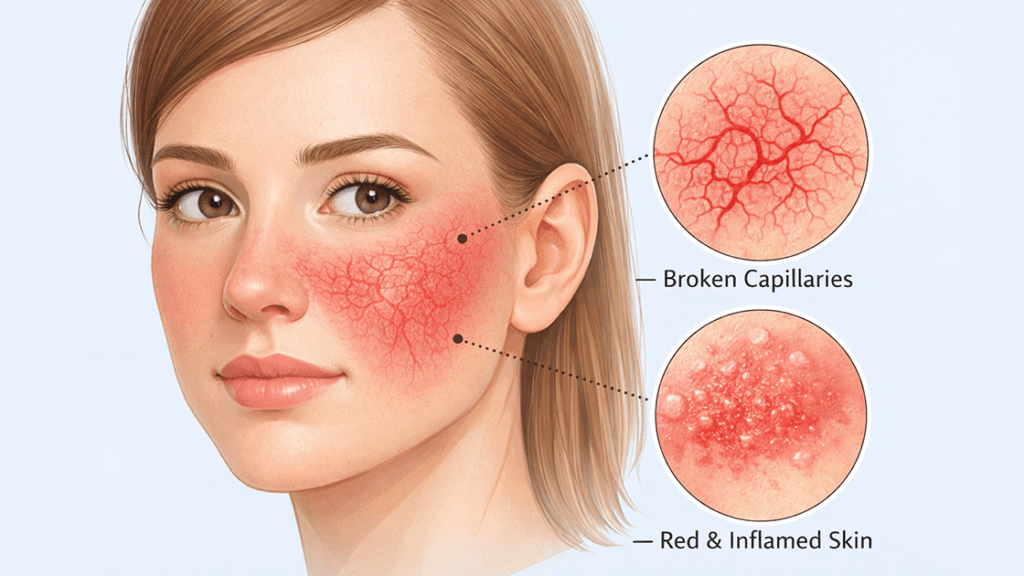
Rosacea is a chronic skin condition characterized by persistent facial redness, telangiectasia (visible small blood vessels), and sometimes papules or pustules. The condition involves hyperreactivity of facial blood vessels, inflammatory signaling, and increased skin sensitivity. External triggers such as UV exposure, heat, spicy foods, and stress can exacerbate symptoms, leading to flare-ups and prolonged redness. Understanding these underlying mechanisms is crucial for targeted intervention.
1.2 Common Challenges and Misconceptions
Many individuals mistake rosacea for acne or simple skin irritation. Over-the-counter creams often fail to address vascular abnormalities, leaving redness untreated. Chronic inflammation can also thicken the skin, particularly in the nose area (rhinophyma), emphasizing the need for therapies that target both inflammation and vascular issues effectively.
2. How Laser Treatments Work for Redness
Laser treatments provide a precise method for reducing facial redness by targeting blood vessels without damaging surrounding tissue.
2.1 Selective Photothermolysis Mechanism
Modern vascular lasers operate on the principle of selective photothermolysis. Light energy is absorbed by hemoglobin in dilated blood vessels, generating heat that selectively coagulates the vessels while sparing adjacent skin. Over time, the body naturally reabsorbs these treated vessels, leading to a noticeable reduction in redness and improved skin tone.
2.2 Types of Lasers Used
Different laser technologies are used depending on the severity and depth of vascular involvement:
- Pulsed Dye Lasers (PDL): Ideal for superficial redness and small vessels.
- Nd:YAG Lasers (1064nm): Penetrates deeper, effective for thicker or larger vessels.
- Intense Pulsed Light (IPL): Broad-spectrum light that targets hemoglobin and melanin, improving overall skin tone and reducing redness.
2.3 Safety and Non-Invasiveness
Laser therapy is generally safe when performed by trained professionals. Most treatments require minimal downtime, and patients experience temporary mild redness or swelling immediately after sessions. With proper technique, laser treatment selectively addresses vascular issues without harming healthy skin.
3. Benefits of Laser Therapy for Facial Redness
Laser treatment offers multiple advantages beyond simple cosmetic improvement.
3.1 Targeted Reduction of Redness
By directly treating dilated capillaries, laser therapy provides significant and lasting reduction in visible facial redness. This targeted approach outperforms topical creams, which cannot address the underlying vascular component of rosacea.
3.2 Decreasing Inflammation and Flare-Ups
Beyond reducing visible redness, laser treatments modulate inflammatory pathways in the skin. By lowering local inflammation, they can reduce the frequency and severity of rosacea flare-ups, enhancing long-term skin health.
3.3 Boosting Confidence and Quality of Life
Persistent facial redness often affects self-esteem and social interactions. By improving skin appearance, laser therapy can help patients feel more comfortable in public and reduce the emotional burden associated with rosacea.
4. Ideal Candidates for Laser Treatment
Not every individual with facial redness requires laser therapy, but certain factors make someone an ideal candidate.
4.1 Individuals with Persistent Redness or Telangiectasia
Patients whose redness does not improve with topical treatments, or who have visible small blood vessels, benefit most from laser therapy. These individuals often experience a more dramatic improvement in skin appearance.
4.2 Patients Seeking Non-Invasive Solutions
Laser therapy is ideal for those looking to avoid systemic medications or invasive procedures. The non-invasive nature and minimal downtime make it suitable for busy lifestyles.
4.3 Those Experiencing Flare-Ups Triggered by Lifestyle Factors
Patients with rosacea exacerbated by sun exposure, heat, or diet may find laser treatments helpful in controlling baseline redness, allowing for better management of trigger-induced flare-ups.
5. What to Expect During Treatment
Understanding the procedure helps patients prepare and ensures better outcomes.
5.1 Pre-Treatment Preparation
Patients are usually advised to avoid sun exposure, tanning, and certain topical medications before laser therapy. Skin may be cleansed, and a topical anesthetic applied if necessary to minimize discomfort.
5.2 Treatment Procedure
Sessions typically last 20–30 minutes, depending on the size of the area. The laser handpiece is applied across the treatment zones, delivering controlled pulses of light to the affected blood vessels. Patients may experience mild stinging or warmth during treatment.
5.3 Post-Treatment Care
After laser therapy, skin may appear slightly red or swollen for 24–48 hours. Applying gentle moisturizers, avoiding heat or friction, and following professional guidance are key to optimal recovery. Multiple sessions may be recommended for maximal results, spaced weeks apart.
FAQ
Q1: Is laser treatment safe for all skin types?
Yes, modern lasers can be adjusted for different skin tones, though darker skin types require careful parameter selection to avoid pigmentation changes.
Q2: Can laser therapy completely cure rosacea?
Laser therapy manages visible redness and vascular issues, but rosacea is a chronic condition. Ongoing skincare and lifestyle management remain important.
Q3: How many sessions are typically required?
Most patients require 3–6 sessions, depending on severity and treatment type.
Q4: Are there any side effects?
Temporary redness, mild swelling, or bruising may occur but usually resolve within a few days.
Q5: Can I combine laser therapy with topical treatments?
Yes, combining laser therapy with topical anti-inflammatory agents or moisturizers often enhances overall results.
결론
Laser treatments provide an effective, non-invasive solution for managing facial redness and rosacea. By selectively targeting dilated blood vessels and reducing inflammation, these therapies improve skin appearance, minimize flare-ups, and enhance quality of life. With proper professional care and complementary skincare, patients can achieve lasting results, regain confidence, and enjoy a calmer, more even complexion.
References
Taub, A. et al. “Laser Treatment of Rosacea: Clinical Outcomes and Safety.” Journal of Cosmetic Dermatology, 2018.
https://doi.org/10.1111/jocd.12345
Alster, T.S., et al. “Pulsed Dye Laser Therapy in the Treatment of Facial Vascular Lesions.” Dermatologic Surgery, 2002.
https://doi.org/10.1046/j.1524-4725.2002.01234.x
Dover, J.S., Arndt, K.A. Vascular Lasers and Light Devices. Elsevier, 2012.
Rhein Lasers. “Facial Redness & Rosacea Treatments.”