Introducción
Stress and emotional fatigue have become major lifestyle factors that influence skin health in modern life. Many individuals notice that during periods of high pressure, their skin becomes dull, rough, uneven, or less radiant—even without major breakouts. This is not only a surface-level issue. Stress affects circulation, collagen production, and cellular repair within the skin layers. As a result, skin quality gradually declines in texture and tone. To address these deeper biological changes, advanced laser-based skin rejuvenation technologies are increasingly used in aesthetic settings. These systems deliver controlled light energy into deeper skin layers, supporting collagen stimulation, circulation improvement, and natural tissue regeneration. Unlike topical skincare alone, they target the internal mechanisms responsible for skin clarity and texture.
1. How Stress Impacts Skin Structure and Function
1.1 Barrier Weakening and Moisture Loss
Under chronic stress, elevated cortisol levels can weaken the skin barrier. This leads to increased water loss and reduced ability to maintain hydration. As a result, skin often feels dry, tight, and less resilient to environmental exposure.
1.2 Reduced Microcirculation and Dull Skin Tone
Stress can reduce blood flow to the skin surface. When microcirculation decreases, oxygen and nutrient delivery to skin cells becomes limited. This contributes to a dull complexion and uneven skin tone, especially in individuals with long-term emotional fatigue.
1.3 Slower Cellular Regeneration
Healthy skin depends on continuous cell turnover. Stress slows down this natural regeneration process, causing dead or damaged skin cells to remain longer on the surface. This leads to rough texture, uneven skin tone, and reduced radiance.
2. Why Skin Texture Changes Under Emotional Fatigue
Emotional fatigue does not only affect appearance temporarily—it influences deeper skin structure over time.
- Collagen production may decrease
- Skin elasticity can weaken
- Repair cycles become less efficient
These changes collectively result in skin that feels rougher, looks less smooth, and loses its natural glow. Because these issues originate in deeper layers, surface skincare alone often provides limited improvement.
3. How Laser Skin Technology Supports Skin Recovery
3.1 Deep Light Energy Penetration
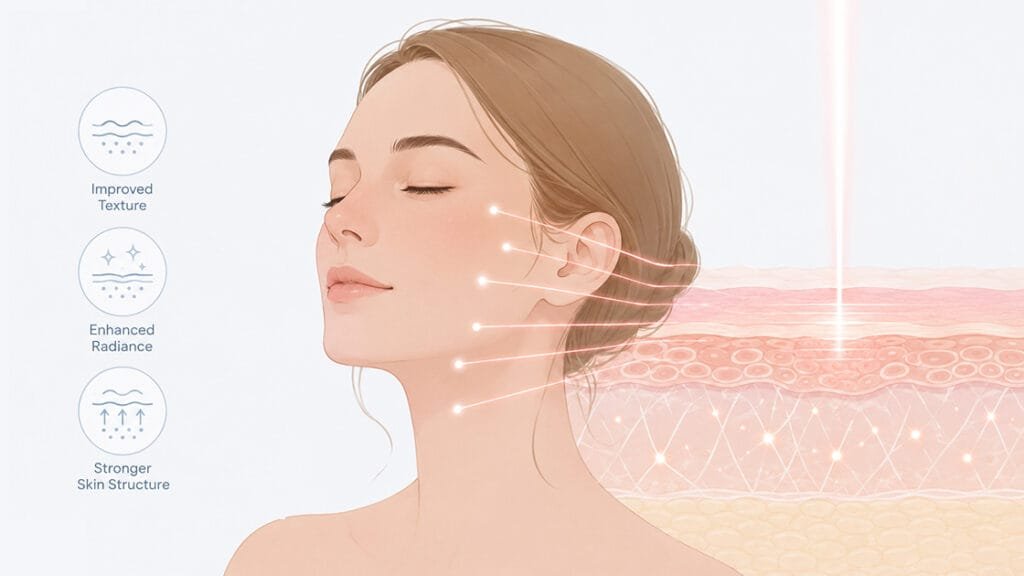
Advanced laser skin systems deliver controlled light energy into the dermis layer. This deep penetration allows interaction with fibroblasts and skin cells responsible for structural repair. Unlike topical treatments, this approach works beneath the surface where collagen and regeneration processes occur.
3.2 Collagen Stimulation and Remodeling
One of the most important effects of laser-based skin therapy is collagen stimulation. Increased collagen activity helps restore firmness, improve elasticity, and smooth uneven texture. Over time, this leads to visibly refined skin quality.
3.3 Circulation and Oxygen Enhancement
Laser energy also supports microcirculation. Improved blood flow enhances oxygen and nutrient delivery to skin cells, which is essential for healthy regeneration. Better circulation often results in brighter, more even-toned skin.
4. Key Benefits for Stress-Related Skin Concerns
4.1 Improvement in Skin Smoothness
Laser skin rejuvenation helps improve uneven texture caused by stress-related cellular slowdown. By supporting cell turnover and tissue repair, skin becomes smoother and more refined over time.
4.2 Restoration of Natural Radiance
As circulation improves and collagen activity increases, skin gradually regains brightness and glow. This radiance reflects healthier internal skin activity rather than temporary surface enhancement.
4.3 Support for Long-Term Skin Resilience
Repeated stress exposure can weaken skin resilience. Laser-based skin therapy helps strengthen deeper skin structure by supporting collagen density and improving tissue organization, making the skin more resistant to future stress-related damage.
5. Why Non-Invasive Laser Skin Rejuvenation Is Growing in Popularity
5.1 Shift Toward Deep Skin Regeneration
Modern aesthetic trends focus on improving skin health from within rather than masking surface issues. Laser-based systems align with this shift by targeting collagen, circulation, and cellular repair directly.
5.2 Minimal Downtime and Gradual Improvement
Non-invasive laser treatments are widely preferred because they require little to no downtime. Improvements occur gradually, making the results appear natural while supporting long-term skin health maintenance.
5.3 Integration Into Preventive Skin Care
Instead of only correcting visible problems, laser skin rejuvenation is increasingly used as a preventive approach. By maintaining collagen activity and supporting continuous regeneration, skin quality can be preserved over time even under lifestyle stress.
FAQ
How does stress affect skin appearance?
Stress can weaken the skin barrier, slow circulation, and reduce cellular regeneration, leading to dull and rough skin.
Can laser skin therapy improve texture issues?
Yes, it may help support collagen production, circulation, and skin renewal processes that improve texture over time.
What makes laser skin treatment different from skincare products?
Laser technology works at deeper skin levels, targeting biological processes rather than only surface hydration.
How long does it take to see results?
Results vary, but improvements in texture and radiance often develop gradually with consistent sessions.
Is this suitable for long-term skin maintenance?
Yes, many people use laser skin rejuvenation as part of ongoing skin maintenance routines.
Conclusión
Stress and emotional fatigue can significantly impact skin clarity and texture by affecting circulation, collagen production, and cellular regeneration. Over time, these internal changes lead to dullness, rough texture, and loss of radiance. Advanced laser-based skin rejuvenation technologies provide a non-invasive way to support deeper skin recovery. By stimulating collagen, improving microcirculation, and enhancing cellular repair, these systems help restore smoother, brighter, and healthier-looking skin. When used consistently, they can play an important role in long-term skin maintenance and resilience against lifestyle stress.
References
Laser Skin Rejuvenation and Advanced Aesthetic Technology
Collagen and Skin Aging Research
https://pubmed.ncbi.nlm.nih.gov
Skin Barrier Function and Stress-Related Skin Changes
https://www.ncbi.nlm.nih.gov/pmc
Laser Therapy and Skin Regeneration Studies
https://pubmed.ncbi.nlm.nih.gov
Skin Circulation and Cellular Repair Research
Emotional Stress and Skin Health Overview
Non-Invasive Skin Rejuvenation and Collagen Remodeling