Introducción
Menopause brings a wave of changes, from hot flashes to sleep disruption. But one of the most frustrating and least discussed shifts happens in the mirror. Your skin may look thinner, drier, and more crepey than it did just a few years ago. Collagen production slows dramatically during this time, and the skin’s natural ability to repair itself declines. You are not imagining it, and you are not alone. Millions of women experience these hormonal skin changes. The good news is that laser rejuvenation offers a non-invasive, drug-free way to restore firmness, improve texture, and bring back a healthy glow without surgery or harsh chemicals.
1. What Happens to Your Skin During Menopause
1.1. The Collagen Crash No One Talks About
Estrogen is essential for keeping skin thick, hydrated, and elastic. When estrogen levels drop during perimenopause and menopause, collagen production falls sharply. In fact, women can lose up to 30 percent of their skin’s collagen in the first five years after menopause. This loss leads to sagging, fine lines, and that papery thinness many women notice on their arms and face. Laser rejuvenation uses controlled light energy to heat deeper layers of the skin, stimulating your body to produce new collagen naturally. Over several months, this helps reverse the visible effects of hormonal aging.
1.2. Dryness, Thinning, and Loss of Elasticity
Without enough estrogen, your skin produces less oil and holds onto less moisture. This explains why menopausal skin often feels tight, itchy, or flaky even with expensive moisturizers. The skin’s barrier function weakens, making it more reactive and slower to heal from minor scratches or irritation. Laser treatments can help by remodeling the outer skin layer and encouraging cellular turnover. Non-ablative lasers, in particular, leave the surface intact while working beneath it, so you get firmer, smoother skin without a long recovery period. Hydration from within still matters, but laser therapy addresses the deeper structural changes.
1.3. Why Hormonal Skin Aging Is Different from Chronological Aging
Chronological aging happens to everyone, but hormonal aging accelerates it. Two women of the same age can have very different skin depending on their estrogen levels. Hormonal aging causes a more abrupt loss of elasticity and a higher risk of melasma (brown patches) and persistent redness. Laser rejuvenation targets these specific concerns. Different wavelengths can be chosen to treat pigmentation, redness, or texture separately. Because menopausal skin is often more sensitive, modern laser devices like those from Rheinlasers offer adjustable settings to match your skin’s changing needs, ensuring safe and effective results without irritation.
2. Why Traditional Anti-Aging Products Fall Short for Menopausal Skin
2.1. Creams and Serums Can Only Do So Much
Over-the-counter creams promise collagen renewal, but their molecules are often too large to penetrate past the skin’s outer layer. Even prescription retinoids have limits. They increase cell turnover but do not reach the deep dermis where collagen loss is most severe. Laser energy bypasses this problem entirely. Light waves pass through the surface without damaging it and deliver heat exactly where it is needed—into the collagen-rich dermis. No cream can match that depth of action. For menopausal women who have tried every serum on the shelf, laser rejuvenation offers a different level of result.
2.2. Hormone Replacement Therapy Isn’t Right for Everyone
Hormone replacement therapy (HRT) can improve skin thickness and hydration, but it is not an option for every woman. Some have medical histories that make HRT risky. Others prefer to avoid systemic hormones due to side effects like bloating or breast tenderness. Laser rejuvenation works independently of your hormone levels. It does not add hormones to your body or interfere with any medications you may be taking. This makes it a safe alternative for women who cannot or choose not to use HRT. You get visible skin improvement without the commitment or risks of systemic therapy.
2.3. Invasive Surgery Carries Downtime and Risks
Facelifts and other surgical procedures tighten skin dramatically, but they require anesthesia, incisions, weeks of recovery, and a significant financial investment. Many menopausal women are busy with careers, families, or caregiving responsibilities and cannot take weeks off. Laser rejuvenation offers a middle ground. Non-ablative treatments have little to no downtime. You can schedule a session during a lunch break and return to work immediately. Results build gradually over several months, so the change looks natural. For women who want improvement without surgery’s disruption, laser therapy is an ideal fit.
3. How Laser Rejuvenation Specifically Helps Menopausal Skin
3.1. Stimulating New Collagen Without Wounding the Surface
Non-ablative and fractional lasers work by creating microscopic zones of heat deep in the skin. These tiny hot spots trigger the body’s natural wound-healing response, which includes producing fresh collagen and elastin. The surface remains intact, so there is no bleeding, no scabbing, and very little redness. Over weeks and months, the new collagen fills in fine lines and tightens loose areas. For menopausal women, this process directly counters the collagen crash caused by estrogen loss. It is like giving your skin a internal lift, all from the outside.
3.2. Improving Texture and Evening Out Pigmentation
Menopausal skin often develops rough patches, enlarged pores, and uneven brown spots from years of sun exposure. Hormonal changes can also trigger melasma—stubborn dark patches on the cheeks and forehead. Laser rejuvenation can be customized to target these pigment issues. Certain wavelengths are absorbed by melanin (the pigment in brown spots) while leaving normal skin alone. The body then clears away the fragmented pigment over several weeks. Texture improves as laser energy smooths the skin’s surface and encourages orderly cell regeneration. The result is clearer, more even-toned skin.
3.3. Reducing Redness and Strengthening the Skin Barrier
Many menopausal women notice persistent redness or broken capillaries on their cheeks and nose. This happens because blood vessels become more fragile with hormonal changes. Vascular lasers can target these visible vessels without harming surrounding skin. The laser light is absorbed by hemoglobin in the blood, causing the vessel to collapse and be reabsorbed by the body. At the same time, gentle laser treatments can strengthen the skin’s barrier function over time, reducing sensitivity and helping your skin hold onto moisture better. Less redness and stronger barrier mean calmer, more comfortable skin.
4. What to Expect from Laser Rejuvenation as a Menopausal Woman
4.1. Customized Treatment Plans for Mature Skin
Menopausal skin is often more sensitive than younger skin, so a one-size-fits-all approach does not work. A good provider will start with lower energy settings and gradually increase as your skin builds tolerance. The number of sessions depends on your goals. For collagen stimulation and tightening, most women need three to six sessions spaced four to six weeks apart. For pigmentation or redness, fewer sessions may be enough. The Rheinlasers family of devices offers multiple wavelengths and handpieces, allowing your provider to tailor each treatment to your specific concerns, whether sagging, spots, or redness.
4.2. What the Treatment Feels Like and Downtime Expectations
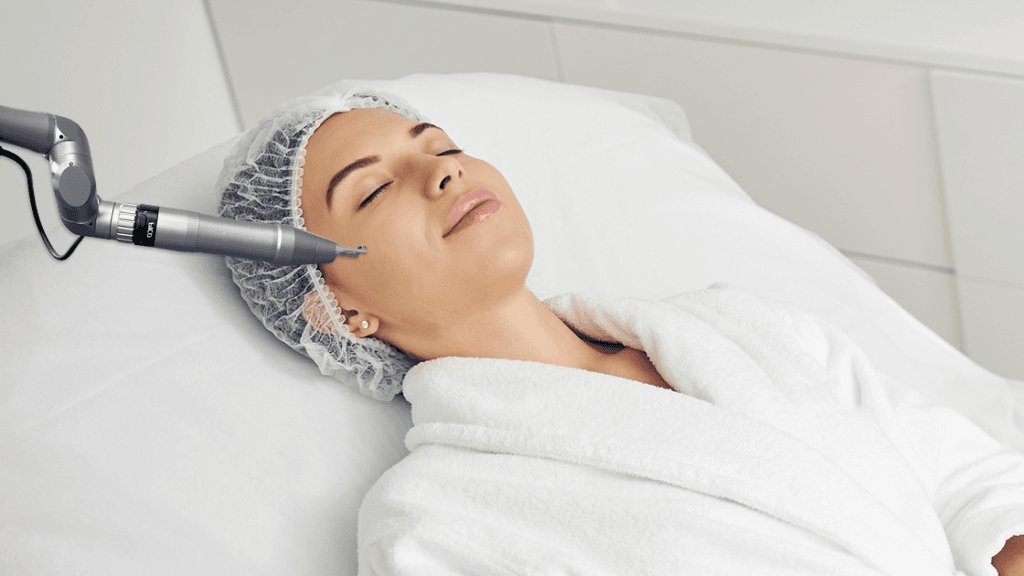
Most laser rejuvenation treatments are described as a series of quick, warm pinches, similar to the snap of a rubber band. A cooling device or chilled gel protects the surface of your skin. The session typically lasts 15 to 30 minutes depending on the area treated. Afterward, you may have mild redness and warmth, similar to a light sunburn, which fades within a few hours to a day. You can wear makeup immediately and return to normal activities. Avoid direct sun exposure and use a broad-spectrum sunscreen. Unlike chemical peels or surgery, there is no peeling, crusting, or social downtime.
4.3. How Soon You See Results and How Long They Last
Collagen remodeling takes time. You may notice smoother texture and a subtle glow within a week or two, but the most dramatic tightening and wrinkle reduction appear after two to three months, when new collagen has fully formed. Results continue to improve for up to six months after your last session. Maintenance treatments once or twice a year can extend the benefits. Because menopause is a permanent change in your hormone levels, your skin will continue to age. However, laser rejuvenation can keep your collagen levels higher than they would be without treatment, slowing the visible signs of hormonal aging significantly.
FAQ
Is laser rejuvenation safe for menopausal skin?
Yes, with proper settings. Mature skin may be more sensitive, so a skilled provider will adjust energy levels accordingly.
How many sessions do I need to see tightening?
Most women need 3 to 6 sessions spaced 4 to 6 weeks apart for noticeable collagen stimulation and firming.
Can I do laser treatments while on hormone replacement therapy?
Absolutely. Laser therapy works independently and is safe to combine with HRT or any other medications.
Will laser help with the crepey skin on my arms?
Yes. Laser rejuvenation can be used on the neck, chest, arms, and hands, not just the face.
Conclusión
Menopause brings enough challenges without adding skin frustration to the list. You do not have to accept sagging, thinning, or dull skin as inevitable. Laser rejuvenation offers a proven, non-invasive way to stimulate your body’s own collagen production, improve texture, and restore a healthy glow. It works with your changing skin, not against it. No surgery, no harsh chemicals, and no long downtime. Whether you choose to combine it with hormone therapy or use it on its own, laser treatments give you back control over how your skin looks and feels. You have earned the confidence to look as vibrant as you feel.
References
Rheinlasers – Aesthetic Laser Treatments Overview:
https://www.rheinlasers.com/treatments
American Academy of Dermatology – Menopause and Skin:
https://www.aad.org/public/diseases/a-z/menopause-skin
Journal of Clinical and Aesthetic Dermatology – Laser Rejuvenation in Perimenopausal and Postmenopausal Women:
https://jcadonline.com/laser-rejuvenation-menopause/
National Institute on Aging – Skin Care and Aging:
https://www.nia.nih.gov/health/skin-care/skin-care-and-aging
Cleveland Clinic – Collagen and Estrogen: What Happens During Menopause:
https://my.clevelandclinic.org/health/diseases/24800-menopause-and-skin