Introduction
Razor bumps and ingrown hairs are common skin concerns for women who regularly shave their legs, underarms, bikini lines, and facial areas. Although shaving offers a quick way to remove unwanted hair, repeated hair removal can irritate the skin, trigger follicular inflammation, and leave behind small red bumps or dark marks. For some women, these problems return after almost every shaving session, making ordinary hair removal increasingly frustrating. Understanding why ingrown hairs develop, how they affect the skin, and how professional laser hair removal works can help women make more informed decisions about long-term hair management and skin comfort.
1. Why Do Women Experience Razor Bumps and Ingrown Hairs?
Razor bumps and ingrown hairs often appear after shaving, waxing, or tweezing. Although these concerns may look similar to ordinary acne, they involve the hair follicles and surrounding skin. Understanding their underlying causes helps explain why certain hair removal habits can lead to repeated irritation.
1.1 What Are Ingrown Hairs?
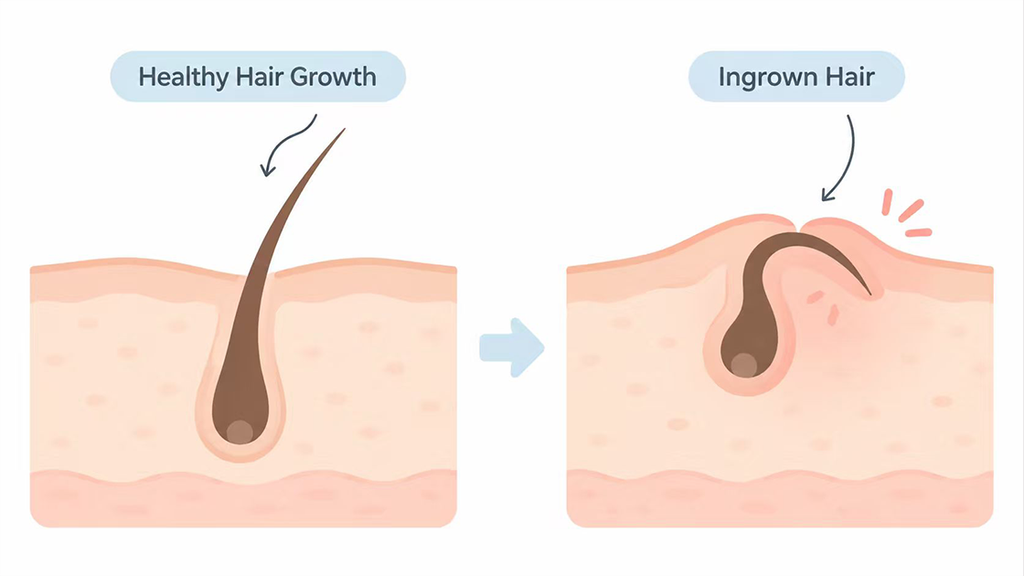
An ingrown hair develops when a growing hair fails to emerge normally from the skin and instead curls backward or grows sideways into the surrounding tissue. This process can trigger a localized inflammatory response, resulting in small, raised bumps around individual hair follicles.
Dermatologists often associate this condition with pseudofolliculitis, a type of follicular inflammation caused by hairs penetrating the surrounding skin. Affected areas may develop redness, itching, tenderness, or small pustules. Some ingrown hairs remain visible beneath the skin, creating a noticeable curved or loop-shaped appearance.
Although ingrown hairs usually occur in recently shaved areas, they can also develop after waxing or tweezing. Repeated irritation may make the affected skin increasingly sensitive.
1.2 How Shaving Contributes to Razor Bumps
Shaving changes the natural shape of the hair tip. When a razor cuts hair very close to the skin, it can leave behind a sharp edge. As the hair begins to grow again, the tip may penetrate the surrounding skin instead of growing outward through the follicular opening.
This problem becomes more noticeable when women shave against the direction of hair growth, stretch the skin during shaving, or repeatedly pass a razor over the same area. These habits can create additional irritation and increase the likelihood of ingrown hairs.
Women with coarse or tightly curled hair may experience this issue more frequently because curved hair follicles and naturally curved hair shafts can encourage hair to re-enter the skin.
1.3 Common Areas Affected by Repeated Hair Removal
Certain body areas experience more friction, frequent shaving, or close contact with clothing. As a result, razor bumps and ingrown hairs often appear in several familiar locations.
- Bikini line: Curved hair growth, shaving, and friction from underwear can contribute to recurring bumps.
- Underarms: Frequent shaving and skin-to-skin friction may aggravate follicular irritation.
- Legs: Repeated shaving can leave small inflamed bumps, particularly around the lower legs and thighs.
- Upper lip and chin: Facial hair removal may trigger visible irritation and unwanted dark marks.
The location and appearance of these bumps can vary depending on hair structure, skin sensitivity, and individual hair removal habits.
2. What Happens When Ingrown Hairs Keep Coming Back?
Occasional ingrown hairs usually cause temporary discomfort. However, repeated inflammation can affect the appearance and texture of the skin. For women who shave frequently, the concern may extend beyond individual bumps to include persistent redness, uneven pigmentation, and visible skin changes.
2.1 Follicular Inflammation and Pseudofolliculitis
Pseudofolliculitis occurs when hair penetrates the surrounding epidermis or remains trapped beneath the skin, triggering inflammation around the hair follicle. The resulting papules may appear red, pink, or skin-colored. Some inflamed follicles also develop pustules containing a small amount of pus.
Unlike acne vulgaris, which involves several factors such as excess sebum, clogged pores, and bacteria, pseudofolliculitis primarily involves the physical interaction between the growing hair and surrounding skin.
Repeated inflammation may also overlap with folliculitis, a broader term describing inflammation of the hair follicles. Although these conditions can look similar, they do not always have the same underlying cause. This distinction matters when evaluating persistent bumps or areas of discomfort.
2.2 Post-Inflammatory Hyperpigmentation and Skin Discoloration
One of the most frustrating effects of recurring ingrown hairs is post-inflammatory hyperpigmentation (PIH). When inflammation activates pigment-producing cells called melanocytes, the affected skin may develop brown, gray-brown, or darker marks.
These marks can remain visible after the original bumps disappear. Areas such as the bikini line, underarms, and legs may gradually develop uneven pigmentation when irritation occurs repeatedly.
Skin tone also influences how these changes appear. People with more melanin-rich skin may notice more persistent dark marks following inflammation. Therefore, managing recurring irritation involves considering both the hair follicles and the surrounding skin.
2.3 Scarring and Long-Term Skin Texture Changes
Repeated follicular inflammation may occasionally contribute to scarring, especially when women frequently scratch, squeeze, or pick at ingrown hairs. Some affected areas develop small depressed scars, while others may form raised scars in individuals prone to hypertrophic scarring or keloids.
Chronic irritation can also make the skin surface appear uneven. Even when active inflammation settles, residual discoloration and textural changes may remain.
These concerns explain why recurring razor bumps deserve more attention than a temporary cosmetic inconvenience, particularly when they affect multiple body areas or interfere with everyday comfort.
3. How Does Laser Hair Removal Relate to Ingrown Hairs?
Traditional hair removal methods focus on removing visible hair above or below the skin surface. Professional laser hair removal works differently by directing light energy toward the pigment within the hair follicle. This approach focuses on reducing future hair growth rather than repeatedly cutting or pulling individual hairs.
3.1 The Science Behind Selective Photothermolysis
Laser hair removal relies on a principle known as selective photothermolysis. During treatment, melanin within the hair shaft and follicular structures absorbs light energy and converts it into heat.
This thermal energy can affect the follicular structures responsible for hair growth, including areas involved in hair regeneration. Over time, repeated treatments can reduce hair density, slow regrowth, and produce finer hair.
The process depends on several factors, including hair pigmentation, hair thickness, skin phototype, wavelength, pulse duration, and energy density.
Because hair follicles do not remain in the same growth phase simultaneously, multiple treatment sessions are generally necessary. Laser energy works most effectively when suitable follicles contain sufficient pigment during their active growth phase, known as anagen.
3.2 The Role of 810nm Diode Laser Technology
An 810nm diode laser uses near-infrared light that targets melanin within pigmented hair follicles. This wavelength offers a balance between melanin absorption and penetration into deeper follicular structures, making it a widely used option for professional hair reduction.
Modern diode laser systems can incorporate adjustable energy density, pulse frequency, and spot configurations to accommodate different treatment areas and hair characteristics.
Energy density, measured in joules per square centimeter (J/cm²), describes the amount of energy delivered across a specific treatment area. Pulse frequency, measured in hertz (Hz), indicates how frequently the system delivers pulses.
These adjustable parameters allow trained practitioners to consider hair thickness, treatment location, and individual skin responses when determining appropriate treatment settings.
3.3 Why Cooling Technology Matters During Treatment
Thermal energy plays an essential role in laser hair reduction, but the surrounding epidermis also requires protection during treatment. Excessive heating of the skin surface can contribute to discomfort, redness, and unwanted thermal injury.
Integrated cooling technology helps manage surface temperature and improve treatment comfort. Water-cooling systems can support heat management within professional laser equipment, while appropriate contact or other cooling methods may provide additional epidermal protection.
The relationship between laser energy delivery and cooling is particularly important in areas with sensitive skin, such as the bikini line and underarms.
A suitable balance between follicular heating and epidermal protection helps support a more controlled treatment experience.
4. Is Laser Hair Removal Suitable for Women With Recurring Razor Bumps?
Laser hair removal may be worth considering when recurring ingrown hairs interfere with everyday grooming or contribute to persistent follicular irritation. However, individual suitability depends on hair characteristics, skin condition, and the underlying cause of the bumps.
4.1 Understanding Skin Tone and Hair Characteristics
Laser hair reduction depends partly on the contrast between hair pigment and surrounding skin. Darker, coarser hair generally contains more melanin and can respond more readily to laser energy than very light, gray, white, or red hair.
Skin phototype also matters because epidermal melanin can absorb some of the delivered energy. Practitioners must consider this factor when selecting wavelengths and treatment parameters.
Although 810nm diode technology is widely used for hair reduction, it does not automatically suit every skin type or treatment area. For individuals with darker skin phototypes, wavelength selection, pulse duration, energy settings, and cooling become especially important. Long-pulsed 1064nm Nd technology may offer a more suitable option in certain cases because its lower melanin absorption can help reduce epidermal heating.
A professional assessment helps determine which technology and treatment approach best match an individual’s characteristics.
4.2 Areas That May Benefit From Reduced Hair Growth
Women who experience recurring razor bumps often notice the problem in areas where they remove hair frequently. Professional laser hair reduction may help reduce the amount of hair growing in these locations.
Common treatment areas include:
- Bikini line: Reduced hair density may help limit repeated shaving-related irritation.
- Underarms: Less frequent hair removal may reduce exposure to repeated razor friction.
- Lower legs: Gradual hair reduction may support easier long-term hair management.
- Chin and upper lip: Targeted hair reduction may help women who experience recurring irritation from facial hair removal.
Treatment suitability varies across body areas because hair density, follicular depth, and hormonal influences differ.
4.3 Important Considerations Before Professional Treatment
Active skin inflammation, open wounds, suspected infections, and unexplained skin lesions require appropriate evaluation before laser exposure. Treating irritated skin without understanding its underlying condition may increase the risk of unwanted reactions.
Women should also discuss medications, recent tanning, previous pigment changes, and any history of abnormal scarring during their consultation.
Possible side effects include temporary redness, swelling around hair follicles, discomfort, blistering, burns, and changes in skin pigmentation. Appropriate treatment parameters and professional experience help manage these risks, but no procedure eliminates them entirely.
5. What Should Women Expect From Long-Term Hair Reduction?
Laser hair removal focuses on gradual changes in hair growth rather than immediate, complete hair elimination. Understanding realistic expectations can help women evaluate whether this approach aligns with their skin concerns and personal grooming preferences.
5.1 Gradual Changes in Hair Density and Regrowth
Hair reduction usually develops over multiple sessions because follicles respond differently depending on their growth cycle. Following suitable treatments, women may notice slower regrowth, reduced hair density, and finer remaining hairs.
However, results vary with hair color, thickness, treatment location, hormonal factors, and individual biological responses.
Facial hair may require additional attention because hormonal influences can stimulate new hair growth over time. Maintenance sessions may also be necessary when some follicles become active again.
For women experiencing recurring ingrown hairs, reduced hair density may lessen the number of hairs that can curl back into the skin. Nevertheless, existing pigmentation, scars, or unrelated inflammatory conditions may require separate professional evaluation.
5.2 Supporting Overall Skin Comfort and Appearance
Hair reduction is only one aspect of managing skin affected by repeated shaving. Skin sensitivity, friction, moisture, and existing pigmentation can all influence how an area looks and feels.
A consistent approach to skin care can help support the skin barrier and reduce unnecessary irritation. Gentle cleansing, suitable moisturization, and appropriate sun protection remain important considerations, particularly for areas prone to post-inflammatory hyperpigmentation.
Women should also understand that laser hair reduction does not replace medical care for bacterial infections, chronic folliculitis, or other dermatological conditions. A qualified professional can help distinguish hair-related irritation from conditions that require separate attention.
FAQ
1. Are ingrown hairs the same as razor bumps?
Not exactly. Ingrown hairs describe hairs growing back into the skin, while razor bumps commonly refer to the inflammatory bumps associated with this process. The terms often overlap.
2. Can laser hair removal help reduce ingrown hairs?
Yes. By reducing hair density and regrowth, laser hair removal may help decrease the occurrence of ingrown hairs associated with shaving.
3. How many laser hair removal sessions are usually needed?
Most individuals need multiple sessions because hair follicles respond differently during their growth cycles. The number varies depending on the treatment area, hair characteristics, and individual response.
4. Does laser hair removal work on every hair color?
No. Laser energy primarily targets melanin, so dark, coarse hair generally responds better than white, gray, blonde, or red hair.
5. Can laser hair removal be used on the bikini line?
Yes. The bikini line is a common treatment area. However, skin sensitivity, hair characteristics, and individual suitability should be assessed beforehand.
6. Can darker skin tones undergo laser hair removal?
Yes, but wavelength selection and treatment settings require careful consideration. A practitioner experienced with different skin phototypes can help determine an appropriate approach.
7. Will laser hair removal eliminate existing dark marks?
Not necessarily. Laser hair reduction targets hair follicles rather than all forms of pigmentation. Existing post-inflammatory hyperpigmentation may require a separate assessment.
8. Is laser hair removal a permanent solution for ingrown hairs?
It can provide long-term hair reduction, which may help limit recurring ingrown hairs. However, it cannot guarantee permanent elimination of all hair or prevent every future skin bump.
Conclusion
Recurring razor bumps and ingrown hairs can affect more than the appearance of the skin. Repeated follicular inflammation may contribute to discomfort, post-inflammatory hyperpigmentation, and long-term textural changes, particularly in areas exposed to frequent shaving. Professional laser hair removal offers an alternative approach by targeting follicular melanin and gradually reducing unwanted hair growth. With technologies such as 810nm diode lasers, adjustable energy delivery, and integrated cooling systems, practitioners can tailor treatment parameters to individual hair and skin characteristics. Although laser hair reduction cannot address every cause of skin irritation or guarantee complete hair removal, it may help women manage recurring shaving-related concerns and maintain a more comfortable hair removal routine.
References
- Mayo Clinic – Ingrown Hair: Symptoms and Causes
https://www.mayoclinic.org/diseases-conditions/ingrown-hair/symptoms-causes/syc-20373893
- American Academy of Dermatology – Laser Hair Removal: Overview
https://www.aad.org/public/cosmetic/hair-removal/laser-hair-removal-overview
- DermNet – Pseudofolliculitis Barbae (Razor Bumps): Images and Management
https://dermnetnz.org/topics/pseudofolliculitis-barbae
- DermNet – Laser Therapy in Skin of Colour
https://dermnetnz.org/topics/laser-therapy-in-skin-of-colour
- Review of Treatments for Pseudofolliculitis Barbae – Clinical and Experimental Dermatology