はじめに
Healthy, hydrated, and radiant skin is a key indicator of overall skin wellness. However, aging, environmental stressors, and lifestyle factors can compromise the skin’s water content, elasticity, and natural radiance. Laser therapy has emerged as a scientifically backed, non-invasive solution to enhance skin hydration and glow. Through photobiomodulation, laser therapy stimulates cellular metabolism, improves microcirculation, and enhances lymphatic flow, leading to improved skin texture, water retention, and overall radiance. This article explores the science behind laser-induced skin hydration, clinical protocols, expected outcomes, and safety considerations, offering a comprehensive guide for professionals and patients seeking effective non-invasive skin rejuvenation.
1. The Science Behind Laser Therapy
1.1 Understanding Photobiomodulation
Photobiomodulation (PBM) refers to the process by which low-level lasers or LED light penetrate skin tissues, stimulating cellular mitochondria to increase ATP production. This surge in cellular energy enhances fibroblast activity, promotes collagen and elastin synthesis, and accelerates tissue repair. PBM also modulates inflammatory pathways, reduces oxidative stress, and promotes vascular function, forming the foundation for laser-based skin rejuvenation.
1.2 Laser Interaction with Skin Structures
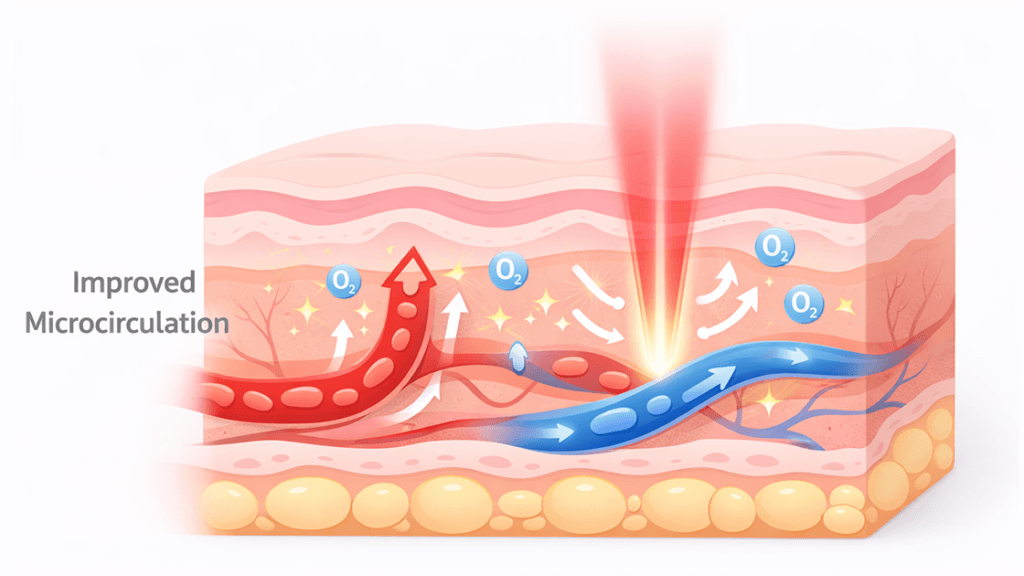
Laser energy penetrates beyond the epidermis into the dermis, targeting fibroblasts, microvasculature, and extracellular matrix components. By improving microcirculation and oxygen delivery, laser therapy enhances nutrient transport while facilitating the removal of metabolic waste. Unlike topical treatments, laser therapy acts on deeper tissue layers, offering sustained benefits for hydration, elasticity, and skin glow.
2. Mechanisms of Laser-Induced Skin Hydration
2.1 Enhancement of Microcirculation
Laser therapy stimulates local vasodilation in dermal capillaries, increasing blood flow and oxygen supply to skin cells. Enhanced microcirculation delivers essential nutrients and water to keratinocytes and fibroblasts, supporting natural hydration and improving overall skin radiance. This vascular stimulation also promotes detoxification, reducing dullness and enhancing uniformity of skin tone.
2.2 Cellular Water Retention
Through PBM, laser therapy promotes fibroblast and keratinocyte function, increasing production of natural moisturizing factors (NMFs) such as hyaluronic acid. These molecules improve the skin’s water-binding capacity, prevent transepidermal water loss, and enhance skin softness and elasticity. Consequently, treated skin appears plumper, smoother, and visibly hydrated.
2.3 Collagen and Elastin Stimulation
Laser exposure triggers fibroblast-mediated collagen synthesis and elastin fiber remodeling. A denser, more organized extracellular matrix supports skin structure, reduces fine lines, and helps lock in moisture. Strengthened collagen networks also contribute to long-term skin resilience and radiance, making laser therapy a powerful tool for both hydration and anti-aging.
3. Clinical Applications and Treatment Protocols
3.1 Ideal Candidates
Laser therapy for skin hydration and glow is suitable for:
- Individuals with dry or dull skin
- Mild aging signs such as fine lines and loss of elasticity
- Those seeking non-invasive, long-term skin rejuvenation
3.2 Treatment Scheduling
Typical sessions last 15–30 minutes, 1–2 times per week, over 4–6 weeks. Treatment parameters, including wavelength, intensity, and duration, are tailored to the patient’s skin condition to maximize efficacy and safety.
3.3 Combining with Skincare Regimens
Laser therapy can be synergistically combined with topical agents such as hyaluronic acid serums, antioxidants, and gentle moisturizers. Integrating this therapy with supportive skincare enhances water retention, protects against oxidative stress, and optimizes treatment outcomes.
4. Safety and Considerations
4.1 レーザー治療 安全プロファイル
Low-level laser therapy is generally safe when administered by trained professionals. Common temporary reactions may include mild erythema or warmth at the treatment site. Eye protection is essential, and individuals with photosensitive conditions, pregnancy, or certain dermatological disorders should consult a qualified clinician before treatment.
4.2 Pre- and Post-Treatment Care
Prior to treatment, patients should avoid photosensitizing skincare products. After therapy, using hydrating and antioxidant-rich products enhances results and mitigates irritation. Sun protection is critical to maintain treatment benefits and prevent UV-induced damage.
5. Long-Term Benefits for Skin Health
5.1 Enhanced Skin Hydration and Radiance
Repeated laser therapy sessions improve dermal microcirculation, cellular energy, and extracellular matrix function. Enhanced nutrient and water delivery results in sustained hydration, plumper skin, and a natural glow that extends beyond the face to the neck, hands, and décolleté.
5.2 Anti-Aging and Skin Resilience
By stimulating collagen and elastin production and improving water retention, this therapy helps reduce the formation of fine lines and wrinkles. It also strengthens skin resilience against environmental stressors, making it a valuable adjunct to routine skincare and long-term anti-aging strategies.
Frequently Asked Questions (FAQ)
Does laser therapy damage the skin?
Low-level laser therapy is non-invasive and safe. Mild redness or warmth is normal and resolves quickly.
When will results be visible?
Patients may notice increased hydration and glow after 2–3 sessions, with more significant improvements after completing a 4–6 week course.
Can laser therapy be combined with skincare products?
Yes, particularly hydrating, antioxidant, or hyaluronic acid-based products enhance treatment effects.
Is laser therapy suitable for sensitive skin?
Yes, with adjusted intensity and duration. Severe photosensitivity or active dermatologic conditions require professional consultation.
結論
Laser therapy enhances skin hydration and radiance by stimulating cellular metabolism, improving microcirculation, and promoting collagen and elastin remodeling. Its non-invasive nature, combined with predictable and long-lasting results, makes it an effective strategy for skin rejuvenation and anti-aging. When integrated with supportive skincare and performed under professional guidance, this therapy offers a scientifically grounded approach to healthier, more radiant skin.
References
Hamblin, M. R. Mechanisms and applications of photobiomodulation in skin therapy. Photochem Photobiol Sci.
https://pubmed.ncbi.nlm.nih.gov/23410848/
Avci, P., Gupta, A., Sadasivam, M., et al. Low-level laser (light) therapy (LLLT) for skin: stimulating, repairing, and rejuvenating. Semin Cutan Med Surg.
https://pubmed.ncbi.nlm.nih.gov/23040840/
Chung, H., Dai, T., Sharma, S. K., et al. The nuts and bolts of low-level laser (light) therapy. Ann Biomed Eng.
https://pubmed.ncbi.nlm.nih.gov/21487950/
Bjordal, J. M., Johnson, M. I., Iversen, V., et al. Low-level laser therapy in acute pain: a systematic review. Pain.