はじめに
Hormonal acne is a persistent and often emotionally frustrating skin condition that affects adolescents and adults alike, particularly adult women. Unlike typical acne caused primarily by excess oil or surface bacteria, hormonal acne is driven by internal hormonal fluctuations that stimulate inflammation deep within the skin. These breakouts are often cyclical, painful, and resistant to conventional topical treatments.
In recent years, low-level laser therapy (LLLT) has gained attention as a non-invasive, drug-free supportive approach for managing hormonal acne. Rather than suppressing hormones directly, LLLT works by modulating inflammation, targeting acne-related bacteria, and supporting skin repair processes. This article explores how low-level laser therapy fits into hormonal acne management, its biological mechanisms, clinical applications, and benefits for long-term skin stability.
1. Understanding Hormonal Acne
Before examining how laser therapy may help, it is important to understand what distinguishes hormonal acne from other forms of acne.
1.1 What Is Hormonal Acne
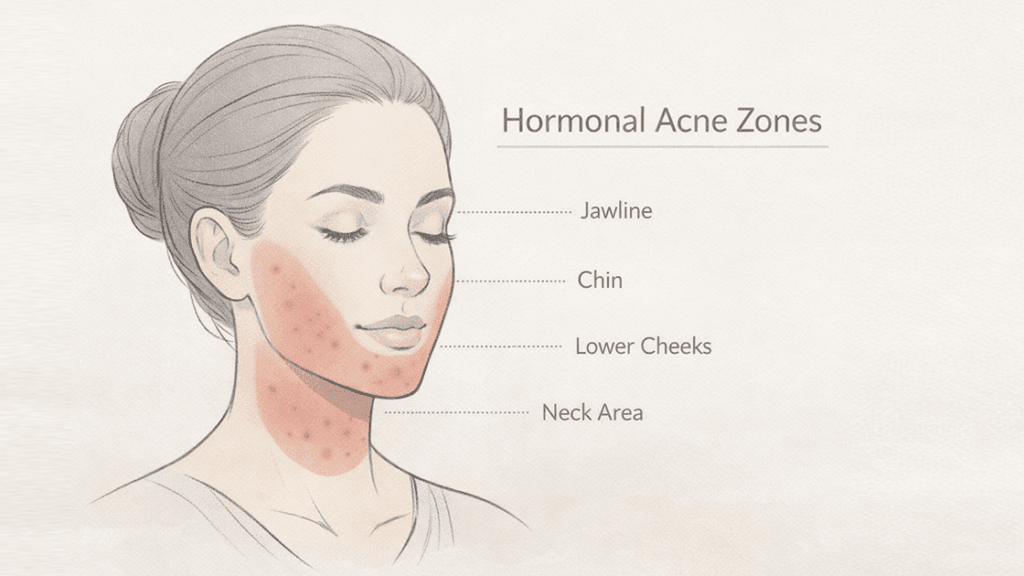
Hormonal acne refers to breakouts that are closely associated with fluctuations in androgen hormones, such as testosterone. These hormones stimulate sebaceous glands to produce more sebum, increasing the likelihood of clogged pores and inflammation. Hormonal acne commonly appears along the jawline, chin, lower cheeks, and neck, areas rich in hormone-sensitive sebaceous glands.
This type of acne often worsens during puberty, menstrual cycles, pregnancy, or periods of high stress. In adults, especially women, hormonal acne can persist well into the 30s, 40s, and beyond, even in individuals with otherwise healthy skincare routines.
1.2 Why Hormonal Acne Is Hard to Treat
Hormonal acne is challenging because its root cause lies beneath the skin’s surface. While topical treatments can reduce bacteria and surface inflammation, they do not address the hormonal signaling that drives sebaceous activity. Oral medications, such as hormonal therapy or antibiotics, may be effective but often come with side effects and are not suitable for long-term use.
Additionally, hormonal acne tends to be inflammatory, producing deep, tender lesions that heal slowly and increase the risk of post-inflammatory erythema or hyperpigmentation. These factors make long-term, gentle management strategies particularly important.
2. What Is Low-Level Laser Therapy (LLLT)
Low-level laser therapy offers a fundamentally different approach compared to traditional acne treatments.
2.1 Principles of Low-Level Laser Therapy
Low-level laser therapy, also known as photobiomodulation, uses specific wavelengths of light delivered at low energy levels. Unlike ablative or high-energy aesthetic lasers, LLLT does not generate heat or cause tissue damage. Instead, it stimulates cellular activity at the mitochondrial level.
When skin cells absorb laser light, mitochondrial activity increases, leading to enhanced ATP production. This process supports cellular repair, reduces oxidative stress, and modulates inflammatory pathways. Because the energy levels are low, LLLT is considered safe for repeated use and suitable for sensitive or acne-prone skin.
2.2 Safety Profile of LLLT in Dermatology
LLLT has been widely studied in dermatology for wound healing, inflammation control, and acne management. Its non-invasive nature means there is no downtime, no skin peeling, and minimal risk of adverse reactions. For patients who cannot tolerate aggressive treatments or systemic medications, LLLT provides a gentle alternative that can be integrated into long-term skincare plans.
3. How LLLT Supports Hormonal Acne Management
Although low-level laser therapy does not alter hormone levels directly, it supports hormonal acne management through several complementary mechanisms.
3.1 Anti-Inflammatory Effects
Inflammation plays a central role in hormonal acne, contributing to redness, swelling, and pain. LLLT helps downregulate pro-inflammatory cytokines while promoting anti-inflammatory mediators within the skin. This reduces the intensity of active breakouts and helps calm inflamed lesions.
By minimizing chronic inflammation, laser therapy also lowers the risk of long-lasting redness and scarring, which are common concerns for individuals with hormonal acne.
3.2 Targeting Acne-Causing Bacteria
Cutibacterium acnes (formerly Propionibacterium acnes) is a key bacterial species involved in acne development. Certain wavelengths used in low-level laser therapy can reduce bacterial activity within hair follicles, creating a less favorable environment for acne formation.
Rather than eliminating bacteria entirely, LLLT helps rebalance the skin’s microbiome, which is crucial for maintaining healthy skin over time. This makes it especially valuable for patients experiencing recurring hormonal breakouts.
3.3 Supporting Skin Healing and Barrier Function
Hormonal acne lesions often heal slowly and leave behind redness or discoloration. LLLT accelerates tissue repair by stimulating fibroblast activity and collagen production. This promotes faster healing and strengthens the skin barrier, improving overall resilience.
A healthier skin barrier is better equipped to withstand hormonal fluctuations, environmental stressors, and irritation from topical products, making laser therapy an effective supportive tool in comprehensive acne care.
4. Clinical Application in Aesthetic and Medical Settings
Low-level laser therapy is increasingly used in dermatology clinics and medical spas as part of a multi-modal acne management approach.
4.1 Treatment Protocols for Hormonal Acne
Treatment protocols vary depending on skin condition and severity, but sessions are typically short, lasting 10–20 minutes. Patients may undergo treatments once or twice per week during an initial phase, followed by maintenance sessions.
Because LLLT is non-invasive, it can be safely repeated over extended periods, making it suitable for chronic acne management rather than short-term flare control alone.
4.2 Combination with Other Acne Treatments
LLLT is most effective when combined with complementary strategies, such as gentle topical treatments, lifestyle adjustments, and professional skincare guidance. It can be used alongside prescription therapies or as a maintenance option after discontinuing medications.
For patients seeking non-drug solutions, laser therapy offers a way to support skin stability without increasing the burden of systemic treatment.
5. Benefits of LLLT for Patients with Hormonal Acne
Low-level laser therapy offers several advantages that make it particularly appealing for hormonal acne patients.
5.1 Non-Drug, Non-Invasive Support
LLLT does not involve hormones, antibiotics, or retinoids, reducing the risk of systemic side effects. This makes it suitable for patients who are pregnant, medication-sensitive, or simply prefer non-pharmaceutical options.
5.2 Suitable for Long-Term Acne Maintenance
Because hormonal acne tends to recur, long-term management is essential. LLLT supports skin health over time, helping reduce flare-ups and maintain clearer skin between hormonal cycles.
5.3 Improved Patient Comfort and Compliance
Treatments are painless, require no recovery time, and fit easily into busy schedules. This high level of comfort improves patient compliance, which is critical for long-term results.
FAQ
Is low-level laser therapy effective for hormonal acne?
LLLT can significantly support hormonal acne management by reducing inflammation, bacterial activity, and healing time, though results vary by individual.
Can LLLT replace prescription acne treatments?
It is best viewed as a complementary therapy rather than a complete replacement, especially for moderate to severe cases.
How long does it take to see results?
Some patients notice improvement within a few weeks, while optimal results typically appear after multiple sessions.
Is LLLT safe for adult female acne?
Yes, it is considered safe and well-tolerated, particularly for adults seeking long-term, gentle solutions.
Can it help with acne flare-ups during menstrual cycles?
Regular treatments may help reduce the severity and duration of hormonally driven flare-ups.
結論
Low-level laser therapy represents a science-based, non-invasive approach to supporting hormonal acne management. By calming inflammation, reducing acne-related bacteria, and enhancing skin repair, LLLT addresses key contributors to persistent breakouts without interfering with hormonal balance.
For individuals seeking long-term stability rather than aggressive short-term solutions, low-level laser therapy offers a valuable addition to modern aesthetic and dermatologic care. When integrated into a comprehensive treatment plan, it can help patients achieve clearer, healthier skin with greater comfort and confidence.
References
Avci P, et al. Low-level laser (light) therapy (LLLT) in skin: stimulating, healing, restoring.
https://pubmed.ncbi.nlm.nih.gov/23641967
Gold MH. Photobiomodulation for acne vulgaris.
https://pubmed.ncbi.nlm.nih.gov/29489386
Hamblin MR. Mechanisms and applications of the anti-inflammatory effects of photobiomodulation.
https://pubmed.ncbi.nlm.nih.gov/26888687
Szymańska A et al. The Anti-Acne Effect of Near-Infrared Low-Level Laser Therapy.
https://pubmed.ncbi.nlm.nih.gov/34471368
Aziz-Jalali MH et al. Comparison of Red and Infrared Low-Level Laser Therapy in the Treatment of Acne Vulgaris.