
Introduction
Melasma is a chronic skin condition marked by dark, irregular patches of pigmentation, most commonly on the face. While often associated with hormonal changes or sun exposure in everyday life, this condition takes on unique challenges for female athletes, especially those who train outdoors for extended periods. In active populations, repeated ultraviolet (UV) exposure, heat stress, and sweat can perpetuate pigmentation and reduce the effectiveness of traditional prevention measures like sunscreen and topical creams.
Although broad-spectrum sunscreen is foundational in melasma prevention, in many athletic cases it is insufficient owing to the intensity of sun exposure, frequency of reapplication challenges, and physiologic responses to exercise. This blog explores why melasma is especially problematic for female athletes, why routine strategies often fall short, and how advanced therapeutic approaches — particularly laser-based interventions — provide a scientifically grounded and clinically validated treatment pathway. We will also address key questions and provide evidence-based recommendations for safe, effective management.
1. Understanding Melasma in Active Women
Melasma is more than simple “sunspots.” For female athletes, it represents a multifactorial dermatologic problem that combines environmental exposure with intrinsic skin biology.
1.1 What Is Melasma and Why It’s Different from Regular Sunspots
Melasma is a form of hyperpigmentation involving increased melanin production and deposition in the epidermis and sometimes the dermis. Unlike regular sunspots (solar lentigines), which are usually distinct, isolated patches caused solely by UV exposure, melasma exhibits irregular, symmetric pigmentation often shaped in a mask-like distribution across the cheeks, forehead, and upper lip. Dermatologists classify melasma into epidermal, dermal, and mixed types. Epidermal melasma typically responds better to treatment due to involvement of melanin in the superficial skin layer, while dermal and mixed types have deeper pigment deposits, making treatment more complex.
Biochemically, melasma is associated with increased activity of melanocytes — the pigment-producing cells — and is influenced by hormonal factors (e.g., estrogen and progesterone), genetic predisposition, and inflammatory processes. This combination differentiates melasma from typical sunspots and underscores why it often requires more than basic UV protection.
1.2 Why Female Athletes Are at Higher Risk
Female athletes, and especially those engaged in outdoor training like running, cycling, rowing, and triathlon, experience a unique set of risk factors for melasma. Prolonged exposure to ultraviolet radiation, particularly UVA and UVB wavelengths, stimulates melanocyte activity and increases melanin synthesis. Exercise also raises core body temperature, which can increase blood flow to the skin and promote inflammatory mediators that further trigger melanin production.
Hormonal fluctuations induced by intense training cycles, menstrual irregularities common among athletes, and use of certain hormonal contraceptives can also elevate risk. Additionally, sweat dilutes and removes sunscreen over time, meaning reapplication is often impractical during workouts. These factors contribute to the persistence and recurrence of melasma in active women, making it a challenging and persistent concern.
2. Why Traditional Treatments Often Fall Short
Standard melasma management focuses on prevention and topical therapy, but in athletic populations these approaches frequently produce limited results.
2.1 Limitations of Topical Creams
Topical agents such as hydroquinone, retinoids, and azelaic acid are commonly prescribed to reduce pigmentation by inhibiting melanin production or promoting epidermal turnover. While these agents can be effective in controlled clinical contexts, they have limitations for athletes. First, they often require consistent, daily application over many weeks or months to achieve visible improvement — a regimen that active women may find difficult to maintain amidst training schedules.
Moreover, some topical therapies can cause irritation, photosensitivity, or dermatitis, which is counterproductive for athletes whose skin is already subjected to friction, sweat, and environmental stressors. These side effects can lead to discontinuation or poor adherence, reducing treatment efficacy.
2.2 Sunscreen Alone Is Not a Cure
Broad-spectrum sunscreen is essential in preventing UV-induced melanin synthesis, but it cannot reverse established pigmentary changes. Sunscreens act as a protective barrier, shielding skin from UVA and UVB rays that trigger melanin overproduction. However, in the context of athletic training, factors like sweat, water exposure, and physical abrasion from clothing quickly reduce sunscreen effectiveness.
Even when athletes use high SPF products, the action of persistent UV exposure during long training sessions overwhelms the ability of sunscreen alone to prevent melasma progression. Thus, while sunscreen remains a cornerstone of prevention, additional interventional approaches are necessary for meaningful treatment.
3. Advanced Laser-Based Approaches to Melasma
When traditional methods are insufficient, advanced in-office therapies — particularly laser and light devices — provide a scientifically supported route to treat melasma with precision.
3.1 How Laser Technology Targets Pigmentation
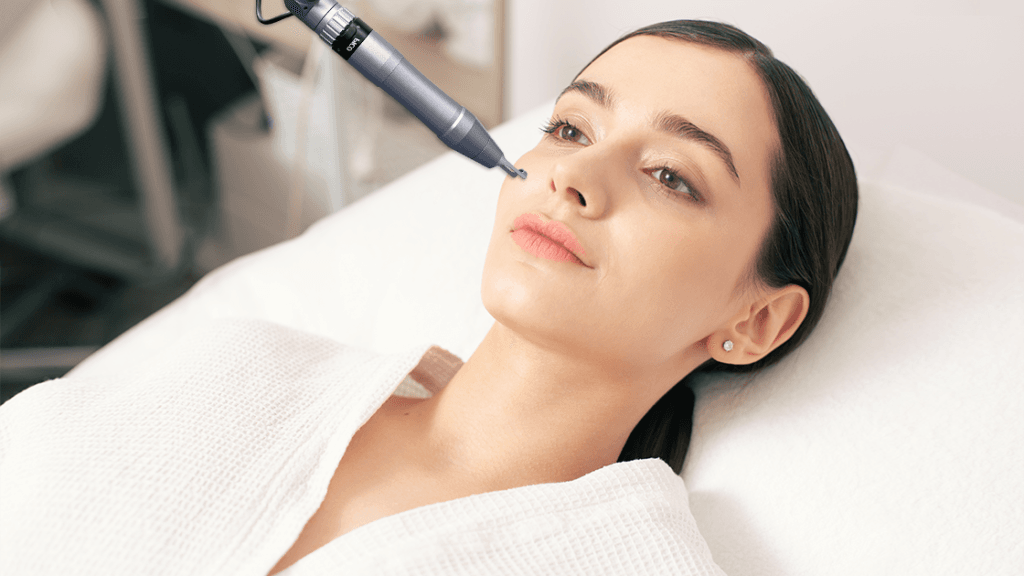
Laser treatments utilize targeted light energy to selectively interact with melanin pigments in the skin. Devices operating at specific wavelengths are absorbed by melanin granules, causing them to break apart into smaller particles through a process known as selective photothermolysis. Once fragmented, the body’s immune system can more efficiently clear these pigment residues through natural metabolic pathways.
This targeted action allows deep pigmentation to be addressed without extensive damage to surrounding tissues. The degree of penetration and selectivity depends on the wavelength, pulse duration, and energy settings chosen by the clinician. By choosing appropriate parameters, laser therapy minimizes adverse effects while maximizing pigment reduction, making it particularly suitable for stubborn melasma that does not respond to topical approaches.
3.2 Benefits for Athletes with Busy Training Schedules
Laser-based therapy is inherently well-suited to athletic lifestyles. Unlike lengthy topical regimens that require daily commitment, laser sessions are typically conducted in a clinical setting at prescribed intervals — often every few weeks — with each session lasting only minutes. This format fits more naturally into the training schedules of female athletes.
Furthermore, because the treatment targets pigment directly and does not rely on behavior change (like daily cream application), athletes benefit from predictable outcomes. Many report noticeable improvement after several sessions, with cumulative benefits over time. Short recovery timelines also mean minimal disruption to training. For many active women, this blend of effectiveness and practicality makes laser therapy a compelling choice.
3.3 Safety Considerations for Active Skin
Any advanced dermatologic intervention requires professional assessment, and lasers are no exception. Providers must evaluate skin type, depth of pigmentation, and history of UV exposure to determine the most appropriate settings. Athletes with erythematous or heat-inflamed skin may require modified parameters to avoid exacerbating irritation.
Post-treatment care is equally important. Immediately after laser sessions, skin may exhibit temporary redness, dryness, or sensitivity. Athletes are advised to avoid intense solar exposure, use high-protection sunscreen, and follow clinician-recommended moisturizing protocols to support healing and reduce the risk of rebound pigmentation. Monitoring and adjusting training exposure to sunlight during the recovery period helps optimize treatment outcomes.
4. What Female Athletes Should Expect from Treatment
Understanding the treatment journey helps set realistic expectations and improve adherence.
4.1 Treatment Timeline and Sessions
Melasma treatment using laser technologies is rarely a single-session solution. Melanin deposits exist at varying skin depths, and complete clearance is typically a gradual process. Most athletes will attend a series of sessions spaced weeks apart, with cumulative improvements often visible after several appointments.
The timeline varies based on pigmentation severity, skin type, and adherence to post-treatment care. Clinicians generally monitor response and adjust treatment plans accordingly. Patience and consistency are vital — significant pigment reduction can take months, but the eventual payoff is often substantial and long-lasting.
4.2 Recovery and Training Adjustments
After laser sessions, skin requires an immediate recovery period that may entail mild redness, dryness, or brief sensitivity to touch. Most athletes can return to light training within a day or two, but high-intensity sun exposure should be avoided until the skin fully calms. Protective strategies like wearing UPF clothing and wide-brimmed hats during outdoor workouts can mitigate UV exposure without hindering training quality.
It’s also important to distinguish between normal post-treatment healing and adverse reactions. Patients who experience prolonged discomfort, blistering, or significant swelling should consult their clinician promptly.
4.3 Long-Term Maintenance for Melasma Control
Even after successful pigment reduction, lifelong maintenance is essential. Melasma is prone to recurrence if exposed to persistent UV radiation or heat stress without adequate protection. A holistic maintenance strategy blends periodic clinical check-ins, consistent photoprotection, and lifestyle adjustments tailored to athletic training routines.
Ongoing use of broad-spectrum sunscreen, even on cloudy days, remains a foundation. Complementary skincare — such as gentle antioxidants and barrier-supporting moisturizers — reinforces skin health. Regular consultation with a dermatologist or trained clinician enables early intervention if pigmentation begins to return.
FAQ
Is laser treatment safe for melasma-prone skin?
Yes, when performed by a qualified clinician who assesses skin type, pigmentation depth, and exercise habits. Safety also depends on post-treatment care, particularly diligent UV protection.
Can melasma come back after laser treatment?
Melasma can recur if the skin continues to receive high levels of UV exposure without protection. Maintenance strategies are critical to long-term success.
How soon can athletes resume outdoor training?
Most athletes can return to low-sun training within a day or two, but high-UV environments should be avoided during the initial recovery period.
Does laser treatment work on all skin tones?
Laser energy must be carefully calibrated for different skin phototypes. A trained clinician can select the safest and most effective parameters for darker or lighter skin.
Is melasma treatment painful?
Discomfort varies by individual and laser type. Many describe mild stinging during treatment, which is generally well tolerated.
Conclusion
Melasma presents unique challenges for female athletes due to the cumulative effects of UV exposure, heat stress, hormonal influences, and lifestyle factors that limit the effectiveness of traditional prevention strategies. While sunscreen and topical agents remain important, they often fall short in controlling persistent pigmentation in active women.
Advanced laser-based therapies provide a science-driven approach by precisely targeting melanin deposits and facilitating their natural clearance. When administered by qualified clinicians and supported with appropriate recovery care, these interventions can significantly improve appearance and boost confidence.
For athletes seeking both performance and healthy, even skin tone, a comprehensive, personalized dermatologic strategy — incorporating advanced treatment, rigorous photoprotection, and consistent follow-up — offers the best pathway to lasting results.
References
Melasma: Pathogenesis and Treatment Options — A Comprehensive Review
https://www.ncbi.nlm.nih.gov/pmc/articles/PMC4158626
Photoprotection and Sunscreens: Epidemiological and Clinical Considerations
https://www.sciencedirect.com/science/article/pii/S0190962212005150
Selective Photothermolysis: Basic Principles and Clinical Applications
https://jamanetwork.com/journals/jamadermatology/fullarticle/479637
Exercise-Induced Inflammation and Skin Biology
https://www.frontiersin.org/articles/10.3389/fphys.2017.00993/full
Melasma in Athletes: A Clinical and Dermatoscopic Study
https://journals.lww.com/dermatology/Fulltext/2019/07000/Melasma_in_Athletes__.12.aspx