
Introduction
Shaving has long been the most common method for managing unwanted body hair, yet many individuals are now exploring laser-based hair reduction as part of a more sustainable grooming routine. Frequent shaving can lead to repetitive skin irritation, ingrown hairs, and uneven texture, especially in sensitive areas. With the development of advanced non-invasive laser technologies, including systems that use controlled wavelength delivery and radiofrequency (RF) skin support functions, more women are shifting toward approaches that focus on reducing hair regrowth frequency and improving overall skin comfort in the long term.
1 Limitations of Traditional Shaving in Modern Skincare Routines
Shaving remains widely used due to its simplicity, but it often introduces repeated mechanical stress to the skin. Over time, this can affect both skin texture and overall comfort, especially when integrated into frequent grooming routines.
1.1 Repetitive Skin Irritation and Surface Stress
Each shaving cycle removes hair at the surface level while also creating micro-level friction on the skin. This repeated action can weaken the skin barrier and increase sensitivity in commonly treated areas such as legs, underarms, and facial regions. Over time, users may notice redness, dryness, or uneven texture. Unlike surface-level removal methods, hair reduction technologies target the follicular structure beneath the skin, helping reduce the need for continuous mechanical shaving and minimizing repeated surface disruption.
1.2 Ingrown Hairs and Follicular Discomfort
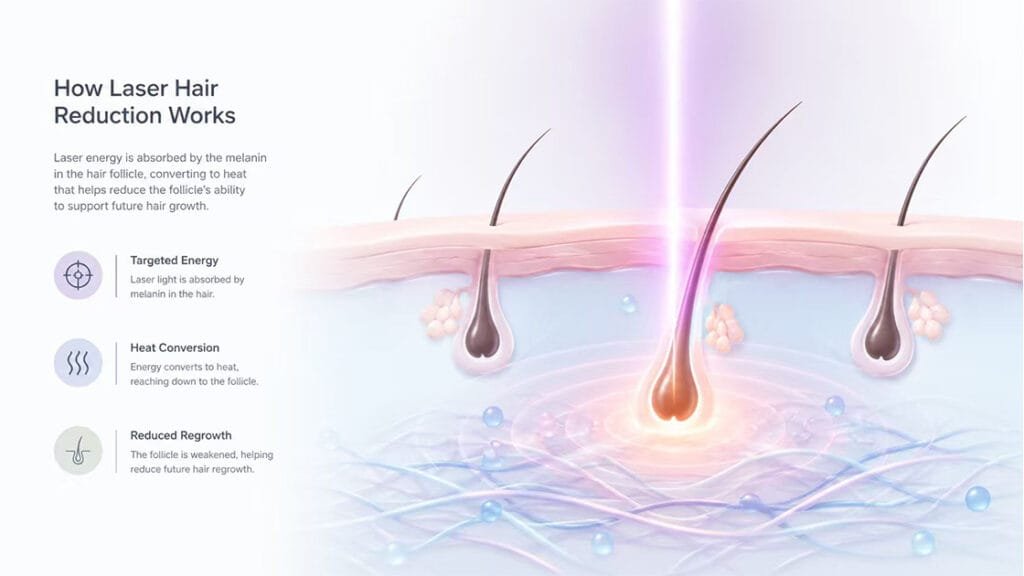
One of the most common concerns associated with shaving is the development of ingrown hairs. These occur when hair grows back into the skin rather than outward, often leading to localized inflammation or small bumps. This is more likely in areas where hair is coarse or curly. Laser-based hair reduction systems use controlled photothermal energy to interact with melanin in the hair follicle, helping reduce the conditions that contribute to ingrown hair formation over time.
2 How Laser Hair Reduction Works as a Long-Term Grooming Alternative
Laser hair reduction has become a widely adopted option for individuals seeking to reduce dependence on daily or weekly shaving routines. It focuses on targeting the hair growth structure beneath the skin surface using specific light-based energy.
2.1 Selective Photothermolysis and Follicle Targeting
Laser systems operate based on selective photothermolysis, where light energy is absorbed by melanin in the hair follicle and converted into controlled heat. Common wavelengths such as 755nm, 810nm, and 1064nm are used depending on hair depth and skin characteristics. This controlled energy interaction influences follicular activity while preserving surrounding skin tissue. Unlike shaving, which repeatedly affects the skin surface, this approach focuses on the underlying hair growth mechanism.
2.2 Reduction in Hair Regrowth Frequency Over Time
With repeated sessions, hair regrowth typically becomes finer and less dense over time. This shift does not rely on cutting or removing hair at the surface but instead targets the follicle’s ability to produce visible hair. As a result, many individuals experience a noticeable reduction in the need for frequent shaving. This makes hair reduction a practical option for those looking to simplify their long-term grooming routine.
3 Role of Advanced Aesthetic Laser Platforms in Skin Comfort
Modern laser systems are often integrated with additional technologies designed to improve comfort and skin compatibility during treatment.
3.1 Wavelength Precision and Skin Type Adaptability
Advanced laser platforms allow adjustment of energy parameters to match different skin types and hair textures. Longer wavelengths, such as 1064nm, are commonly used for deeper follicular targeting, while shorter wavelengths are used for finer or lighter hair. This flexibility allows the treatment to be adapted across various skin conditions while maintaining controlled energy delivery and minimizing unnecessary surface impact.
3.2 RF-Assisted Skin Conditioning Support
Some aesthetic systems integrate radiofrequency (RF) technology alongside hair reduction. While laser energy targets hair follicles, RF energy works within deeper dermal layers to support collagen structure and skin texture balance. This combined approach helps maintain skin comfort in areas that are frequently affected by shaving irritation, providing a more comprehensive grooming experience.
4 Lifestyle Shift From Shaving to Laser-Based Hair Reduction
The increasing preference for laser hair reduction is closely linked to lifestyle changes and evolving beauty routines. Many individuals now prioritize convenience, consistency, and reduced skin irritation in their grooming habits.
4.1 Simplifying Daily Grooming Routines
Traditional shaving requires frequent repetition, which can become time-consuming and contribute to ongoing skin stress. Laser hair reduction helps reduce reliance on daily or weekly shaving cycles by gradually decreasing hair regrowth activity. This allows individuals to adopt a more simplified grooming routine without constant surface-level hair removal.
4.2 Focus on Long-Term Skin Comfort and Appearance
Beyond hair reduction, many individuals choose laser-based approaches for their impact on overall skin comfort. By minimizing repeated shaving trauma, the skin is exposed to less mechanical stress over time. This supports a smoother surface appearance and reduces common shaving-related concerns such as irritation and uneven texture.
FAQ
Q1: Why do many women switch from shaving to laser hair reduction?
Because laser hair reduction helps reduce repeated shaving irritation and simplifies long-term grooming routines.
Q2: Does laser hair reduction completely stop hair growth?
It focuses on reducing hair regrowth over time, but results can vary depending on individual hair and skin characteristics.
Q3: Is laser hair removal suitable for sensitive skin?
Many modern systems offer adjustable settings designed to accommodate different levels of skin sensitivity.
Q4: How does laser treatment differ from shaving?
Shaving removes hair at the surface level, while laser treatment targets the hair follicle beneath the skin.
Conclusion
The shift from shaving to laser-based hair reduction reflects a broader change in modern skincare priorities, where individuals seek methods that reduce repetitive irritation and support long-term skin comfort. By targeting hair follicles with controlled laser energy and incorporating supportive technologies such as RF-based skin conditioning, these systems offer a more sustainable alternative to traditional shaving routines while aligning with evolving grooming preferences.
References
Laser Hair Removal Principles and Mechanisms
https://www.ncbi.nlm.nih.gov/pmc/articles/PMC4145537
American Academy of Dermatology Hair Removal Overview
https://www.aad.org/public/cosmetic/hair-removal-laser
Selective Photothermolysis in Dermatology
https://www.ncbi.nlm.nih.gov/pmc/articles/PMC3573441
Ingrown Hair and Follicular Irritation Overview
https://www.ncbi.nlm.nih.gov/pmc/articles/PMC6835993
Radiofrequency in Aesthetic Dermatology