Introduction
Acne is often associated with adolescence, but for many individuals, breakouts—and more importantly, acne scars—persist well into adulthood. Adult acne scars can significantly affect skin texture, tone, and overall confidence. Unlike temporary blemishes, scars represent structural changes in the skin, making them more difficult to treat with conventional skincare products. Fortunately, advancements in dermatological technology, particularly laser acne scar treatment, offer effective, non-invasive solutions. By targeting both pigmentation and underlying tissue damage, laser therapy has become one of the most trusted methods for improving skin clarity and restoring a smoother complexion.
1 Understanding Adult Acne Scars
Before exploring treatment options, it is essential to understand the nature of acne scars and why they are particularly challenging in adults.
1.1 Types of Acne Scars
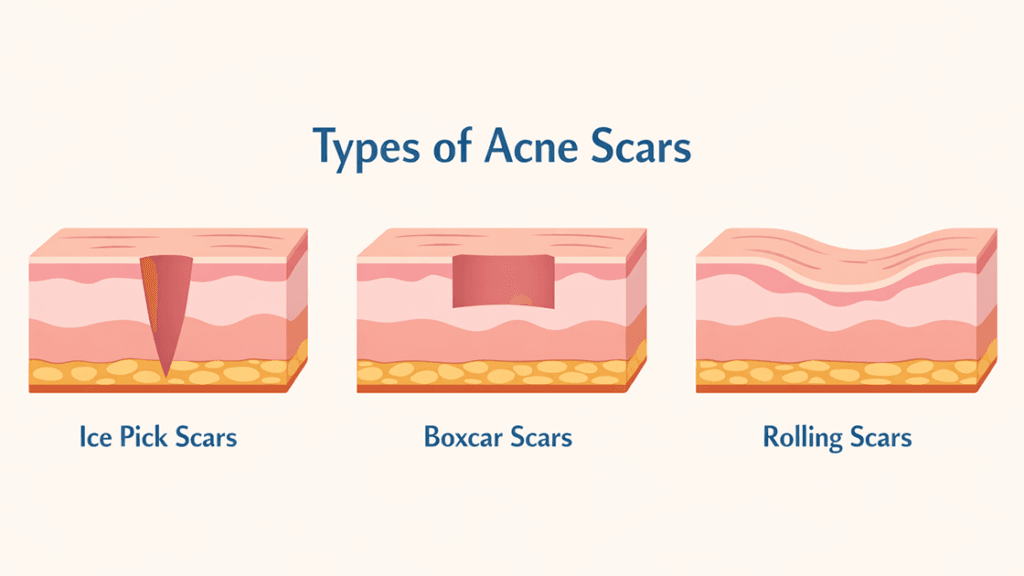
Acne scars are not uniform; they vary in shape, depth, and cause. The most common types include ice pick scars, which are deep and narrow; boxcar scars, which have sharp edges and defined borders; and rolling acne scar, which create a wave-like texture due to fibrous tissue pulling the skin downward. In addition to structural scars, many individuals also experience post-inflammatory hyperpigmentation (PIH), which appears as dark spots after acne heals. Each type requires a different therapeutic approach, making proper diagnosis critical for effective treatment.
1.2 Why Adult Acne Leaves More Noticeable Scars
Adult skin differs from younger skin in several ways. As we age, collagen production decreases, and the skin’s natural repair mechanisms slow down. This makes it more difficult for the skin to heal smoothly after inflammation. Additionally, adult acne is often linked to hormonal fluctuations and chronic inflammation, which can prolong healing time and increase the risk of scarring. These factors contribute to more visible and persistent scars compared to those formed during adolescence.
1.3 Common Treatment Challenges
Treating acne scars in adults presents several challenges. Over-the-counter products may help with mild discoloration but are generally ineffective for deeper scars. Furthermore, scars often coexist with uneven skin tone, enlarged pores, and fine lines, requiring multi-targeted treatment strategies. The variability in scar types and skin conditions means that a one-size-fits-all approach is rarely effective, highlighting the need for advanced solutions such as laser therapy.
2 How Laser Therapy Works for Acne Scars
With a clear understanding of acne scars, the next step is exploring how laser technology addresses these complex skin concerns. https://www.rheinlasers.com/treatments/skin-tightening
2.1 The Science Behind Laser Skin Resurfacing
Laser therapy works by delivering controlled energy into the skin to stimulate collagen remodeling and cellular turnover. When laser light penetrates the skin, it creates micro-injuries that trigger the body’s natural healing response. This process activates fibroblasts, which produce new collagen and elastin fibers. Over time, this leads to smoother skin texture, reduced scar depth, and improved overall appearance. The precision of laser technology allows targeted treatment without damaging surrounding tissue.
2.2 Types of Lasers Used in Acne Scar Treatment
Different types of lasers are used depending on the severity and type of scars. Ablative lasers remove the outer layer of skin, making them effective for deep scars but requiring longer recovery. Non-ablative lasers penetrate beneath the skin surface without removing layers, offering gradual improvement with minimal downtime. Fractional lasers combine the benefits of both by treating microscopic zones of skin while leaving surrounding tissue intact. This promotes faster healing while delivering noticeable results.
2.3 Targeting Pigmentation and Texture
Laser treatments are uniquely capable of addressing both textural irregularities and pigmentation issues simultaneously. By breaking down excess melanin, lasers help fade dark spots and even out skin tone. At the same time, they smooth out uneven surfaces by stimulating new tissue growth. This dual-action approach makes laser therapy especially effective for adults dealing with multiple skin concerns beyond just scarring.
3 Benefits of Laser Acne Scar Treatment
Understanding how laser therapy works naturally leads to its key benefits, which make it a preferred option for many patients.
3.1 Visible Skin Smoothing and Refinement
One of the most immediate benefits of laser treatment is the noticeable improvement in skin texture. Scars become less pronounced as the skin surface becomes smoother and more even. Patients often report a refined skin appearance, with reduced roughness and improved clarity. These visible changes can significantly boost confidence and overall satisfaction with one’s appearance.
3.2 Long-Term Collagen Remodeling
Unlike temporary treatments, laser therapy offers long-lasting results by stimulating collagen production deep within the skin. This process continues for weeks or even months after treatment, gradually improving skin structure. Increased collagen not only reduces the appearance of scars but also enhances skin firmness and elasticity, providing anti-aging benefits as well.
3.3 Non-Invasive and Minimal Downtime Options
Laser treatments are non-surgical, making them appealing for individuals who want effective results without invasive procedures. Many modern laser systems offer minimal downtime, allowing patients to resume daily activities quickly. This convenience makes laser therapy particularly suitable for busy adults seeking efficient skin solutions.
4 What to Expect During Treatment
Knowing the benefits is important, but understanding the treatment process helps set realistic expectations.
4.1 Consultation et évaluation de la peau
The process begins with a professional consultation, where a specialist evaluates skin type, scar severity, and overall condition. This step is crucial for developing a personalized treatment plan tailored to individual needs. Factors such as skin sensitivity and medical history are also considered to ensure safety and effectiveness.
4.2 Treatment Process Step-by-Step
During the procedure, the skin is first cleansed, and a topical anesthetic may be applied to enhance comfort. The laser device is then carefully used to deliver controlled energy to targeted areas. Patients may feel a mild warming or tingling sensation. The session typically lasts between 20 and 60 minutes, depending on the treatment area. Afterward, soothing products are applied to protect the skin and promote healing.
4.3 Recovery and Results Timeline
Post-treatment, mild redness and swelling are common and usually subside within a few days. In some cases, slight peeling may occur as the skin renews itself. Visible improvements can appear within a few weeks, with continued enhancement over several months due to collagen remodeling. Multiple sessions are often recommended for optimal results.
5 Safety, Risks, and Best Practices
While laser therapy is generally safe, understanding potential risks and best practices is essential for achieving the best outcomes.
5.1 Is Laser Treatment Safe for All Skin Types
Modern laser technologies are designed to accommodate a wide range of skin types. However, individuals with darker skin tones may require specialized settings to minimize the risk of pigmentation changes. Choosing an experienced practitioner and advanced equipment is critical to ensure safe and effective treatment.
5.2 Possible Side Effects
Most side effects are mild and temporary, including redness, swelling, and slight sensitivity. In rare cases, patients may experience hyperpigmentation or hypopigmentation. Proper pre- and post-treatment care significantly reduces these risks, making complications uncommon when performed correctly.
5.3 How to Maximize Results
To achieve the best results, patients should follow recommended aftercare guidelines. This includes using sunscreen, avoiding harsh skincare products, and maintaining hydration. Combining laser therapy with other treatments, such as microneedling or topical therapies, can further enhance outcomes. Consistency and professional guidance are key to long-term success.
FAQ
How many sessions are needed for acne scar removal?
Most patients require 3–6 sessions, depending on scar severity and skin condition.
Is laser treatment painful?
Discomfort is minimal, often described as a mild tingling or warming sensation.
How soon can I see results?
Initial improvements may appear within weeks, with continued enhancement over several months.
Can acne scars return after treatment?
Treated scars typically do not return, but new acne can cause new scars if not managed.
Is it suitable for all scar types?
Laser therapy is effective for most scars, though deep scars may require combined treatments.
Conclusion
Laser acne scar treatment offers a powerful, scientifically backed solution for adults struggling with persistent scars. By addressing both surface imperfections and deeper structural damage, laser therapy delivers visible, long-term improvements in skin texture and tone. With minimal downtime and customizable treatment options, it has become a cornerstone of modern aesthetic dermatology. For individuals seeking smoother, clearer skin and renewed confidence, laser therapy represents a safe and effective path forward.
References
Laser Treatment of Acne Scars: A Review
https://www.ncbi.nlm.nih.gov/pmc/articles/PMC3580984
Fractional Laser Resurfacing for Acne Scars
https://pubmed.ncbi.nlm.nih.gov/20677531
Nonablative Laser Therapy in Dermatology
https://www.sciencedirect.com/science/article/pii/S0738081X13001989