Введение
Skin laxity around the ankles and lower legs can affect the overall appearance of the legs, especially when the skin begins to look thinner, less elastic, or slightly creased. Although people often focus on the face, abdomen, and upper arms when considering skin tightening, the lower legs deserve attention too. Age-related changes, weight fluctuations, genetics, and natural reductions in collagen can all influence skin firmness in this area. Radiofrequency skin tightening offers a non-surgical approach that uses controlled energy to warm targeted tissue and support collagen-related skin changes. Understanding how this technology works, what it may improve, and where its limitations lie can help individuals make more informed decisions about lower-leg skin care.
1. Why Skin Around the Ankles Can Become Loose
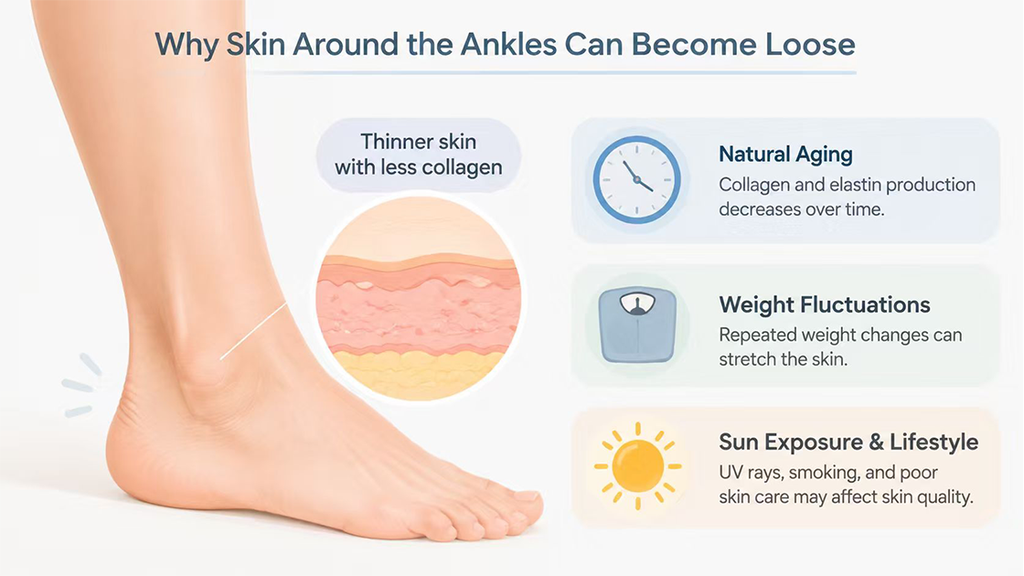
The skin around the ankles has different structural characteristics from the skin on many other parts of the body. It is relatively thin, and changes in elasticity can become noticeable as people age. Several factors may contribute to a less firm appearance.
1.1 Natural Aging and Collagen Changes
Collagen and elastin help maintain skin structure, firmness, and flexibility. As people age, the body gradually produces less collagen, while existing structural fibers may become less organized. Consequently, the skin can lose some of its natural support and begin to appear thinner or less firm.
These changes may become noticeable around the ankles, where the skin has limited underlying soft tissue in certain areas. Fine creases, mild looseness, and changes in skin texture can develop gradually.
1.2 Weight Fluctuations and Skin Elasticity
Repeated weight changes can stretch the skin and affect how well it returns to its previous shape. Although the ankles generally experience less dramatic volume changes than the abdomen or thighs, overall changes in body composition may influence the appearance of the lower legs.
Age, genetics, and the duration of skin stretching all affect how much natural elasticity remains. Therefore, two people with similar body weights may have very different levels of lower-leg skin firmness.
1.3 Sun Exposure and Lifestyle Factors
The lower legs are often exposed to sunlight, especially during warmer months. Cumulative ultraviolet exposure can contribute to collagen breakdown, uneven texture, and visible signs of skin aging.
Smoking, inadequate skin care, and limited sun protection may also affect skin quality. Consistent moisturizing and daily sun protection can support overall skin health, although topical care cannot fully reverse established skin laxity.
2. What Is Radiofrequency Skin Tightening?
Радиочастотная подтяжка кожи is a non-surgical aesthetic treatment that uses controlled electromagnetic energy to generate heat within targeted skin tissue. Unlike treatments that primarily focus on removing surface pigment or hair, radiofrequency technology focuses on tissue heating and skin firmness.
2.1 How Radiofrequency Energy Works
Radiofrequency energy creates controlled thermal effects in the targeted tissue. Depending on the treatment system and its settings, this heating can affect collagen fibers and stimulate biological processes associated with collagen remodeling.
Existing collagen fibers may respond to controlled heating, while the body’s natural repair processes may contribute to longer-term changes in skin structure. Over time, these processes may help improve the appearance of mild skin laxity and support a firmer-looking surface.
However, results vary according to the treatment area, skin condition, energy settings, and individual response. Radiofrequency treatment does not replace surgical procedures for significant excess skin.
2.2 The Role of Controlled Heating
Temperature control is important during radiofrequency treatment. A suitable treatment approach aims to deliver energy to the intended tissue while limiting unnecessary surface heating.
Professional systems may use different electrode designs, energy delivery methods, and temperature-monitoring features. These functions help practitioners adjust treatment parameters according to the area being treated and the individual’s skin characteristics.
Because ankle skin can be relatively thin and close to underlying structures, treatment settings should be selected carefully by a trained provider.
3. Can Radiofrequency Tighten Loose Skin Around the Ankles?
Radiofrequency treatment may help improve the appearance of mild skin laxity in selected areas. However, the ankle region requires careful assessment because its anatomy differs from that of larger body areas.
3.1 Areas That May Be Considered
Depending on the treatment system and professional assessment, the lower-leg region may include:
- Skin around the outer ankle
- Skin above the ankle bones
- The lower calf
- Areas with mild creasing or reduced firmness
The treatment plan should account for the thickness of the skin, the amount of underlying tissue, and the proximity of bones, tendons, and other structures.
Not every device is designed or cleared for every anatomical area. A practitioner should confirm that the specific system is appropriate for ankle and lower-leg treatment before proceeding.
3.2 What Improvements May Be Realistic?
For suitable candidates, radiofrequency treatment may support modest improvements in the appearance of skin firmness and texture. Some individuals may notice that mild creasing looks less prominent or that the treated area appears smoother.
Nevertheless, radiofrequency cannot reliably remove substantial excess skin, change ankle bone structure, or correct every cause of an uneven lower-leg appearance. It is important to distinguish mild skin laxity from swelling, circulation-related changes, or other medical conditions.
4. Who May Be a Suitable Candidate?
A professional consultation helps determine whether radiofrequency skin tightening is appropriate for an individual’s lower-leg concerns.
4.1 People With Mild Skin Laxity
Adults who notice mild looseness, fine creasing, or reduced skin firmness may wish to explore non-surgical options. Radiofrequency may be considered when the main concern involves skin quality rather than a large amount of excess tissue.
People with significant loose skin may need a different approach, and a provider should explain the realistic limitations of non-surgical treatment.
4.2 People Concerned About Lower-Leg Skin Texture
Some individuals are less concerned about pronounced sagging and more interested in improving the overall appearance of thin or uneven skin. A practitioner can assess whether the concern is related to skin laxity, dryness, pigmentation, or another condition.
This distinction matters because radiofrequency primarily targets tissue heating and collagen-related changes. It is not a universal treatment for every skin concern.
4.3 When Medical Assessment Should Come First
New or unexplained changes around the ankles should not automatically be treated as cosmetic concerns. Swelling, persistent pain, redness, warmth, skin discoloration, or sudden differences between the legs may indicate an underlying medical issue.
People with unexplained ankle swelling, suspected circulation problems, active skin infections, or wounds should seek appropriate medical assessment before considering an aesthetic procedure.
5. Treatment Planning and Aftercare
A suitable treatment plan begins with an assessment of the skin and the underlying cause of the concern. The provider should also review medical history, medications, skin sensitivity, and any factors that could affect treatment safety.
5.1 What Happens During a Treatment Session?
The practitioner first examines the treatment area and confirms whether the selected radiofrequency system is suitable. The skin is then prepared according to the device’s instructions.
During treatment, the practitioner applies the treatment handpiece to the selected area and delivers controlled radiofrequency energy. Patients may experience a gradual warming sensation, although comfort levels vary with the system and individual sensitivity.
Treatment duration and the number of sessions depend on the device, treatment area, and professional protocol. There is no single schedule that is appropriate for everyone.
5.2 Aftercare for the Lower Legs
After treatment, following the provider’s instructions is essential. General skin-care guidance may include:
- Keep the treated area clean and follow the recommended skin-care routine.
- Use gentle moisturizers if advised.
- Protect exposed lower-leg skin from direct sunlight.
- Avoid excessive heat or vigorous friction if the provider recommends temporary restrictions.
- Contact the provider if unexpected or persistent skin reactions develop.
Some temporary warmth, redness, or sensitivity may occur. However, significant pain, blistering, unusual discoloration, or worsening swelling should be evaluated promptly.
5.3 Supporting Skin Health Between Sessions
Radiofrequency treatment works best as part of a broader approach to skin care rather than as a substitute for healthy habits.
Regular moisturizing can help reduce dryness and improve the appearance of surface texture. Sun protection helps limit additional UV-related skin damage. Adequate nutrition, hydration, and avoiding smoking can also support general skin health.
These measures do not guarantee tighter skin, but they can help maintain skin quality over time.
6. Radiofrequency Compared With Other Skin Treatments
Different aesthetic technologies address different skin concerns. Choosing an appropriate option depends on whether the main issue involves laxity, surface texture, pigmentation, or excess tissue.
6.1 Radiofrequency and Laser Skin Treatments
Radiofrequency uses electromagnetic energy to produce controlled heat within targeted tissue. Laser treatments use specific wavelengths of light, and their effects depend on the wavelength, pulse duration, and treatment target.
Some laser systems focus on pigmentation, hair follicles, or surface texture, while others are designed for skin rejuvenation. These treatments are not automatically interchangeable with radiofrequency skin tightening.
6.2 Radiofrequency and Topical Skin Care
Moisturizers, retinoid-based products, and other topical formulations may support skin hydration or texture, depending on their ingredients and suitability. However, topical products generally cannot deliver the same type of controlled tissue heating as radiofrequency procedures.
A combined approach may be considered when appropriate, but treatment products should be selected according to individual skin needs and professional advice.
6.3 Radiofrequency and Surgical Skin Tightening
Surgical procedures can address substantial excess skin by physically removing tissue. Radiofrequency is a non-surgical option that may provide more modest changes in selected individuals.
People with significant skin redundancy should understand that non-surgical treatments cannot reliably reproduce surgical results. A consultation can help clarify which approach is more appropriate.
7. Important Safety Considerations
Although radiofrequency is used in various aesthetic applications, treatment safety depends on the device, settings, operator training, and treatment location.
7.1 Why the Ankle Area Requires Careful Assessment
The ankles contain prominent bony landmarks, tendons, and relatively thin soft tissue. These anatomical features make treatment planning particularly important.
Practitioners should use a system intended for the proposed treatment area and follow its operating instructions. They should also adjust energy delivery according to skin thickness, sensitivity, and the individual’s response.
7.2 When Treatment May Not Be Appropriate
Certain health conditions, implanted electronic devices, active infections, open wounds, or other medical factors may affect eligibility for radiofrequency procedures. Pregnancy and specific medications may also require additional consideration, depending on the treatment system.
Patients should provide a complete medical history and ask the provider about contraindications before treatment.
FAQ
1. Can radiofrequency tighten loose skin around the ankles?
It may improve the appearance of mild skin laxity in selected individuals. However, results depend on skin condition, treatment settings, and the system used.
2. Is radiofrequency treatment suitable for thin ankle skin?
Possibly, but the ankle area requires careful assessment because the skin may be thin and close to underlying structures. A trained provider should confirm suitability.
3. How many sessions are needed?
The number of sessions varies according to the device, treatment area, and individual goals. A provider can recommend a schedule after examining the skin.
4. Does radiofrequency treatment hurt?
Many people describe the sensation as controlled warmth. Comfort levels vary, and treatment should be adjusted if excessive heat or discomfort occurs.
5. Can radiofrequency remove excess skin around the ankles?
No. It may support modest improvements in skin firmness, but it cannot reliably remove significant excess skin.
6. Are the results permanent?
Results are not considered permanent. Natural aging and lifestyle factors continue to affect skin structure after treatment.
7. Can radiofrequency treat swollen ankles?
Radiofrequency skin tightening is a cosmetic procedure, not a treatment for unexplained swelling. New or persistent ankle swelling should be medically evaluated first.
Заключение
Loose skin around the ankles and lower legs can develop through natural aging, changes in collagen, weight fluctuations, and cumulative environmental exposure. Radiofrequency skin tightening offers a non-surgical approach that may support modest improvements in skin firmness by delivering controlled thermal energy to targeted tissue. However, the ankle area requires particular care because of its thin skin and underlying anatomy. A professional assessment can help determine whether treatment is appropriate, establish realistic expectations, and identify any medical concerns that should be addressed first. Combining suitable aesthetic care with consistent moisturizing and sun protection can also support healthier-looking lower-leg skin over time.
References
- American Academy of Dermatology Association – Skin Care and Aging
https://www.aad.org/public/everyday-care/skin-care-basics/anti-aging - Cleveland Clinic – Radiofrequency Skin Tightening
https://my.clevelandclinic.org/ - U.S. National Library of Medicine – Radiofrequency-Based Skin Tightening: A Review of the Literature
https://pubmed.ncbi.nlm.nih.gov/ - American Society for Dermatologic Surgery – Non-Surgical Skin Tightening
https://www.asds.net/ - DermNet – Ageing Skin
https://dermnetnz.org/topics/ageing-skin