Введение
In the modern aesthetic industry, increasing attention to skin appearance and non-invasive rejuvenation has contributed to the wider adoption of professional laser skin systems in clinical environments. Dermatology clinics and aesthetic medical centers primarily use these technologies to support skin tightening, texture refinement, and overall facial rejuvenation. By delivering controlled energy into targeted skin layers, these systems interact with dermal structures to support collagen-related activity and gradual improvement in skin quality. As demand for advanced aesthetic solutions continues to grow, professional laser systems have become an essential part of structured skin management protocols.
1. Professional Laser Systems in Aesthetic Skin Management
1.1 Controlled Energy Delivery in Clinical Environments
Professional laser skin systems operate through precisely controlled energy output, allowing practitioners to adjust treatment parameters based on individual skin conditions. This ensures consistent interaction with skin tissue while maintaining safety and predictability within clinical protocols.
1.2 Skin Tightening Mechanisms in Dermal Rejuvenation Processes
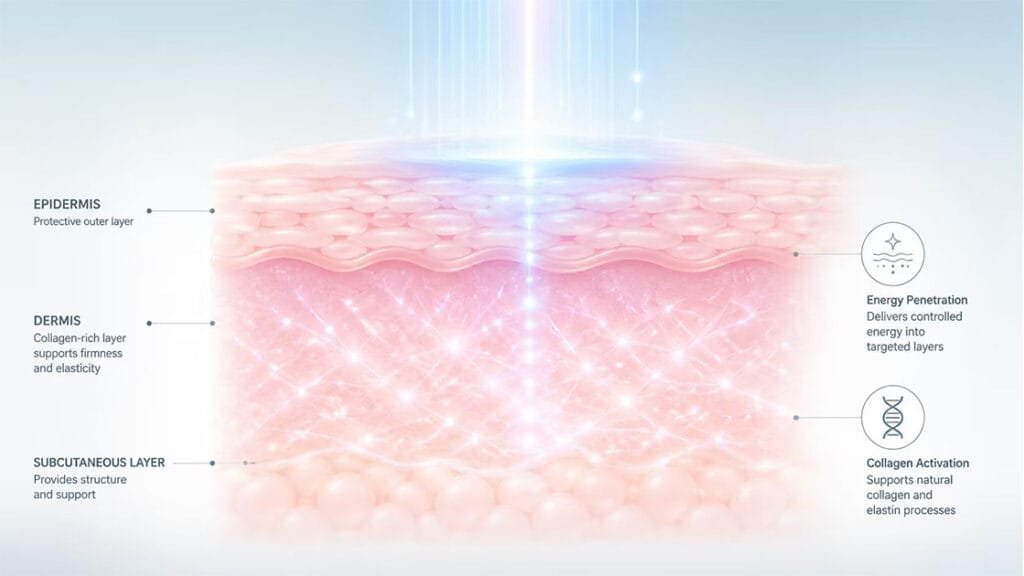
When practitioners deliver laser energy to the skin, it stimulates biological responses in deeper dermal layers. Clinicians commonly associate these responses with improved skin firmness, enhanced elasticity, and smoother surface appearance over time. The process focuses on gradual tissue remodeling rather than immediate transformation.
1.3 Why Clinics Prefer Advanced Skin Tightening Laser Systems
Aesthetic clinics prefer advanced laser systems due to their versatility in addressing multiple skin concerns. These include aging-related changes, uneven texture, and pigmentation irregularities. The ability to customize energy levels and treatment modes allows for broader application across different skin types.
2. The Role of Advanced Laser Technology in Skin Appearance Maintenance
2.1 Skin Tightening and Structural Support
One of the primary applications of professional laser systems is non-invasive skin tightening. By targeting dermal layers, the energy interaction supports skin firmness and contributes to improved facial contour definition over time.
2.2 Skin Tightening for Texture Refinement and Surface Smoothing
Uneven skin texture is a common aesthetic concern. Laser-based systems help support skin surface renewal processes, which may result in smoother appearance and more refined skin texture with repeated sessions.
2.3 Skin Tightening and Tone Balance for Visual Improvement
These systems are also widely used to support more even skin tone appearance. By interacting with pigment-related structures in the skin, laser energy helps promote a more balanced and uniform visual complexion.
3. Integration of Laser Systems in Aesthetic Treatment Protocols
3.1 Structured Clinical Skin Tightening Treatment Planning
In professional settings,clinicians integrate laser procedures into structured treatment plans rather than isolated sessions.They evaluate skin conditions before determining appropriate energy settings and treatment intervals.
3.2 Adjustable Parameters for Personalized Skin Tightening Care
Manufacturers design modern laser systems used in aesthetic clinics with adjustable parameters, allowing practitioners to modify intensity, pulse duration, and energy delivery based on specific treatment goals and skin sensitivity levels.
3.3 Combination with Other Aesthetic Procedures
Practitioners often combine laser treatments with complementary aesthetic procedures such as hydration therapies, skin barrier support treatments, or other non-invasive energy-based technologies to enhance overall skin appearance outcomes.
4. Long-Term Skin Tightening and Quality Management with Laser Systems
4.1 Focus on Gradual Skin Improvement
Rather than producing immediate changes, professional laser systems are designed to support gradual skin improvement. This approach aligns with long-term aesthetic maintenance strategies commonly used in clinical practice.
4.2 Support for Collagen-Related Processes
A key functional aspect of laser skin systems is their role in supporting collagen-related biological processes. This contributes to improved skin elasticity and structural integrity over time.
4.3 Maintaining Consistent Skin Appearance
With repeated use in clinical protocols, these systems help maintain more consistent skin appearance by supporting ongoing skin renewal and balance within dermal layers.
5. Expanding Use of Professional Laser Systems in Aesthetic Industry
5.1 Growing Demand for Non-Invasive Skin Solutions
The demand for non-invasive aesthetic procedures continues to rise, leading to wider adoption of laser-based technologies in professional skin care environments.
5.2 Standardization of Aesthetic Treatment Technologies
As the industry develops, laser systems are becoming more standardized in terms of energy control, treatment safety, and procedural consistency, making them a core tool in modern aesthetic clinics.
5.3 Long-Term Aesthetic Maintenance Strategy
Professional laser systems are increasingly viewed as part of long-term skin maintenance strategies, focusing on sustained improvement in skin texture, tone, and elasticity rather than short-term correction.
FAQ
Where are professional laser skin systems used?
They are primarily used in dermatology clinics and aesthetic medical centers under professional supervision.
What skin concerns do these systems address?
Practitioners commonly use them for skin tightening, texture refinement, pigmentation balance, and overall rejuvenation support.
Are results immediate?
These systems typically support gradual improvement over multiple sessions rather than immediate visible change.
Can these systems be used on different skin types?
Yes, professional systems are designed with adjustable settings to accommodate different skin conditions and sensitivities.
Do these systems replace skincare products?
No, they are usually part of a broader aesthetic treatment plan and are often combined with topical skincare or other procedures.
Заключение
Professional laser skin systems play an important role in modern aesthetic medicine, offering non-invasive solutions for skin tightening, texture refinement, and overall facial rejuvenation. Their ability to deliver controlled energy into targeted skin layers makes them a valuable tool in clinical skin management protocols. As demand for advanced aesthetic treatments continues to grow,clinics increasingly integrate these systems into long-term strategies that aim to maintain consistent skin quality and appearance through structured, technology-driven care.
References
Photobiomodulation and Skin Rejuvenation Mechanisms
https://www.ncbi.nlm.nih.gov/pmc/articles/PMC5523874/
Low-Level Light Therapy in Dermatology Applications
https://www.ncbi.nlm.nih.gov/pmc/articles/PMC4743666/
Mechanisms of Laser Interaction with Skin Tissue
https://www.ncbi.nlm.nih.gov/pmc/articles/PMC4743664/
Energy-Based Devices in Aesthetic Dermatology Review
https://pubmed.ncbi.nlm.nih.gov/29093296/
Advances in Clinical Laser and Light-Based Skin Treatments