Введение
Hair removal is one of the most common cosmetic concerns for both men and women. From daily shaving to weekly waxing, traditional hair removal methods are widely used, but they often come with drawbacks such as irritation, ingrown hairs, and inconsistent results. In contrast, laser hair removal has emerged as a modern, technology‑driven approach that promises longer‑lasting results with fewer side effects. As more individuals seek efficient and comfortable solutions, understanding how laser technology compares with conventional methods becomes essential. This post explores the differences, benefits, and science behind laser hair removal to help you make an informed decision.
1. Understanding Hair Removal Options
Before comparing laser with traditional techniques, it’s important to clearly define what each method entails and how they influence hair regrowth patterns and skin health over time.
1.1 Traditional Hair Removal Methods
Traditional methods typically includes shaving, waxing, depilatory creams, and plucking. These methods mechanically remove hair from either the skin surface or the hair follicle but do not affect hair’s biological growth cycle.
Shaving cuts hair at the skin’s surface, offering quick but short‑lived results and often resulting in stubble and razor burn. Waxing and plucking remove hair from the root, which can delay regrowth but often cause pain, irritation, and folliculitis (inflammation of the hair follicle). Depilatory creams use chemical agents like calcium thioglycolate to dissolve hair but carry the risk of chemical burns or allergic reactions.
While inexpensive and accessible, these traditional methods require frequent repetition and offer only temporary relief from hair growth. This leads many people to seek solutions that provide more lasting smoothness.
1.2 Laser Hair Removal Technology
Laser hair removal is a technology‑based approach that uses concentrated light energy to target hair follicles. A laser emits a specific wavelength—commonly around 810nm in diode lasers like the Artemis system—that penetrates the skin, where the pigment in the hair follicle absorbs the energy. This process, known as selective photothermolysis, damages the follicle’s ability to produce new hair.
Unlike traditional methods that respond to hair already above the skin, laser therapy affects the anagen (growth) phase of hair follicles, where hairs are actively growing. Over multiple treatment sessions, this leads to a significant reduction in hair density and thickness. Modern laser systems often integrate cooling mechanisms to reduce discomfort and protect surrounding skin.
Transitioning from basic methods to advanced laser technology involves a shift from temporary removal to long‑term hair reduction, making it a compelling choice for many.
2. Comparing Pain and Comfort Levels
Comfort and pain perception are major considerations when choosing a hair removal method. While all techniques involve some degree of sensation, the level and duration can vary significantly.
2.1 Pain with Traditional Methods
Traditional techniques generally involve more immediate and intense sensations. Shaving may cause microabrasions or razor nicks, especially if done without proper lubrication or technique. Waxing is widely known for its sharp, acute pain as hair is pulled directly from the follicle, which can be especially sensitive in areas like the bikini line or underarms. Chemical depilatories may cause burning sensations or itching due to active ingredients penetrating the skin surface.
Moreover, repeated irritation from these methods can contribute to conditions like pseudofolliculitis barbae (ingrown hairs), which not only cause discomfort but can also lead to hyperpigmentation or scarring.
Given these challenges, many individuals find the consistent discomfort associated with traditional methods to be a significant drawback, especially when repeated routinely over months or years.
2.2 Pain and Comfort in Laser Hair Removal
Laser hair removal generally offers a more controlled and tolerable experience. Because the device targets the hair follicle with light, users often describe the sensation as a rubber band snap rather than prolonged pain. Most modern systems, including high‑quality diode lasers, incorporate contact cooling or integrated cooling tips to protect the epidermis and enhance comfort.
Patients with sensitive skin may still experience mild warmth or tingling during treatment, but these sensations are typically brief and well‑tolerated. Many providers also apply a topical anesthetic before sessions to further minimize discomfort. After treatment, temporary redness or slight swelling may occur, but these effects usually resolve quickly.
Overall, laser hair removal tends to be less painful in the long term than repetitive waxing or frequent shaving, particularly when performed by trained professionals.
3. Long‑Term Results and Effectiveness
When considering hair removal methods, results and longevity are crucial. Here, we contrast temporary strategies with laser’s capacity for permanent hair reduction.
3.1 Short‑Term vs Long‑Term Hair Reduction
Traditional methods offer short‑term benefits. Shaving typically requires daily or every‑few‑days maintenance, and waxing usually needs repeating every 3–6 weeks. These cycles reflect the normal hair growth phases and do not alter the hair follicle’s ability to regenerate new strands.
Laser hair removal, by contrast, works on multiple hair follicles across different growth phases over a series of sessions. As follicles in the active growth stage are targeted and weakened, the overall hair density reduces over time. Many patients experience up to 80–90% hair reduction following a complete treatment plan, which often translates into years of minimal maintenance.
This lasting effect is a key reason why laser hair removal is considered cost‑effective and efficient compared to continual traditional removal.
3.2 Number of Sessions Required
Laser hair removal requires multiple sessions, usually between 6 and 10, spaced several weeks apart. This spacing accounts for the hair growth cycle, ensuring each follicle is treated during its growth phase. Each session is relatively quick, from a few minutes for small areas like the upper lip to over an hour for larger body parts.
In contrast, traditional methods require frequent repetition, adding up to significant time and effort over months or years. While laser faces a higher upfront time investment, many find the reduced maintenance burden afterward to be a significant lifestyle advantage.
4. Skin Health and Safety
Skin health is a paramount concern for anyone undergoing hair removal. Some methods present risks of irritation or infection, while others offer enhanced safety when administered properly.
4.1 Skin Risks in Traditional Methods
Traditional hair removal can compromise the integrity of the skin surface. Shaving can create micro‑tears, leading to razor burn, nicks, and cuts that may become infected. Waxing forcibly removes hair from the root, which can lead to traction folliculitis and post‑inflammatory hyperpigmentation. Depilatory creams rely on chemicals that may penetrate the epidermis, sometimes leading to burns or allergic dermatitis in sensitive individuals.
Repeated trauma from these methods makes the skin more prone to chronic irritation, scarring, or changes in texture, especially in delicate areas.
4.2 Skin Benefits and Safety in Laser Hair Removal
When performed by trained professionals using FDA‑cleared devices, laser hair removal offers a safer profile with proper pre‑ and post‑care. Because laser energy is selectively absorbed by melanin in the hair follicle and not the surrounding skin, it minimizes unnecessary tissue damage. Modern laser systems adjust wavelength and pulse duration tailored to different skin types, reducing risks such as hyperpigmentation or burns.
Most practitioners recommend avoiding sun exposure before and after treatment, and applying broad‑spectrum sunscreen to protect treated areas. When accompanied by standard precautions, laser hair removal has a low complication rate and supports smoother, clearer skin over time.
5. Cost and Convenience Considerations
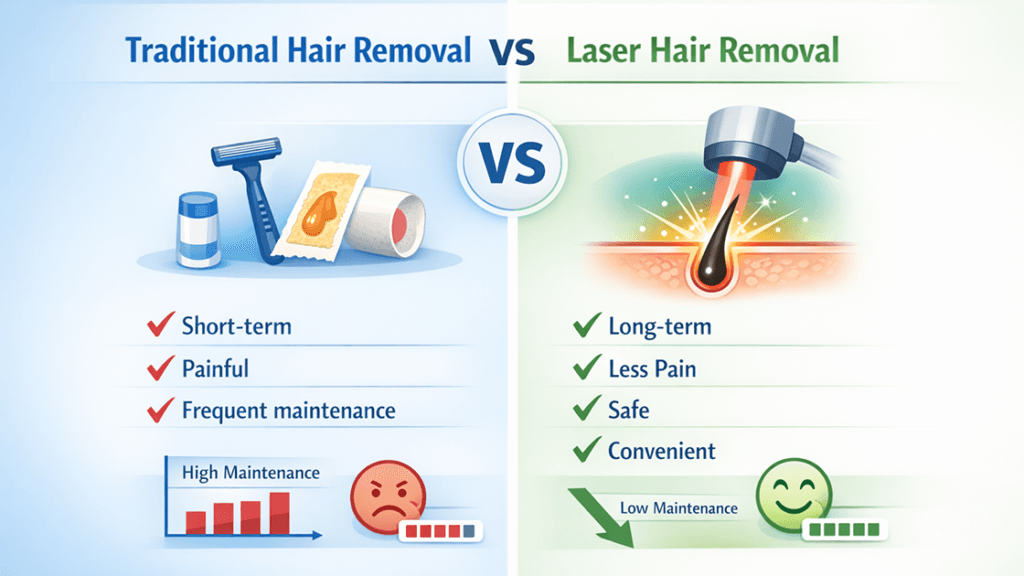
Evaluating cost involves both financial and time aspects. Here, we break down how traditional methods compare with laser in both categories.
5.1 Short‑Term Cost vs Long‑Term Savings
Traditional methods are inexpensive upfront—razors, wax strips, or creams are affordable and readily available. However, when used consistently, these costs add up quickly. A lifetime of shaving or waxing may eclipse the relatively higher initial cost of laser sessions.
Laser hair removal requires a significant upfront investment, but once a treatment series is complete, many people find they rarely need follow‑ups. This can result in long‑term financial savings and less recurring cost compared to frequent purchases of traditional supplies.
5.2 Convenience and Lifestyle Benefits
From a convenience standpoint, laser hair removal offers clear advantages. Shaving and waxing demand consistent scheduling, preparation, and recovery time. In contrast, after completing a laser treatment plan, most patients enjoy minimal regrowth, reducing daily grooming time and enhancing confidence.
For many, this results in not just aesthetic benefit but also a lifestyle improvement—less time spent on repeated routines and more freedom from skin irritation or regrowth anxiety.
FAQ
Is laser hair removal painful?
Most people describe laser sensations as a mild snapping feeling. Cooling features or topical anesthetics greatly improve comfort.
Can all skin types benefit from laser hair removal?
Modern diode and Alexandrite lasers are effective on a range of skin tones. Consultation with a certified provider ensures appropriate wavelength selection.
How many sessions are needed for permanent results?
Typically 6–10 sessions spaced 4–8 weeks apart optimize results based on hair growth cycles.
Are there side effects?
Temporary redness or swelling may occur but usually resolves quickly. Serious side effects are rare with professional care.
Is laser hair removal worth the cost?
Long‑term time savings, reduced irritation, and significant hair reduction often outweigh the higher initial expense.
Заключение
When comparing laser hair removal and traditional hair removal methods, several key differences stand out. Traditional techniques offer short‑term results with frequent repetition and skin irritation risks, whereas laser technology provides long‑lasting reduction with less maintenance and improved comfort. Modern systems use targeted wavelengths and cooling technologies to minimize discomfort and maximize safety. While the upfront cost and commitment can be higher, the long‑term savings in time, money, and convenience make laser hair removal an increasingly preferred solution for many seeking smooth, hair‑free skin.
References
Rhein Lasers – Treatments: Laser Hair Removal
https://www.rheinlasers.com/treatments/
American Academy of Dermatology – Hair Removal Options
https://www.aad.org/public/cosmetic/hair-removal/laser
Mayo Clinic – Laser Hair Removal: What to Expect
https://www.mayoclinic.org/tests-procedures/laser-hair-removal/about/pac-20394555