
Введение
Many people choose tattoo cover-ups when they want to refresh an old tattoo, modify an unwanted design, or create a completely new appearance on existing ink. However, covering a tattoo directly with another design may not always provide the visual result people expect, especially when the original tattoo contains dark pigments, dense ink layers, or complex colors. Laser tattoo fading has become an important step for many individuals and tattoo professionals who want to prepare the skin before creating a new design. By using advanced laser technology with targeted energy delivery and specific wavelength options, tattoo fading can help reduce the intensity of existing pigments and create a better foundation for future artwork. This article explains how laser technology supports tattoo fading before cover-ups, the science behind pigment interaction, and why controlled fading is becoming an important part of modern tattoo modification.
1. Understanding Tattoo Fading Before a Cover-Up
Tattoo cover-ups require careful planning because the original ink remains beneath the new artwork. The appearance, color, and density of the previous tattoo can influence the final result. Laser tattoo fading provides an option for reducing the visual impact of existing pigments before a new tattoo design is applied.
1.1 Why Some Tattoos Need Fading Before Cover-Up Designs
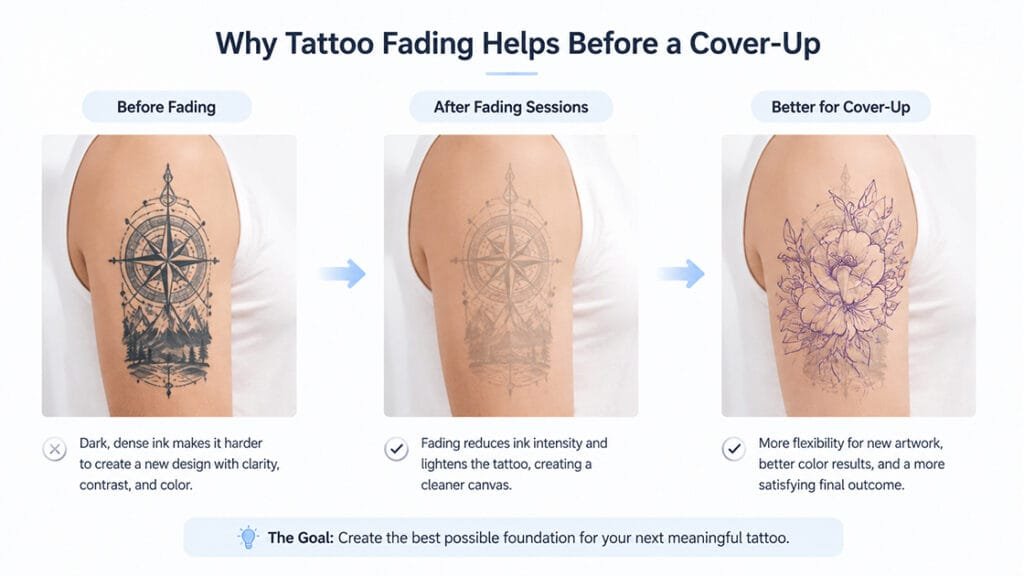
A tattoo cover-up works by adding new ink over an existing design. However, older tattoos with strong pigmentation, large dark areas, or complicated patterns may make it difficult for a new design to achieve the desired appearance.
When existing ink is too visible, tattoo artists may have limited options for creating contrast and detail. Fading the original tattoo can help reduce pigment intensity and provide more flexibility for new artwork.
Laser tattoo fading focuses on gradually decreasing the visibility of unwanted ink rather than immediately removing all pigment. This approach can be useful for people who want to transform an existing tattoo while maintaining more creative possibilities for a future design.
1.2 The Difference Between Tattoo Removal and Tattoo Fading
Tattoo removal and tattoo fading are related but serve different purposes. Tattoo removal generally focuses on reducing unwanted ink until the tattoo becomes significantly less visible, while fading focuses on lightening specific areas to prepare the skin for another tattoo.
For cover-up projects, complete removal may not always be necessary. A lighter tattoo can provide tattoo artists with more freedom when designing new artwork, especially when working with colors, shading, and detailed patterns.
Laser tattoo fading allows individuals to approach tattoo modification with a more customized goal based on their desired future design.
1.3 Why Cover-Up Preparation Requires Professional Planning
A successful cover-up involves more than simply placing a new design over an old tattoo. Factors such as ink color, tattoo depth, skin condition, and the size of the existing artwork all influence the planning process.
Laser technology provides a way to modify the appearance of existing pigments before the creative process begins. By understanding how different tattoo colors respond to laser energy, professionals can develop a more suitable approach for each situation.
This combination of laser technology and artistic planning allows tattoo modification to become a more personalized process.
2. How Laser Technology Supports Tattoo Pigment Fading
Modern tattoo fading technology uses controlled laser energy to interact with tattoo pigments beneath the skin. Different laser systems are designed to target pigment particles while considering factors such as wavelength selection and pulse duration.
2.1 The Science Behind Laser Tattoo Pigment Interaction
Tattoo ink contains pigment particles that remain within the skin after the tattooing process. Laser tattoo technology uses specific wavelengths of light that are absorbed by different pigment colors.
When laser energy reaches tattoo pigments, it creates a photothermal effect, which means the energy is converted into heat at the pigment level. This process affects the structure of ink particles, allowing the body’s natural processes to gradually handle fragmented pigment materials.
Advanced laser systems often use short pulse durations to deliver energy efficiently while focusing on pigment targets. The interaction between laser wavelength and ink color plays an important role in achieving effective fading results.
2.2 Why Different Tattoo Colors Require Different Laser Approaches
Tattoo colors respond differently to laser wavelengths because each pigment has unique light absorption characteristics. Dark pigments, such as black ink, often respond differently compared with brighter colors like green, blue, or red.
Multi-wavelength laser technology allows professionals to select suitable settings based on the specific tattoo pigments being addressed. This flexibility is especially important for colorful tattoos that contain multiple ink types.
Understanding pigment behavior helps improve the planning process and allows tattoo fading strategies to become more precise.
2.3 The Role of Pulse Duration in Modern Tattoo Fading Technology
Pulse duration refers to how long laser energy is delivered during each pulse. Advanced tattoo laser systems often use extremely short pulse durations to focus energy on pigment particles.
Short pulses help deliver concentrated energy while supporting controlled interaction with tattoo ink. This technology has become an important development in modern pigment management because it allows professionals to work with different tattoo characteristics.
For individuals preparing for cover-up designs, controlled fading with advanced laser technology may provide a more suitable foundation for future artwork.
3. Preparing Different Types of Tattoos for New Designs
Every tattoo has unique characteristics, including size, color, age, and ink density. These factors influence how laser fading strategies are planned before a cover-up.
3.1 Fading Dark and Dense Tattoos Before Cover-Up
Dark tattoos, especially those containing large areas of black ink, can create challenges for cover-up designs. Strong pigment concentration may affect how new colors appear when placed over the original artwork.
Laser fading can help reduce the intensity of dark areas and create additional design flexibility. Tattoo artists may then have more options when selecting new patterns, shading techniques, and color combinations.
By preparing the existing tattoo before applying a new design, individuals can improve the possibilities for creative transformation.
3.2 Managing Colorful Tattoos With Advanced Laser Technology
Colorful tattoos often require careful consideration because different pigments interact with laser energy in different ways. Blue, green, red, and yellow pigments may each require specific wavelength considerations.
Modern laser systems with multiple wavelength capabilities allow professionals to address different pigment types more selectively. This approach supports customized fading plans based on the tattoo’s specific colors.
For people seeking a cover-up, reducing the strength of certain colors may help create a more balanced surface for the next tattoo.
3.3 Considering Tattoo Age, Location, and Skin Characteristics
The age of a tattoo, its location on the body, and individual skin characteristics can influence how pigment responds during laser fading.
Older tattoos may have naturally softened over time, while newer tattoos may contain stronger pigment density. Areas with different skin thickness and circulation patterns may also respond differently.
A professional evaluation helps determine the most appropriate approach for preparing the tattoo before a new design.
4. Laser Technology and the Future of Tattoo Modification
Tattoo modification continues to evolve as more people look for ways to update their body art. Laser technology has become an important tool in this process because it provides more options beyond traditional cover-up methods.
4.1 Why More People Choose Tattoo Transformation Instead of Complete Removal
Many individuals do not necessarily want to eliminate all traces of their original tattoo. Instead, they may want to transform the design into something that better matches their current lifestyle, interests, or personal preferences.
Tattoo fading offers a middle option between keeping an unwanted tattoo and pursuing complete removal. By reducing pigment intensity, it can help create opportunities for new creative directions.
This approach reflects a growing interest in personalized tattoo modification rather than one single solution.
4.2 How Laser Technology Supports Tattoo Artists and Creative Freedom
Tattoo artists often consider contrast, color balance, and available skin space when designing cover-ups. A lighter base can provide more flexibility for creating detailed artwork.
Laser fading technology supports this creative process by helping reduce visual barriers from previous tattoos. It allows artists and clients to collaborate on designs with more possibilities.
The combination of laser technology and artistic expertise continues to shape the future of tattoo transformation.
5. Choosing a Laser Tattoo Fading Approach for Cover-Up Preparation
Selecting the right tattoo fading approach requires understanding the technology, tattoo characteristics, and desired outcome. A personalized strategy helps create realistic expectations for future cover-up projects.
5.1 Factors to Consider Before Laser Tattoo Fading
Before beginning tattoo fading, individuals should consider factors such as tattoo size, pigment colors, location, and the type of new design they want.
Understanding these elements helps determine how laser technology may be used to prepare the tattoo area. Different tattoos may require different settings and approaches depending on their unique characteristics.
Professional consultation can help individuals better understand the process and create a suitable preparation plan.
5.2 The Growing Role of Advanced Laser Systems in Tattoo Design Evolution
As tattoo culture continues to develop, more people are exploring ways to update and personalize existing artwork. Advanced laser systems provide additional possibilities for modifying tattoos while supporting creative design goals.
The combination of precise energy delivery, multiple wavelength options, and pigment-focused technology has expanded the role of lasers in modern tattoo management.
Tattoo fading before cover-up is becoming an increasingly recognized approach for people who want greater flexibility when transforming existing body art.
FAQ
What is tattoo fading before a cover-up?
Tattoo fading is the process of reducing tattoo pigment intensity before applying a new tattoo design.
Is tattoo fading the same as tattoo removal?
No. Fading focuses on lightening existing ink to prepare for a cover-up, while removal aims to make the tattoo less visible.
Why do some cover-up tattoos need laser fading first?
Fading can help reduce strong pigment visibility and provide tattoo artists with more design options.
Can laser technology work on colored tattoos?
Yes, different wavelengths may be used to address various tattoo pigment colors.
How does laser tattoo fading work?
Laser energy targets tattoo pigments, creating changes in pigment particles that allow the body to gradually process them.
Заключение
Tattoo fading before a cover-up has become an important option for people who want to transform existing body art without limiting future creative possibilities. Advanced laser technology uses targeted energy, wavelength selection, and controlled pulse delivery to interact with tattoo pigments and support a more suitable foundation for new designs. By understanding tattoo color, pigment characteristics, and the role of professional planning, individuals can approach tattoo modification with clearer expectations. Laser tattoo fading continues to connect aesthetic technology with creative expression, offering a modern approach for those looking to refresh their tattoos.
References
Laser Treatment of Tattoos: A Review of Current Technologies and Clinical Applications
https://www.ncbi.nlm.nih.gov/pmc/articles/PMC4411594
Picosecond Lasers for Tattoo Removal: A Review of Current Evidence
https://www.ncbi.nlm.nih.gov/pmc/articles/PMC5969975
Laser and Light-Based Approaches for Tattoo Removal
https://www.ncbi.nlm.nih.gov/pmc/articles/PMC4479367
Principles of Laser-Tissue Interactions in Dermatology
https://www.ncbi.nlm.nih.gov/pmc/articles/PMC4291050
Advances in Laser Technology for Pigmented Lesion and Tattoo Management