Введение
Athletes frequently experience skin irritation due to constant friction, sweat retention, tight sportswear, and repeated shaving routines. One of the most common dermatological concerns in high-performance environments is recurrent folliculitis, a condition characterized by inflammation of hair follicles that may cause redness, discomfort, and reduced training confidence. While temporary treatments such as topical antiseptics or antibiotics can relieve symptoms, they often do not address the underlying triggers related to dense hair growth and repeated mechanical irritation. Laser hair removal has become increasingly recognized as a long-term supportive solution that helps reduce follicular stress, minimize ingrown hairs, and improve overall skin tolerance in active individuals exposed to frequent training conditions.
1. Why Athletes Are More Prone to Recurrent Folliculitis
Understanding why folliculitis develops more frequently in athletic populations helps explain why hair-reduction technologies are increasingly considered supportive skin-management tools.
1.1 Mechanical Friction from Sports Equipment and Apparel
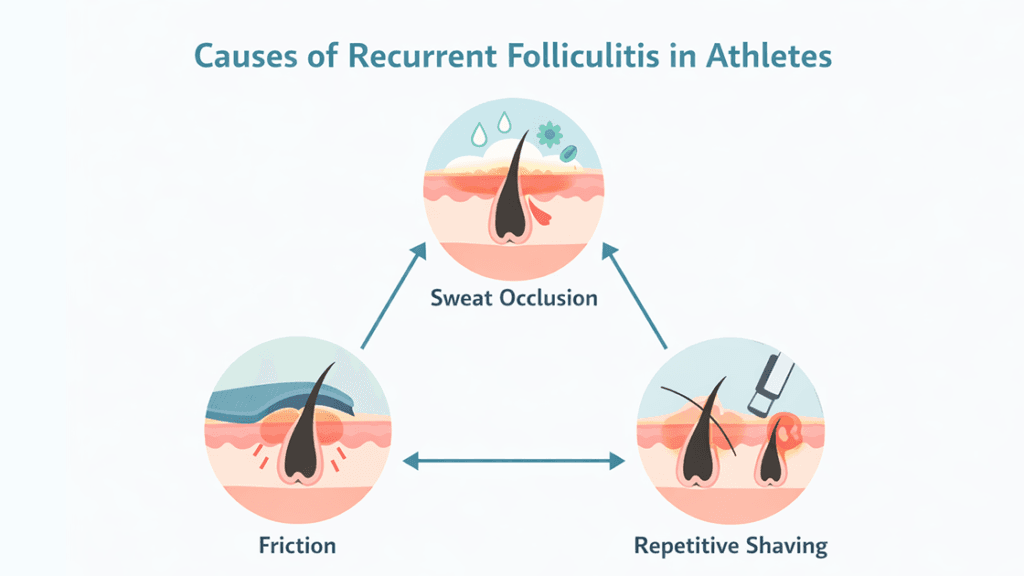
Athletes routinely wear compression garments, protective padding, and performance uniforms designed to improve mobility and safety. However, these materials often create repetitive friction against hair-bearing skin surfaces such as the thighs, neck, chest, and underarms. Continuous mechanical contact disrupts the follicular opening and increases the risk of micro-trauma around the pilosebaceous unit. Over time, these microscopic irritations may promote bacterial entry and localized inflammation. Laser hair removal reduces hair shaft thickness and density, which decreases frictional resistance between skin and fabric. As a result, athletes frequently experience fewer irritation episodes in high-movement zones during intensive training cycles.
1.2 Sweat Retention and Occlusion in Training Environments
High-intensity physical activity increases perspiration levels and creates a warm, humid microenvironment on the skin surface. Sweat accumulation combined with tight athletic clothing can block follicular openings and trap microorganisms near the epidermis. This occlusive effect increases the likelihood of follicular inflammation, especially in areas with dense terminal hair growth. Repeated exposure to these conditions contributes to chronic recurrence patterns rather than isolated inflammatory episodes. By reducing hair density within frequently occluded zones, laser hair removal supports improved ventilation of the skin surface and lowers the probability of persistent follicular blockage associated with athletic training routines.
1.3 Repetitive Shaving and Grooming Practices
Many athletes remove body hair regularly to improve hygiene, comfort, or aerodynamic efficiency. However, repeated shaving may cause micro-abrasions that compromise the skin barrier and increase susceptibility to ingrown hairs. These ingrown hairs can trigger localized inflammatory responses that resemble or worsen folliculitis symptoms. Over time, repeated grooming cycles create a pattern of recurring irritation that interferes with consistent training comfort. Laser hair removal helps reduce dependence on frequent shaving routines by progressively decreasing hair regrowth density. This shift supports improved epidermal stability and reduces repeated barrier disruption associated with mechanical grooming methods.
2. The Role of Laser Hair Removal in Folliculitis Prevention
Laser hair removal technologies provide a targeted approach to reducing hair growth activity within inflamed or irritation-prone areas commonly affected in athletic populations.
2.1 How Laser Hair Removal Targets Hair Follicles
Laser hair removal systems operate through selective photothermolysis, a process in which specific wavelengths of light are absorbed by melanin within the hair shaft and follicular matrix. The absorbed energy converts into heat that temporarily disables the follicle’s growth cycle without damaging surrounding tissues. This selective targeting allows gradual reduction of terminal hair thickness across treated regions. As hair density decreases, the likelihood of follicular obstruction and ingrown hair formation also declines. For athletes exposed to frequent friction and perspiration, this reduction contributes to improved skin tolerance during repeated movement patterns associated with training and competition environments.
2.2 Supporting Skin Barrier Stability in High-Movement Areas
Athletic performance places repeated stress on areas such as the inner thighs, shoulders, lower back, and neckline where skin experiences constant motion and pressure. These regions are particularly vulnerable to irritation when dense hair increases surface resistance between skin and fabric. Laser hair removal reduces this resistance by minimizing coarse hair presence across high-movement zones. As a result, the epidermal barrier experiences fewer mechanical disruptions during activity. Maintaining barrier integrity helps lower susceptibility to inflammatory responses within follicular structures and supports long-term skin resilience for individuals engaged in regular high-intensity exercise routines.
2.3 Reducing Ingrown Hair Formation in Performance Settings
Ingrown hairs represent a major contributor to recurrent folliculitis among athletes who shave frequently. Curved regrowth patterns may redirect hair shafts into the dermis instead of outward through the follicular opening. This process stimulates localized inflammation and increases bacterial colonization risk. Laser hair removal gradually weakens follicular regrowth cycles, allowing fewer opportunities for abnormal hair re-entry beneath the skin surface. Over time, reduced regrowth frequency supports smoother epidermal texture and improves tolerance to athletic clothing contact. This effect is particularly valuable for athletes participating in endurance sports requiring extended uniform wear durations.
3. Benefits of Laser Hair Reduction for Athletic Performance Comfort
Beyond cosmetic considerations, laser hair removal offers functional skin-comfort advantages that align with the practical needs of physically active individuals.
3.1 Enhancing Hygiene Efficiency During Training Cycles
Athletes often follow strict hygiene routines to minimize infection risk associated with shared training environments. Dense body hair can trap sweat, bacteria, and debris, increasing the difficulty of maintaining consistent skin cleanliness after exercise sessions. Laser hair reduction simplifies hygiene maintenance by decreasing hair density across frequently perspiring areas. Improved airflow across the skin surface supports faster drying after activity and reduces microbial retention potential. This effect contributes to a cleaner skin environment that supports consistent training schedules without repeated interruptions from irritation-related discomfort.
3.2 Supporting Recovery Between Training Sessions
Skin irritation caused by folliculitis may interfere with recovery routines by creating localized tenderness or sensitivity during stretching, massage, or mobility exercises. Laser hair removal supports smoother skin surfaces that tolerate post-training recovery techniques more comfortably. Reduced inflammation frequency allows athletes to maintain uninterrupted rehabilitation strategies that support long-term performance goals. In this way, hair-reduction technologies contribute indirectly to musculoskeletal readiness by improving tolerance to routine recovery interventions commonly integrated into athletic conditioning programs.
3.3 Improving Confidence in Competitive Environments
Skin health plays an important psychological role in athletic preparation and competition readiness. Recurrent folliculitis may cause visible irritation that affects confidence when wearing performance apparel designed for mobility and ventilation. Laser hair removal supports improved skin clarity across frequently exposed areas such as the shoulders, thighs, and neckline. As irritation episodes become less frequent, athletes often experience increased comfort in training environments that require close physical interaction with teammates or equipment. This confidence contributes to improved focus during performance preparation and supports consistent participation in demanding training programs.
FAQ
Q1: Can laser hair removal reduce folliculitis recurrence in athletes?
Yes, reducing hair density lowers friction, ingrown hair formation, and follicular blockage that contribute to repeated irritation episodes.
Q2: Which athletic areas benefit most from laser hair removal?
Common treatment zones include the neck, inner thighs, shoulders, chest, and underarms where friction and perspiration are frequent.
Q3: Is laser hair removal suitable for athletes with sensitive skin?
Modern non-invasive laser technologies are designed to target follicles selectively while preserving surrounding skin structures.
Q4: Does laser hair removal affect training schedules?
Sessions are typically short and can be integrated into recovery planning without interfering with regular training cycles.
Q5: How does reducing hair density improve hygiene for athletes?
Lower hair density improves airflow across the skin surface and reduces sweat retention associated with bacterial accumulation.
Заключение
Recurrent folliculitis remains a common dermatological challenge for athletes exposed to repetitive friction, perspiration, and frequent grooming routines. Laser hair removal provides a clinically supported strategy for reducing hair density in irritation-prone areas, helping minimize ingrown hairs and improving overall skin tolerance during training cycles. By supporting barrier stability, hygiene efficiency, and long-term comfort, laser-based hair reduction technologies offer practical benefits that extend beyond aesthetic improvement and contribute to consistent athletic readiness.
References
Anderson RR, Parrish JA. Selective photothermolysis: precise microsurgery by selective absorption of pulsed radiation
https://pubmed.ncbi.nlm.nih.gov/7110207
Liew SH. Laser hair removal: guidelines for management
https://pubmed.ncbi.nlm.nih.gov/21689281
Alster TS, Tanzi EL. Laser hair removal: long-term efficacy and safety
https://pubmed.ncbi.nlm.nih.gov/15056137
Goldberg DJ. Laser dermatology: advances in laser treatment of skin conditions
https://pubmed.ncbi.nlm.nih.gov/19175622
Rhein Laser Technologies – Treatment Applications