
Введение
Post-acne pigmentation is a persistent skin concern that frequently affects individuals with active lifestyles, especially those who engage in regular training, high-intensity workouts, or professional sports. Sweat accumulation, hormonal fluctuations triggered by strenuous exercise, and repeated cleansing routines can all contribute to prolonged inflammation and delayed skin recovery. As acne lesions heal, residual dark marks often remain visible for extended periods, impacting overall skin clarity. In modern aesthetic dermatology, laser-based technologies are widely used as non-invasive solutions to address post-acne pigmentation by targeting melanin accumulation, improving skin tone uniformity, and supporting dermal regeneration without interrupting active lifestyles.
1. Why Active Lifestyles Can Worsen Post-Acne Pigmentation
Athletes and gym-goers often assume that exercise automatically improves skin health due to increased circulation and detoxification through sweat. However, from a dermatological perspective, high physical activity can also create conditions that prolong inflammation and deepen post-acne pigmentation. The combination of sweat, friction, heat exposure, and hormonal fluctuations forms a complex environment that affects skin recovery at multiple biological levels.
1.1 Sweat, Friction, and Inflammatory Skin Response
During intense exercise, sweat mixes with sebum and surface bacteria, creating a microenvironment that may irritate hair follicles and prolong inflammatory responses. Continuous friction from sportswear, towels, or exercise equipment further disrupts the epidermal barrier, particularly in acne-prone areas such as the face, back, and shoulders. This repeated irritation keeps melanocytes in an activated state, increasing melanin production and darkening post-acne marks. Clinically, this is classified as inflammation-driven hyperpigmentation, where persistent microtrauma delays normal skin recovery and reinforces pigmentation pathways.
1.2 Hormonal Fluctuations from High-Intensity Training
High-intensity physical activity can influence androgen levels and stress-related hormones such as cortisol. Elevated androgen activity increases sebaceous gland output, while cortisol prolongs inflammatory signaling within the skin. This hormonal combination creates a cycle in which acne lesions heal more slowly and are more likely to leave visible pigmentation. Over time, this contributes to recurring breakouts and more pronounced post-inflammatory hyperpigmentation, particularly in individuals with genetically sensitive or acne-prone skin profiles.
1.3 Over-Cleansing and Skin Barrier Disruption
To manage sweat and oil buildup, many active individuals engage in frequent cleansing routines. However, excessive washing or the use of harsh surfactants can strip the skin’s natural lipid barrier. When this barrier is compromised, transepidermal water loss increases, and the skin becomes more reactive to environmental stressors. This weakened barrier slows down post-acne healing and increases the likelihood of residual pigmentation. From a dermatological standpoint, barrier dysfunction is a key contributor to chronic post-inflammatory discoloration.
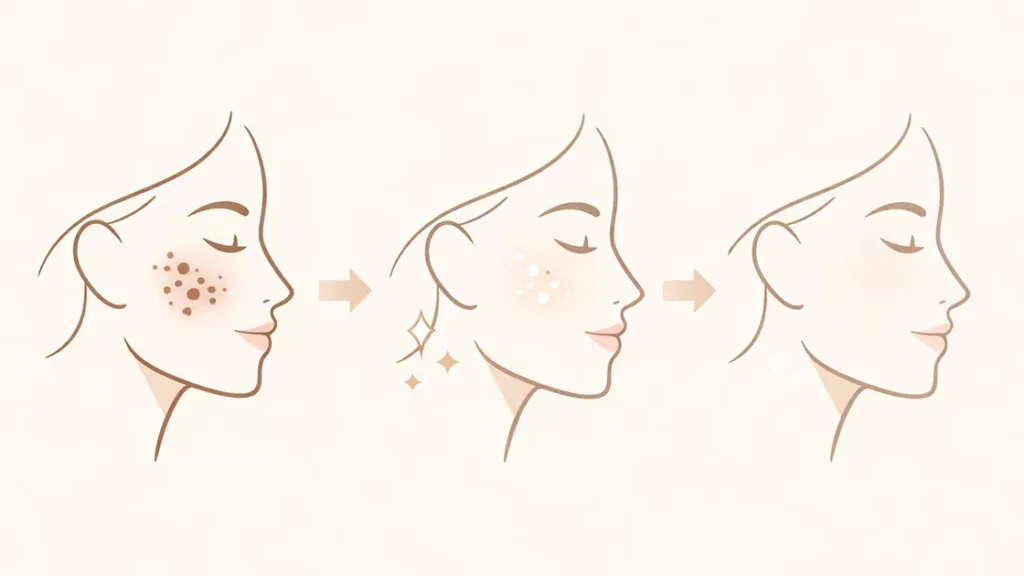
2. Common Post-Acne Concerns in Fitness-Oriented Individuals
Post-acne pigmentation rarely appears in isolation. In physically active populations, it is often accompanied by other skin concerns influenced by training habits, sweat exposure, and recovery cycles. These combined factors create a distinct dermatological profile frequently observed in athletes and gym-goers.
2.1 Persistent Dark Marks and Uneven Skin Tone
Post-inflammatory hyperpigmentation typically presents as flat brown or dark spots following acne resolution. In active individuals, these marks may persist longer due to repeated inflammatory triggers such as sweat exposure and mechanical irritation. Uneven skin tone becomes especially noticeable under strong gym lighting or outdoor training conditions, affecting perceived skin clarity and smoothness. This condition is linked to sustained melanocyte activity even after the primary acne lesion has resolved.
2.2 Recurrent Breakouts and Residual Skin Sensitivity
Active individuals often experience recurring acne due to sweat-related follicular occlusion and bacterial proliferation. Even after lesions heal, the surrounding skin may remain highly sensitive, making it more vulnerable to new inflammatory episodes. This cycle of irritation and healing leads to overlapping pigmentation patterns, where new marks form before previous discoloration has fully resolved. Over time, this contributes to chronic uneven skin tone and delayed skin normalization.
2.3 Textural Irregularities and Enlarged Pores
Beyond pigmentation, many individuals with active lifestyles also experience changes in skin texture. Increased sebum production combined with frequent sweating can contribute to enlarged pores. Additionally, incomplete dermal remodeling after acne lesions may result in subtle atrophic scarring. These textural irregularities affect light reflection on the skin surface, making pigmentation appear more pronounced and overall skin quality less refined.
3. How Laser-Based Dermatological Technology Targets Post-Acne Pigmentation
Laser dermatology plays a central role in modern treatment strategies for post-acne pigmentation. These systems operate through the principle of selective photothermolysis, where specific wavelengths of light are absorbed by targeted chromophores such as melanin, enabling precise energy delivery while minimizing damage to surrounding tissue structures.
3.1 Selective Melanin Targeting and Pigment Fragmentation
Laser systems designed for pigmentation concerns emit wavelengths that are selectively absorbed by melanin particles within the epidermis and dermis. This controlled energy absorption leads to fragmentation of pigment clusters into smaller particles. These fragments are gradually eliminated through natural metabolic and lymphatic processes. Over time, this mechanism reduces visible dark marks and improves overall skin tone uniformity while preserving surrounding healthy tissue structures.
3.2 Dermal Remodeling for Post-Acne Recovery
In addition to pigment reduction, laser energy stimulates dermal remodeling processes. Controlled thermal micro-injury activates fibroblasts, which are responsible for collagen and elastin synthesis. This biological response improves skin structure and supports the repair of areas affected by previous inflammatory acne lesions. As collagen density increases, skin texture becomes smoother, and surface irregularities gradually diminish, resulting in a more refined appearance.
3.3 Vascular Stabilization and Inflammation Control
Some post-acne marks include persistent erythema caused by dilated superficial blood vessels and residual inflammation. Vascular-targeted laser applications selectively interact with hemoglobin, leading to coagulation of abnormal microvessels and gradual reduction of redness. This process helps regulate local inflammatory activity and supports a more balanced skin tone. By addressing both vascular and pigment components, laser technology improves overall complexion uniformity.
4. Why Athletes and Gym-Goers Prefer Laser-Based Skin Solutions
As aesthetic dermatology continues to evolve, individuals with active lifestyles increasingly prefer non-invasive technologies that align with their physical training routines and recovery cycles. Laser-based solutions offer a combination of efficacy, convenience, and minimal disruption.
4.1 Compatibility with High-Activity Lifestyles
Laser-based procedures are designed to integrate seamlessly into active schedules. Unlike invasive interventions, they typically involve minimal downtime, allowing individuals to continue training and daily activities without significant interruption. This compatibility makes laser dermatology particularly suitable for athletes and gym-goers who prioritize consistent physical performance alongside aesthetic maintenance.
4.2 Focus on Skin Quality Rather Than Surface Correction
Modern aesthetic preferences increasingly emphasize overall skin quality rather than isolated correction of imperfections. Active individuals often seek improvements that enhance natural appearance without altering facial identity. Laser-based dermatology supports this goal by gradually improving tone consistency, texture smoothness, and skin radiance, resulting in a more balanced and healthy appearance rather than dramatic transformation.
4.3 Integration into Preventive Skin Maintenance Routines
Many individuals with active lifestyles now incorporate dermatological care into their broader wellness routines. Just as physical training supports long-term fitness, preventive skin maintenance helps preserve dermal health over time. Laser-based technologies are increasingly used as part of this preventive approach, helping manage pigmentation recurrence and supporting continuous skin quality improvement in response to environmental and physiological stressors.
5. The Expanding Role of Laser Dermatology in Active Lifestyle Skincare
Laser dermatology has become a foundational component of modern skin management for individuals with high physical activity levels. Its ability to address multiple layers of post-acne concerns—including pigmentation, inflammation, and texture irregularities—makes it particularly effective for complex skin profiles. Advances in laser technology continue to improve precision, safety, and customization, enabling more targeted treatment protocols. As a result, laser-based dermatology is increasingly recognized as a long-term strategy for maintaining skin clarity and supporting overall skin resilience in active populations.
FAQ
Q1: Why do athletes experience more post-acne pigmentation?
Because sweat, friction, and hormonal changes can prolong inflammation and delay skin healing.
Q2: Can exercise worsen acne marks?
Yes, indirectly. Excess sweat and repeated irritation may increase pigmentation after acne.
Q3: How does laser treatment improve post-acne pigmentation?
It targets melanin, breaks down pigment clusters, and supports dermal regeneration.
Q4: Is laser treatment suitable for active lifestyles?
Yes, it is widely chosen due to minimal downtime and compatibility with training routines.
Q5: Does laser also improve skin texture?
Yes, it can improve both pigmentation and underlying skin structure.
Заключение
Post-acne pigmentation in active individuals is influenced by a combination of physiological, environmental, and behavioral factors, including sweat exposure, hormonal fluctuations, and repeated skin barrier disruption. Athletes and gym-goers are particularly prone to prolonged discoloration due to these overlapping conditions. Laser-based dermatological technology provides a scientifically grounded, non-invasive solution that targets pigmentation, supports collagen remodeling, and improves overall skin quality. As modern aesthetic medicine continues to evolve, these technologies are becoming an essential part of long-term skin maintenance strategies for individuals with active lifestyles.
References
American Academy of Dermatology – Post-Inflammatory Hyperpigmentation Overview
https://www.aad.org/public/diseases/a-z/post-inflammatory-hyperpigmentation-overview
Journal of Cosmetic and Laser Therapy – Laser Treatment of Pigmentation Disorders
https://www.tandfonline.com/journals/ijcl20
Lasers in Medical Science – Principles of Selective Photothermolysis
https://link.springer.com/journal/10103
Dermatologic Surgery Journal – Advances in Laser Skin Resurfacing
https://journals.lww.com/dermatologicsurgery/pages/default.aspx
International Journal of Dermatology – Acne and Lifestyle Factors