Introdução
Surgical scars, including those resulting from Cesarean sections (C‑sections) and other medical procedures, are a natural consequence of lifesaving and life‑enhancing operations. While healing is a sign of progress, many individuals find that these scars can lead to aesthetic concerns, textural irregularities, pigmentation changes, and even discomfort or tightness. Advances in dermatologic and cosmetic medicine have introduced effective non‑invasive treatments for scar management, with laser therapy emerging as a leading option. Among these, CO₂ cryotherapy represents a cutting‑edge approach that utilizes cold temperatures to stimulate tissue repair, reduce inflammation, and improve scar appearance with minimal downtime. This article explores the science behind surgical scar formation, how CO₂ cryotherapy works, its benefits compared to traditional treatments, preparation, treatment process, long‑term results, and practical guidance for individuals considering this therapy.
1. Understanding Surgical Scars
Before exploring treatment options, it is important to understand how surgical scars form and why they vary in appearance and texture.
1.1 Causes of C-Section and Surgical Scars
The formation of surgical scars begins at the moment of incision. When the skin and underlying tissues are cut during surgery, the body initiates a complex wound healing cascade. This involves inflammatory, proliferative, and remodeling phases, during which fibroblasts generate collagen fibers to bridge the wound gap. Initially, collagen is laid down in a disorganized fashion, leading to a raised, thick, or discolored scar. Factors influencing scar formation include the surgical technique, wound tension, patient genetics, age, skin type, and post‑operative care. In some individuals, prolonged inflammation or excessive collagen deposition can lead to hypertrophic scars or keloids, characterized by raised and firm tissue. Understanding these mechanisms is crucial for selecting a treatment that targets the cellular and structural aspects of a scar.
1.2 Types of Scars
Surgical scars are not homogenous; they present in several types, each with distinct characteristics. Atrophic scars appear depressed or sunken due to insufficient collagen formation and are often seen after acne or certain injuries. Hypertrophic scars are thick and raised but remain confined to the surgical area, often red and firm. Keloid scars extend beyond the original wound boundary, forming dense fibrous nodules that can cause pain or itching. Surgical scars may also exhibit pigmentation changes, appearing darker or lighter than surrounding skin. These variations underscore the need for personalized treatment plans. Identifying scar type helps clinicians evaluate which laser modality or therapeutic approach will yield the most optimal aesthetic and functional outcome.
2. How Laser Scar Reduction Works
Laser therapies have evolved to address the complex architecture of scar tissue at a cellular and extracellular level, offering more predictable and satisfying outcomes.
2.1 Mechanism of Laser Therapy on Scars
CO₂ cryotherapy works by delivering controlled wavelengths of light energy into the skin, targeting specific layers of tissue without damaging the surface. This energy induces photothermal and photomechanical effects, stimulating neocollagenesis—the production of new collagen—and remodeling existing fibers. The thermal impact also promotes angiogenesis (formation of new blood vessels), enhancing blood flow and oxygen delivery to the scar tissue. Over time, this facilitates the replacement of disordered collagen with a more organized matrix, improving texture and elasticity. In addition, laser energy can target melanin deposits within scars, reducing pigmentation irregularities. CO₂ cryotherapy, specifically, applies cold energy to create a rapid cooling effect that triggers vasoconstriction followed by vasodilation, reducing inflammation and stimulating cellular repair processes. This mechanism makes laser therapy highly effective for improving both the appearance and biomechanical properties of scars.
2.2 Benefits Over Traditional Treatments
Traditional scar treatments, such as silicone gels, pressure therapy, and corticosteroid injections, provide variable results and may require prolonged use. Silicone products can help flatten scars but often take months to show measurable improvement. Steroid injections reduce inflammation and size in hypertrophic and keloid scars but carry risks of skin atrophy and pigmentation changes. In contrast, laser therapies, including CO₂ cryotherapy, offer a more direct and targeted approach to modulating the scar’s structural components. Laser treatments are non‑invasive or minimally invasive, typically require no anesthesia, and involve short procedure times. They are also customizable; clinicians can adjust wavelength, pulse duration, and energy levels to match the scar’s depth, pigmentation, and tissue characteristics. As a result, laser therapy generally provides faster visible improvement with fewer side effects when administered by trained professionals.
3. Preparing for Laser Scar Reduction
Like all medical treatments, laser scar reduction begins with a thorough consultation and preparation to ensure safety and efficacy.
3.1 Consultation and Skin Assessment
A qualified clinician will assess the scar’s age, type, size, pigmentation, and texture during the initial consultation. They will also consider the patient’s overall health, medication use, and skin sensitivity. Scars less than six months old may still be in flux, whereas older scars tend to respond differently to treatment. The clinician may use tools like digital photography or specialized imaging to document scar characteristics and track improvement over time. This evaluation helps determine the number of sessions required and establishes realistic expectations. It is essential to disclose any history of keloid formation, bleeding disorders, or photosensitivity, as these factors influence treatment choice and parameters.
3.2 Pre-Treatment Care
Before CO₂ cryotherapy, patients are typically advised to avoid sun exposure and tanning beds for several weeks to reduce the risk of pigmentation changes. Certain medications that increase photosensitivity, such as retinoids or some antibiotics, may need to be discontinued under medical guidance. The treatment area should be clean and free of lotions, makeup, or other topical products on the day of the procedure. Hydration and good nutritional status support healing, so patients are encouraged to drink water and follow a balanced diet. In some cases, topical numbing agents may be applied shortly before the procedure to enhance comfort. Pre‑treatment care helps optimize the skin’s condition and minimizes the likelihood of adverse effects.
4. The Laser Scar Reduction Process
The process of laser scar reduction involves carefully planned sessions that gradually improve scar appearance with controlled energy delivery and healing intervals.
4.1 Typical Treatment Sessions
Laser scar reduction sessions are typically brief, lasting between 15 and 30 minutes depending on the scar’s size and location. During treatment, the clinician directs laser or cryotherapy energy across the scarred area in a grid‑like pattern to ensure uniform penetration. For CO₂ cryotherapy, cooling pulses are applied to induce a thermal shock that activates local circulatory and cellular responses. Most patients describe mild warmth or tingling during the procedure, which is generally well‑tolerated. Treatments are spaced several weeks apart to allow the tissue time to repair and remodel. A typical course may involve 3 to 6 sessions, though the number varies based on individual response. After each session, the scar gradually becomes flatter, smoother, and more similar in color to surrounding skin. Clinicians tailor treatment intervals and settings to balance maximal benefit with minimal irritation.
4.2 Post-Treatment Care
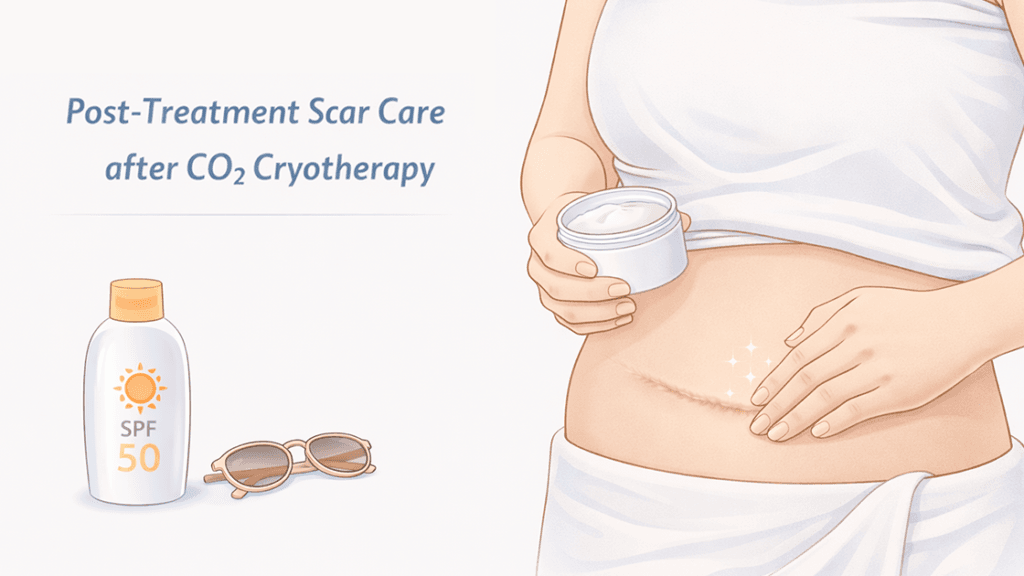
Following laser scar reduction, proper aftercare plays a crucial role in achieving optimal results and preventing complications. The treatment area may appear slightly red or feel warm immediately afterward — a normal response that usually subsides within a few days. Patients are advised to keep the area clean and moisturized, using gentle, non‑perfumed products. Sun protection is essential; broad‑spectrum sunscreen with high SPF should be applied daily to prevent hyperpigmentation. Avoiding excessive heat (such as saunas or hot tubs) and strenuous activity for the first 24 to 48 hours supports healing. Some clinicians recommend gentle scar massage after the skin has sufficiently healed, as this can further improve collagen alignment. Adhering to post‑treatment guidelines enhances comfort and helps maintain the progress achieved through laser therapy.
5. Long-Term Results and Expectations
Realistic expectations, ongoing care, and understanding how tissue changes over time are key to appreciating the long‑term benefits of laser scar reduction.
5.1 Scar Appearance Improvement
With a complete course of treatment and appropriate aftercare, most individuals observe a marked improvement in scar texture, color, and contour. Atrophic or depressed scars become smoother as new collagen fills irregular spaces. Raised scars typically flatten and soften, with a decrease in redness and firm edges. Pigmentation irregularities — whether hyperpigmented (darker) or hypopigmented (lighter) areas — also tend to normalize as the skin undergoes remodeling. These changes are gradual and cumulative; for many patients, noticeable results emerge after several weeks and continue to improve for months. Laser scar reduction does not erase scars completely, but it significantly enhances their aesthetic appearance and feel, often boosting confidence and comfort in clothing or daily activities.
5.2 Maintaining Results
Sustaining the benefits of laser scar therapy involves a combination of regular skincare, protective measures, and, in some cases, periodic maintenance treatments. Consistent use of sunscreen prevents new pigmentation changes caused by ultraviolet radiation. Maintaining healthy skin through balanced nutrition, hydration, and routine moisturization supports ongoing repair. For individuals with a history of hypertrophic or keloid scarring, clinicians may recommend follow‑up sessions at extended intervals to reinforce the structural improvements. Monitoring scars over time allows early intervention if changes recur or if new concerns emerge. With proper care, many patients experience long‑lasting enhancements in scar appearance and skin texture.
FAQ
Q1: Is laser scar reduction safe for all surgical scars?
Laser scar reduction is generally safe when performed by a trained clinician. Safety depends on factors such as scar type, skin tone, and overall health. A thorough evaluation helps determine suitability.
Q2: How many sessions are usually needed for noticeable improvement?
Most individuals require multiple sessions — often 3 to 6 — spaced several weeks apart. The exact number depends on the scar’s age, depth, and patient response.
Q3: Are there side effects or risks?
Short‑term redness, swelling, or slight discomfort may occur. Rarely, temporary changes in pigmentation can develop. Following pre‑ and post‑care guidelines minimizes risk.
Q4: Can laser treatment completely remove a scar?
Laser therapy improves texture, color, and contour, but cannot completely erase a scar. The goal is significant cosmetic and structural enhancement.
Q5: How soon can normal activities resume after a session?
Most patients return to normal light activities immediately. Avoiding vigorous exercise and sun exposure for a short period enhances healing.
Conclusão
Laser scar reduction, including CO₂ cryotherapy‑based approaches, offers a scientifically grounded, non‑invasive option for improving the appearance and structure of C‑section and other surgical scars. By stimulating collagen remodeling, enhancing circulation, and targeting pigmentation irregularities, it provides meaningful cosmetic and functional improvements. With appropriate pre‑treatment assessment, tailored treatment planning, and diligent aftercare, many individuals experience smoother, more even scars that blend with surrounding skin. While results vary, the cumulative benefits of laser therapy can restore confidence and comfort, making it a compelling choice within modern scar management strategies.
References
Gold MH. Laser treatment of scars: an overview. Dermatologic Surgery.
https://pubmed.ncbi.nlm.nih.gov/30860374/
Manuskiatti W, Fitzpatrick RE. Treatment of hypertrophic scars and keloids. Dermatologic Therapy.
https://pubmed.ncbi.nlm.nih.gov/12190547/
Hultman CS et al. Surgical scar revision and laser therapy. Clinics in Plastic Surgery.
https://pubmed.ncbi.nlm.nih.gov/21839002/
Zhang X et al. Laser therapy for scar management: mechanisms and clinical applications. Lasers in Medical Science.
https://pubmed.ncbi.nlm.nih.gov/32317822/
Chung VQ, Cho BK. Non-invasive laser therapy for improving scar appearance. Journal of Cosmetic Dermatology.