Introduction
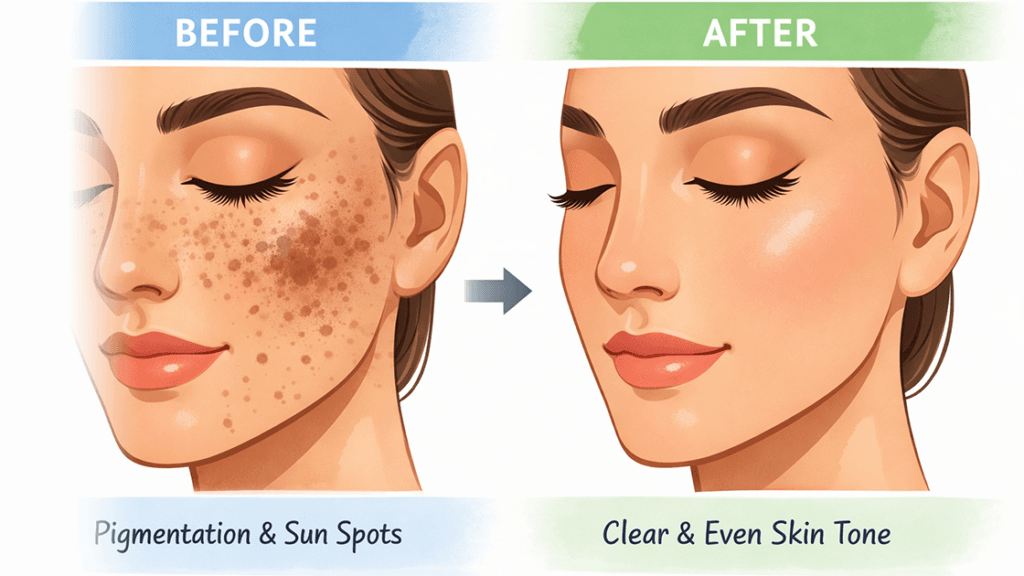
Skin pigmentation and sun damage are among the most common cosmetic concerns faced by individuals of all ages. Conditions such as freckles, sun spots, melasma, and age-related lentigines not only affect the aesthetic appearance of the skin but can also indicate underlying photodamage. Traditional topical treatments, including bleaching creams, exfoliation, and chemical peels, provide limited results and often require long-term commitment. Laser therapy has emerged as a precise, safe, and effective solution, capable of targeting specific pigmentation issues while promoting overall skin rejuvenation. This article explores the mechanisms, applications, benefits, and considerations of laser treatments for pigmentation and sun-induced skin damage.
1. Understanding Skin Pigmentation and Sun Damage
1.1 Types of Pigmentation Disorders
Skin pigmentation disorders vary widely in appearance and etiology. Freckles are small, flat, tan or light-brown spots often triggered by sun exposure and genetic predisposition. Sun spots, also known as solar lentigines, are darker patches appearing on chronically sun-exposed areas such as the face, hands, and décolletage. Melasma manifests as symmetric, blotchy brown patches, frequently exacerbated by hormonal changes or pregnancy. Age-related lentigines, commonly called liver spots, develop with cumulative ultraviolet (UV) exposure over time.
Each of these pigmentation types involves an overproduction or irregular distribution of melanin, the pigment responsible for skin color. While topical creams can lighten some superficial pigmentation, they are generally less effective on deeper or more stubborn pigment accumulations. Understanding the type of pigmentation is crucial for selecting the appropriate laser treatment, as different wavelengths and energy settings target specific melanin depths.
1.2 Mechanisms of Sun Damage
Sun damage occurs primarily due to ultraviolet (UV) radiation, specifically UVA and UVB rays. UVA penetrates deeply into the dermis, promoting collagen degradation, elastin breakdown, and free radical generation. UVB primarily affects the epidermis, causing erythema, sunburn, and DNA damage. Chronic exposure leads to photoaging, characterized by wrinkles, laxity, pigmentation irregularities, and an increased risk of precancerous lesions.
Free radicals generated by UV radiation can oxidize cellular components, including lipids, proteins, and DNA, accelerating both pigmentation irregularities and structural skin aging. Laser therapy addresses these issues by precisely targeting the affected pigment, breaking it down without harming surrounding tissues, and stimulating dermal repair mechanisms that counteract some of the underlying UV-induced damage.
2. Laser Technology for Pigmentation Treatment
2.1 Types of Lasers Used
Multiple laser technologies are utilized to treat pigmentation effectively. Q-Switched Nd:YAG lasers are versatile and suitable for various skin types, particularly darker skin tones, due to their longer wavelength and reduced risk of post-inflammatory hyperpigmentation. Alexandrite lasers are ideal for lighter skin types and target superficial pigmentation effectively. Picosecond lasers, a newer technology, deliver ultrashort pulses to shatter pigment more efficiently, minimizing heat diffusion to surrounding tissues and enhancing safety.
The selection of laser depends on several factors, including skin type, pigment depth, size of the lesion, and previous treatments. Laser therapy provides non-invasive, precise energy delivery, making it a highly controlled and safe option compared to more aggressive resurfacing techniques.
2.2 Mechanisms of Laser Pigment Removal
Laser treatment works through a process called selective photothermolysis, where specific wavelengths are absorbed by melanin pigments. The laser energy converts into heat or mechanical pressure, fragmenting the pigment particles into smaller fragments. These fragments are then naturally cleared by the body’s lymphatic and phagocytic systems, gradually fading the pigmentation over several days to weeks.
Unlike chemical peels or topical agents, laser treatment acts selectively, minimizing damage to surrounding skin and reducing downtime. This precision allows practitioners to target individual spots or larger areas with consistent results, making it suitable for both localized pigmentation and diffuse sun damage.
2.3 Skin Response and Collagen Stimulation
Beyond pigment reduction, laser treatment also stimulates collagen remodeling in the dermis. The mild thermal and mechanical stimulation activates fibroblasts, promoting the production of new collagen and elastin fibers. As a result, the skin becomes firmer, smoother, and more evenly toned, addressing fine lines and improving overall texture. This dual benefit of pigmentation reduction and skin rejuvenation makes laser therapy a comprehensive solution for sun-damaged and aging skin.
3. Treatment Planning and Procedure
3.1 Pre-Treatment Assessment
A thorough pre-treatment evaluation is essential for safety and efficacy. Skin type is assessed using the Fitzpatrick scale, which classifies skin from Type I (very fair) to Type VI (very dark). The type and depth of pigmentation, previous treatments, sun exposure history, and any skin conditions are also evaluated. This ensures that the correct laser wavelength, pulse duration, and energy level are selected for optimal results.
Setting realistic expectations is also crucial. Patients must understand that multiple sessions are often required, and while laser therapy is highly effective, it cannot completely prevent future pigmentation caused by sun exposure.
3.2 The Laser Procedure
During the procedure, the targeted area may be cooled using a chilled tip, air-cooling device, or topical numbing to improve comfort. The practitioner applies the laser systematically across the pigmented region, adjusting parameters for depth and intensity based on skin type and pigment characteristics. Patients may feel a brief stinging or snapping sensation during treatment, which is generally well-tolerated.
The duration of a session depends on the size and number of areas treated, typically ranging from 15 to 45 minutes. Multiple sessions spaced weeks apart are often recommended to achieve the best cosmetic outcomes, allowing the body to metabolize fragmented pigment between treatments.
3.3 Post-Treatment Care
Proper post-procedure care is essential to maximize results and prevent complications. Patients should:
- Apply cold compresses or soothing gels to reduce redness and swelling
- Keep the treated area moisturized
- Avoid direct sun exposure and apply high-SPF sunscreen daily
- Refrain from scratching, exfoliating, or applying harsh products for at least a week
Short-term side effects may include mild erythema, slight swelling, or temporary darkening of treated spots before fading. With proper care, most patients can resume normal activities immediately.
4. Advantages and Limitations
4.1 Benefits of Laser Treatment
Laser therapy offers several key advantages:
- High Precision: Targets pigment without damaging surrounding skin
- Non-Invasive: No incisions or anesthesia required
- Short Recovery Time: Minimal downtime compared to surgical or deep chemical treatments
- Dual Benefit: Reduces pigmentation and stimulates collagen for rejuvenated skin
These features make laser treatment particularly appealing for individuals seeking effective results with minimal disruption to daily life.
4.2 Limitations and Considerations
Despite its benefits, laser therapy has limitations:
- Multiple Sessions Needed: Some pigmentation may require 3–6 sessions or more for optimal results
- Variable Efficacy: Deep or stubborn pigmentation may respond slower
- Potential Risks: Overexposure may cause temporary hyperpigmentation, hypopigmentation, or mild burns if improperly administered
- Cost: Advanced laser treatments may be more expensive than topical alternatives
Selecting a qualified, experienced practitioner and adhering to post-treatment care protocols is essential to minimize risks and maximize results.
FAQs
Is laser treatment safe?
Yes, when performed by a certified professional, laser therapy is generally safe with minimal side effects.
How long does it take to see results?
Visible improvement can appear after 1–2 weeks, with optimal results often achieved after several sessions.
Can laser treat melasma?
Yes, but it may require specialized wavelengths and multiple sessions due to the complexity of melasma.
Can I undergo treatment in summer?
It is possible, but strict sun protection is essential before and after treatment to prevent complications.
Will it leave scars?
Properly performed laser treatments rarely cause scarring. Minor redness or temporary darkening may occur but usually resolves within days.
Do I need special skincare after laser?
Yes, moisturizing, gentle cleansing, and diligent sunscreen use are essential to protect and maintain results.
Conclusion
Laser therapy represents a highly effective, non-invasive approach for treating skin pigmentation and sun-induced damage. By targeting specific melanin deposits while stimulating dermal collagen remodeling, it not only improves uneven skin tone but also enhances texture, firmness, and overall radiance. When combined with careful pre-treatment assessment, professional execution, and proper post-care, laser treatment can provide lasting, safe, and visible results. For individuals seeking clearer, healthier, and rejuvenated skin, laser therapy offers a scientifically proven solution that goes beyond traditional topical treatments.
References
Rosen, T., & West, D. Laser Treatment of Pigmented Lesions. Dermatologic Clinics, 2014; 32(1): 25–35.
https://pubmed.ncbi.nlm.nih.gov/24480890/
Hedelund, L., et al. Q-switched Nd:YAG Laser for Hyperpigmentation: Mechanisms and Efficacy. Lasers in Surgery and Medicine, 2009; 41(2): 85–93.
https://pubmed.ncbi.nlm.nih.gov/19173837/
Alexiades-Armenakas, M. Laser and Light-Based Treatments for Skin Pigmentation. Journal of Cosmetic Dermatology, 2016; 15(1): 10–21.
https://pubmed.ncbi.nlm.nih.gov/26790406/
Bernstein, E. F. Principles of Laser Dermatology. Dermatologic Surgery, 2012; 38(9): 1349–1358.
https://pubmed.ncbi.nlm.nih.gov/22889268/
Rheinlasers. Laser Treatments for Pigmentation and Sun Damage.