Introduction
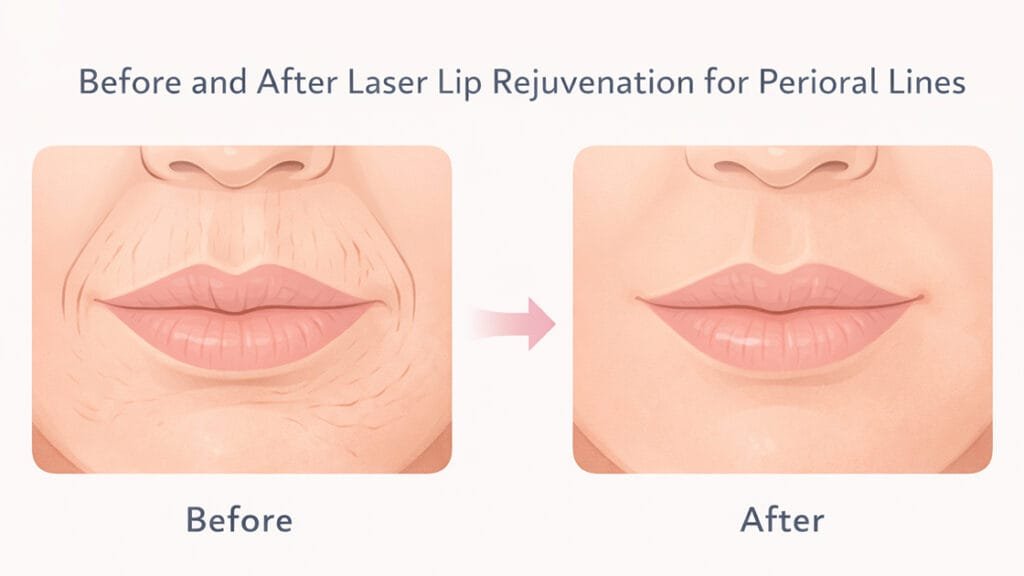
Perioral lines, commonly referred to as smoker’s lines, are fine vertical wrinkles that form around the mouth as a result of intrinsic aging, repetitive muscle movement, and environmental damage. Because the perioral area contains thinner skin and fewer sebaceous glands, it is particularly susceptible to collagen loss and texture changes over time. Traditional aesthetic treatments may offer temporary improvement, but advances in laser technology have introduced laser lip rejuvenation as a precise, non-invasive solution. By stimulating collagen remodeling and improving dermal structure, laser therapy provides a scientifically supported approach to restoring smoother, firmer skin around the lips while preserving natural facial expression.
1. Understanding Perioral Lines and Lip Aging
Before exploring laser-based solutions, it is essential to understand the anatomical and biological factors that contribute to perioral aging. These lines differ from other facial wrinkles in both cause and treatment considerations.
1.1 What Are Perioral Lines (Smoker’s Lines)?
Perioral lines are vertically oriented wrinkles that develop in the skin surrounding the lips, particularly along the upper lip. Medically, they are classified as fine rhytides caused by repetitive contraction of the orbicularis oris muscle combined with progressive dermal thinning. Unlike nasolabial folds, which are primarily volume-related, perioral lines are surface-level structural changes in the epidermis and dermis. They may appear even in individuals who have never smoked, as aging, ultraviolet exposure, and facial dynamics all contribute. These lines can deepen over time, creating an aged or tense appearance and disrupting lip contour symmetry.
1.2 Causes of Lip Aging
Lip aging is multifactorial and results from both intrinsic and extrinsic mechanisms. Intrinsic aging involves the gradual reduction of collagen type I, elastin fibers, and hyaluronic acid within the dermal matrix. Extrinsic aging, or photoaging, is driven by ultraviolet radiation, which accelerates collagen degradation through increased matrix metalloproteinase activity. Repetitive lip movements, such as speaking or pursing, further contribute to wrinkle formation. Lifestyle factors including smoking, dehydration, and poor skincare exacerbate oxidative stress and impair tissue regeneration. Because the perioral region lacks a robust lipid barrier, these combined effects manifest earlier and more prominently than in other facial areas.
2. What Is Laser Lip Rejuvenation?
Laser lip rejuvenation represents a targeted dermatologic approach designed to address the specific challenges of perioral aging while preserving the delicate anatomy of the lip area.
2.1 Definition of Laser Lip Rejuvenation
Laser lip rejuvenation is a medical aesthetic procedure that uses controlled laser energy to improve skin texture, reduce fine lines, and stimulate collagen regeneration around the lips. The treatment works by delivering precise thermal energy to the dermal layers, triggering a wound-healing response without significant surface damage. This process encourages fibroblast activation and new collagen synthesis, leading to gradual skin tightening and smoothing. Unlike injectable fillers, laser rejuvenation focuses on improving skin quality rather than adding volume, making it a preferred option for patients seeking natural-looking rejuvenation.
2.2 Types of Lasers Used for Lip Rejuvenation
Several laser technologies are utilized for perioral rejuvenation, each with distinct tissue interactions. Fractional non-ablative lasers penetrate the dermis while preserving the epidermis, promoting collagen remodeling with minimal downtime. Fractional CO₂ lasers provide ablative resurfacing, removing micro-columns of damaged tissue to stimulate robust regeneration. Er:YAG lasers offer precise ablation with controlled thermal effects, making them suitable for delicate areas such as the lips. Selection depends on wrinkle severity, skin type, and desired recovery time, underscoring the importance of professional assessment.
3. How Laser Lip Rejuvenation Works
Understanding the biological mechanisms behind laser therapy highlights why it is effective for treating perioral lines without compromising safety.
3.1 Stimulating Collagen Remodeling
Laser energy induces controlled thermal injury within the dermis, activating fibroblasts responsible for collagen production. This process initiates neocollagenesis and collagen reorganization, strengthening the skin’s structural framework. Over time, newly formed collagen fibers replace damaged ones, improving skin resilience and firmness. Unlike topical treatments that act superficially, laser therapy targets deeper tissue layers where aging originates. This regenerative response continues for weeks to months following treatment, resulting in progressive improvement rather than immediate but short-lived effects.
3.2 Improving Skin Texture and Elasticity
Beyond collagen stimulation, laser therapy enhances overall skin texture by promoting epidermal turnover and dermal thickening. Heat-induced remodeling increases elastin fiber integrity, improving elasticity and resistance to mechanical stress. Enhanced microcirculation delivers oxygen and nutrients essential for tissue repair. As the perioral skin becomes more resilient, fine lines soften and the lip border appears smoother. These changes contribute to a refreshed appearance without altering natural lip movement or facial expression.
3.3 Reducing Fine Lines Safely
Safety is a critical concern when treating the lip area due to its sensitivity. Laser systems designed for perioral rejuvenation use adjustable energy parameters to precisely target affected tissue while minimizing collateral damage. Fractional delivery creates microthermal zones surrounded by intact skin, accelerating healing and reducing complication risk. This controlled approach allows effective wrinkle reduction while preserving mucosal integrity and preventing scarring or pigment alteration.
4. Benefits of Laser Lip Rejuvenation
Laser-based rejuvenation offers distinct advantages compared to traditional anti-aging treatments, particularly for delicate facial regions.
4.1 Non-Invasive Anti-Aging Solution
Laser lip rejuvenation is non-invasive or minimally invasive, eliminating the need for surgical intervention or implants. This reduces procedural risk, shortens recovery time, and increases patient acceptance. The absence of incisions or foreign substances makes laser therapy suitable for individuals seeking gradual, natural improvement rather than dramatic alteration.
4.2 Natural-Looking Results
Because laser treatment enhances the skin’s intrinsic regenerative processes, results develop gradually and appear natural. Rather than artificially filling wrinkles, laser therapy restores dermal quality, allowing facial expressions to remain authentic. This subtle improvement aligns with modern aesthetic preferences emphasizing refinement over transformation.
4.3 Suitable for Delicate Lip Area
Laser systems can be precisely calibrated for the thin perioral skin, making them safer than aggressive chemical peels or deep dermabrasion. The ability to control depth and intensity allows practitioners to tailor treatment to individual anatomy, reducing the risk of adverse effects.
5. Treatment Protocol and Procedure
A structured treatment protocol ensures optimal outcomes and patient safety throughout the laser rejuvenation process.
5.1 Pre-Treatment Assessment
Prior to treatment, a comprehensive skin evaluation is conducted to assess wrinkle depth, skin type, and medical history. Factors such as photosensitivity, previous procedures, and healing capacity are considered. This assessment allows clinicians to select appropriate laser settings and establish realistic expectations.
5.2 Treatment Process
During the procedure, laser energy is delivered evenly across the perioral area using controlled pulses. Protective measures are applied to surrounding tissues, and cooling systems may be used to enhance comfort. Treatment duration typically ranges from 10 to 30 minutes, depending on laser type and treatment area.
5.3 Recovery and Downtime
Post-treatment responses may include mild redness, swelling, or sensitivity, which usually resolve within days. Non-ablative treatments require minimal downtime, while ablative lasers may involve a short recovery period. Proper aftercare supports healing and optimizes results.
6. Who Is an Ideal Candidate?
Laser lip rejuvenation is appropriate for a wide range of patients, but ideal candidates share specific characteristics.
6.1 Early Signs of Lip Aging
Patients with fine lines and mild texture changes benefit significantly from early intervention, as collagen stimulation is most effective before advanced degeneration occurs.
6.2 Moderate Perioral Wrinkles
Individuals with moderate wrinkles who prefer non-surgical solutions often achieve noticeable improvement through laser therapy alone.
6.3 Patients Seeking Non-Filler Options
Patients concerned about volume alteration or filler-related risks may prefer laser rejuvenation as a skin-quality–focused alternative.
7. Laser Lip Rejuvenation vs Other Treatments
Comparing laser therapy with alternative treatments highlights its unique advantages.
7.1 Laser vs Dermal Fillers
Fillers add volume but do not address skin texture. Laser therapy improves dermal structure without altering facial proportions.
7.2 Laser vs Chemical Peels
Chemical peels rely on surface exfoliation, whereas lasers target deeper tissue layers for longer-lasting results.
7.3 Combination Treatment Considerations
In some cases, laser therapy can be combined with other modalities for comprehensive rejuvenation under professional guidance.
FAQ
Is laser lip rejuvenation painful?
Most patients experience mild discomfort, which is typically well-tolerated.
How many sessions are needed?
Treatment plans vary, but multiple sessions may enhance results.
Is laser treatment safe for the lip area?
Yes, when performed by trained professionals using appropriate devices.
How long do results last?
Results can last months to years with proper skincare and maintenance.
Conclusion
Laser lip rejuvenation is a scientifically grounded, non-invasive solution for treating perioral lines and restoring youthful skin quality. By stimulating collagen remodeling, improving elasticity, and refining texture, laser therapy addresses the root causes of lip aging rather than masking symptoms. Its precision, safety, and natural-looking outcomes make it a valuable option within modern aesthetic medicine for patients seeking subtle yet effective rejuvenation.
References
Fractional Laser Resurfacing and Collagen Remodeling
https://www.ncbi.nlm.nih.gov/pmc/articles/PMC5843353
Perioral Wrinkles: Etiology and Treatment Options
https://www.sciencedirect.com/science/article/pii/S0738081X20302135
Laser Skin Resurfacing in Aesthetic Dermatology