
소개
Dark circles and eye pigmentation are common cosmetic concerns affecting millions of people worldwide. They can appear as a result of genetics, aging, blood vessel prominence, hyperpigmentation, or lifestyle factors such as inadequate sleep and stress. While many topical creams and serums promise to reduce dark circles, their efficacy is often limited, particularly for deeper pigment deposits or vascular-related discoloration.
The skin around the eyes is thinner and more delicate than other areas, making it highly susceptible to pigment accumulation, blood vessel visibility, and fine lines. This vulnerability has made traditional cosmetic solutions only partially effective, leaving patients frustrated. Laser therapy has emerged as a safe, non-invasive treatment option that targets the underlying causes of dark circles—whether pigmentary, vascular, or structural—providing both immediate and long-term improvements. This article explores the mechanisms, clinical applications, advantages, and considerations of laser therapy for eye pigmentation, offering a comprehensive guide for patients and aesthetic professionals.
1. Understanding Dark Circles and Eye Pigmentation
1.1 Types of Dark Circles
Not all dark circles are the same, and understanding their type is essential for effective treatment. There are three primary categories:
- Pigmentary dark circles – caused by increased melanin deposition in the periorbital skin, often appearing brown or grey. Common in individuals with darker skin tones.
- Vascular dark circles – caused by visible blood vessels under thin skin, leading to bluish or purple hues, exacerbated by poor circulation or blood pooling.
- Structural or anatomical dark circles – caused by shadowing from under-eye hollows, tear troughs, or loss of skin elasticity, appearing as a hollowed shadow rather than true pigmentation.
Each type may coexist with the others, which is why personalized assessment is critical before starting any treatment.
1.2 Why Eye Skin Is More Vulnerable
The periorbital region has unique anatomical characteristics: it is one of the thinnest areas of skin on the body, averaging 0.5mm in thickness, and contains a high density of blood vessels. This thinness makes underlying vascular structures more visible and allows pigment accumulation to show prominently. Additionally, chronic exposure to sunlight, oxidative stress, and repetitive facial expressions can exacerbate dark circles over time. Because of this delicate structure, treatments must be precise and minimally invasive to avoid damaging surrounding tissues.
2. Conventional Treatments and Their Limitations
2.1 Topical Creams and Serums
Many patients attempt to treat dark circles using over-the-counter or prescription creams containing ingredients like vitamin C, retinol, niacinamide, or hydroquinone. While these agents can lighten superficial pigment and improve skin quality to some extent, their effects are limited for deep melanin deposits or vascular dark circles. Creams require prolonged, consistent use, and results are typically subtle and slow.
2.2 Fillers and Cosmetic Procedures
Dermal fillers, typically hyaluronic acid, are used to address tear trough hollows and shadowing, improving structural or anatomical dark circles. While effective for volume restoration, fillers do not treat pigmentation or visible blood vessels. Micro-needling or chemical peels may also help slightly, but again, these approaches have limited efficacy for deeper pigmentation and require multiple sessions.
In summary, conventional treatments often fail to address the multifactorial nature of dark circles. This limitation has increased demand for targeted, minimally invasive procedures like laser therapy.
3. How Laser Therapy Works on Dark Circles
Laser therapy offers a sophisticated approach by targeting specific components contributing to dark circles: pigmentation, vascular visibility, and dermal thinning.
3.1 Targeting Pigmentation
Pigmentary dark circles are caused by excess melanin in the epidermis or dermis. Lasers utilize selective photothermolysis, which delivers specific wavelengths of light absorbed by melanin. This process fragments pigment particles into smaller pieces that the body’s lymphatic system gradually removes.
Modern lasers, such as Q-switched Nd:YAG or picosecond devices, are highly precise, allowing treatment of the periorbital area without damaging surrounding tissue. The result is a progressive lightening of brown or gray pigmentation, usually noticeable after 1–3 sessions, depending on severity.
3.2 Improving Microcirculation
Vascular dark circles result from visible veins or capillaries beneath thin skin. Certain lasers, including pulsed dye lasers (PDL) and KTP lasers, target hemoglobin in these vessels, causing controlled thermal injury that promotes vascular remodeling and resorption. Improved microcirculation reduces blood pooling and diminishes bluish or purple discoloration. This mechanism is especially beneficial for individuals with chronic under-eye swelling and congestion.
3.3 Collagen Stimulation
Laser therapy can also stimulate fibroblast activity in the dermis, promoting new collagen formation. Enhanced collagen thickens the periorbital skin, reducing translucency and improving skin elasticity. Over time, this effect not only reduces the visibility of dark circles but also minimizes fine lines and early signs of aging, providing a more youthful and refreshed appearance.
4. Clinical Applications and Treatment Process
4.1 Patient Assessment and Customized Protocol
Before initiating laser therapy, a thorough assessment is essential. Dermatologists or aesthetic professionals evaluate the type of dark circle, skin sensitivity, history of pigmentation disorders, and any contraindications. A personalized protocol is then developed, selecting appropriate laser type, wavelength, energy settings, and treatment intervals. This tailored approach ensures safety and optimizes efficacy.
4.2 Treatment Sessions and Recovery
Laser sessions are relatively short, typically 15–30 minutes per eye, depending on the device and area treated. Patients may experience mild redness, swelling, or a warming sensation, which usually resolves within 24–48 hours. Protective eyewear is mandatory during procedures to shield the eyes from laser exposure. Multiple sessions spaced 2–4 weeks apart may be required for optimal results.
4.3 Expected Results and Maintenance
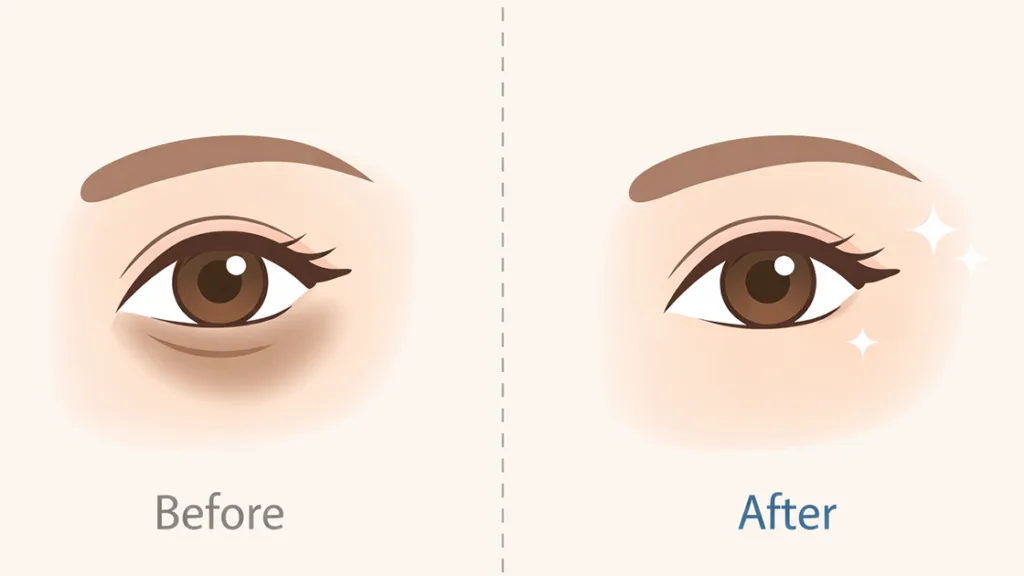
Pigment lightening is gradual, with noticeable improvement often after 1–3 sessions. For vascular dark circles, remodeling of capillaries may take several weeks. Maintenance sessions every 6–12 months, along with sun protection and healthy lifestyle habits, help sustain results and prevent recurrence.
5. Advantages of Laser Therapy for Eye Pigmentation
5.1 Non-Invasive and Precise
Laser therapy avoids injections or surgical incisions, making it minimally invasive. Its precision ensures that only targeted pigment or blood vessels are affected, minimizing collateral tissue damage.
5.2 Minimal Downtime
Most patients can return to daily activities immediately, with only mild transient redness or swelling. This makes it suitable for professionals seeking aesthetic improvements without prolonged recovery.
5.3 Long-Term Results with Collagen Support
Laser-induced collagen remodeling not only improves skin thickness and elasticity but also enhances the long-term appearance of the under-eye area, reducing the likelihood of dark circle recurrence.
6. Who Can Benefit from Laser Eye Treatments?
6.1 Adults with Genetic Pigmentation
Individuals with hereditary brown or gray periorbital pigmentation benefit from targeted laser treatment, which effectively fragments pigment that is resistant to creams.
6.2 Individuals with Blood Vessel-Related Dark Circles
Patients with bluish or purple discoloration due to visible veins see improvement from vascular-targeting lasers, which remodel microvasculature and reduce pooling.
6.3 People with Lifestyle-Induced Eye Pigmentation
Those affected by sleep deprivation, stress, or photodamage experience both pigment and vascular improvements, especially when laser therapy is combined with sun protection and healthy habits.
FAQ
Can laser therapy completely eliminate dark circles?
Laser therapy significantly reduces pigmentation and vascular discoloration but may not entirely remove dark circles if multiple factors (genetic, structural) coexist.
Is the procedure painful?
Most patients report mild discomfort, often described as a warming or snapping sensation. Topical numbing cream can be applied for sensitive individuals.
Is laser safe for the delicate eye area?
Yes, when performed by trained professionals using precise energy settings and protective eyewear.
결과는 얼마나 오래 지속되나요?
Results can last months to years, depending on skin type, maintenance, and lifestyle factors.
Are there any post-treatment precautions?
Sun protection is critical. Avoid aggressive rubbing, chemical peels, or other harsh treatments for 1–2 weeks post-procedure.
결론
Laser therapy offers a safe, effective, and minimally invasive solution for periorbital pigmentation and dark circles. By targeting melanin, remodeling microvasculature, and stimulating collagen production, laser treatments address multiple underlying causes of dark circles. Personalized protocols ensure safety and efficacy, while proper post-treatment care maximizes results. For individuals frustrated with conventional creams or non-specific interventions, laser therapy provides a scientifically backed approach to achieving brighter, rejuvenated eyes.
References
Laser treatment for periorbital pigmentation:
https://pubmed.ncbi.nlm.nih.gov/25674872/
Clinical efficacy of lasers in dark circle management:
https://www.sciencedirect.com/science/article/pii/S0738081X13001190
Laser therapy and collagen stimulation: