はじめに
After the age of 30, many individuals begin to notice that their skin no longer recovers as quickly as it used to. Post-acne marks remain longer, skin looks dull for extended periods, and signs of fatigue become more visible even after rest. These changes are closely linked to collagen decline, slower cellular turnover, and reduced barrier efficiency. In modern aesthetic practice, advanced multi-functional laser systems are increasingly used to support skin tightening, improve skin recovery, and enhance overall dermal resilience through controlled energy-based technology designed to work across multiple skin layers.
1. Why Skin Recovery Naturally Slows After 30
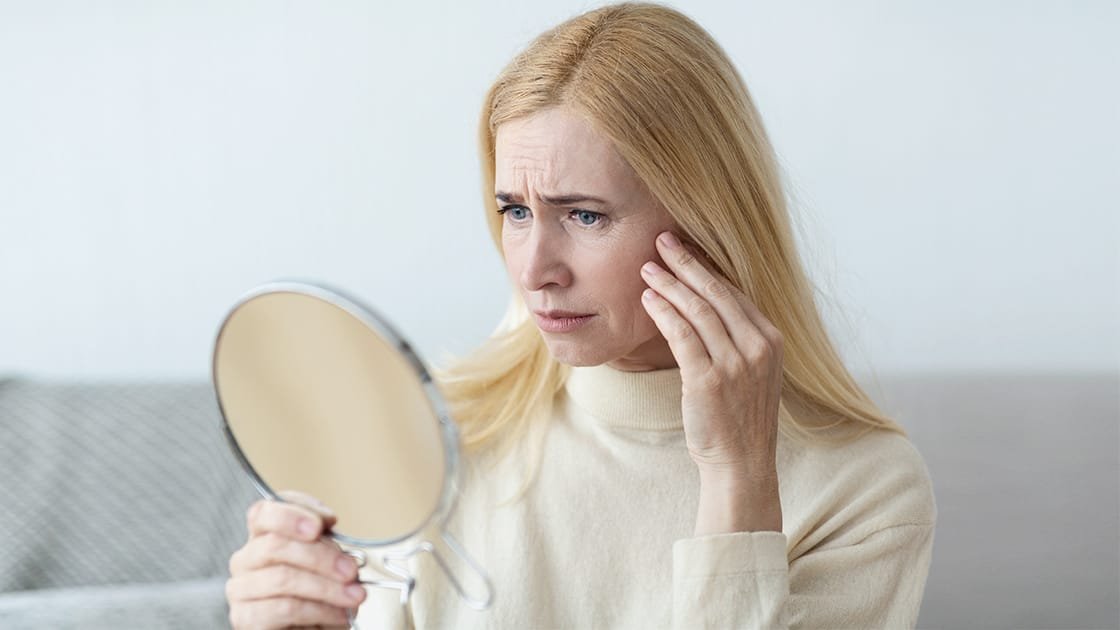
Skin recovery depends on the coordinated function of epidermal renewal and dermal repair. After 30, both processes gradually decline, leading to slower visible healing and reduced skin adaptability. This does not mean the skin stops repairing itself, but the efficiency of regeneration decreases over time.
1.1 Slower Cell Turnover and Dull Complexion
As cell renewal slows, dead skin cells accumulate more easily on the surface. This leads to dullness, uneven tone, and prolonged visibility of post-inflammatory marks. The skin becomes less responsive to environmental changes and takes longer to return to a balanced, radiant state.
1.2 Collagen Reduction and Structural Weakening
Collagen plays a central role in maintaining firmness and elasticity. With age, collagen production declines, weakening the dermal structure. This affects not only wrinkle formation but also slows the skin’s ability to recover from stress, dehydration, and minor inflammation.
1.3 Skin Barrier Decline and Sensitivity Increase
A weakened skin barrier results in higher moisture loss and increased sensitivity. External factors such as pollution and UV exposure have a stronger impact, and recovery from irritation or redness takes significantly longer.
2. Lifestyle Factors That Slow Down Skin Recovery
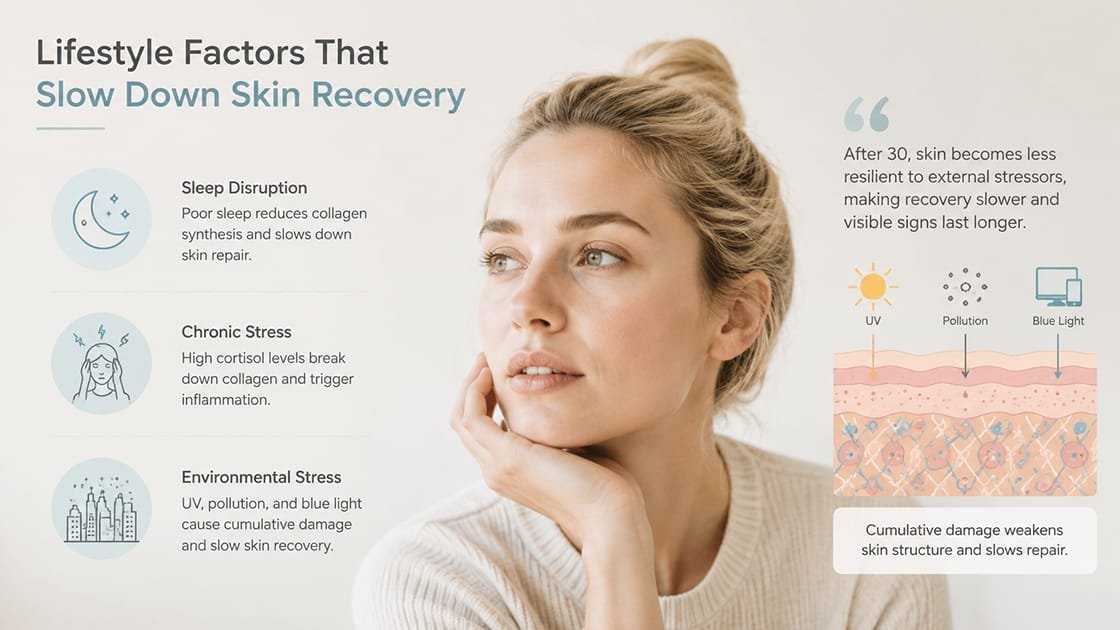
Beyond biological aging, lifestyle habits play a major role in how quickly the skin heals and restores itself. After 30, the skin becomes less resilient to external stressors.
2.1 Sleep Disruption and Reduced Repair Efficiency
Sleep is a key phase for skin regeneration. During deep sleep, collagen synthesis and cellular repair are activated. When sleep quality declines, these processes are interrupted, leading to prolonged dullness and slower recovery from fatigue.
2.2 Chronic Stress and Cortisol Impact
Long-term stress increases cortisol levels, which negatively affects collagen stability and promotes inflammatory responses. This results in a more persistent tired appearance and reduced skin recovery efficiency.
2.3 Environmental Stress Accumulation
UV exposure, pollution, and digital screen exposure all contribute to cumulative skin stress. Younger skin can recover quickly, but after 30, this accumulated damage becomes more visible and takes longer to resolve.
3. Why Skin Loses Its “Bounce-Back” Ability
The skin’s ability to “bounce back” depends on elasticity, hydration balance, and structural integrity. These factors gradually decline with age, affecting how quickly the skin returns to its normal state.
3.1 Loss of Elastic Fiber Function
Elastic fibers allow the skin to return to its original shape after stretching. As these fibers weaken, facial contours become less defined, and temporary changes such as swelling or expression lines take longer to fade.
3.2 Decreased Hydration Retention
Reduced moisture retention leads to dryness and a less plump appearance. Even with external hydration, the skin struggles to maintain long-lasting moisture balance.
3.3 Slower Inflammatory Resolution
Inflammatory responses such as redness or acne-related irritation take longer to resolve. This prolongs visible imperfections and contributes to an overall sense of delayed skin recovery.
4. How Advanced Multi-Functional Laser Systems Improve Skin Recovery
Modern aesthetic laser technology is designed to support the skin’s natural repair mechanisms by delivering controlled energy into different skin layers. Multi-functional platforms can target multiple concerns simultaneously, including tightening, texture refinement, and pigmentation correction.
4.1 Controlled Dermal Energy Stimulation
Laser energy penetrates into the dermal layer where fibroblast cells are activated. These cells are responsible for collagen production and structural maintenance. Controlled stimulation helps support the skin’s internal repair environment and improves long-term structural stability.
4.2 Skin Tightening Through Deep Tissue Interaction
One of the key functions of advanced laser systems is skin tightening. By delivering energy into deeper tissue layers, the skin gains improved firmness and structural support, especially in areas prone to early laxity such as the jawline and cheeks.
4.3 Multi-Layer Skin Rejuvenation
Multi-functional systems are capable of addressing both superficial and deep skin concerns. This includes improving surface texture, reducing uneven tone, and enhancing overall skin smoothness for a more refined appearance.
5. The Shift Toward Preventive Skin Maintenance
Modern skincare is increasingly focused on prevention rather than correction. Instead of waiting for visible aging signs, many individuals now choose to maintain skin structure earlier.
5.1 Preventive Collagen Support Strategy
Preventive skin management focuses on maintaining collagen levels and barrier integrity before significant decline occurs. This helps slow visible aging progression and supports long-term skin stability.
5.2 Integration of Laser Technology into Skin Care Routines
Energy-based laser systems are becoming part of long-term skin maintenance strategies. They complement topical skincare by targeting deeper structural layers that surface products cannot reach.
5.3 Long-Term Stability Over Short-Term Correction
The focus has shifted from quick fixes to long-term skin health. Maintaining consistent skin quality and resilience is now considered more important than achieving temporary visible changes.
FAQ
Q1: Why does skin recover more slowly after 30?
Because cell turnover slows, collagen decreases, and barrier function weakens.
Q2: How do laser systems help skin recovery?
They deliver controlled energy that supports collagen activity and dermal structure stability.
Q3: Can laser treatments improve skin tightening?
Yes, they enhance deep tissue support and improve firmness.
Q4: Can they also improve pores and texture?
Yes, multi-functional systems help refine skin texture and reduce visible pores.
Q5: Why is preventive skincare becoming more popular?
Because maintaining skin early is more effective than correcting advanced aging changes later.
結論
Skin recovery naturally slows after the age of 30 due to biological aging processes and lifestyle factors. Reduced collagen production, slower cell renewal, and weakened barrier function all contribute to this change. However, modern multi-functional laser systems provide a technology-driven approach to support skin tightening, improve texture, and enhance overall skin resilience. With preventive maintenance strategies, it becomes possible to maintain more stable, healthier skin over time.
References
American Academy of Dermatology – Skin Aging Overview
https://www.aad.org/public/everyday-care/skin-care-basics/care/anti-aging
Healthline – Skin Aging and Repair
https://www.healthline.com/health/beauty-skin-care/skin-aging
Mayo Clinic – Laser Skin Resurfacing
https://www.mayoclinic.org/tests-procedures/laser-resurfacing/about/pac-20385114
Dermatology Times – Aesthetic Laser Technology Trends
https://www.dermatologytimes.com/view/noninvasive-aesthetic-treatments-growth-trends
NCBI – Photobiomodulation and Skin Biology
https://www.ncbi.nlm.nih.gov/pmc/articles/PMC3926176/
Lorem ipsum dolor sit amet, consectetur adipiscing elit. Ut elit tellus, luctus nec ullamcorper mattis, pulvinar dapibus leo.