
はじめに
Smooth, hair-free backs and chests are no longer a niche preference reserved for bodybuilders and models. Across gyms, offices, and social circles, more men are choosing laser hair removal. They want to solve daily grooming frustrations. These frustrations go far beyond appearance. Research shows searches for “laser hair removal for men” have risen over 70% in five years. In metropolitan areas, about one in three men has already tried at least one session. Some suffer from chronic skin irritation from coarse back hair. Others face the endless cycle of shaving, waxing, and ingrown hairs. Their motivations are practical, not just aesthetic. This article explores why men are making the switch. It also explains how advanced laser technology works on a physiological level. Finally, it covers what every man should know before starting his hair‑free journey.
1. The Physical Toll of Back and Chest Hair During Exercise
1.1 Why Sweat-Trapped Hair Leads to Folliculitis and Skin Infections
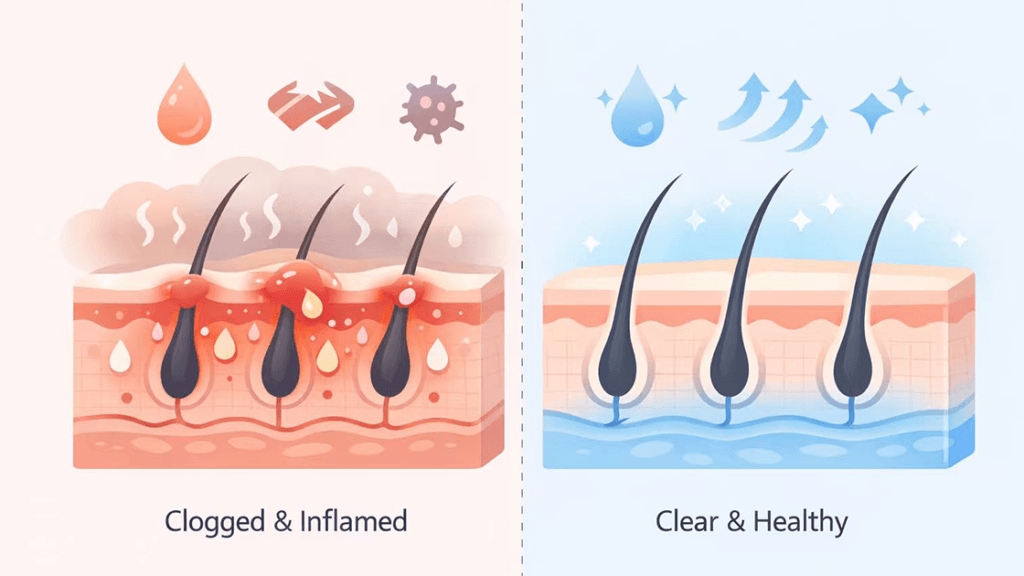
For men who train regularly, the combination of coarse back or chest hair, sweat, and friction creates an ideal environment for skin breakdown. Constant movement during running, weightlifting, or cycling causes hair shafts to rub against clothing and skin, leading to micro‑abrasions. Sweat then traps bacteria and dead cells around the hair follicles, triggering an inflammatory response known as folliculitis. When left untreated, this can progress to painful boils or even cellulitis.
1.1.1 The Role of Advanced Laser Technology in Reducing Post-Exercise Inflammation
Modern laser systems target hair follicles with precision. They also minimize impact on surrounding tissue. High‑power diode lasers at 810nm work well for male trunk hair. This wavelength penetrates deep into the dermis. Coarse terminal hairs reside there. Melanin in the hair shaft absorbs the laser energy. The energy converts to controlled heat. This heat disrupts the follicular structure that drives regrowth. A series of sessions permanently reduces hair density. This eliminates the friction and bacterial trapping that cause post‑workout folliculitis. Men with recurrent exercise‑related skin infections find relief. The approach resolves existing irritation. It also prevents future flare‑ups entirely.
2. The Financial and Time Cost of Traditional Male Grooming Methods
2.1 Razors, Waxes, and Creams Add Up Quickly
Many men spend hundreds of dollars annually on disposable razors, shaving creams, waxing appointments, and depilatory lotions. More importantly, they lose countless hours each week contorting to shave their own backs or scheduling salon visits. The repeated trauma of shaving also leads to pseudofolliculitis barbae—a condition where curly hairs re‑enter the skin, causing painful, dark bumps. Over time, these methods not only fail to provide lasting smoothness but also worsen skin texture and pigmentation.
2.1.1 Professional Laser Hair Removal as a Cost-Effective Long-Term Investment
Professional laser hair removal systems deliver stable, high-fluence energy. They work efficiently on large areas like the back and chest. This makes them far better than home devices or temporary methods. A full back treatment needs six to eight sessions. Sessions are four to six weeks apart. Most men then see an 80 to 95 percent permanent hair reduction. Upfront costs range from $1,200 to $4,000. The price depends on the clinic and location. However, razors, waxes, and creams often cost more over five years. Many professional systems also use integrated contact cooling. This technology protects the skin during treatment. It also reduces the need for numbing creams. As a result, patients pay less out of pocket and enjoy greater comfort.
3. Why Professional Laser Systems Are Revolutionizing Men‘s Hair Removal
3.1 The Science Behind Effective and Comfortable Hair Reduction
Professional laser hair removal works on selective photothermolysis. Melanin in the hair shaft absorbs specific light wavelengths. It converts that energy into heat. The heat then damages the follicular structures that control hair growth. Male patients typically have thicker, denser hair than female patients. So the choice of laser wavelength is critical. Diode lasers at 810nm offer a good balance of melanin absorption and penetration depth. They treat coarse back and chest hair effectively. They work across a range of skin phototypes.
3.1.1 How Advanced Features Minimize Discomfort and Maximize Safety
One of the primary barriers for men is the fear of pain. Advanced professional systems solve this with integrated contact cooling technology. It continuously cools the skin’s surface during each laser pulse. This reduces thermal sensation at the epidermis. At the same time, sufficient energy reaches the deeper hair follicles. Clinical comparisons show diode and alexandrite lasers are very effective for hair reduction. Patients also rate them as the most tolerable in terms of discomfort. For men with darker skin tones (Fitzpatrick types IV to VI), longer wavelengths like 1064nm offer a safer option. These wavelengths bypass superficial melanin. They target the follicle more selectively. This significantly lowers the risk of burns or post‑inflammatory hyperpigmentation.
4. Real Men, Real Results: Who Benefits Most From Laser Hair Removal
4.1 From Bodybuilders to Sensitive-Skin Sufferers
The ideal candidate for male laser hair removal is not limited to one body type. Competitive bodybuilders and fitness models seek hairless backs and chests to accentuate muscle definition under stage lighting. Meanwhile, men with dermatological conditions such as hidradenitis suppurativa—characterized by recurrent abscesses in hairy, sweaty areas—often find that permanent hair reduction dramatically reduces flare‑ups. Clinical studies have demonstrated that laser hair removal is effective in treating chronic inflammatory conditions including pseudofolliculitis barbae and folliculitis, particularly when intervention occurs at an early disease stage.
4.1.1 Case Scenarios: Athletes and Professionals Achieving Smooth Skin
Consider a competitive swimmer who shaves his entire torso before every meet. The repeated razor use causes chronic folliculitis and ingrown hairs, forcing him to miss practices. After six sessions using a professional diode laser system with contact cooling, his back hair thickness decreases by over 90 percent, and he no longer needs to shave. Another example is an office executive who avoids golf outings because excessive chest hair leads to painful chafing under his polo shirt. Professional laser treatments allow him to groom pain‑free, boosting his confidence in professional social settings. In both cases, the integration of advanced cooling technology means no time off work or training—a critical advantage for busy men. According to dermatologists, the most common areas men treat are the back, chest, and shoulders, with many also adding the abdomen for a complete, uniform result.
5. What Every Man Should Know Before Starting Laser Hair Removal
5.1 Key Factors: Skin Type, Hair Thickness, and Technology Choice
Not all laser systems are created equal. The effectiveness and safety of treatment depend heavily on matching the appropriate laser wavelength to the patient’s skin type and hair characteristics. Alexandrite lasers operating at 755nm offer high effectiveness for individuals with lighter skin and dark hair, as the wavelength absorbs strongly into melanin. Diode lasers at 810nm provide versatility across a broader range of skin tones and suit particularly well for treating thick, coarse male hair on large surface areas like the back and chest. Nd:YAG lasers at 1064nm penetrate deepest and are the safest option for darker skin tones or tanned skin. Men should also understand that hormonal factors, such as high testosterone levels, may influence regrowth patterns and could require occasional maintenance sessions after the initial treatment series is complete.
5.1.1 Why Professional-Grade Laser Technology Is a Game-Changer for Male Grooming
The key advantage of professional laser hair removal lies in its power, precision, and safety features. Unlike at‑home intense pulsed light devices, which deliver broad‑spectrum light at lower energy levels, professional systems use true laser technology with precisely controlled wavelengths and adjustable pulse durations. Many advanced platforms now incorporate multiple wavelengths within a single system—commonly 755nm, 810nm, and 1064nm—allowing practitioners to tailor treatment parameters to each patient’s unique skin and hair characteristics. Integrated contact cooling protects the epidermis during each pulse, ensuring that energy reaches the hair follicle without overheating the surrounding skin. This combination of power and safety means that men can achieve lasting results with fewer sessions and minimal discomfort.
When selecting a clinic, men should inquire specifically about the laser wavelengths available, the presence of integrated cooling technology, and the practitioner’s experience treating male patients, as male hair density and hormonal regrowth patterns present unique clinical considerations.
FAQ
Q1: How many sessions does a man typically need for back hair removal?
A: Most men require 6 to 8 sessions spaced 4 to 6 weeks apart. Thicker hair may need up to 10 sessions for optimal results.
Q2: Does laser hair removal hurt for men?
A: Most men describe the sensation as a mild rubber band snap against the skin. Integrated contact cooling technology significantly reduces discomfort during treatment.
Q3: Can I shave between laser sessions?
A: Yes, shaving is permitted between sessions. However, waxing and plucking should be avoided, as the hair root must remain intact for the laser to be effective.
Q4: Is laser hair removal safe for men with darker skin?
A: Yes. Nd:YAG lasers operating at 1064nm are specifically designed for darker skin tones, as this wavelength bypasses surface melanin and targets the follicle safely.
Q5: Will the hair grow back thicker after stopping treatments?
A: No. Laser hair removal permanently reduces hair density. Any hair that regrows will be finer, lighter, and sparser than before treatment.
結論
Male laser hair removal has evolved from a niche aesthetic service into a practical solution for chafing, ingrown hairs, and time‑consuming grooming routines. Professional laser systems equipped with advanced features such as 810nm diode technology, multiple wavelength configurations, and integrated contact cooling address the two biggest barriers that have historically kept men away: discomfort and downtime. By delivering precisely controlled energy directly to the hair follicle while protecting the surrounding skin, these technologies allow men to achieve smooth, hair‑free skin without burns, blisters, or extended recovery periods. Whether you are an athlete, a professional, or simply someone tired of razor bumps and recurrent folliculitis, professional laser hair removal offers a scientifically sound, cost‑effective path forward. Consult a qualified provider to assess your skin type and hair characteristics, and take the first step toward a more comfortable, confident daily life.
References
American Academy of Dermatology – Laser hair removal: Overview
https://www.aad.org/public/cosmetic/hair-removal/laser-hair-removal-overview
National Institutes of Health (PMC) – Trunk hair removal treatment with diode laser 810 nm in men population
https://www.ncbi.nlm.nih.gov/pmc/articles/PMC10467235
National Institutes of Health (PMC) – The diverse application of laser hair removal therapy: a tertiary laser unit’s experience
https://pubmed.ncbi.nlm.nih.gov/24189908
GQ – Laser Hair Removal for Men 101, According to a Dermatologist
https://www.gq.com/story/laser-hair-removal-men-dermatologist
Ready Sleek – Back Hair Removal for Men: Every Method Compared (2025 Guide)
https://www.readysleek.com/back-hair-removal-for-men
Phenicia Clinic – Laser hair removal for men: figures, trends & areas
https://clinique-phenicia.com/en/laser-hair-removal-for-men-figures-trends-areas
Rhein Lasers – Treatments page