
はじめに
Uneven body skin tone is a common cosmetic concern that affects areas beyond the face, including the arms, legs, knees, elbows, and back. Factors such as sun exposure, friction, shaving habits, skin sensitivity, and natural pigmentation changes can contribute to differences in skin appearance. As modern skincare continues to expand beyond traditional facial treatments, laser technology has become an option for individuals seeking support for smoother-looking and more balanced skin tone. Advanced laser approaches using specific wavelengths, including 532nm and 1064nm technologies, are designed to target different skin concerns while supporting overall skin appearance. By combining precision energy delivery with professional aesthetic techniques, laser treatments provide a modern approach for individuals interested in improving the appearance of uneven body skin tone.
1. Understanding Uneven Body Skin Tone and Modern Laser Technology
Body skin tone concerns can appear in many forms and may develop due to different environmental and lifestyle factors. Understanding the reasons behind uneven pigmentation helps explain why targeted laser technologies have become increasingly popular in aesthetic skincare.
1.1 What Causes Uneven Skin Tone on the Body?
Uneven body skin tone refers to differences in color, brightness, or overall appearance across different skin areas. Unlike facial skin, body areas often experience repeated friction, pressure, and environmental exposure, which may influence skin appearance over time.
Common areas where people notice uneven tone include:
- Knees and elbows affected by frequent friction
- Underarms influenced by shaving or irritation
- Legs exposed to sunlight
- Back areas affected by lifestyle and skin changes
Melanin, the natural pigment responsible for skin color, plays an important role in pigmentation. When melanin production becomes uneven, certain areas may appear darker or less uniform compared with surrounding skin.
Modern aesthetic technologies focus on supporting more balanced-looking skin by targeting pigment-related concerns while considering different skin types and treatment areas.
1.2 Why Body Pigmentation Requires a Different Approach From Facial Skincare
Many skincare routines focus mainly on the face, but body skin has unique characteristics that require specialized attention.
The skin thickness, exposure level, and daily stress factors vary significantly between facial and body areas. For example, knees and elbows experience frequent bending and friction, while legs and arms may receive repeated sun exposure.
Laser technology provides a targeted approach by allowing professionals to adjust wavelength selection and energy settings based on different skin needs.
Pico laser technology using 532nm and 1064nm wavelengths has gained attention in aesthetic applications because different wavelengths can interact with pigment-related concerns at different depths of the skin.
The 532nm wavelength is commonly associated with superficial pigment concerns, while 1064nm technology can support applications involving deeper skin layers.
This multi-wavelength approach allows aesthetic professionals to consider individual skin characteristics rather than applying one single method to every situation.
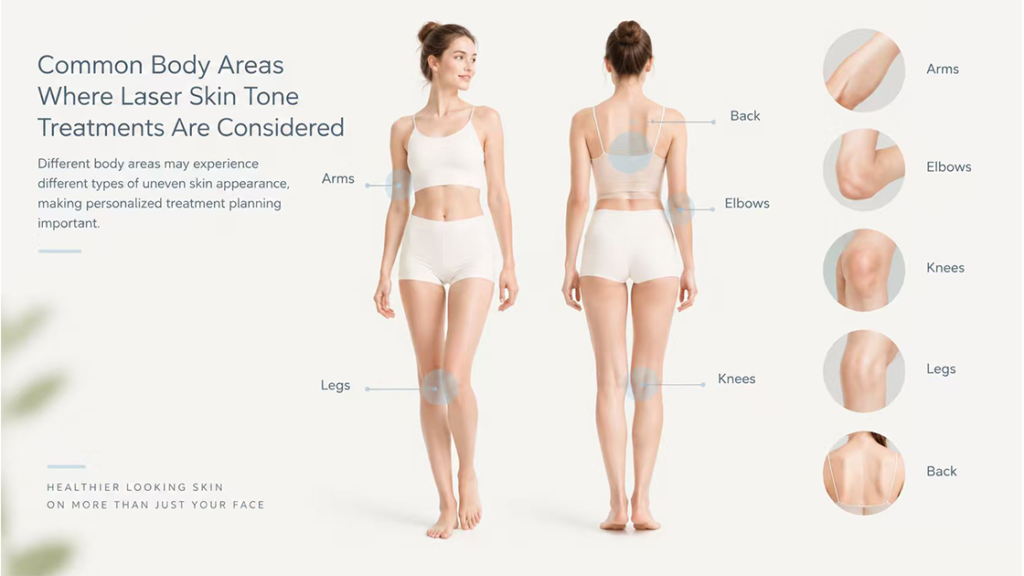
1.3 Common Body Areas Where Laser Skin Tone Treatments Are Considered
Different body areas may present different types of uneven skin appearance, making personalized treatment planning important.
The arms are one of the most visible areas where people may notice differences in skin tone caused by sun exposure or previous irritation.
The legs often experience pigmentation changes related to shaving, environmental exposure, or daily activities. Since many people prefer smoother-looking legs, maintaining balanced skin appearance has become an important part of modern body skincare.
The back is another area where people may seek aesthetic improvement. Because the back can be difficult to care for with traditional skincare methods, professional laser approaches provide another option for supporting overall skin appearance.
By focusing on specific areas, laser treatments allow a more customized approach to body skincare.
2. How Laser Technology Supports Body Skin Tone Improvement
Laser-based aesthetic treatments have developed significantly as technology continues to improve. Modern systems combine precise energy control with different wavelength options to address various cosmetic skin concerns.
2.1 The Role of Pico Laser Technology in Pigment-Related Skin Care
Pico laser technology uses extremely short energy pulses to interact with targeted areas of pigmentation.
Unlike traditional approaches that rely only on surface-level skincare products, laser technology delivers controlled energy into the skin to support pigment-related cosmetic improvements.
The short pulse duration allows energy to be delivered efficiently while focusing on specific treatment goals.
For uneven body skin tone, Pico laser technology is often considered for areas where pigmentation differences affect overall skin appearance.
The use of different wavelengths, such as 532nm and 1064nm, allows professionals to select appropriate approaches depending on the depth and type of pigmentation concern.
This flexibility makes Pico laser technology an important part of modern aesthetic skincare.
2.2 Understanding 532nm and 1064nm Laser Wavelength Applications
Different laser wavelengths interact with skin tissue in different ways.
The 532nm wavelength is commonly used for concerns involving more superficial pigmentation. It is often considered when addressing visible color differences closer to the surface of the skin.
The 1064nm wavelength provides deeper penetration characteristics and is frequently used in aesthetic applications requiring deeper energy delivery.
By combining multiple wavelengths, advanced laser systems provide greater flexibility for professionals managing different skin appearance concerns.
For body areas such as arms, legs, and back, wavelength selection allows treatment approaches to be adjusted according to individual needs and skin conditions.
2.3 How Laser Technology Fits Into Modern Body Skincare Routines
Modern consumers increasingly view skincare as a full-body wellness routine rather than a facial-only practice.
Body skincare now includes concerns related to:
- Skin tone balance
- Texture appearance
- Overall smoothness
- Confidence in visible areas
Laser technology complements traditional skincare by providing professional options for individuals seeking targeted aesthetic support.
When combined with healthy skincare habits, sun protection, and appropriate maintenance routines, laser treatments can become part of a comprehensive approach to improving overall skin appearance.
3. Laser Treatments for Different Body Areas With Uneven Skin Tone Concerns
Different parts of the body experience different environmental exposure and daily stress. Because of these differences, laser-based skincare approaches often require customized considerations depending on the treatment area.
Understanding how laser technology can support different body zones helps individuals develop more realistic expectations about modern aesthetic care.
3.1 Supporting More Even-Looking Skin on Arms and Legs
The arms and legs are among the most visible areas of the body, making skin tone consistency an important cosmetic concern for many people.
Daily factors such as sunlight exposure, friction from clothing, shaving routines, and lifestyle habits may influence the appearance of these areas over time.
Laser technology provides a targeted approach that focuses on pigment-related concerns while supporting a smoother-looking skin appearance.
For arm and leg areas, professionals may consider wavelength selection, skin characteristics, and individual goals when developing an appropriate aesthetic plan.
Advanced laser systems with multiple wavelength options allow greater flexibility when addressing different levels of pigmentation appearance.
Rather than focusing only on changing skin color, modern aesthetic approaches often emphasize overall skin balance, brightness, and texture.
3.2 Addressing Uneven Skin Appearance on Knees and Elbows
Knees and elbows are common areas where darker-looking skin may appear because these regions experience frequent pressure and friction.
Daily activities such as kneeling, leaning, exercise, and repeated movement can contribute to changes in skin appearance.
Traditional skincare methods may sometimes be limited in these areas because the skin texture and environmental exposure are different from facial skin.
Laser technology offers another option by providing focused energy that can support pigment-related aesthetic goals.
When considering laser applications for knees and elbows, professionals typically evaluate factors such as skin tone, pigmentation depth, and overall skin condition.
A personalized approach helps ensure that treatment planning matches the unique characteristics of each body area.
3.3 Supporting Back Skin Appearance Through Advanced Laser Technology
The back can be a challenging area for skincare because it is difficult to reach and often receives less daily attention compared with facial areas.
Changes in back skin appearance may be associated with factors such as oil production, previous skin concerns, friction from clothing, and environmental influences.
Laser-based aesthetic approaches can support individuals who want to improve the overall appearance of back skin.
Because the back contains a larger treatment area, advanced systems with precise energy control can provide professionals with greater flexibility during aesthetic procedures.
The goal of these approaches is to support smoother-looking and more balanced skin appearance as part of a comprehensive skincare routine.
4. The Science Behind Laser-Based Skin Tone Care
Understanding the science behind laser technology helps explain why wavelength selection and energy control are important parts of modern aesthetic treatments.
Laser systems work by delivering specific light energy into targeted skin areas. Different wavelengths interact with skin structures in different ways, allowing professionals to select suitable approaches for various cosmetic concerns.
4.1 How Laser Energy Interacts With Pigment-Related Concerns
Pigmentation is influenced by melanin activity within the skin. Laser technology uses controlled light energy that can interact with pigment-containing areas.
The process depends on several factors, including:
- Laser wavelength
- Energy level
- Pulse duration
- Individual skin characteristics
Pico laser technology uses ultra-short pulse durations, allowing energy to be delivered in a precise manner.
This approach has become popular in aesthetic applications because it provides professionals with more control when working with pigment-related concerns.
For body skin tone management, precision is especially important because different areas may respond differently based on thickness, sensitivity, and pigmentation characteristics.
4.2 The Importance of Customized Laser Parameters
Every person’s skin has unique characteristics. Factors such as skin type, pigmentation level, and treatment area influence how professionals select laser parameters.
Modern aesthetic laser systems allow adjustments in:
- Wavelength selection
- Energy output
- Treatment settings
This customization helps create more personalized skincare approaches.
For example, the skin on the knees may require different considerations compared with the skin on the arms or back because each area experiences different levels of friction and environmental exposure.
Customized settings are an important part of responsible aesthetic laser application.
4.3 Combining Laser Technology With Long-Term Skin Wellness
Laser treatments are often considered part of a broader skincare strategy rather than a standalone solution.
Maintaining healthy-looking skin involves multiple factors, including:
- Daily sun protection
- Consistent skincare habits
- Hydration
- Professional aesthetic care when appropriate
Laser technology can support individuals who want additional options for managing uneven-looking skin tone.
By combining advanced technology with proper skincare routines, people can create a more complete approach to maintaining smooth and balanced-looking skin.
5. Why Full-Body Skin Care Is Becoming a Growing Beauty Trend
The beauty industry continues to move beyond traditional facial treatments. More consumers are now paying attention to the appearance of their entire body, including areas that were previously overlooked.
This shift has increased interest in advanced technologies that provide professional solutions for different skin concerns.
5.1 The Growing Demand for Personalized Body Aesthetic Treatments
Modern beauty consumers increasingly prefer personalized treatments that match their specific skin goals.
Instead of choosing general skincare solutions, many individuals look for approaches designed around:
- Specific body areas
- Individual skin conditions
- Personal appearance goals
Laser technology supports this trend by allowing professionals to adjust treatment approaches according to different needs.
Whether focusing on arms, legs, knees, elbows, or back areas, personalized treatment planning helps create more targeted aesthetic experiences.
5.2 The Future of Laser Technology in Body Skincare
As aesthetic technology continues to develop, laser treatments are becoming more versatile and adaptable.
Modern systems combining multiple wavelengths and advanced energy control provide professionals with more options when supporting different skin appearance goals.
The future of body skincare is likely to continue moving toward personalized, technology-based solutions that focus on comfort, precision, and overall skin appearance.
For individuals interested in improving uneven body skin tone, laser technology represents one of the modern approaches available within the expanding field of aesthetic skincare.
FAQ
What causes uneven body skin tone?
Uneven body skin tone can be influenced by factors such as sun exposure, friction, shaving habits, skin sensitivity, and natural pigmentation changes.
Can laser treatments support more even-looking body skin?
Laser treatments can support cosmetic skin tone improvement by targeting pigment-related concerns and promoting a more balanced skin appearance.
Which body areas commonly receive laser skin tone treatments?
Common areas include arms, legs, knees, elbows, and back areas where people may notice differences in skin appearance.
What wavelengths are commonly used in pigment-focused laser treatments?
Common wavelengths include 532nm and 1064nm, which are selected based on different skin concerns and treatment goals.
Are laser treatments a replacement for daily skincare?
No. Laser treatments work best as part of a complete skincare routine that includes sun protection and healthy skin habits.
結論
Uneven body skin tone is a common aesthetic concern that extends beyond facial skincare. Areas such as the arms, legs, knees, elbows, and back may experience changes in appearance due to environmental exposure, friction, and lifestyle factors. Modern laser technology, including multi-wavelength approaches using 532nm and 1064nm energy, provides professionals with flexible options for supporting smoother-looking and more balanced skin. When combined with proper skincare habits and personalized aesthetic planning, laser treatments can become an important part of modern body skincare routines.
References
Laser Treatment of Pigmented Lesions: A Review of Current Technologies
https://www.ncbi.nlm.nih.gov/pmc/articles/PMC5418958
Picosecond Lasers in Dermatology: A Review of Current Applications
https://www.ncbi.nlm.nih.gov/pmc/articles/PMC5843357
Principles and Applications of Laser Technology in Dermatology
https://www.ncbi.nlm.nih.gov/pmc/articles/PMC4291051
Advances in Laser and Light-Based Treatments for Skin Rejuvenation
https://www.ncbi.nlm.nih.gov/pmc/articles/PMC3927082
Advances in Aesthetic Laser Technology and Skin Treatment Applications