
はじめに
Tattoos are a form of personal expression, but changing preferences, lifestyle decisions, or professional requirements may lead some individuals to explore tattoo removal options. After tattoo removal procedures, maintaining healthy-looking skin and supporting the skin recovery process become important considerations. Modern laser technology, especially picosecond laser systems with dual wavelengths such as 532nm and 1064nm, has changed the approach to tattoo pigment management by delivering ultra-short energy pulses that target tattoo pigments more precisely. This article explores how advanced laser technology supports tattoo removal procedures, the role of different wavelengths, and how aesthetic professionals can create more comprehensive skin care plans after laser sessions.
1. Understanding Tattoo Pigments and Skin Changes After Removal Procedures
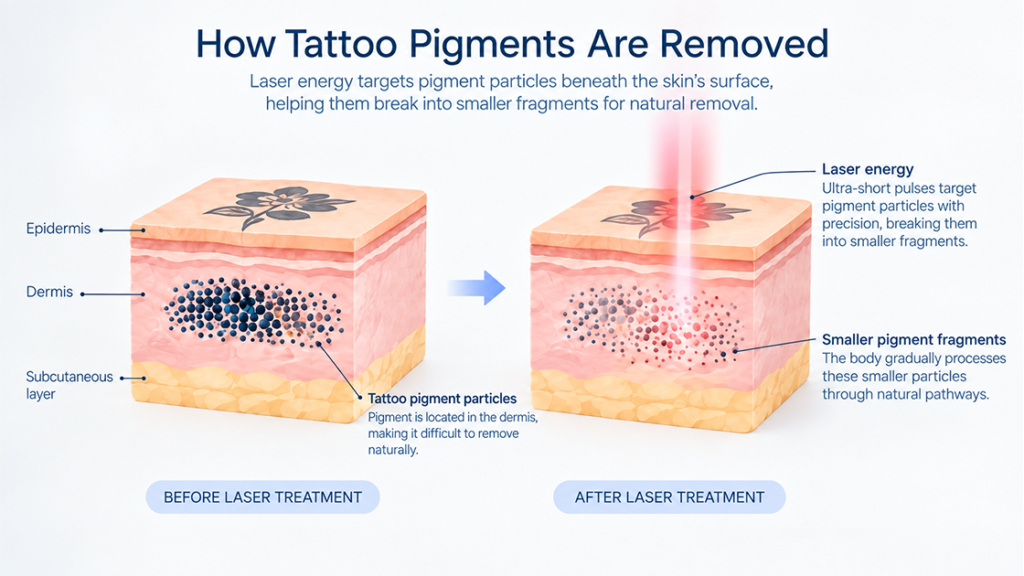
Tattoo ink is designed to remain within the dermal layer of the skin, where pigment particles become difficult for the body to naturally remove completely. When individuals decide to fade or remove tattoos, laser technology provides a targeted approach by focusing energy on pigment particles while supporting the surrounding skin structure.
1.1 Why Tattoo Pigments Are Difficult to Remove
Tattoo pigments are placed beneath the surface layer of the skin, allowing designs to remain visible for many years. Different tattoo colors contain different pigment compositions, which means they respond differently to laser energy.
Dark colors such as black and blue often absorb longer wavelengths effectively, while lighter colors such as red, orange, and yellow may require shorter wavelengths for better pigment targeting. Understanding pigment characteristics allows aesthetic professionals to select appropriate laser settings based on tattoo appearance and skin condition.
1.2 Common Skin Concerns After Tattoo Removal Sessions
After laser tattoo removal, the skin may temporarily experience visible changes as it responds to laser energy. Common concerns include temporary redness, sensitivity, dryness, or changes in skin texture.
Because tattoo removal focuses on pigment particles located inside the skin, post-treatment skin care plays an important role in maintaining a comfortable recovery process. Many individuals look for professional guidance on how to support their skin appearance during different stages of tattoo fading.
1.3 The Growing Demand for Advanced Tattoo Removal Technology
As tattoo styles become more diverse, the demand for advanced removal technology continues to increase. Traditional methods often faced challenges with complex tattoo colors, larger designs, and deeper pigments.
Picosecond laser technology has gained attention because it delivers extremely short pulses that create a photoacoustic effect, helping break pigment particles into smaller fragments. Dual wavelength systems using 532nm and 1064nm allow professionals to address different pigment colors with more flexibility.
2. How Picosecond Laser Technology Supports Tattoo Pigment Management
Picosecond laser technology uses pulse durations measured in trillionths of a second. These rapid energy bursts focus on tattoo pigments through mechanical effects rather than relying mainly on prolonged heat exposure.
2.1 The Role of Ultra-Short Laser Pulses
Ultra-short pulses allow laser energy to interact with pigment particles in a controlled way. When pigment absorbs the laser energy, the particles can break into smaller fragments that the body gradually processes through natural biological pathways.
Compared with traditional longer pulse technologies, picosecond systems focus on precision and controlled energy delivery, helping professionals manage a wide range of tattoo colors and designs.
2.2 Understanding 532nm and 1064nm Wavelength Applications
Different wavelengths are selected according to tattoo pigment characteristics.
The 532nm wavelength is commonly associated with lighter pigment colors, including red, orange, and some yellow tones. It targets pigments closer to the surface of the skin.
The 1064nm wavelength penetrates deeper and is commonly used for darker pigments such as black and blue. This wavelength flexibility allows aesthetic professionals to develop more personalized tattoo removal strategies.
2.3 The Importance of Precision in Tattoo Removal Procedures
Precision is one of the most important factors in modern laser tattoo removal. Aesthetic professionals need technology that can focus energy on unwanted pigment while considering surrounding skin conditions.
Advanced picosecond systems combine adjustable parameters, multiple wavelengths, and controlled energy delivery to create a more customized approach for different tattoo types and skin appearances.
3. Supporting Skin Appearance During the Tattoo Removal Journey
Tattoo removal is not only about reducing visible pigment. Many individuals also focus on maintaining smooth-looking skin and supporting overall skin appearance throughout the process.
3.1 Skin Texture Considerations After Pigment Reduction
As tattoo pigments gradually become less visible, some individuals pay attention to changes in skin texture and tone. Supporting balanced skin appearance becomes an important part of aesthetic care.
Picosecond laser technology is also explored in skin rejuvenation applications because its energy delivery may influence collagen-related skin responses. This makes it possible for aesthetic professionals to consider both pigment concerns and overall skin appearance when creating treatment plans.
3.2 The Role of Cooling Technology in Laser Procedures
Comfort during aesthetic procedures is an important consideration for both professionals and clients. Cooling technologies are often combined with laser applications to help manage heat sensation and improve the overall treatment experience.
Localized cooling systems provide targeted temperature control around treatment areas, creating an additional support option during laser-based aesthetic procedures.
3.3 Creating a Complete Skin Care Approach After Tattoo Removal
A comprehensive approach after tattoo removal involves more than focusing only on pigment reduction. Skin hydration, sun protection habits, and professional skin care guidance are important parts of maintaining healthy-looking skin.
Aesthetic clinics increasingly focus on combining advanced technology with personalized skin management plans to support different client goals.
4. Tattoo Removal Applications in Modern Aesthetic Clinics
With increasing interest in personalized beauty services, aesthetic clinics are expanding their technology options to address different skin concerns. Tattoo removal has become one part of a broader approach to skin appearance management.
4.1 Meeting the Needs of Different Tattoo Styles and Colors
Modern tattoos often include multiple colors, complex designs, and layered pigments. A single wavelength may not be suitable for every pigment type.
Dual wavelength picosecond technology provides greater flexibility by allowing professionals to select different wavelengths according to tattoo characteristics. This approach helps address various pigment colors while supporting customized treatment planning.
4.2 Combining Tattoo Removal With Skin Rejuvenation Services
Many aesthetic clinics provide multiple skin services within one professional environment. Technologies that support both pigment-focused procedures and skin appearance improvement can help clinics create broader service options.
Picosecond laser platforms are commonly discussed in relation to tattoo removal, pigmentation management, acne scar appearance, and skin rejuvenation because of their versatile energy delivery capabilities.
4.3 Choosing Advanced Laser Technology for Professional Settings
When selecting aesthetic laser technology, professionals often consider wavelength options, pulse duration, treatment flexibility, and user experience.
Systems with multiple functions allow clinics to adapt services according to different skin concerns, tattoo types, and client expectations.
5. The Future of Laser Tattoo Removal and Skin Wellness
The development of laser technology continues to influence the aesthetics industry. From pigment targeting to overall skin appearance support, modern laser systems are becoming more versatile and precise.
5.1 The Evolution From Traditional Lasers to Picosecond Technology
Earlier tattoo removal technologies provided important foundations, but they faced limitations with certain pigment colors and skin concerns.
Picosecond laser systems introduced shorter pulse durations, allowing more controlled interactions with tattoo pigments. This technological development has expanded possibilities for managing complex tattoo designs and supporting improved aesthetic outcomes.
5.2 Personalized Laser Care as a Future Trend
The future of aesthetic laser care continues moving toward personalization. Different tattoos, skin types, and aesthetic goals require different approaches.
By combining advanced laser wavelengths, precise energy control, and supportive skin care strategies, professionals can create more individualized experiences for people exploring tattoo removal and skin appearance improvement.
FAQ
How does laser tattoo removal work?
Laser tattoo removal uses focused light energy to target tattoo pigments and break them into smaller particles that the body can gradually process.
Why are 532nm and 1064nm wavelengths used for tattoo removal?
The 532nm wavelength is commonly used for lighter tattoo colors, while the 1064nm wavelength is often used for deeper and darker pigments.
Can picosecond laser technology support different tattoo colors?
Yes. Picosecond laser systems with multiple wavelengths can provide more flexibility for addressing different pigment colors.
Does tattoo removal affect surrounding skin?
Modern laser systems are designed to focus energy on pigment targets while considering surrounding skin conditions.
Why is cooling technology used during laser procedures?
Cooling technology can help manage heat sensation and improve comfort during aesthetic laser procedures.
結論
Laser tattoo removal has developed significantly with the introduction of picosecond technology and advanced wavelength systems. By using precise energy pulses and flexible wavelength options such as 532nm and 1064nm, modern laser platforms provide aesthetic professionals with effective tools for managing different tattoo pigments and supporting skin appearance. As more individuals seek personalized solutions for tattoo fading and skin wellness, advanced laser technology continues to play an important role in modern aesthetic care.
References
The Picosecond Laser for Tattoo Removal
https://pubmed.ncbi.nlm.nih.gov/27552447
Picosecond Laser Treatment for Tattoos and Benign Cutaneous Pigmented Lesions
https://pmc.ncbi.nlm.nih.gov/articles/PMC5801452
Laser Tattoo Removal: Laser Principles and an Updated Guide for Clinicians
https://pubmed.ncbi.nlm.nih.gov/35356994
Prospective Comparison Study of 532/1064 nm Picosecond Laser vs 532/1064 nm Nanosecond Laser in the Treatment of Professional Tattoos
https://pmc.ncbi.nlm.nih.gov/articles/PMC7447827
Picosecond Lasers for Tattoo Removal: A Systematic Review