
はじめに
Modern aesthetic dermatology is experiencing a structural shift away from volume-based correction toward biologically driven skin regeneration. Instead of relying primarily on external filling materials to restore facial volume, more attention now goes to energy-based technologies that stimulate collagen remodeling within the dermis. Radiofrequency and laser systems now play a central role in this transformation, as they focus on improving skin quality, elasticity, and structural integrity from within. This transition reflects a broader preference for natural facial dynamics and long-term tissue health rather than temporary surface-level enhancement.
1. From Volume Correction to Biological Regeneration in Aesthetic Medicine
Aesthetic treatments have traditionally relied on volume replacement methods to address facial aging. However, modern skin science increasingly prioritizes internal tissue behavior, especially the biological processes responsible for collagen production and dermal support structure maintenance. Energy-based systems fit this new direction by targeting fibroblast activity and extracellular matrix remodeling rather than simply adding external volume.
1.1 The Structural Limitations of Volume-Based Approaches
Volume-based correction focuses on restoring facial fullness through external augmentation of soft tissue layers. While this approach can immediately modify facial contours, it does not actively influence the underlying dermal architecture. Over time, the skin continues to experience collagen decline and structural weakening. This creates a growing gap between surface appearance and underlying tissue condition. As aesthetic expectations shift toward more natural movement and texture consistency, reliance on static volumizing strategies becomes less aligned with long-term skin biology.
1.2 Why Skin Biology Matters More Than Surface Volume
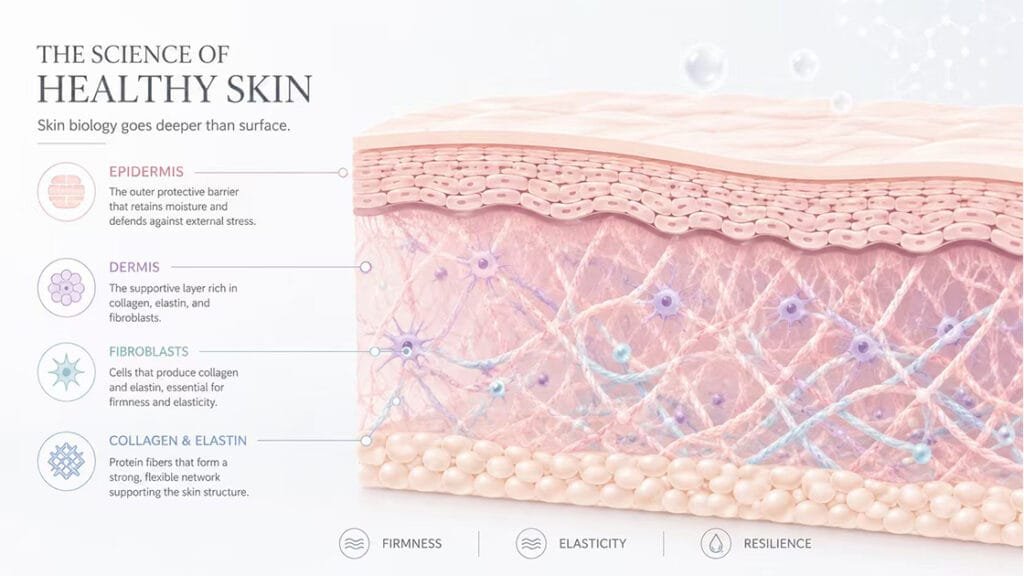
Skin aging is fundamentally linked to changes in collagen density, elastin integrity, and extracellular matrix organization. These structural components determine firmness, elasticity, and resilience. Energy-based technologies directly interact with these biological elements by stimulating fibroblast activity and encouraging collagen synthesis. Instead of masking volume loss, they support the skin’s own regenerative capacity. This biologically aligned approach allows facial structures to evolve more naturally over time, reflecting underlying tissue health rather than external supplementation.
2. Energy-Based Skin Technology as a Regenerative Alternative
Energy-based systems such as radiofrequency and laser treatments introduce controlled thermal and photonic energy into targeted skin layers. These technologies influence dermal remodeling processes that are essential for long-term skin firmness and elasticity. The focus shifts from external correction to internal structural renewal.
2.1 Radiofrequency and Dermal Remodeling Response
Radiofrequency energy generates heat through electrical resistance within dermal tissues. This controlled thermal effect causes immediate collagen contraction followed by gradual activation of fibroblasts. Fibroblasts then begin producing new collagen fibers, particularly type I and type III collagen, which are essential for skin strength and elasticity. Unlike surface-based interventions, this process influences deeper dermal layers, supporting a more stable and progressive structural improvement over time.
2.2 Laser Energy and Subdermal Structural Influence
Laser systems operating in near-infrared wavelengths, such as 1064nm, penetrate deeper skin layers where they interact with water molecules and adipose tissue structures. This controlled energy delivery produces selective thermal effects that support both collagen remodeling and subtle subdermal structural adjustments. As tissue temperature increases within a controlled range, skin architecture gradually reorganizes. This leads to improved firmness and smoother surface texture without disrupting the epidermal barrier.
3. Laser and RF Interaction with Skin and Fat Layers
Energy-based systems do not act only on the dermis but also extend their influence to subcutaneous fat layers. This dual-layer interaction is one of the reasons these technologies are increasingly associated with full-spectrum facial and body rejuvenation strategies.
3.1 Photothermal Lipolysis and Tissue Reorganization
Photothermal lipolysis describes the process in which laser energy induces controlled heating within adipose tissue. At the 1064nm wavelength, energy penetrates deeply into fat compartments and influences lipid stability within adipocytes. This thermal interaction gradually modifies fat structure while preserving surrounding connective tissue. As fat layer configuration shifts, the skin above responds by initiating structural adaptation, resulting in improved contour definition and surface smoothness.
3.2 Dermal Response After Subcutaneous Energy Interaction
Following subcutaneous energy exposure, the dermal layer enters a remodeling phase. Fibroblasts become more active, producing new collagen fibers that reorganize the extracellular matrix. This process allows the skin to better conform to underlying structural changes. Over time, this contributes to a more stable and balanced facial or body contour, where skin tightness and underlying support structures remain in harmony.
4. Clinical Expansion: From Facial Rejuvenation to Structural Skin Quality Improvement
Energy-based aesthetic technologies now extend across multiple clinical applications, ranging from facial tightening to texture refinement and body contour support. Their adaptability across different tissue depths makes them suitable for comprehensive skin quality management strategies.
4.1 Skin Texture Remodeling and Scar Structure Reorganization
RF microneedling combines mechanical microchannels with controlled thermal energy delivery into the dermis. This dual-action mechanism stimulates fibroblast activation in localized areas, encouraging organized collagen deposition. Over time, irregular dermal structures such as acne scars gradually reorganize into smoother and more uniform tissue patterns. The controlled nature of this process supports gradual skin refinement while maintaining overall structural integrity.
4.2 Natural Facial Contouring Through Deep Tissue Support
Facial contouring using energy-based systems focuses on improving the structural support network beneath the skin surface. By enhancing collagen density in key anatomical regions, such as the jawline and midface, these technologies support improved facial definition. Instead of adding external volume, the skin strengthens its internal framework, allowing facial contours to become more defined while preserving natural expression dynamics.
5. The Shift from Dermal Fillers to Energy-Based Regeneration
The growing preference for energy-based systems reflects a broader transition in aesthetic philosophy. Rather than relying on temporary structural replacement, modern approaches emphasize biological stimulation and long-term tissue health. This shift represents a move toward regenerative aesthetics, where the skin becomes an active participant in its own improvement.
5.1 Biological Activation Versus External Volume Addition
Dermal fillers function by adding external material to restore facial volume, but they do not directly influence the biological processes responsible for skin aging. In contrast, energy-based treatments activate fibroblasts and promote collagen regeneration within the skin itself. This biological activation supports ongoing structural improvement rather than static correction. As a result, the skin develops stronger internal support over time, which aligns more closely with natural aging patterns and facial movement.
5.2 Long-Term Skin Architecture and Regenerative Balance
Energy-based systems encourage gradual remodeling of the dermal matrix, leading to improved structural balance between collagen, elastin, and extracellular components. This creates a more stable skin environment where firmness and elasticity are maintained through internal biological activity. Over time, the skin becomes less dependent on external augmentation, as its own regenerative systems become more active and structurally efficient.
FAQ
What is the main difference between fillers and energy-based treatments?
Fillers add external volume, while energy-based systems stimulate the skin’s own collagen production and structural renewal.
How do radiofrequency treatments support skin improvement?
They use controlled heat to activate fibroblasts and encourage new collagen formation in the dermis.
Why is laser technology used in skin rejuvenation?
Laser energy penetrates deeper layers of the skin, influencing both dermal structure and subcutaneous tissue behavior.
Can energy-based treatments replace fillers completely?
They serve a different biological function, focusing on tissue regeneration rather than volume replacement.
What skin concerns do these technologies address?
They are commonly used for skin laxity, texture irregularities, contour definition, and overall skin quality improvement.
結論
The evolution of aesthetic dermatology increasingly highlights the importance of biological regeneration over structural supplementation. Energy-based technologies such as radiofrequency and laser systems offer a deeper approach to skin improvement by engaging collagen remodeling and supporting dermal integrity from within. As understanding of skin biology continues to advance, these methods are becoming central to modern anti-aging strategies, gradually reshaping the role of traditional volume-based correction methods in long-term aesthetic care.
References
Journal of Cosmetic and Laser Therapy: Radiofrequency and Dermal Remodeling
https://www.tandfonline.com/doi/abs/10.1080/14764172.2018
Lasers in Surgery and Medicine: 1064nm Laser Tissue Interaction
https://onlinelibrary.wiley.com/journal/10969101
Dermatologic Surgery Journal: Collagen Remodeling Mechanisms
https://journals.lww.com/dermatologicsurgery
Aesthetic Surgery Journal: Non-Invasive Facial Rejuvenation Systems
National Library of Medicine: Fibroblast Activity and Thermal Skin Response