Introduzione
Stretch marks, also known as striae distensae, are common skin texture concerns that often appear after significant body changes, including pregnancy, muscle growth, weight fluctuations, or changes in body shape. They usually develop when the dermal layer of the skin experiences stretching that affects collagen and elastin structures, creating visible lines with different colors and textures. While stretch marks are harmless, many people look for professional aesthetic solutions to improve their overall skin appearance. Modern laser technology and radiofrequency-based approaches have become important options in aesthetic clinics because they focus on supporting collagen remodeling, improving skin texture, and enhancing skin firmness. Advanced systems that combine controlled laser energy, such as 1064nm wavelength technology, with radiofrequency energy provide professionals with more personalized approaches for areas like the arms, thighs, abdomen, and other body regions.
1. Understanding Stretch Marks and Modern Skin Appearance Management
Stretch marks can appear on different areas of the body, especially locations that experience rapid changes in volume or tension. Understanding their formation and characteristics helps explain why advanced aesthetic technologies focus on supporting the deeper skin structure rather than only addressing surface appearance.
1.1 What Causes Stretch Marks on Arms and Thighs?
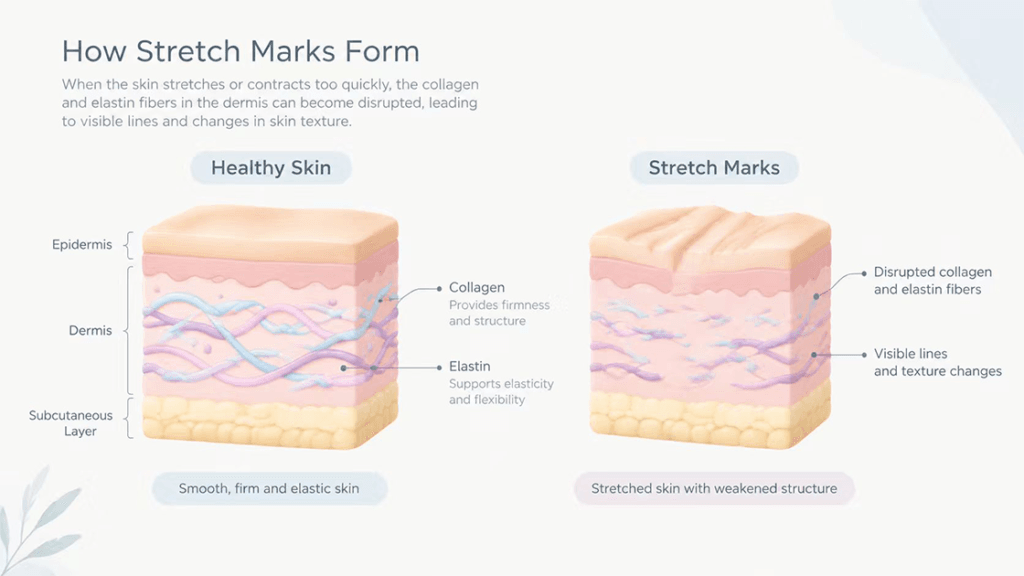
Stretch marks occur when the skin expands or contracts faster than the dermal structure can adapt. During this process, collagen and elastin fibers may become disrupted, creating visible lines that can appear on areas such as the thighs, arms, hips, and abdomen.
Common situations connected with stretch marks include pregnancy, rapid weight changes, strength training, and natural body development. On the arms and thighs, stretch marks are often associated with changes in muscle volume, body composition, or skin elasticity.
From a dermatological perspective, stretch marks can appear in different stages. Early stretch marks may have a reddish or purple tone, while older marks often become lighter and more similar to the surrounding skin color. Because the structure of each stretch mark can vary, professional aesthetic providers usually consider skin type, location, and individual concerns when developing a suitable skin appearance management plan.
1.2 Why Are Arms and Thighs Common Areas for Stretch Marks?
The arms and thighs contain areas where skin can experience repeated stretching caused by changes in body volume. For example, fitness enthusiasts who increase muscle mass may notice changes around the upper arms and shoulders, while individuals experiencing weight changes may observe marks around the inner thighs or outer thighs.
These areas can also be challenging because the skin needs to maintain both smooth texture and natural flexibility. Unlike facial skin, body skin often has different thickness, movement patterns, and structural characteristics.
Modern aesthetic technology focuses on supporting these specific body areas through targeted energy delivery. By adjusting treatment parameters according to different skin conditions, professionals can create customized approaches for improving the appearance of uneven skin texture.
1.3 The Role of Collagen and Elastin in Skin Texture
Collagen and elastin are essential components that help maintain skin structure, firmness, and flexibility. When these proteins become affected by stretching or aging processes, the skin may show visible changes in texture and elasticity.
Laser and radiofrequency technologies are commonly explored in aesthetic care because controlled energy can interact with deeper skin layers and support natural skin remodeling processes. The goal is not to completely remove stretch marks but to help improve their appearance by supporting healthier-looking skin texture.
Scientific literature has discussed the use of different laser and energy-based technologies for stretch mark appearance improvement, including approaches involving 1064nm laser wavelengths and radiofrequency-based methods.
2. How Laser Technology Supports Stretch Mark Appearance Improvement
Modern aesthetic clinics continue to explore advanced technologies that focus on skin remodeling and texture improvement. Laser-based approaches use controlled energy to interact with targeted skin layers, while radiofrequency technology provides another method for supporting collagen-related skin processes.
2.1 Understanding 1064nm Laser Technology in Skin Care
1064nm laser technology is widely recognized in aesthetic applications because its wavelength allows energy to reach deeper skin layers compared with some shorter wavelengths. In professional settings, this technology is often considered when addressing concerns related to skin texture, pigmentation appearance, and overall skin quality.
For stretch mark appearance management, 1064nm laser energy is designed to support the skin remodeling process by delivering controlled thermal energy. This process may encourage natural repair responses within the dermal layer and support collagen-related activity.
The use of 1064nm laser technology requires professional assessment because different skin types and stretch mark conditions may respond differently. Customized settings help ensure that energy delivery matches individual skin characteristics.
2.2 Combining Laser Energy With Radiofrequency Technology
Radiofrequency technology uses electromagnetic energy to create controlled heating within deeper skin tissues. This controlled thermal effect is commonly used in aesthetic procedures designed to support skin firmness and texture.
When laser technology is combined with radiofrequency energy, professionals can address different aspects of skin appearance. Laser energy focuses on targeted skin interaction, while radiofrequency supports deeper tissue heating and collagen remodeling processes.
This combination approach reflects the growing trend of multifunctional aesthetic platforms that allow clinics to provide personalized skin improvement programs rather than relying on a single technology.
Research has explored radiofrequency-based approaches for improving the appearance of stretch marks by supporting collagen remodeling and skin texture changes.
2.3 Why Personalized Treatment Planning Matters
Every person’s stretch marks are different. Factors such as age of the stretch marks, skin tone, location, and overall skin condition influence how professionals design aesthetic care plans.
For example, newer stretch marks may have different characteristics compared with older white stretch marks. Similarly, the thigh area may require different considerations compared with the arms because of differences in movement and skin thickness.
Personalized planning allows professionals to select appropriate energy settings, treatment areas, and supportive skincare recommendations. This approach helps create realistic expectations and focuses on gradual improvement of skin appearance.
3. Stretch Mark Concerns After Fitness and Lifestyle Changes
Lifestyle changes are one of the most common reasons people notice new stretch marks. Body transformation journeys, including muscle development and weight changes, can influence how the skin adapts over time.
3.1 Stretch Marks After Muscle Growth and Fitness Training
Strength training and muscle development can create noticeable changes in body shape. When muscle volume increases quickly, the surrounding skin may experience stretching that contributes to visible stretch marks.
Fitness-focused individuals often pay attention to body definition and overall appearance, making skin texture an important part of their aesthetic goals.
Laser and radiofrequency technologies provide professional options that focus on improving the appearance of stretched skin areas while supporting a smoother-looking skin surface.
3.2 Stretch Marks After Weight Fluctuations
Changes in body weight can affect skin elasticity and texture. When the body expands or decreases in size over time, the skin structure may show visible lines or uneven areas.
The arms, thighs, and abdomen are common areas where these changes become noticeable. Modern aesthetic approaches focus on supporting skin quality by addressing texture, firmness, and overall appearance.
Maintaining healthy lifestyle habits, including balanced nutrition and regular activity, remains an important part of overall skin health management.
3.3 Why Body Skin Requires Specialized Aesthetic Approaches
Body skin differs from facial skin because it usually has different thickness, elasticity, and movement patterns. Therefore, techniques designed for facial rejuvenation may not always directly apply to areas like thighs or arms.
Professional body aesthetic technologies are developed with these differences in mind. By using adjustable energy systems and targeted application methods, providers can create approaches that match different body areas and skin conditions.
4. Exploring Advanced Aesthetic Technologies for Stretch Mark Appearance
As demand for body aesthetic services continues to grow, clinics are increasingly exploring technologies that focus on skin quality, firmness, and texture. Modern laser and energy-based systems provide professionals with different approaches for supporting the appearance of areas affected by stretch marks, especially the arms and thighs.
4.1 How Radiofrequency Technology Supports Skin Firmness
Radiofrequency technology has become an important part of modern aesthetic care because it focuses on controlled thermal energy delivery beneath the skin surface. The generated heat can interact with deeper tissue layers and support processes associated with collagen remodeling.
For areas such as the thighs and upper arms, maintaining skin firmness is an important consideration because these regions often experience changes related to aging, weight fluctuation, or lifestyle changes. Radiofrequency-based approaches are designed to support a smoother and more balanced skin appearance by focusing on skin structure rather than only surface-level concerns.
Professional providers typically adjust energy levels according to individual skin characteristics. Factors such as treatment area, skin thickness, and personal aesthetic goals can influence the selected approach.
4.2 The Importance of Controlled Energy Delivery in Body Aesthetic Procedures
Advanced aesthetic technologies rely on precise energy management to create consistent treatment experiences. Controlled energy delivery allows professionals to focus on specific skin areas while considering surrounding tissue conditions.
Laser technology, including 1064nm wavelength systems, is commonly used in aesthetic environments because of its ability to reach deeper skin layers. When applied professionally, controlled laser energy can support skin remodeling processes and improve the overall appearance of uneven skin texture.
For stretch mark concerns on the arms and thighs, precision is especially important because these areas may vary significantly in skin structure. A customized approach helps professionals provide treatments that align with different skin needs.
4.3 Combining Different Technologies for Comprehensive Skin Care
The development of multifunctional aesthetic platforms reflects a growing trend in the beauty industry. Instead of focusing on one single concern, modern systems often allow professionals to address multiple aspects of skin appearance.
For stretch mark appearance management, combining technologies such as laser energy and radiofrequency can provide a broader approach. Laser technology may focus on targeted skin interaction, while radiofrequency supports deeper tissue warming and skin firmness.
This combination allows aesthetic providers to create more personalized plans based on the individual’s skin condition and desired appearance goals.
5. Choosing a Professional Approach for Stretch Mark Appearance Management
Selecting the right aesthetic approach involves understanding technology, skin characteristics, and realistic expectations. Professional guidance plays an important role in determining suitable options for different body areas.
5.1 Factors Professionals Consider Before Skin Texture Treatments
Before performing aesthetic procedures, professionals usually evaluate several factors, including skin type, stretch mark condition, treatment area, and overall skin health.
The appearance of stretch marks can vary significantly. Some may appear more visible due to color differences, while others may be more noticeable because of changes in skin texture. These differences influence how professionals design personalized treatment plans.
A detailed consultation helps identify suitable energy settings and treatment strategies while ensuring that the focus remains on improving skin appearance in a gradual and controlled way.
5.2 Why Arms and Thighs Need Targeted Body Aesthetic Solutions
The arms and thighs are dynamic areas that experience frequent movement and pressure. Because of this, body aesthetic treatments need to consider both skin structure and daily activities.
The upper arms may experience changes related to muscle development or aging, while thighs may be affected by weight fluctuations, exercise routines, or natural body changes.
Technologies that offer adjustable settings provide professionals with flexibility when working on different body regions. This allows treatment approaches to be adapted according to individual needs.
5.3 The Future of Laser-Based Body Skin Management
The aesthetic industry continues to move toward personalized technology solutions. Consumers increasingly look for treatments that support natural-looking improvements rather than dramatic changes.
Laser technology, radiofrequency systems, and other energy-based approaches represent this shift toward customized skin management. As technology develops, professionals continue exploring ways to improve comfort, precision, and overall treatment experiences.
For individuals concerned about stretch mark appearance on the arms and thighs, modern aesthetic technology provides additional options that focus on supporting healthier-looking skin texture and improved confidence.
FAQ
What causes stretch marks on the arms and thighs?
Stretch marks often develop when the skin stretches due to body changes such as pregnancy, muscle growth, or weight fluctuations.
Can laser technology improve the appearance of stretch marks?
Laser technology may support skin texture improvement and collagen-related remodeling processes, helping create a smoother-looking appearance.
Why are 1064nm lasers used in aesthetic treatments?
1064nm laser technology can reach deeper skin layers and is commonly used in various professional aesthetic applications.
Can radiofrequency technology be combined with laser treatments?
Yes. Some aesthetic platforms combine radiofrequency and laser technologies to provide a more comprehensive approach to skin appearance management.
Are stretch marks only caused by pregnancy?
No. Stretch marks can also appear after muscle growth, weight changes, and other body transformations.
Are laser treatments suitable for every skin type?
Skin type, condition, and individual goals should be evaluated by qualified professionals before selecting an aesthetic approach.
Conclusione
Stretch marks on the arms and thighs are common skin appearance concerns associated with changes in body structure, lifestyle, and skin elasticity. Modern laser and radiofrequency technologies provide professional aesthetic options that focus on supporting collagen remodeling, improving skin texture, and enhancing overall skin appearance. Advanced approaches using technologies such as 1064nm laser energy and radiofrequency heating allow professionals to create more personalized strategies for different body areas. While stretch marks may not completely disappear, innovative aesthetic solutions continue to provide new possibilities for individuals seeking smoother-looking and healthier-looking skin.
References
Stretch Marks: Current Perspectives on Pathogenesis and Treatment
https://pmc.ncbi.nlm.nih.gov/articles/PMC5782435
A Review of Radiofrequency Technology in Dermatology and Aesthetic Medicine
https://pmc.ncbi.nlm.nih.gov/articles/PMC10264298
Laser and Light-Based Treatments for Striae Distensae: A Review
https://pubmed.ncbi.nlm.nih.gov/28697542
Fractional Laser Treatment for Stretch Marks: Clinical Approaches and Outcomes
https://pubmed.ncbi.nlm.nih.gov/24566534
Energy-Based Devices in Aesthetic Dermatology: Current Applications and Future Directions