
Introduzione
In the pursuit of a toned and sculpted body, fitness enthusiasts often encounter the challenge of stubborn fat pockets that resist even rigorous exercise and strict dietary plans. These localized fat deposits are commonly found in the abdomen, flanks, thighs, and upper arms, and can be influenced by genetic predisposition, hormonal fluctuations, and lifestyle factors. While exercise improves overall body composition, it cannot always target these specific areas. Laser lipolysis, a non-invasive or minimally invasive procedure, offers a solution by precisely targeting subcutaneous adipose tissue. This advanced body contouring technique uses specific wavelengths of laser energy to disrupt fat cells, enhance microcirculation, and stimulate collagen remodeling. When combined with regular exercise, laser lipolysis not only reduces localized fat deposits but also promotes firmer, more contoured skin, optimizing the aesthetic outcomes for fitness-conscious individuals. This article explores the science, benefits, and safety considerations of laser lipolysis, particularly as it complements an active lifestyle.
1. Understanding Laser Lipolysis
1.1 What is Laser Lipolysis?
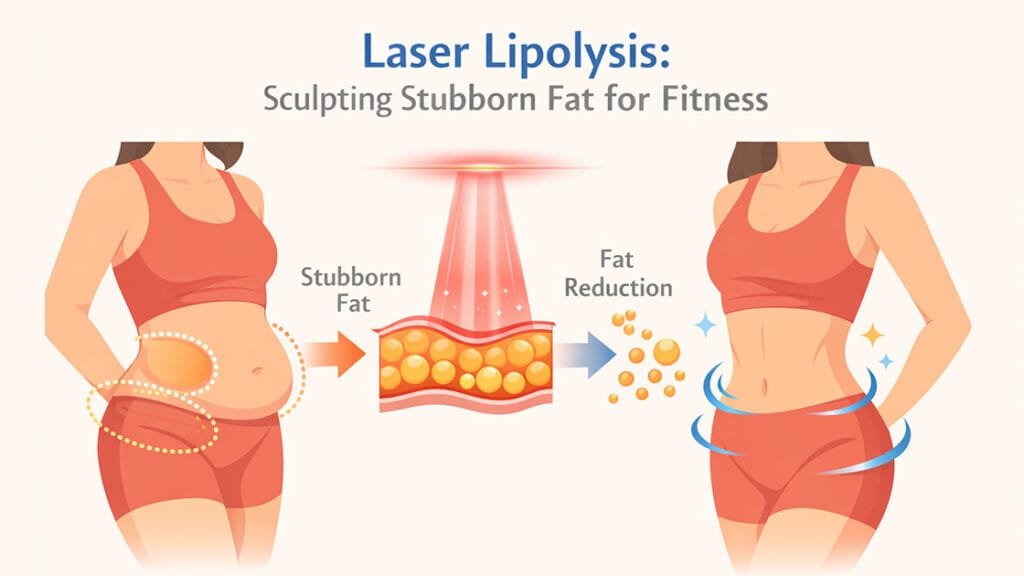
Laser lipolysis is a specialized body contouring technique that delivers targeted laser energy into subcutaneous fat layers to induce adipocyte disruption. Commonly using wavelengths such as 1064nm, this technology selectively penetrates fat tissue while minimizing damage to surrounding structures. The procedure can be applied non-invasively or via minimally invasive cannula-assisted approaches, depending on the clinical setting and patient goals.
Unlike traditional liposuction, which mechanically removes fat, laser lipolysis utilizes photothermal effects to liquefy fat, facilitating natural metabolic clearance. The procedure is associated with reduced recovery time, minimal bruising, and localized precision, making it appealing for individuals who wish to refine specific body areas without extensive downtime. Its mechanism not only targets fat cells but also encourages collagen synthesis and dermal tightening, enhancing skin texture alongside fat reduction.
1.2 Mechanisms of Laser Lipolysis
The effectiveness of laser lipolysis stems from a combination of photothermal and photomechanical interactions. When the laser energy penetrates the adipose tissue, it selectively heats adipocytes, inducing cell membrane rupture and triglyceride release. This process, called lipolysis, allows fat content to be naturally metabolized and cleared by the lymphatic system over several weeks.
Simultaneously, the localized thermal effect stimulates fibroblast activity and collagen remodeling, which tightens the dermis and prevents post-lipolysis skin laxity. Enhanced microvascular circulation in the treated area promotes oxygenation and waste removal, supporting tissue regeneration. Modern laser devices integrate temperature feedback and wavelength modulation to maximize fat disruption while safeguarding epidermal structures, ensuring both efficacy and safety. This dual-action mechanism—fat reduction coupled with skin tightening—distinguishes laser lipolysis from other non-invasive modalities such as cryolipolysis or ultrasound cavitation.
2. Why Fitness Enthusiasts Choose Laser Lipolysis
2.1 Stubborn Fat Resistant to Exercise
Even the most dedicated athletes often encounter adipose deposits that are resistant to caloric restriction or strength training. These pockets typically result from regional differences in lipolytic activity, hormonal influences, and adipocyte density. Areas like the lower abdomen, inner thighs, and flanks are notoriously difficult to sculpt through conventional exercise alone.
Laser lipolysis addresses these challenges by targeting fat at a cellular level. The selective laser energy compromises the adipocyte membrane integrity, promoting fat breakdown precisely in problem areas without affecting surrounding muscle or connective tissue. By focusing on these resistant zones, laser lipolysis provides a complementary solution to physical training, allowing fitness enthusiasts to achieve a proportionally contoured physique that exercise alone might not fully realize.
2.2 Enhancing Fitness Outcomes
When integrated into a structured fitness routine, laser lipolysis amplifies the results of exercise by reducing localized fat stores and promoting dermal tightening. The procedure works synergistically with both aerobic and resistance training, enhancing metabolic efficiency and aesthetic definition.
For instance, abdominal fat reduction through laser therapy can accentuate core muscle definition, while thigh and flank treatments improve overall body symmetry. Additionally, post-laser collagen remodeling maintains skin elasticity, preventing sagging as fat is metabolized. This complementary effect not only enhances visual results but also supports long-term adherence to healthy lifestyle habits by reinforcing motivation and satisfaction with body composition changes.
3. Effects and Advantages of Laser Lipolysis
3.1 Visual and Physical Improvements
Laser lipolysis yields noticeable contouring and body shape improvements by selectively reducing subcutaneous fat. Unlike generalized weight loss, which may result in uneven fat distribution, this technique enables targeted refinement, producing smooth, natural-looking body lines.
In addition to fat reduction, the procedure induces collagen remodeling in the treated area, which helps maintain skin firmness and minimize the appearance of sagging. For fitness enthusiasts who combine laser lipolysis with a consistent exercise regimen, results often include enhanced muscle definition, more proportionate curves, and an overall toned appearance that complements athletic training.
3.2 Synergy with Exercise
Laser lipolysis not only removes localized fat but also enhances exercise outcomes. By targeting stubborn adipose deposits, it allows muscles in the treated area to be more prominent, improving overall physique aesthetics.
Regular physical activity post-treatment supports lymphatic clearance of liquefied fat, accelerating results. Exercise also maintains basal metabolic rate, ensuring that newly sculpted contours remain stable over time. Moreover, the combination of laser therapy and fitness promotes collagen integrity and skin elasticity, preventing skin sagging that may otherwise occur with rapid fat loss. This integrative approach highlights the procedure’s suitability for active individuals seeking both performance and aesthetic optimization.
4. Risks and Safety Considerations
4.1 Common Side Effects
Laser lipolysis is generally safe when performed by trained professionals. Most patients experience only mild, transient effects, including localized redness, warmth, or slight swelling. Some individuals may notice temporary numbness or tingling in treated areas, which usually resolves within hours to a few days. Unlike traditional liposuction, laser lipolysis minimizes the risk of hematoma, scarring, and prolonged downtime, making it well-suited for individuals with active schedules.
4.2 Indications and Contraindications
Ideal candidates are healthy adults with localized fat deposits who maintain an active lifestyle and wish to refine their body contours. The procedure is not intended for overall weight reduction or obesity treatment.
Contraindications include pregnancy, breastfeeding, severe cardiovascular conditions, or active dermatologic infections in the target area. Patients with compromised healing capacity or specific photosensitivity disorders should consult a physician before treatment. By following pre- and post-treatment guidelines, laser lipolysis can be administered safely and effectively for aesthetic improvement.
FAQ
Is laser lipolysis painful?
Patients typically experience only mild warmth or tingling sensations during treatment. Most individuals find the procedure comfortable and well-tolerated.
When will results be noticeable?
Initial improvements are often observed within 2-4 weeks, with full effects typically evident around 3 months as fat metabolism and collagen remodeling progress.
Can it replace exercise and diet?
No, laser lipolysis is an adjunctive procedure. Optimal results require a combination of consistent physical activity and balanced nutrition.
Is laser lipolysis safe?
When performed by qualified professionals, it is generally safe, with minor, temporary side effects that resolve quickly.
Conclusione
Laser lipolysis offers fitness enthusiasts a precise, non-invasive solution for stubborn fat reduction, complementing structured exercise routines to enhance body contouring and skin firmness. By combining localized fat disruption, collagen stimulation, and improved microcirculation, it allows individuals to refine problem areas that resist traditional training. When integrated with consistent workouts and nutritional management, laser lipolysis can help achieve a toned, sculpted, and proportionate physique, supporting both aesthetic goals and overall confidence in one’s fitness journey.
References
Laser-Assisted Lipolysis: Mechanisms and Clinical Applications
https://www.ncbi.nlm.nih.gov/pmc/articles/PMC6348724
Effectiveness of Non-Invasive Body Contouring Techniques: A Review
https://www.sciencedirect.com/science/article/pii/S1748681520300731
Combination of Exercise and Laser Therapy for Fat Reduction
https://www.frontiersin.org/articles/10.3389/fphys.2021.634505/full