Introduction
Dark underarms and uneven underarm skin tone are common cosmetic concerns that may affect personal confidence and daily skincare routines. Factors such as shaving habits, friction, hormonal changes, skin sensitivity, and increased melanin activity can contribute to a darker appearance in the underarm area. Modern aesthetic technology has introduced advanced laser-based approaches that focus on supporting more balanced-looking skin tone and improving overall skin appearance. Laser pigmentation treatments using specific wavelengths, such as 532nm and 1064nm picosecond laser technology, are designed to target pigment-related concerns while supporting skin rejuvenation processes. By combining precise energy delivery with advanced skin-focused techniques, these treatments have become an option for individuals seeking professional solutions for uneven pigmentation include underarm laser and skin texture concerns.
1. Understanding Dark Underarms and Pigmentation Concerns
Dark underarms are not simply related to surface discoloration. The appearance of this area can be influenced by different biological and lifestyle factors. Understanding why underarm pigmentation develops helps people better understand how modern laser technology can support aesthetic skin management.
1.1 Common Reasons Behind Dark Underarm Appearance
The underarm area has unique characteristics because it experiences frequent movement, friction, and exposure to different skincare products. Regular shaving, waxing, deodorant use, and tight clothing may contribute to irritation or changes in skin appearance over time.
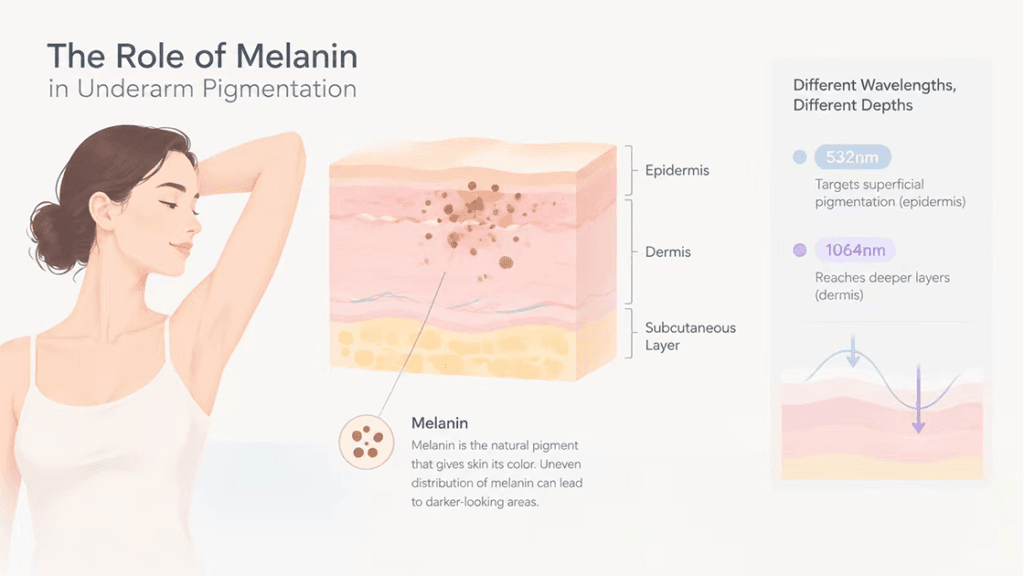
One important factor associated with dark underarms is melanin production. Melanin is the natural pigment responsible for skin color. When pigment activity increases in certain areas, the skin may appear darker or less even compared with surrounding areas.
Other factors, including post-inflammatory pigmentation after irritation, repeated friction, and individual skin characteristics, can also influence underarm appearance. Because the causes vary between individuals, aesthetic approaches often focus on improving overall skin tone rather than addressing only the surface layer.
1.2 The Role of Melanin in Underarm Pigmentation
Melanin plays an essential role in protecting the skin from environmental factors, but uneven melanin distribution may create visible pigmentation concerns.
Underarm pigmentation can involve different skin layers. Some pigment concerns are closer to the epidermis, while others may involve deeper dermal areas. This difference is one reason why modern laser systems often use different wavelengths to target various pigmentation depths.
Laser technologies using 532nm and 1064nm wavelengths are commonly explored in aesthetic dermatology because they interact with pigment-related structures in different ways. Shorter wavelengths are often associated with superficial pigment concerns, while longer wavelengths can reach deeper skin layers.
1.3 Why Traditional Underarm Care May Not Always Provide Desired Results
Many people use traditional methods such as exfoliation, brightening skincare products, or hair removal routines to improve underarm appearance. These approaches may support general skin maintenance, but some pigmentation concerns can remain difficult to manage.
Frequent shaving may also create another challenge. Repeated mechanical irritation can affect sensitive skin areas and may contribute to an uneven appearance.
For individuals seeking more advanced aesthetic options, laser-based skin rejuvenation technologies provide a different approach by focusing on controlled energy delivery and targeted pigment management.
2. How Laser Technology Supports Underarm Skin Appearance
Laser pigmentation treatments have become an important part of modern aesthetic skincare because they combine precision and customizable energy settings. Understanding the technology behind these treatments can help explain why they are used for pigmentation-related concerns.
2.1 The Role of Picosecond Laser Technology in Pigment Management
Picosecond laser technology delivers energy pulses in extremely short durations, allowing energy to interact with pigment particles through a highly controlled process.
Compared with traditional laser approaches, picosecond technology focuses on creating targeted photomechanical effects while reducing unnecessary heat accumulation in surrounding tissues.
In aesthetic applications, picosecond lasers are commonly used for concerns related to pigmentation, skin revitalization, and overall skin appearance improvement. Research has explored the use of picosecond-domain lasers with 532nm and 1064nm wavelengths for pigmentation and skin rejuvenation purposes.
2.2 Understanding 532nm and 1064nm Wavelength Applications
Different wavelengths interact with skin structures in different ways. This allows aesthetic professionals to select suitable approaches based on pigmentation characteristics and individual skin conditions.
The 532nm wavelength is commonly associated with targeting superficial pigmentation concerns because it has strong absorption by melanin. It is often considered for epidermal pigment-related issues.
The 1064nm wavelength has deeper penetration characteristics and is frequently used in applications involving deeper pigment concerns and broader skin rejuvenation goals.
The combination of these wavelengths allows modern laser platforms to provide more flexible approaches for managing different types of pigmentation appearance.
2.3 Supporting More Balanced-Looking Underarm Skin Tone
Underarm skin requires careful consideration because the area can be sensitive and frequently exposed to friction. Laser-based pigmentation management focuses on supporting a smoother and more even-looking appearance.
By targeting pigment-related concerns with controlled energy, laser technology may support the gradual improvement of uneven skin tone while also contributing to overall skin quality.
Many aesthetic professionals consider skin rejuvenation technology as part of a broader approach that includes proper skincare, sun protection habits, and reducing repeated irritation.
3. Laser Skin Rejuvenation for Different Underarm Skin Concerns
Dark underarms can appear differently depending on individual skin characteristics and lifestyle factors. A personalized approach allows aesthetic professionals to consider different causes behind uneven pigmentation.
3.1 Laser Support for Post-Irritation Underarm Pigmentation
Post-inflammatory pigmentation can occur after repeated skin irritation. The underarm area is especially vulnerable because shaving, waxing, and friction may repeatedly affect the skin barrier.
When the skin experiences irritation, pigment activity may increase as part of the natural skin response. This can result in darker-looking areas that remain even after the original irritation has improved.
Laser skin rejuvenation technologies may help support the appearance of these pigmentation concerns by focusing on pigment-related structures and promoting overall skin renewal.
3.2 Laser Approaches for Uneven Skin Tone Caused by Lifestyle Factors
Daily habits can influence underarm skin appearance. Tight clothing, frequent hair removal, and repeated exposure to cosmetic products may contribute to changes in skin texture and tone.
For people who want to improve the appearance of uneven underarm skin, laser treatments can provide a technology-based option that works alongside healthy skincare habits.
Maintaining proper hydration, avoiding excessive friction, and choosing suitable personal care products remain important parts of long-term skin management.
3.3 The Connection Between Pigmentation Management and Skin Confidence
Underarm appearance is a personal skincare concern that can influence how individuals feel about wearing certain clothing styles or participating in activities.
Modern aesthetic treatments increasingly focus not only on addressing visible concerns but also on supporting overall skin confidence.
Laser pigmentation technology provides one option for individuals who are looking for professional methods to improve the appearance of uneven skin tone while maintaining a focus on skin health and comfort.
4. Factors to Consider Before Laser Treatment for Dark Underarms
Laser pigmentation technology provides a modern approach for improving the appearance of uneven underarm skin tone. However, understanding skin characteristics, pigmentation causes, and appropriate skincare habits remains important when considering aesthetic treatments.
4.1 Skin Type and Pigmentation Characteristics Matter
Every individual has different skin characteristics, and pigmentation concerns may vary depending on skin tone, melanin activity, and previous skin reactions.
Before choosing a laser approach, aesthetic professionals usually consider factors such as the depth of pigmentation, skin sensitivity, and overall skin condition. Different wavelengths may be selected depending on whether the concern involves superficial epidermal pigmentation or deeper pigment-related changes.
The flexibility of dual-wavelength laser technology allows professionals to adjust treatment strategies based on individual needs. The 532nm wavelength is often associated with surface-level pigment concerns, while the 1064nm wavelength can be used for deeper skin layers and broader skin rejuvenation goals.
4.2 Supporting Underarm Skin Health After Laser-Based Care
Maintaining healthy skin habits plays an important role in supporting long-term skin appearance. The underarm area can easily experience repeated friction and irritation, so daily care remains essential.
Using gentle skincare products, reducing unnecessary irritation, and maintaining proper hydration can support the skin barrier. These habits may help create a better environment for maintaining smoother-looking and more balanced skin tone.
Laser technology works as one part of an overall aesthetic skincare routine rather than a replacement for proper skin maintenance. A combination of professional treatments and healthy daily habits can support more consistent skin appearance.
4.3 The Relationship Between Pigmentation Management and Skin Rejuvenation
Modern aesthetic laser treatments increasingly focus on multiple aspects of skin appearance rather than only pigment reduction.
Many advanced laser platforms are designed to support pigmentation management while also promoting overall skin quality. The controlled energy delivered by picosecond laser systems may influence skin remodeling processes related to texture and tone.
This broader approach allows individuals to address concerns such as uneven pigmentation, dull-looking skin, and overall skin appearance within a comprehensive aesthetic plan. Research has explored dual-wavelength picosecond laser approaches for pigmentation and skin rejuvenation purposes.
5. The Future of Laser Technology for Underarm Skin Enhancement
As aesthetic technology continues to develop, laser-based solutions are becoming more personalized and focused on improving natural-looking skin appearance. The future of pigmentation management is moving toward more precise energy control, customized treatment approaches, and improved user comfort.
5.1 Advances in Precision Laser Pigmentation Technology
Modern laser systems continue to improve through advancements in pulse duration, wavelength selection, and energy delivery methods.
Picosecond laser technology represents one development direction within aesthetic dermatology. By delivering energy in extremely short pulses, these systems are designed to interact with pigment-related targets while supporting controlled treatment approaches.
The combination of 532nm and 1064nm wavelengths provides flexibility for different pigmentation concerns. This technology is widely discussed in relation to pigment management, skin revitalization, and aesthetic improvement.
5.2 Expanding Applications Beyond Underarm Pigmentation
Although dark underarms are a common cosmetic concern, similar laser technologies are also explored for other skin appearance goals, including uneven skin tone, sun-related pigmentation, and overall skin rejuvenation.
The development of multi-functional aesthetic laser platforms allows professionals to address different cosmetic concerns with more personalized approaches.
As consumers become more interested in advanced skincare solutions, laser pigmentation technology is expected to remain an important part of modern aesthetic practices.
FAQ
What causes dark underarm appearance?
Dark underarms may be related to factors such as friction, shaving, irritation, hormonal changes, and increased melanin activity.
Can laser technology improve the appearance of dark underarms?
Laser-based pigmentation treatments may support a more even-looking skin tone by targeting pigment-related concerns.
What wavelengths are commonly used for pigmentation management?
532nm and 1064nm wavelengths are commonly discussed in aesthetic laser applications for different pigment depths.
Is laser pigmentation treatment the same as skin whitening?
No. Laser pigmentation treatments focus on supporting balanced-looking skin tone and improving overall skin appearance.
Can skincare habits affect underarm pigmentation?
Yes. Reducing irritation, maintaining hydration, and using suitable skincare products can support healthier-looking skin.
Conclusion
Dark underarms can be influenced by many factors, including repeated friction, shaving habits, skin sensitivity, and melanin activity. Modern laser pigmentation technology provides a professional approach that focuses on supporting more even-looking skin tone and overall skin appearance. Through advanced methods such as picosecond laser technology and dual-wavelength energy systems, aesthetic professionals can create more targeted approaches for different pigmentation concerns. While laser treatments are not a replacement for healthy skincare habits, they can serve as a valuable option within a comprehensive beauty and skin wellness routine.
References
Study of a 532/1064 Fractional Picosecond Laser for Facial Rejuvenation
https://pubmed.ncbi.nlm.nih.gov/34608097
The effect of a dual-wavelength 532 nm and 1064 nm picosecond-domain laser with a fractionated holographic optic on photoaging and patient age perception: A pilot study
https://pubmed.ncbi.nlm.nih.gov/34908229
Fractional 1064 nm Picosecond Laser in Treatment of Melasma and Skin Rejuvenation in Asians, A Prospective Study
https://pubmed.ncbi.nlm.nih.gov/33544930
Prospective Study of 532-nm Picosecond Laser for the Treatment of Pigmented Lesions of the Face and Dorsal Hands
https://pubmed.ncbi.nlm.nih.gov/36342252
Q-Switched 1064/532 nm Laser with Picosecond Pulse to Treat Benign Hyperpigmentations: A Single-Center Retrospective Study