
Introduction
Laser hair removal is a popular option for reducing unwanted hair, but taking certain medications may require additional precautions before treatment. Some prescription drugs, over-the-counter medicines, and topical products can increase skin sensitivity to light or contribute to irritation. Although sensitivity to sunlight does not automatically mean a person cannot undergo laser hair removal, medication history should always be considered during treatment planning. Understanding how diode laser technology works, which medications to disclose, and how factors such as skin tone, sun exposure, and cooling technology affect treatment can help you make an informed decision with a qualified professional.
1. Understanding Photosensitivity and Laser Hair Removal
1.1 What Is Medication-Related Photosensitivity?
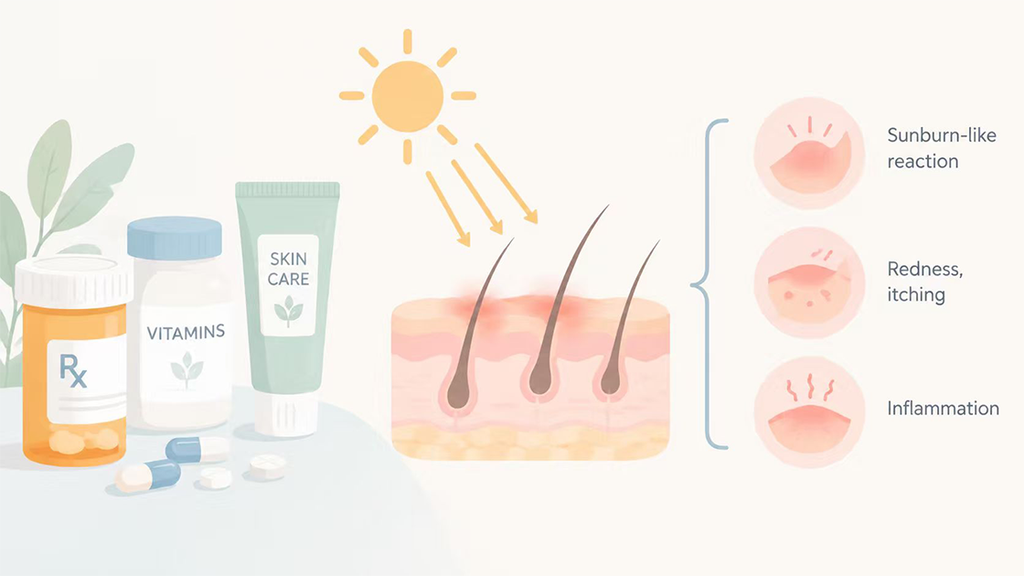
Photosensitivity occurs when the skin reacts abnormally to light exposure. Certain medications can cause phototoxic reactions, which may resemble an exaggerated sunburn, while others can trigger photoallergic reactions involving redness, itching, or inflammation.
However, sunlight and hair removal lasers use different light sources and wavelengths. A medication that increases sensitivity to sunlight does not necessarily create the same risk with every laser procedure. The medication involved, the treatment technology, and the individual’s skin condition must all be considered before treatment.
1.2 How Does Diode Laser Hair Removal Work?
Diode laser hair removal uses concentrated light energy that is absorbed by melanin, the pigment in hair. The energy converts into heat, damaging structures involved in hair growth and helping reduce future hair production.
Professional systems may offer different wavelengths, adjustable energy settings, and treatment modes to accommodate varying skin tones and hair characteristics. The appropriate configuration depends on an individual’s assessment rather than a single standard setting.
For people taking medications that may affect skin sensitivity, these technical features should be considered alongside medical history and current skin condition. Device capabilities alone cannot determine whether treatment is appropriate.
1.3 Why Your Medication History Matters
A medication review helps identify potential risks that may not be visible during a routine skin assessment. Some medicines increase sensitivity to light, while others may contribute to irritation or affect skin recovery.
Before your appointment, disclose all prescription medications, over-the-counter products, topical treatments, vitamins, and herbal supplements. Include recently started medications, dosage changes, and any previous unusual reactions to sunlight or cosmetic procedures.
Never stop or change a prescribed medication simply to qualify for laser hair removal. Consult your prescribing clinician and laser treatment provider if there are concerns about proceeding safely.
2. Which Medications Should You Discuss Before Treatment?
2.1 Antibiotics and Other Photosensitizing Medications
Certain antibiotics, including doxycycline and some other tetracyclines, can increase sensitivity to sunlight. Other medications, including some anti-inflammatory drugs and diuretics, may also cause photosensitivity.
Taking one of these medications does not automatically mean laser hair removal is prohibited. The specific drug, dose, treatment wavelength, and individual risk factors all matter. Your healthcare professional should determine whether treatment can proceed or whether additional precautions or postponement are appropriate.
2.2 Acne Medications and Topical Skin Care Products
People treating acne may use oral medications, topical retinoids, exfoliating products, or prescription creams. Some can increase dryness and irritation, while others may require specific precautions before cosmetic procedures.
Tell your practitioner which products you use, how often you apply them, and whether you have recently undergone chemical peels or other skin treatments. Do not assume that topical products are irrelevant simply because they are not taken orally.
Depending on your skin condition and treatment plan, your provider may recommend adjusting your routine or postponing the procedure.
2.3 Is There a Required Waiting Period?
There is no universal waiting period for laser hair removal after taking a photosensitizing medication. Recommendations depend on the specific medicine, how long its effects may persist, and the proposed procedure.
Stopping a medication does not necessarily eliminate its effects immediately. Ask your prescribing clinician and laser practitioner whether a waiting period is necessary for your circumstances. Avoid relying on a generic recommendation that applies the same number of days or weeks to every medication.
3. How Laser Technology and Cooling Support Treatment Planning
3.1 Wavelength Selection and Energy Settings
Professional diode laser systems may use an 810 nm wavelength, while some platforms offer additional options, such as 755 nm and 1064 nm. Different wavelengths interact with melanin and penetrate tissue differently, influencing how practitioners approach hair removal for various skin tones and hair types.
Adjustable energy settings and treatment modes allow trained professionals to tailor the procedure to individual needs. However, more wavelengths or higher energy do not automatically make a treatment safer.
When medication-related photosensitivity is a concern, ask whether the proposed wavelength and settings are appropriate for your skin and medical history. In some cases, postponing treatment may be the more appropriate decision.
3.2 The Role of Sapphire Contact Cooling
Some professional diode laser systems incorporate sapphire contact cooling to help cool the skin surface during treatment. This technology can improve comfort and help limit unwanted heating of the epidermis while laser energy is delivered to the targeted area.
However, cooling does not eliminate medication-related photosensitivity or guarantee protection against burns, inflammation, or pigmentation changes. A thorough assessment remains necessary, even when a device includes advanced cooling features.
The safest approach combines appropriate equipment, individualized settings, professional training, and a careful review of the patient’s medical history.
3.3 Should You Have a Test Spot?
Depending on your medication history and skin condition, a practitioner may recommend a small test spot before treating a larger area. This can help assess the skin’s response to the selected settings, but it cannot guarantee that a delayed reaction will not occur.
Your practitioner should determine whether a test spot is appropriate and how long the area should be observed. Report any new medications, dosage changes, rashes, or significant sun exposure before subsequent sessions.
4. Questions to Ask Before Your Appointment
4.1 Questions About Your Medications
Ask whether your current prescriptions, nonprescription products, or supplements could affect your suitability for laser hair removal. Clarify whether the concern involves photosensitivity, irritation, or skin recovery.
If the risk is uncertain, ask whether your prescribing clinician should be consulted before treatment.
4.2 Questions About the Laser Device
Ask which wavelength will be used, how the settings will be adapted to your skin and hair, and whether the device includes a cooling feature. You should also understand the potential risks and what symptoms require medical attention.
A qualified practitioner should explain the proposed treatment plan and its limitations rather than promising that a particular device feature eliminates risk.
4.3 Questions About Sun Exposure and Aftercare
Recent tanning and sunburn can affect treatment planning. Ask how to prepare your skin, when to avoid direct sun exposure, and what aftercare is recommended.
Temporary redness and swelling may occur after laser hair removal. Blistering, severe pain, or worsening inflammation warrants prompt medical advice.
5. When Should You Postpone Laser Hair Removal?
5.1 When Medication Risks Remain Unclear
If you have recently started a potentially photosensitizing medication and your treatment provider has not assessed the risks, postpone the appointment until you receive appropriate guidance.
This is particularly important when the medication is essential for managing an ongoing health condition.
5.2 When Your Skin Is Sunburned or Irritated
Avoid treating significantly sunburned, inflamed, or compromised skin without appropriate professional assessment. Laser treatment on already irritated skin may increase discomfort and the risk of adverse reactions.
Tell your practitioner about recent tanning, unusual skin reactions, and changes in your medication routine before proceeding.
5.3 When Individualized Medical Advice Is Needed
People with a history of significant photosensitivity, pigmentation disorders, unusual skin reactions, or complex medication regimens may require additional evaluation.
A dermatologist or other qualified healthcare professional can help determine whether the potential benefits of treatment outweigh the risks. The goal is not to exclude everyone taking medication, but to make an informed decision based on individual circumstances.
FAQ
1. Can I get laser hair removal while taking photosensitizing medication?
Possibly. It depends on the medication, laser procedure, and your individual risk factors. Consult your healthcare professional first.
2. Which medications should I disclose?
Disclose all prescription medicines, over-the-counter products, topical treatments, and supplements.
3. Should I stop my medication before treatment?
No. Never stop or change prescribed medication without consulting your prescribing clinician.
4. Does cooling eliminate photosensitivity risks?
No. Cooling may improve comfort but cannot eliminate medication-related risks or guarantee against adverse reactions.
5. Is a test spot enough to confirm safety?
Not always. A test spot provides useful information but cannot rule out every delayed reaction.
6. What if I develop a rash after treatment?
Contact a healthcare professional promptly, especially if you experience blistering, significant pain, or worsening symptoms.
Conclusion
Laser hair removal can help reduce unwanted hair, but medication-related photosensitivity requires careful consideration before treatment. Reviewing your medications, assessing your skin condition, selecting appropriate laser settings, and using suitable cooling measures can support responsible treatment planning. No device feature can replace individualized medical judgment. By discussing your medications openly and following professional advice, you can make a better-informed decision about whether laser hair removal is appropriate for you and when to proceed.
References
1. American Academy of Dermatology Association. Laser Hair Removal: Preparation
https://www.aad.org/public/cosmetic/hair-removal/laser-hair-removal-preparation
2. DermNet. Drug-Induced Photosensitivity
https://dermnetnz.org/topics/drug-induced-photosensitivity
3. Australian Radiation Protection and Nuclear Safety Agency. Lasers and Intense Pulsed Light Devices
4. Mayo Clinic. Laser Hair Removal
https://www.mayoclinic.org/tests-procedures/laser-hair-removal/about/pac-20394555
5. Professional Diode Laser Hair Removal Technology. Hair Removal Treatments and Device Features