Introduction
Crepey skin on the knees and elbows can make the skin appear thin, finely wrinkled, and less firm, even when the rest of the body looks relatively smooth. These areas experience frequent movement, friction, and environmental exposure, while age-related changes in collagen, elastin, and skin hydration can gradually affect their texture. Although moisturizers and consistent skincare can improve dryness, they may not fully address changes in skin firmness. Non-surgical aesthetic treatments, including radiofrequency (RF) skin tightening, may offer another option for people with mild to moderate skin laxity. Understanding the causes of crepey skin, the available treatment approaches, and their limitations can help individuals make more informed decisions about improving the appearance of their knees and elbows.
1. Understanding Crepey Skin on the Knees and Elbows
1.1 Why These Areas Develop Fine Wrinkles
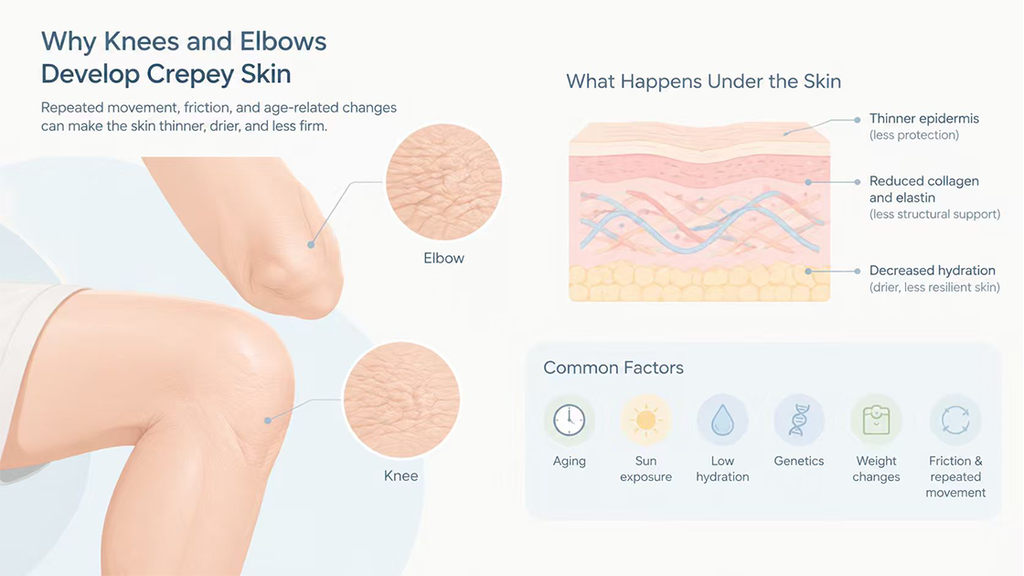
Crepey skin is characterized by a thin, finely wrinkled appearance that can resemble crepe paper. It may develop as collagen and elastin change with age, reducing the skin’s structural support and ability to return to its original shape.
The knees and elbows are particularly exposed to repeated bending, stretching, and friction. Frequent movement can make existing folds more noticeable, while dry skin may emphasize fine lines and uneven texture.
1.2 Common Factors That Affect Skin Firmness
Several factors can contribute to crepey-looking skin, including natural aging, cumulative sun exposure, reduced hydration, genetics, and changes in body weight. Repeated friction and certain skincare habits may also aggravate dryness or irritation.
It is important to distinguish dehydration from true skin laxity. Dry skin may improve substantially with moisturizers, whereas structural changes involving collagen and elastin generally require a different approach. Both concerns can occur at the same time.
2. Non-Surgical Treatments for Crepey Skin
2.1 Daily Skincare and Hydration
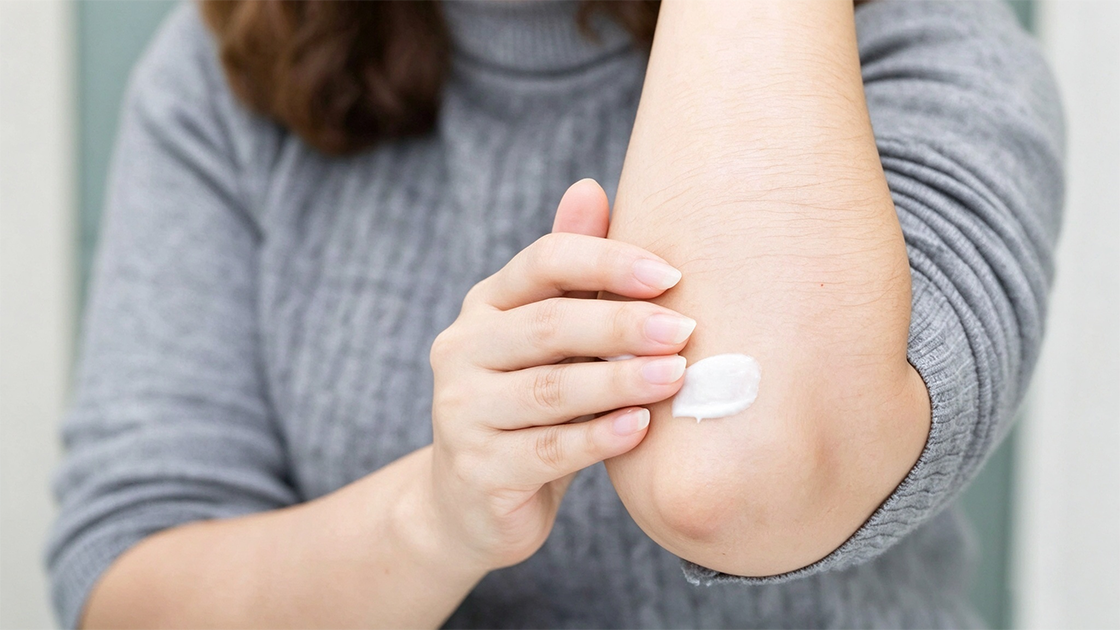
A consistent skincare routine is an important starting point for improving the appearance of crepey skin. Moisturizers containing ingredients such as ceramides, glycerin, or hyaluronic acid can help support the skin barrier and reduce moisture loss.
Gentle cleansing and avoiding excessive exfoliation may also help prevent irritation around the knees and elbows. Broad-spectrum sunscreen with SPF 30 or higher is particularly important for exposed skin because ultraviolet radiation contributes to collagen breakdown over time.
These measures can improve dryness and surface texture, but they should not be expected to remove substantial loose skin or fully reverse age-related structural changes.
2.2 Radiofrequency Skin Tightening
Radiofrequency skin tightening uses controlled electromagnetic energy to generate heat within targeted skin tissues. This thermal response can influence collagen remodeling and may gradually improve the appearance of mild skin laxity.
For crepey-looking knees and elbows, RF may be considered as part of a professional aesthetic treatment plan when the primary concern is reduced firmness rather than substantial excess skin. Treatment suitability depends on the device, the applicator design, the treatment area, and the individual’s skin condition.
Results vary, and multiple sessions may be recommended depending on the treatment protocol. RF should not be presented as a replacement for surgery when significant excess skin is present.
3. How RF Technology May Support Skin Firmness
3.1 Understanding Collagen Remodeling
Collagen provides much of the skin’s structural support, while elastin contributes to its ability to stretch and recoil. As these components change over time, the skin may become less firm and fine wrinkles may become more visible.
RF devices deliver controlled energy that produces a thermal effect in the targeted tissue. Under appropriate treatment conditions, this may stimulate a remodeling response involving existing collagen and new collagen production.
The process is gradual rather than instantaneous. Any improvement in firmness or texture depends on the treatment method, individual tissue characteristics, and the degree of existing skin laxity.
3.2 Why Treatment Settings and Applicator Design Matter
The knees and elbows differ from the face in their contours, movement patterns, and skin characteristics. A treatment approach suitable for one body area cannot automatically be assumed to be appropriate for another.
Professional assessment should determine whether a particular RF device is cleared or otherwise authorized for the intended use, whether its applicator is suitable for the treatment area, and which energy settings and temperature controls are appropriate. Consistent technique and adherence to the manufacturer’s instructions are important for managing treatment risks.
The goal is controlled treatment—not simply applying more energy. Excessive or improperly delivered heat can cause burns or other unwanted effects.
4. Choosing the Right Approach for Knees and Elbows
4.1 When Professional Aesthetic Treatment May Be Appropriate
People with mild to moderate skin laxity who want to improve firmness without surgery may wish to discuss RF skin tightening with a qualified provider. A consultation can help determine whether the visible concern is primarily dryness, fine wrinkling, skin laxity, pigmentation, or a combination of these issues.
Other professional approaches may be considered depending on the diagnosis and treatment goal. However, not every skin rejuvenation technology is designed to address loose skin. For example, pigment-targeting lasers are intended for specific pigmentation concerns and should not be assumed to tighten crepey skin simply because they are used in aesthetic dermatology.
4.2 When Other Options May Be Needed
Non-surgical treatments have limitations. If the knees or elbows have substantial excess skin following major weight changes, a non-invasive procedure may provide only modest improvement.
A dermatologist or appropriately qualified medical professional can assess whether skincare, an energy-based treatment, or a surgical consultation is more suitable. New, persistent, painful, or unusual skin changes should also be medically evaluated rather than treated as a cosmetic concern without assessment.
5. Maintaining Results and Protecting Skin Health
5.1 Build a Consistent Skin-Care Routine
Daily moisturization, gentle cleansing, sun protection, and avoiding unnecessary friction can help maintain skin comfort and appearance. Products containing retinoids may help with some signs of photoaging, but they can also cause irritation and may not be suitable for everyone. Professional advice is especially useful when the skin is sensitive or the treatment area is frequently exposed to friction.
Healthy habits support overall skin health, but they cannot guarantee that crepey skin will disappear. A realistic plan should focus on gradual improvement rather than perfection.
5.2 Set Realistic Expectations for Non-Surgical Treatments
Before starting RF treatment, individuals should understand the expected degree of improvement, the recommended number and spacing of sessions, possible side effects, and the need for maintenance. Temporary redness, swelling, tenderness, or discomfort may occur, while burns and other complications are possible if treatment is inappropriate or improperly performed.
Choosing a qualified provider and a device designed for the intended application is essential. A careful treatment plan should prioritize safety and suitability over promises of dramatic or immediate results.
FAQ
1. Can crepey skin on the knees and elbows be tightened without surgery?
Potentially. RF treatments may improve mild skin laxity, but results vary and significant excess skin may require other options.
2. Does moisturizing help crepey skin?
Yes. Moisturizers can improve hydration and make fine lines less noticeable, but they cannot fully reverse structural skin laxity.
3. How does RF skin tightening work?
RF delivers controlled heat into targeted tissue, which may support collagen remodeling and gradually improve skin firmness.
4. How many RF sessions are needed?
The number varies by device, treatment area, and individual skin condition. A qualified provider should establish the treatment plan.
5. Is RF suitable for everyone?
No. Suitability depends on medical history, skin condition, the device, and its approved or authorized uses. A professional assessment is essential.
Conclusion
Crepey skin on the knees and elbows can result from a combination of dryness, sun exposure, and age-related changes in collagen and elastin. Consistent moisturization and sun protection provide an important foundation for skin care, while non-surgical treatments such as RF skin tightening may offer additional support for improving mild to moderate skin laxity. The most appropriate approach depends on the cause and severity of the concern, as well as the suitability of the technology for the intended treatment area. With realistic expectations, professional guidance, and consistent skin care, individuals can make informed decisions about maintaining smoother, firmer-looking skin.
References
1. Introduction and Overview of Radiofrequency Treatments in Aesthetic Dermatology
https://pubmed.ncbi.nlm.nih.gov/36459080
2. Radiofrequency Therapy in Esthetic Dermatology: A Review of Clinical Evidences
https://pubmed.ncbi.nlm.nih.gov/31691477
3. Minimally Invasive Approach to Skin Tightening of the Face and Body: Systematic Review of Monopolar and Bipolar Radiofrequency Devices
https://pubmed.ncbi.nlm.nih.gov/35877937
4. A Noninvasive Approach to Off-Face Skin Laxity and Tightening: A Review of the Literature
https://pubmed.ncbi.nlm.nih.gov/26566567
5. American Academy of Dermatology: How to Select Anti-Aging Skin Care Products
https://www.aad.org/public/everyday-care/skin-care-secrets/anti-aging/selecting-anti-aging-products