
Introducción
Enlarged pores are one of the most common cosmetic concerns for people who want smoother, more refined-looking skin. Although pore size relates to factors such as genetics, sebum production, skin elasticity, age, and sun exposure, modern aesthetic technology offers several approaches for improving the appearance of visible pores. Among them, picosecond laser technology has attracted attention because of its ultra-short pulse duration and ability to deliver focused energy to the skin. Rather than simply focusing on the surface appearance of pores, picosecond laser technology can interact with pigmentation and dermal structures while supporting skin remodeling. A dual-wavelength platform using 532 nm and 1064 nm wavelengths can provide different treatment options according to the depth and characteristics of the target. Understanding how pico laser energy interacts with the skin can help aesthetic professionals and clients develop more realistic expectations about pore appearance, skin texture, and overall skin rejuvenation.
1. Why Do Enlarged Pores Become More Noticeable?
Before discussing picosecond laser technology, it is important to understand why pores can appear larger over time. Pores themselves are normal openings associated with hair follicles and sebaceous glands, but several biological and environmental factors can make them more visible.
1.1 Sebum, Age, and Skin Elasticity
Sebum production can make pores appear more prominent, particularly when excess oil combines with dead skin cells and other surface debris. At the same time, the gradual decline of collagen and elastin can reduce the structural support around follicular openings. As skin becomes less firm, pores may look wider or more irregular. Age, genetics, hormonal factors, and environmental exposure can all influence this appearance, which means enlarged pores rarely have a single cause.
1.2 Sun Exposure and Uneven Skin Texture
Long-term ultraviolet exposure can contribute to photoaging, changes in skin elasticity, uneven pigmentation, and rougher skin texture. These changes can make pores stand out more clearly against the surrounding skin. For this reason, improving the appearance of enlarged pores often involves looking beyond the pore opening itself and considering the overall quality and texture of the surrounding skin.
2. How Can Pico Laser Technology Affect Skin Texture?
Once the causes of visible pores are understood, the next question is how laser energy can interact with the skin. Picosecond technology uses extremely short laser pulses that deliver energy within trillionths of a second, creating a different interaction with tissue compared with longer-pulse laser systems.
2.1 The Role of Ultra-Short Laser Pulses
Picosecond lasers can generate rapid energy delivery with high peak power. This allows the laser to produce photoacoustic and photomechanical effects while limiting prolonged heat accumulation in the surrounding tissue. In aesthetic applications, these effects can help target pigment particles and contribute to processes associated with dermal remodeling. Fractional picosecond approaches can also create localized zones of controlled energy delivery, which researchers have investigated for skin texture, photoaging, acne scarring, and enlarged pores.
2.2 Collagen Remodeling and Skin Appearance
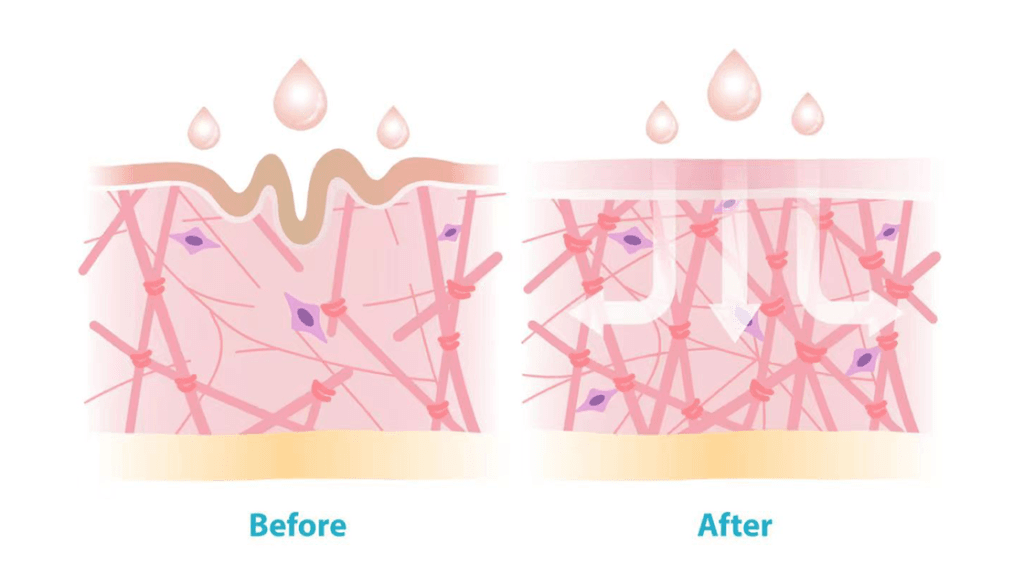
Skin texture depends partly on the organization and quality of collagen within the dermis. Certain picosecond laser approaches can stimulate remodeling processes in the dermal environment, potentially supporting a smoother and more even skin appearance. This does not mean that laser energy permanently changes pore structure. Instead, the goal in aesthetic skin rejuvenation is generally to improve the visual quality of the surrounding tissue so that pores may appear less prominent.
3. 532 nm vs. 1064 nm: Why Wavelength Matters
Wavelength selection is an important part of laser-based aesthetic technology because different wavelengths interact with skin chromophores and tissue at different depths. A dual-wavelength system can therefore provide greater flexibility when addressing different skin concerns.
3.1 532 nm for More Superficial Pigmentation
A 532 nm wavelength falls within the green portion of the visible light spectrum and has a strong interaction with melanin. It can be used for superficial pigmentation concerns such as freckles, sun spots, and certain forms of superficial hyperpigmentation. When pigment is present around areas where pores appear prominent, addressing uneven pigmentation can contribute to a more uniform overall complexion. The technology is designed to focus energy precisely rather than relying on prolonged heating of the skin.
3.2 1064 nm for Deeper Tissue Interaction
A 1064 nm wavelength operates in the near-infrared range and can penetrate more deeply into the skin. It has lower melanin absorption than shorter wavelengths, allowing energy to reach deeper tissue structures. In aesthetic applications, 1064 nm picosecond technology has been studied for enlarged pores and skin rejuvenation, including approaches using fractional microlens arrays. Research has reported changes in pore appearance after repeated treatment sessions, although outcomes can vary according to treatment parameters and individual skin characteristics.
4. What Makes a Picosecond System Suitable for Skin Rejuvenation?
The wavelength is only one part of the technology. Pulse characteristics, energy density, spot size, frequency, cooling, and handpiece design can all influence how professionals customize an aesthetic treatment.
4.1 Flexible Spot Sizes for Targeted Energy Delivery
A professional picosecond platform can provide multiple spot sizes to accommodate different treatment areas and levels of precision. The system described on the referenced product page supports spot sizes from 2 mm to 10 mm and pulse frequencies from 1 to 10 Hz. This flexibility can help professionals select parameters according to the size of the target area and the intended aesthetic application.
4.2 Water Cooling and Controlled Treatment Parameters
Cooling can play an important role in maintaining a controlled treatment environment. The referenced system uses water cooling and provides adjustable treatment parameters, allowing professionals to tailor energy delivery according to the skin concern and treatment area. Careful parameter selection matters because laser-tissue interaction depends on factors including wavelength, fluence, pulse duration, spot size, repetition rate, and the individual’s skin characteristics.
5. What Can Clients Expect From Pico Laser for Enlarged Pores?
Understanding realistic expectations is essential when discussing any cosmetic laser procedure. Enlarged pores can respond differently depending on their underlying causes, and no single laser approach produces identical results for every person.
5.1 Pore Appearance and Overall Skin Texture
Clinical literature has explored 1064 nm picosecond laser approaches for enlarged facial pores. One study using a 1064 nm picosecond laser with a fractional microlens array reported a significant reduction in pore size after three treatment sessions, with improvement continuing during follow-up. Another randomized study found that a 1064 nm picosecond approach with a microlens array produced meaningful changes in pore appearance and was well tolerated. These findings suggest that picosecond technology may have a role in improving the visual appearance of enlarged pores, although treatment response varies.
5.2 Why a Personalized Approach Still Matters
Pore appearance can result from several overlapping factors, including sebum production, photoaging, reduced elasticity, pigmentation, and skin texture. A person with oily skin may have different needs from someone whose pores appear more visible because of age-related changes in collagen and elasticity. A qualified aesthetic professional can evaluate these factors and determine whether picosecond laser technology fits the individual’s cosmetic goals and skin characteristics.
FAQ
Can pico laser permanently shrink enlarged pores?
Pico laser treatment does not permanently remove or close pores. It may help improve their appearance by supporting changes in skin texture and surrounding tissue.
Which wavelength is used for enlarged pores?
A 1064 nm wavelength has been studied for enlarged pores, particularly when combined with fractional microlens technology. The appropriate wavelength depends on the skin concern and treatment objective.
Is 532 nm useful for pore concerns?
532 nm is primarily associated with more superficial pigmentation. If uneven pigmentation contributes to the appearance of the skin, it may have a role within a broader skin rejuvenation approach.
Does pico laser stimulate collagen?
Certain picosecond laser approaches can promote dermal remodeling and collagen-related changes. The extent of the response depends on the treatment parameters and individual skin characteristics.
How many sessions may be needed?
There is no universal number of sessions. Published studies have evaluated multiple-session protocols, but an appropriate schedule depends on the person’s skin condition and the professional’s assessment.
Can pico laser improve skin texture?
Picosecond laser technology has been studied for skin texture and rejuvenation. Improvements can vary depending on the treatment approach, skin condition, and individual response.
Conclusión
Enlarged pores are influenced by more than the size of individual follicular openings. Sebum production, collagen and elastin changes, photoaging, pigmentation, and overall skin texture can all affect how prominent pores appear. Picosecond laser technology offers a precise approach to skin rejuvenation through ultra-short laser pulses, with different wavelengths providing different interactions with superficial and deeper tissue structures. A dual-wavelength platform combining 532 nm and 1064 nm can offer flexibility for pigmentation and skin texture concerns, while adjustable spot sizes, pulse frequency, energy parameters, and water cooling support customized professional applications. Current literature suggests that 1064 nm picosecond approaches may help improve the appearance of enlarged pores, but outcomes depend on treatment parameters and individual characteristics. For that reason, the most appropriate goal is not to eliminate pores, but to support smoother-looking skin, more even texture, and a refined overall complexion through a professionally guided approach.
References
The Efficacy and Adverse Effects of Treatment Options for Facial Pores: A Review Article
https://pubmed.ncbi.nlm.nih.gov/36440737
An Update on Fractional Picosecond Laser Treatment: Histology and Clinical Applications
https://pmc.ncbi.nlm.nih.gov/articles/PMC9852188
Quantitative Assessment of the Long-Term Efficacy and Safety of a 1064-nm Picosecond Laser With Fractionated Microlens Array in the Treatment of Enlarged Pores in Asians
https://pubmed.ncbi.nlm.nih.gov/34233039
Comparison of the 1064-nm Picosecond Laser With Fractionated Microlens Array and 1565-nm Non-Ablative Fractional Laser for the Treatment of Enlarged Pores: A Randomized, Split-Face, Controlled Trial
https://pubmed.ncbi.nlm.nih.gov/38396012
Skin Rejuvenation – Dual Wavelength Pico Laser Technology