
Einführung
Tattoos have become a common form of personal expression, but people’s preferences and lifestyle choices can change over time. Some individuals may consider reducing the appearance of an existing tattoo, while others may want to prepare an area for a new design or modification. Modern laser technology provides different approaches, including tattoo removal and tattoo fading, by using targeted light energy to interact with tattoo pigments beneath the skin surface. Advanced laser systems with technologies such as picosecond and Q-switched laser platforms allow professionals to select suitable wavelengths and energy settings based on pigment characteristics and treatment goals. Understanding the differences between tattoo removal and tattoo fading helps individuals and aesthetic professionals explore appropriate laser options for different tattoo management needs.
1. Understanding the Difference Between Tattoo Removal and Tattoo Fading
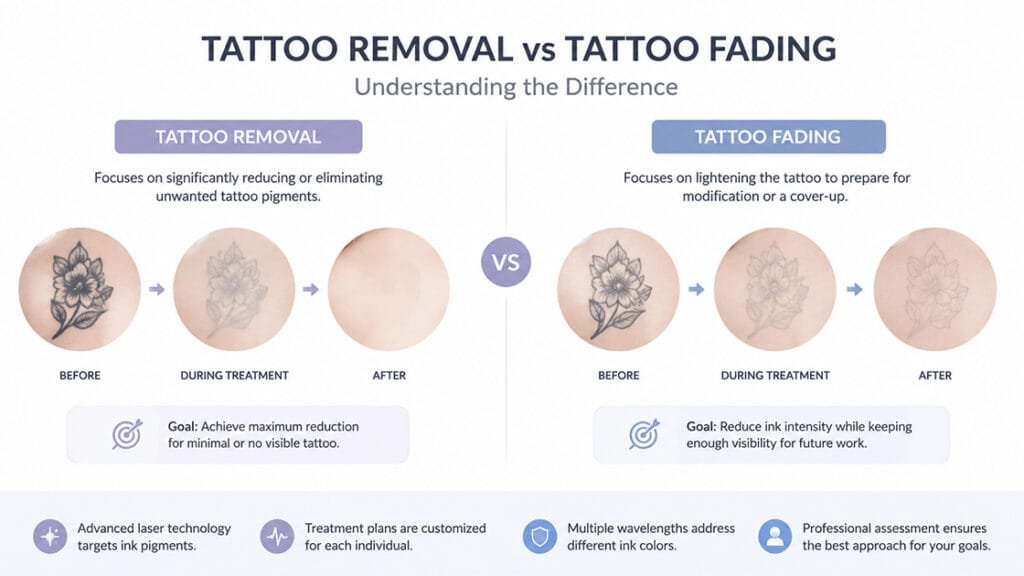
Tattoo removal and tattoo fading are often discussed together, but they represent different goals within laser tattoo management. Understanding these differences can help people make more informed decisions when exploring modern laser technology.
1.1 What Is Laser Tattoo Removal?
Laser tattoo removal focuses on reducing the appearance of unwanted tattoo pigments through controlled laser energy application. During the process, specific wavelengths of laser light target tattoo ink particles located within the skin.
Advanced laser technologies, including Q-switched lasers and picosecond lasers, are designed to deliver short energy pulses that interact with pigment particles. Different tattoo colors absorb light differently, which is why professionals may select different wavelengths, such as 1064nm or 532nm, depending on the pigment type and treatment objectives.
Laser tattoo removal typically involves a personalized approach because tattoo characteristics can vary significantly. Factors such as ink color, pigment density, tattoo size, and skin condition may influence the choice of laser parameters.
1.2 What Is Laser Tattoo Fading?
Laser tattoo fading focuses on lightening tattoo pigments rather than completely reducing their appearance. Many people choose fading when they want to modify an existing tattoo, prepare for a cover-up design, or create a lighter base for future tattoo changes.
Compared with complete tattoo removal goals, fading often focuses on achieving a suitable level of pigment reduction. Tattoo artists may prefer a lighter existing tattoo because it can provide more flexibility when creating a new design.
Laser technology supports this process by delivering targeted energy to specific pigment areas. The use of appropriate wavelengths and pulse durations allows professionals to adjust treatments according to tattoo characteristics and desired outcomes.
1.3 Why Understanding the Goal Matters Before Choosing Laser Options
Before exploring laser tattoo technology, identifying the main goal is an important step. Someone interested in significantly reducing a tattoo may have different expectations compared with someone preparing for a cover-up tattoo.
Modern laser systems offer adjustable settings that allow professionals to customize approaches based on individual situations. Factors such as tattoo age, ink composition, color variety, and skin type can influence how laser energy interacts with pigments.
By understanding whether the goal is removal or fading, individuals can have clearer conversations with qualified professionals and explore suitable laser technology options.
2. How Advanced Laser Technology Targets Tattoo Pigments
Laser tattoo management relies on the interaction between specific light wavelengths and tattoo pigments. Modern systems use advanced energy delivery methods to improve precision and provide professionals with more control during aesthetic procedures.
2.1 The Role of Picosecond Laser Technology in Tattoo Pigment Management
Picosecond laser technology uses extremely short pulse durations to deliver energy to tattoo pigments. These ultra-short pulses allow laser energy to interact with pigment particles in a highly controlled manner.
The rapid delivery of energy helps create a photoacoustic effect, where light energy generates mechanical pressure that influences pigment particles. This technology has become an important development in modern tattoo management because it offers professionals another option for addressing different tattoo characteristics.
Picosecond laser systems are often associated with advanced pigment-focused applications because their pulse technology allows precise energy delivery while considering surrounding skin areas.
2.2 How Q-Switched Laser Technology Supports Tattoo Applications
Q-switched laser technology has been widely used in pigment-related aesthetic applications. It produces high-energy laser pulses in very short durations, allowing professionals to target specific tattoo pigments.
Different wavelengths are commonly selected for different pigment colors. For example, 1064nm wavelength technology is often associated with darker pigments, while 532nm wavelength technology may be considered for certain lighter or warmer colors.
The ability to select different wavelengths allows laser professionals to develop customized approaches based on tattoo composition and individual skin considerations.
2.3 Why Multiple Wavelength Options Matter for Different Tattoo Colors
Tattoo ink contains various pigments, and different colors respond differently to laser wavelengths. Black, blue, green, red, and other colors may require different approaches because each pigment absorbs laser energy in unique ways.
Advanced laser platforms that support multiple wavelengths provide professionals with greater flexibility when managing complex tattoo designs. Selecting the appropriate wavelength helps focus energy on targeted pigments while considering the surrounding skin environment.
Understanding the relationship between wavelength and pigment absorption is an important part of modern laser tattoo technology.
3. Factors That Influence Tattoo Removal and Fading Results
Laser tattoo management depends on multiple factors, including tattoo characteristics, skin condition, and technology selection. A personalized approach helps professionals determine appropriate settings and expectations.
3.1 Tattoo Color and Pigment Composition
Tattoo color is one of the most important factors affecting laser applications. Different pigments absorb specific wavelengths differently, meaning that a single laser approach may not be suitable for every tattoo.
Dark pigments, especially black ink, often interact differently with laser energy compared with brighter colors such as green or red. Professionals may evaluate pigment characteristics before selecting wavelength options and energy parameters.
Modern laser systems with multiple wavelength capabilities provide more flexibility when addressing tattoos with various colors and complex designs.
3.2 Tattoo Size, Density, and Design Complexity
The size and density of a tattoo can influence the overall laser management approach. Larger tattoos may contain more pigment areas, while detailed designs may include multiple colors and varying ink concentrations.
Dense tattoos may require careful parameter adjustments to maintain a balanced approach. Laser professionals consider factors such as pigment depth, tattoo structure, and skin response when developing treatment plans.
Technology advancements allow professionals to adjust energy settings more precisely according to individual tattoo features.
3.3 Skin Type and Personalized Laser Settings
Skin characteristics are another important consideration in laser tattoo applications. Different skin types may respond differently to laser energy, which is why professional assessment plays an important role.
Modern laser devices allow adjustments in parameters such as wavelength, pulse duration, and energy level. These customization options help professionals create approaches that consider both tattoo pigments and individual skin conditions.
A personalized laser strategy supports a more controlled and professional approach to tattoo management.
4. Choosing Between Tattoo Removal and Tattoo Fading for Different Needs
The decision between tattoo removal and tattoo fading depends on personal goals, tattoo characteristics, and future plans. Modern laser technology provides flexible options that allow professionals to create different approaches based on individual expectations and aesthetic preferences.
4.1 When Tattoo Fading May Be a Suitable Option
Tattoo fading is often considered by individuals who want to reduce the intensity of an existing tattoo rather than completely eliminate its appearance. This approach is commonly associated with people who are interested in modifying a current design or preparing the skin area for a new tattoo concept.
By gradually reducing pigment visibility, laser fading can provide tattoo artists with a lighter canvas for future creative work. The process relies on precise laser energy delivery to target tattoo pigments while maintaining attention to surrounding skin conditions.
Advanced laser systems with adjustable pulse durations and wavelength options allow professionals to customize fading approaches according to tattoo color, pigment depth, and design complexity.
4.2 When Tattoo Removal May Be Considered
Tattoo removal focuses on significantly reducing the appearance of unwanted tattoo pigments through laser-based pigment targeting technology. Individuals may consider this option when a tattoo no longer matches their personal preferences, lifestyle changes, or aesthetic goals.
Modern laser platforms use technologies such as Q-switched and picosecond laser systems to deliver controlled energy pulses. These technologies help professionals manage different pigment types by selecting suitable wavelengths and adjusting treatment parameters.
Because every tattoo has unique characteristics, professionals typically evaluate factors such as ink color, tattoo age, skin type, and pigment concentration before determining an appropriate laser approach.
4.3 The Importance of Professional Laser Assessment
A professional assessment is an important part of selecting suitable laser tattoo management options. Tattoo characteristics can vary widely, and factors such as pigment composition, skin sensitivity, and desired outcomes all influence technology selection.
During an evaluation, professionals may consider whether tattoo fading or tattoo removal better matches the individual’s expectations. They can also determine suitable laser parameters, including wavelength selection, pulse duration, and energy settings.
This personalized approach helps create a more structured and informed experience when exploring modern tattoo laser technology.
5. The Future of Laser Tattoo Management Technology
Laser tattoo technology continues to develop as aesthetic professionals look for more precise and customizable solutions. Innovations in pulse technology, wavelength selection, and energy control are shaping the future of tattoo pigment management.
5.1 Advances in Picosecond and Multi-Wavelength Laser Systems
The development of picosecond laser technology has introduced new possibilities for pigment-focused applications. Short pulse durations allow professionals to deliver laser energy in a highly controlled manner, supporting advanced approaches for different tattoo types.
Multi-wavelength laser systems provide additional flexibility by allowing professionals to select suitable wavelengths based on pigment characteristics. Technologies involving wavelengths such as 1064nm and 532nm are commonly discussed in relation to different tattoo colors and pigment responses.
These technological developments continue to improve the options available for professionals managing complex tattoo designs.
5.2 How Laser Technology Supports Modern Aesthetic Services
Laser tattoo management has become an important part of many aesthetic service environments. Beauty clinics, aesthetic centers, and specialized professionals increasingly explore advanced laser platforms to provide more personalized services.
Modern laser systems are designed to support professional workflows through adjustable settings, precise energy delivery, and versatile applications. These features allow professionals to consider different tattoo conditions and individual preferences.
As consumers become more interested in customized aesthetic solutions, laser technology continues to play an important role in modern skin and pigment management.
5.3 Understanding Laser Safety and Skin Care Considerations
Proper skin care and professional guidance remain important aspects of laser tattoo applications. Laser energy interacts with both tattoo pigments and skin tissues, making appropriate parameter selection essential.
Professionals typically consider factors such as skin type, pigment location, and application settings when planning laser procedures. Following recommended skin care practices before and after laser sessions can also support overall skin comfort.
Understanding the technology, preparation process, and professional recommendations helps individuals approach tattoo management with realistic expectations.
FAQ
What is the difference between tattoo removal and tattoo fading?
Tattoo removal focuses on significantly reducing unwanted tattoo pigments, while tattoo fading aims to lighten tattoo appearance, often for modification or cover-up preparation.
Can all tattoo colors be treated the same way?
Modern tattoo laser systems may use technologies such as Q-switched lasers and picosecond lasers with wavelength options like 1064nm and 532nm.
Can all tattoo colors be treated the same way?
No. Different tattoo pigments absorb laser wavelengths differently, so professionals may select different approaches based on tattoo colors and pigment characteristics.
Why are multiple wavelengths important in tattoo laser technology?
Multiple wavelengths allow professionals to address different pigment types with more customized laser settings.
Is tattoo fading the same as tattoo removal?
No. Fading focuses on reducing pigment intensity, while removal focuses on greater reduction of tattoo appearance.
What factors influence laser tattoo management?
Factors may include tattoo color, pigment composition, tattoo size, design complexity, skin type, and selected laser parameters.
Schlussfolgerung
Tattoo removal and tattoo fading represent two different approaches within modern laser tattoo management. By using advanced technologies such as picosecond lasers, Q-switched lasers, and multiple wavelength options, professionals can develop more personalized strategies based on tattoo pigments and individual goals. Whether someone wants to reduce tattoo visibility, prepare for a cover-up design, or explore modern pigment management options, understanding laser technology helps create clearer expectations. As aesthetic technology continues to advance, targeted laser systems provide professionals with more flexible tools for supporting tattoo appearance management and personalized skin care services.
References
Laser Tattoo Removal: A Review of Current Techniques and Future Directions
https://pubmed.ncbi.nlm.nih.gov/23148828
Advances in Laser Treatment of Tattoos: A Review of Current Technologies
https://pubmed.ncbi.nlm.nih.gov/28253193
Picosecond Lasers in Dermatology: Applications and Future Perspectives
https://pubmed.ncbi.nlm.nih.gov/27556600
Laser-Tissue Interactions in Dermatology and Aesthetic Medicine
https://www.ncbi.nlm.nih.gov/pmc/articles/PMC4479482
Principles of Laser and Light-Based Technologies in Dermatology