
Einführung
For many adults, acne does not end when breakouts disappear. Post-acne marks, uneven skin tone, and residual pigmentation often remain long after active acne has resolved. These visible skin concerns can affect overall complexion and confidence, leading many individuals to seek professional skin rejuvenation options. Among the available aesthetic technologies, modern laser-based treatments have become increasingly popular because they can target pigmentation irregularities while supporting overall skin renewal. Understanding how laser technology interacts with post-acne skin concerns can help individuals make informed decisions when exploring professional treatment options.
1 Understanding Post-Acne Marks and Skin Discoloration
Post-acne marks are among the most common cosmetic concerns following inflammatory acne. Although they are often mistaken for acne scars, pigmentation-related changes involve different biological processes and may require different treatment approaches.
1.1 What Causes Post-Acne Marks?
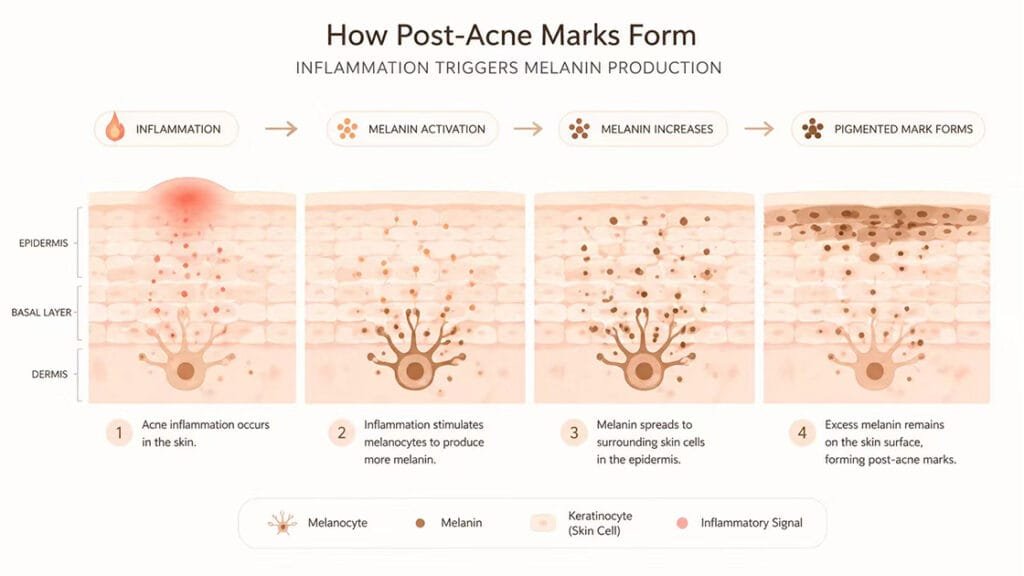
Post-inflammatory hyperpigmentation develops when inflammation triggers excess melanin production during the skin’s healing process. As acne lesions heal, darkened spots may remain on the skin surface. These marks can appear on the cheeks, forehead, jawline, and chin, especially in individuals with medium to darker skin tones. Sun exposure may further contribute to uneven pigmentation, making the discoloration more noticeable over time.
1.2 The Difference Between Acne Scars and Pigmentation
It is important to distinguish between acne scars and post-acne marks. Acne scars involve structural changes within the skin, while pigmentation concerns primarily affect skin color and tone. Many individuals experience a combination of both conditions, which is why comprehensive skin assessment is often recommended before selecting a treatment strategy.
2 How Modern Laser Technology Addresses Post-Acne Skin Concerns
Advancements in laser aesthetics have expanded treatment options for individuals seeking support for uneven skin tone and pigmentation-related concerns.
2.1 Targeting Pigmented Areas With Selective Light Energy
Modern laser systems are designed to deliver controlled wavelengths that interact with melanin-containing structures in the skin. By targeting specific chromophores while minimizing impact on surrounding tissue, these technologies can support the gradual improvement of visible pigmentation irregularities. Treatment parameters are typically adjusted based on skin type, pigmentation depth, and treatment goals.
2.2 Supporting Skin Renewal and Overall Complexion Improvement
In addition to addressing visible pigmentation, laser-based skin rejuvenation treatments are frequently used to support overall skin appearance. Controlled laser energy may stimulate natural skin renewal processes, helping create a smoother and more refined complexion. This dual approach makes laser technology an attractive option for individuals seeking comprehensive skin rejuvenation rather than focusing solely on individual dark spots.
3 Key Laser Features Used in Post-Acne Skin Rejuvenation
Modern aesthetic laser platforms incorporate multiple technologies that allow practitioners to customize treatments according to individual skin concerns.
3.1 Multi-Wavelength Flexibility for Different Skin Conditions
Different pigmentation concerns often require different wavelengths and treatment strategies. Advanced laser platforms offer multiple wavelength options, allowing practitioners to address superficial discoloration as well as deeper pigmentation patterns. This flexibility supports personalized treatment planning for a wide range of skin types and aesthetic goals.
3.2 Precision Treatment for Facial Pigmentation Concerns
Facial skin requires careful treatment due to its visibility and varying sensitivity across different regions. Modern laser systems provide controlled energy delivery that can be adjusted for specific treatment areas such as the cheeks, forehead, nose, and chin. This precision helps practitioners tailor treatments according to the characteristics of each target area.
4 Why More Adults Are Exploring Laser-Based Skin Rejuvenation
The growing demand for non-invasive aesthetic procedures has contributed to increased interest in laser-based skin treatments.
4.1 Interest in Non-Invasive Skin Improvement Options
Many adults prefer aesthetic procedures that do not involve surgery or significant downtime. Laser treatments fit well within this preference because they can be incorporated into professional skincare plans while allowing individuals to maintain their normal routines. This convenience has contributed to the widespread popularity of laser skin rejuvenation services.
4.2 Personalized Treatment Approaches for Diverse Skin Types
Modern aesthetic clinics increasingly focus on personalized treatment strategies. Laser technologies offer adjustable parameters that can accommodate different skin tones, pigmentation patterns, and treatment objectives. This adaptability makes laser-based solutions suitable for a broad range of aesthetic concerns associated with post-acne skin changes.
5 Considerations Before Choosing Laser Treatment for Post-Acne Marks
Understanding treatment expectations and skin characteristics is an important part of the decision-making process.
5.1 Professional Skin Assessment Matters
Every individual’s skin condition is unique. Factors such as pigmentation depth, skin sensitivity, previous acne history, and overall skin health may influence treatment planning. Professional assessment helps determine which laser settings and treatment approaches are most appropriate for specific concerns.
5.2 Long-Term Skin Care Supports Treatment Outcomes
Laser treatments are often incorporated into broader skincare programs. Consistent sun protection, gentle skincare practices, and professional follow-up care may help support overall skin appearance and maintain improvements over time. A comprehensive approach often produces the most balanced aesthetic results.
FAQ
Can laser treatments help improve post-acne marks?
Many aesthetic professionals use laser technology to address visible pigmentation concerns associated with post-acne skin changes as part of a personalized treatment plan.
Are post-acne marks the same as acne scars?
No. Post-acne marks primarily involve pigmentation changes, while acne scars involve structural changes within the skin.
Can laser treatments be customized for different skin types?
Yes. Modern laser platforms often provide adjustable treatment parameters that allow practitioners to tailor procedures according to individual skin characteristics.
Is laser skin rejuvenation only used for acne-related concerns?
No. Laser-based treatments are commonly used for pigmentation concerns, uneven skin tone, skin rejuvenation, and various cosmetic skin conditions.
Schlussfolgerung
Post-acne marks can remain a frustrating concern long after active acne has resolved. As aesthetic technology continues to evolve, modern laser systems provide practitioners with increasingly sophisticated tools for addressing pigmentation irregularities and supporting overall skin rejuvenation. Through customizable treatment parameters, precision energy delivery, and adaptability across different skin types, laser-based solutions have become an important component of contemporary aesthetic skincare programs focused on improving skin tone, texture, and appearance.
References
Post-Inflammatory Hyperpigmentation: Etiologic and Therapeutic Considerations
https://www.ncbi.nlm.nih.gov/pmc/articles/PMC2921758
Laser Treatment of Pigmented Lesions in Cosmetic Dermatology
https://www.ncbi.nlm.nih.gov/pmc/articles/PMC3461803
Acne Scarring and Post-Inflammatory Hyperpigmentation Management
https://www.ncbi.nlm.nih.gov/pmc/articles/PMC3996784
Laser and Light-Based Treatment of Pigmented Lesions
https://www.ncbi.nlm.nih.gov/pmc/articles/PMC5843358
American Academy of Dermatology – Acne Marks and Skin Discoloration
https://www.aad.org/public/diseases/acne/skin-care/acne-dark-spots