
Einführung
For many individuals, shaving remains one of the most common methods of hair removal. However, frequent shaving often comes with unwanted side effects, including razor burn, skin irritation, redness, and visible bumps. These concerns can affect comfort, appearance, and confidence, especially in highly visible areas such as the face, underarms, legs, and bikini line. As a result, many people are exploring professional laser hair reduction treatments as part of a long-term grooming strategy. Modern laser technologies offer advanced solutions designed to target hair follicles while supporting smoother-looking skin and reducing the need for frequent shaving.
1 Understanding Razor Burn and Shaving-Related Skin Irritation
Razor burn is a common skin concern that can occur after repeated shaving. While temporary, recurring irritation may affect skin appearance and overall comfort.
1.1 What Causes Razor Burn?
Razor burn typically occurs when the skin becomes irritated by repeated friction from shaving. Dull blades, dry shaving, sensitive skin, and frequent hair removal can all contribute to redness, itching, and discomfort. Areas with coarse or dense hair growth are often more susceptible to irritation because repeated shaving places additional stress on the skin surface.
1.2 Common Areas Affected by Razor Burn
Razor burn can appear on many parts of the body, but it most commonly affects the underarms, bikini area, legs, neck, and facial regions. These areas often experience repeated shaving throughout the year, increasing the likelihood of visible irritation and uneven skin texture.
2 How Laser Hair Reduction Supports Long-Term Hair Management
As more people seek alternatives to frequent shaving, laser reduction has become a popular option for managing unwanted hair growth.
2.1 Targeting Hair Follicles With Precision
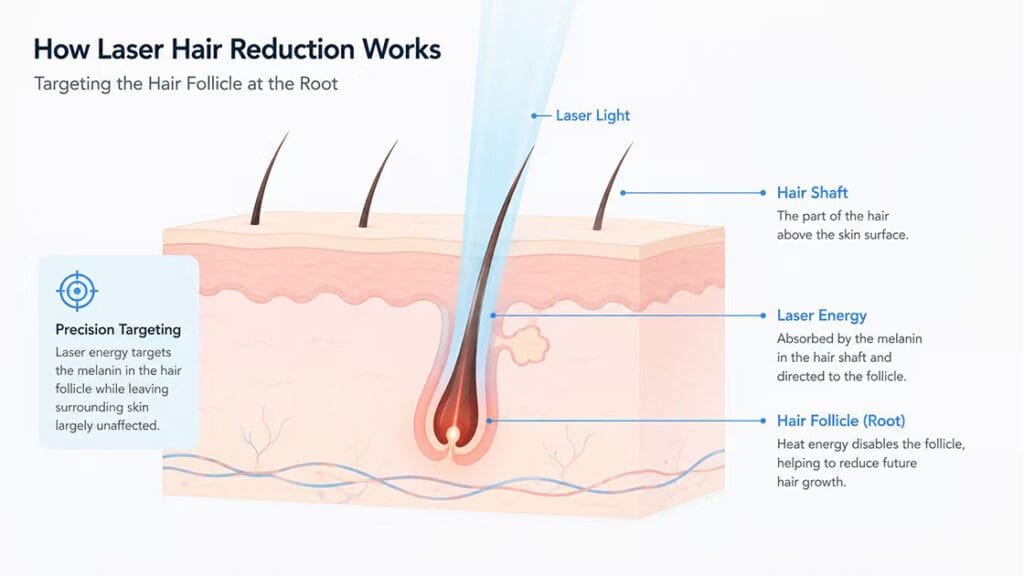
Modern laser reduction systems utilize carefully selected wavelengths that target melanin within hair follicles. The laser energy is delivered directly to the treatment area while allowing surrounding skin to remain largely unaffected. This selective targeting supports long-term reduction strategies and decreases reliance on frequent shaving routines.
2.2 Reducing Repetitive Skin Irritation From Shaving
One of the reasons laser hair reduction has gained popularity is its ability to reduce the frequency of traditional hair removal methods. As hair growth patterns change over time, individuals often find themselves shaving less frequently. This may help reduce the repetitive friction that contributes to razor burn and shaving-related skin irritation.
3 Advanced Laser Technologies Used for Hair Reduction
Modern aesthetic clinics increasingly utilize advanced laser platforms designed to accommodate different skin types and hair characteristics.
3.1 Multiple Wavelength Options for Different Hair and Skin Types
Professional laser reduction systems often incorporate multiple wavelengths to address a wide variety of hair textures and skin tones. Different wavelengths can target hair follicles at varying depths, allowing practitioners to customize treatments according to individual needs. This flexibility makes laser reduction suitable for treating multiple body areas and a broad range of skin types.
3.2 High-Energy Delivery and Large Treatment Coverage
Advanced laser platforms are designed to deliver consistent energy while covering larger treatment areas efficiently. Features such as adjustable spot sizes, optimized pulse durations, and customizable energy settings allow practitioners to perform treatments on areas including the legs, back, chest, underarms, and bikini line with precision and control.
4 Why More Individuals Are Choosing Laser Hair Reduction
The growing interest in laser hair reduction reflects broader trends in modern aesthetic care and personal grooming.
4.1 Seeking Smoother-Looking Skin
Many individuals are looking for ways to maintain smoother skin without the inconvenience of constant shaving. Laser hair reduction offers a professional approach that can be incorporated into personalized aesthetic treatment plans while supporting overall skin appearance.
4.2 Supporting a Consistent Grooming Routine
Busy professionals, athletes, travelers, and individuals with active lifestyles often seek grooming solutions that fit within their routines. Laser hair reduction provides an alternative approach that may help reduce the need for frequent maintenance while supporting long-term hair management goals.
5 Important Considerations Before Starting Treatment
Understanding treatment planning and individual skin characteristics can help ensure realistic expectations.
5.1 Skin Type and Hair Characteristics Matter
Hair color, hair density, skin tone, and treatment area all influence how laser hair reduction is planned. Professional assessment allows practitioners to select appropriate treatment parameters and develop personalized treatment strategies.
5.2 Consistency Is Part of the Process
Laser hair reduction is typically performed over a series of treatment sessions. Because hair grows in different cycles, treatment schedules are often customized based on individual hair growth patterns and aesthetic objectives.
FAQ
Can laser hair reduction help with razor burn?
Many people choose laser hair reduction because reducing the need for frequent shaving may help minimize recurring skin irritation associated with razor burn.
Is laser hair reduction suitable for different skin types?
Modern laser systems often provide adjustable treatment parameters that can accommodate a wide range of skin tones and hair types.
Which areas are commonly treated?
Common treatment areas include the face, underarms, legs, bikini line, chest, and back.
Does laser hair reduction completely stop hair growth?
Results vary by individual. Treatment plans are typically designed to support long-term hair reduction rather than guarantee complete hair removal.
Schlussfolgerung
Razor burn remains a common concern for individuals who rely on frequent shaving to manage unwanted hair. Modern laser hair reduction technologies provide an advanced alternative that targets hair follicles directly while supporting smoother-looking skin and reducing dependence on traditional hair removal methods. With customizable treatment parameters, multiple wavelength options, and the ability to address different hair and skin types, professional laser hair reduction has become an increasingly popular solution for those seeking long-term hair management and improved skin comfort.
References
Laser Hair Removal: A Review
https://www.ncbi.nlm.nih.gov/pmc/articles/PMC2921762
Laser Treatment in Dermatology and Aesthetic Medicine
https://www.ncbi.nlm.nih.gov/pmc/articles/PMC5843359
Principles of Laser Hair Reduction
https://www.ncbi.nlm.nih.gov/pmc/articles/PMC4458938
American Academy of Dermatology – Hair Removal Methods
https://www.aad.org/public/everyday-care/skin-care-basics/hair/hair-removal
Laser Hair Removal and Skin Considerations