Einführung
In the pursuit of smoother, brighter, and more youthful skin, many people explore advanced aesthetic treatments beyond traditional skincare. Among the most popular options are laser therapy and chemical peels—both known for improving skin texture, tone, and overall appearance. But can these two powerful treatments be combined safely and effectively? Understanding how they work together, their benefits, and potential risks is essential before deciding whether this combination is right for your skin goals.
1. Understanding Laser Treatments and Chemical Peels
Before combining treatments, it is important to understand how each one works individually and what skin concerns they address.
1.1 How Laser-Behandlungen Work
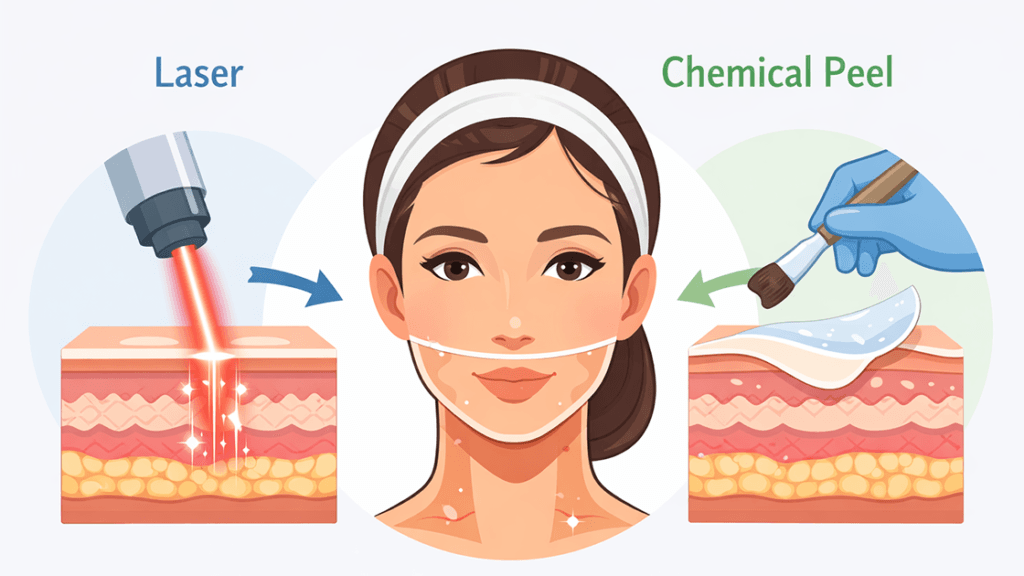
Laser treatments use focused light energy to target specific layers of the skin. Depending on the type of laser used—ablative or non-ablative—the treatment can either remove the outer layer of skin or stimulate collagen production beneath the surface. This process helps reduce wrinkles, improve skin tone, treat pigmentation, and minimize acne scars. By triggering controlled micro-injuries, lasers activate the body’s natural healing response, resulting in smoother and firmer skin over time.
1.2 How Chemical Peels Work
Chemical peels involve applying a solution—commonly containing acids such as glycolic, salicylic, or trichloroacetic acid—to exfoliate the outer layers of the skin. This process removes dead skin cells, unclogs pores, and encourages cell turnover. Depending on the strength of the peel, results can range from mild brightening to deeper resurfacing. Chemical peels are widely used to treat uneven skin tone, acne, fine lines, and sun damage.
2. Why People Combine Laser and Chemical Peels
Combining treatments is becoming increasingly popular in aesthetic medicine, as patients seek faster and more noticeable results.
2.1 Enhanced Skin Rejuvenation
When used strategically, laser peel and chemical peel can complement each other to enhance overall skin rejuvenation. While lasers penetrate deeper layers to stimulate collagen production, chemical peels focus on exfoliating the surface. This dual approach allows for both internal repair and external renewal, leading to more comprehensive results. Many individuals notice improvements in skin clarity, smoothness, and brightness when both treatments are incorporated into a treatment plan.
2.2 Targeting Multiple Skin Concerns
Different skin issues often coexist, such as pigmentation, acne scars, and fine lines. Using only one treatment may not fully address all concerns. By combining laser therapy with chemical peels, practitioners can tailor treatments to target multiple layers of the skin simultaneously. For example, a laser can address deeper pigmentation while a peel refines the surface texture, resulting in a more even and polished appearance.
3. Benefits of Combining Laser and Chemical Peels
When performed correctly, this combination can provide several significant advantages.
3.1 Improved Treatment Efficiency
Combining treatments can reduce the total number of sessions required to achieve visible results. Instead of relying on a single modality over a longer period, patients may experience faster improvements when both treatments are used in a coordinated plan. This can be particularly appealing for individuals seeking noticeable changes within a shorter timeframe.
3.2 Enhanced Skin Texture and Tone
The synergy between deep collagen stimulation and surface exfoliation helps refine skin texture and even out skin tone more effectively than either treatment alone. Patients often report smoother skin, reduced pore visibility, and a more radiant complexion after undergoing combined treatments.
3.3 Long-Term Skin Health Benefits
Beyond immediate results, combining laser therapy with chemical peels can support long-term skin health. Increased collagen production helps maintain skin elasticity, while regular exfoliation promotes healthy cell turnover. Together, these effects contribute to sustained improvements in skin quality and resilience over time.
4. Risks and Considerations
Despite the benefits, combining treatments also comes with potential risks that should not be overlooked.
4.1 Increased Skin Sensitivity
Both laser treatments and chemical peels can temporarily weaken the skin barrier. When combined improperly or performed too closely together, they may lead to excessive irritation, redness, or prolonged recovery time. Sensitive skin types may be particularly vulnerable to these effects.
4.2 Risk of Hyperpigmentation
Post-inflammatory hyperpigmentation is a concern, especially for individuals with darker skin tones. Over-treatment or inadequate spacing between procedures can trigger unwanted pigmentation changes. Proper assessment and customized treatment planning are essential to minimize this risk.
4.3 Importance of Professional Guidance
Combining advanced treatments should always be done under the supervision of a qualified professional. Factors such as skin type, treatment intensity, and timing must be carefully managed to ensure safety and effectiveness. Self-administering or combining treatments without guidance can lead to complications and unsatisfactory results.
5. Best Practices for Combining Treatments
To achieve optimal results while minimizing risks, following best practices is essential.
5.1 Proper Treatment Timing
Spacing between treatments is critical. In many cases, practitioners recommend allowing the skin to fully recover from one procedure before starting another. For example, a chemical peel may be performed weeks after a laser session, depending on the intensity of each treatment.
5.2 Choosing the Right Combination
Not all lasers and peels are suitable for combination. Mild peels may be paired with non-ablative lasers, while stronger treatments require more caution. A personalized approach ensures compatibility and reduces the risk of adverse effects.
5.3 Post-Treatment Skincare
Aftercare plays a vital role in recovery and results. Using gentle cleansers, hydrating products, and broad-spectrum sunscreen helps protect the skin and support healing. Avoiding harsh ingredients and excessive sun exposure is especially important following combined treatments.
FAQ
Q1: Can laser and chemical peels be done on the same day?
A1: In most cases, it is not recommended unless performed under professional supervision with mild treatments.
Q2: Which should I do first, laser or peel?
A2: It depends on your skin condition, but many practitioners prefer starting with laser treatment followed by a peel after recovery.
Q3: Is this combination suitable for sensitive skin?
A3: It can be, but only with gentle treatments and proper spacing. A professional consultation is essential.
Q4: How long is the recovery time?
A4: Recovery varies, but combining treatments may extend downtime compared to a single procedure.
Q5: Are the results better than doing one treatment alone?
A5: Yes, when done correctly, combining treatments can deliver more comprehensive and longer-lasting results.
Schlussfolgerung
Combining laser treatments with chemical peels can be a powerful strategy for achieving smoother, brighter, and more youthful skin. However, the key to success lies in proper planning, professional guidance, and personalized treatment protocols. While the benefits can be significant, understanding the risks and following best practices ensures that this combination enhances your skin rather than causing unnecessary complications.
References
American Academy of Dermatology. “Chemical Peels: What to Expect.”
https://www.aad.org/public/cosmetic/chemical-peels
Mayo Clinic. “Laser Resurfacing.”
https://www.mayoclinic.org/tests-procedures/laser-resurfacing/about/pac-20385114
National Institutes of Health. “Skin Resurfacing Techniques.”