소개
Long working hours, continuous mask use, and demanding professional environments can create challenges for maintaining healthy-looking skin. Healthcare workers and other service professionals often experience concerns such as dryness, uneven skin texture, redness, excess oil, and occasional breakouts caused by friction, humidity, and changes in the skin environment. Modern aesthetic care focuses on supporting skin balance and improving overall appearance through advanced light-based and energy-based technologies. With the development of laser and skin rejuvenation techniques, professionals can explore personalized beauty care solutions that help maintain smoother, refreshed, and more comfortable-looking skin.
1. Understanding How Long-Term Mask Use Affects Professional Skin Appearance
For many professionals, masks have become an important part of daily work environments. However, extended mask use can influence the condition and appearance of facial skin. The combination of friction, moisture accumulation, and reduced airflow may affect the skin barrier and contribute to visible concerns.
1.1 The Connection Between Mask Environments and Skin Changes
A mask creates a unique microenvironment around the face. Increased humidity, heat, and repeated friction may influence sebum production and skin comfort. Some professionals notice more visible issues such as uneven skin texture, dull appearance, dryness, or occasional blemishes in areas covered by masks.
Healthcare professionals who wear protective facial equipment for extended periods have reported different types of occupational facial skin concerns, including acne-related problems and irritation. The pressure and occlusive environment created by masks can contribute to changes in the skin surface and microbiome balance.
Because professional appearance often plays an important role in communication and confidence, maintaining balanced and healthy-looking skin has become an important part of modern beauty care.
1.2 Common Skin Concerns Among Healthcare and Service Professionals
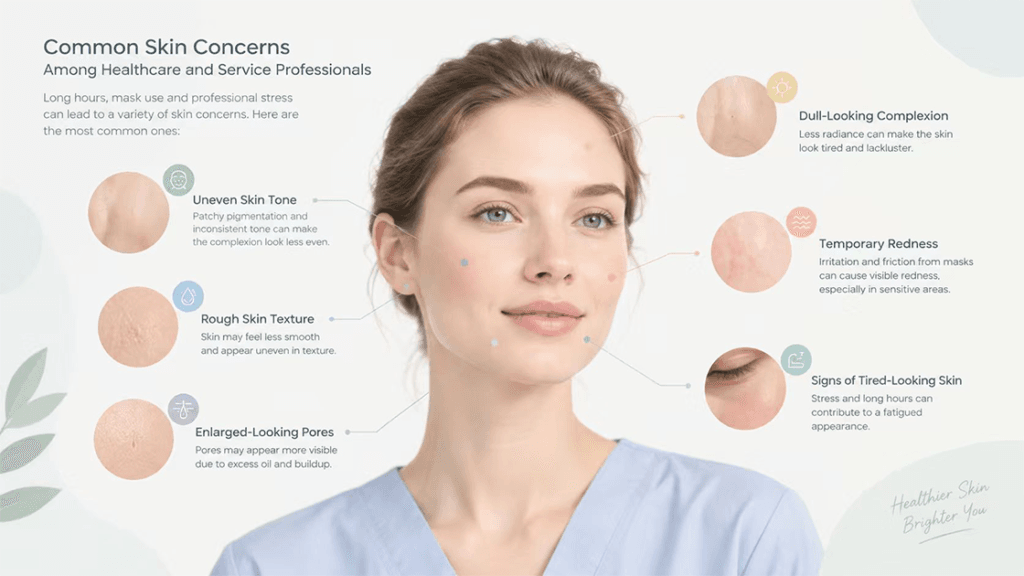
Different professional environments create different skin challenges. Healthcare workers, beauty professionals, hospitality employees, and other service workers may spend many hours wearing masks or working in conditions that increase sweating and skin stress.
Common aesthetic concerns include:
- Uneven skin tone
- Dull-looking complexion
- Rough skin texture
- Temporary redness
- Enlarged-looking pores
- Signs of tired-looking skin
These concerns do not always represent serious skin conditions, but they can affect how people feel about their appearance. Therefore, many professionals look for comfortable cosmetic approaches that support skin improvement while fitting into busy lifestyles.
1.3 Why Skin Rejuvenation Has Become Part of Professional Beauty Care
Modern beauty care increasingly focuses on prevention, maintenance, and improving overall skin quality. Instead of only addressing visible problems, many aesthetic approaches aim to support collagen activity, enhance skin smoothness, and improve skin appearance.
Laser-based and energy-based aesthetic technologies provide options that can be customized according to individual skin conditions. These technologies use controlled energy delivery to interact with targeted skin layers, supporting processes related to skin renewal and collagen remodeling.
2. The Role of Laser Technology in Modern Skin Rejuvenation
Laser technology has become an important part of aesthetic dermatology because it allows professionals to provide customized skin improvement approaches. Different wavelengths and energy settings allow treatment plans to focus on various skin appearance concerns.
2.1 How Laser Energy Supports Skin Renewal
Laser skin rejuvenation works by delivering controlled light energy into specific skin areas. Depending on the technology used, this energy can influence pigmentation, skin texture, and collagen-related processes.
Collagen is an essential structural protein that contributes to skin firmness and elasticity. As people age or experience environmental stress, collagen production gradually changes, which may influence skin smoothness and firmness.
Aesthetic laser technology focuses on stimulating natural skin responses rather than creating immediate artificial changes. This makes it an important option within comprehensive beauty management.
2.2 Laser-Based Approaches for Uneven Skin Tone and Texture
Long hours indoors, environmental exposure, and professional stress can contribute to uneven-looking skin. Laser technology can target specific visual concerns related to pigmentation and skin texture.
Advanced systems may use different wavelengths to address different chromophores in the skin, including melanin and water components. This selective approach allows professionals to customize energy delivery according to skin appearance goals.
For individuals concerned about dullness, uneven tone, or rough texture, laser-based aesthetic care may help create a smoother and more balanced appearance.
2.3 Supporting Skin Comfort Through Controlled Energy Technology
Comfort has become an important factor in modern aesthetic procedures. Many advanced systems include cooling mechanisms and adjustable energy parameters to improve the overall treatment experience.
Controlled energy delivery allows professionals to adapt procedures according to different skin types and needs. This personalized approach helps maintain safety awareness while focusing on cosmetic improvement.
3. Combining Professional Lifestyle Management With Aesthetic Skin Care
Although advanced beauty technologies can support skin improvement, professional skin health also depends on daily habits. A combination of lifestyle management and aesthetic care creates a more complete approach.
3.1 Protecting Skin Balance During Long Working Hours
Professionals who wear masks for extended periods can pay attention to maintaining skin comfort. Gentle cleansing, proper hydration, and suitable skincare routines can support the skin barrier.
The skin barrier plays an important role in protecting against external factors. When the barrier becomes stressed, the skin may appear more sensitive, dry, or uneven.
Therefore, maintaining consistent skincare habits helps create a better foundation for aesthetic treatments.
3.2 The Importance of Customized Beauty Plans
Every person has different skin characteristics, professional requirements, and aesthetic goals. A customized approach considers factors such as skin type, pigmentation patterns, sensitivity levels, and desired outcomes.
Medical aesthetic professionals usually evaluate skin conditions before selecting appropriate technologies and parameters. This personalized process helps create more suitable beauty strategies rather than applying the same approach to every individual.
3.3 Laser Beauty Care as Part of Long-Term Skin Maintenance
Professional beauty care is moving toward long-term maintenance instead of short-term solutions. Many individuals prefer approaches that support gradual skin improvement and help maintain a refreshed appearance.
Laser-based aesthetic technology can become one component of a broader skincare routine. When combined with healthy habits, it may help professionals maintain better-looking skin over time.
4. Medical Aesthetic Knowledge Behind Skin Rejuvenation Technology
Understanding the science behind aesthetic technology helps professionals and consumers make more informed decisions. Laser beauty care involves principles from dermatology, optics, and skin biology.
4.1 Understanding Selective Light Absorption in Skin
Laser technology relies on the interaction between light energy and specific skin structures. Different wavelengths are absorbed by different targets, allowing controlled energy application.
This principle is known as selective photothermolysis, where specific tissue components absorb light energy while surrounding areas receive limited impact.
This technology supports various aesthetic applications related to pigmentation management, skin texture improvement, and rejuvenation.
4.2 The Relationship Between Collagen and Skin Appearance
Collagen provides structural support within the dermis. Reduced collagen activity may contribute to changes such as decreased firmness and visible fine lines.
Certain energy-based aesthetic technologies aim to encourage collagen-related remodeling processes. Over time, this may contribute to improvements in skin smoothness and firmness.
However, individual responses can vary depending on age, skin condition, lifestyle, and other factors.
4.3 The Importance of Professional Skin Assessment
A professional assessment is an important part of aesthetic care. Skin analysis helps determine appropriate approaches based on pigmentation, texture, sensitivity, and personal goals.
Medical terminology and advanced technology should always be combined with professional judgment. A detailed evaluation allows aesthetic providers to develop more suitable cosmetic plans.
5. The Future of Workplace Skin Care and Professional Beauty
As beauty standards continue to evolve, workplace skincare is becoming an important topic among professionals. More people are focusing on maintaining healthy-looking skin while managing demanding careers.
5.1 Personalized Laser Beauty Solutions for Different Professionals
Healthcare workers, hospitality employees, and other professionals have different lifestyle patterns. Their skin concerns may also vary depending on working hours, environmental exposure, and daily routines.
Personalized laser beauty solutions provide flexibility by allowing professionals to focus on their specific aesthetic goals, such as improving skin texture, supporting firmness, or creating a more refreshed appearance.
5.2 A More Scientific Approach to Modern Beauty Management
The future of aesthetic care combines medical knowledge with advanced technology. Instead of focusing only on appearance changes, modern beauty approaches increasingly emphasize skin quality, comfort, and personalized care.
Laser-based aesthetic technologies represent one part of this development, helping professionals explore more advanced options for maintaining their skin appearance.
5.3 Building Confidence Through Healthy-Looking Skin
Professional environments often require frequent communication and interaction. Healthy-looking skin can contribute to personal confidence and overall presentation.
By combining professional skincare habits with appropriate aesthetic approaches, individuals can create a balanced strategy for maintaining their appearance in demanding work environments.
FAQ
What skin problems can occur from wearing masks for long hours?
Long-term mask use may contribute to concerns such as dryness, irritation, uneven texture, and occasional breakouts because of friction, humidity, and reduced airflow.
Can laser skin treatments completely remove mask-related skin problems?
Laser aesthetic treatments are designed to support skin improvement and appearance enhancement. Results vary between individuals, and they do not guarantee complete removal of every skin concern.
Is laser skin rejuvenation suitable for all skin types?
Different skin types may require different settings and approaches. A professional skin assessment helps determine suitable options.
How does laser technology improve skin appearance?
Laser technology uses controlled light energy to target specific skin structures, supporting processes related to skin renewal, pigmentation balance, and collagen remodeling.
Why are professionals interested in aesthetic skin care?
Many professionals want to maintain a refreshed appearance while managing long working hours, environmental stress, and lifestyle factors.
결론
Mask-related skin concerns have encouraged many professionals to pay more attention to modern beauty care and skin maintenance. Advanced laser and energy-based aesthetic technologies provide personalized approaches that focus on improving skin appearance, supporting collagen activity, and enhancing overall skin quality. When combined with professional skincare habits and appropriate evaluation, these technologies can become a valuable part of long-term beauty management for individuals with demanding careers.
References
Occupational facial dermatoses related to mask use in healthcare professionals
https://pubmed.ncbi.nlm.nih.gov/34450685/
Occupational skin dermatoses among health care workers: A review of adverse skin reactions to personal protective equipment
https://pmc.ncbi.nlm.nih.gov/articles/PMC9724726/
Occupational dermatitis to facial personal protective equipment in health care workers: A systematic review
https://pmc.ncbi.nlm.nih.gov/articles/PMC7528888/
Mask related acne is a problem for healthcare workers and those with pigmented skins
https://www.bmj.com/content/374/bmj.n1695
Mask‐induced dermatoses during the COVID‐19 pandemic: a questionnaire‐based study in 12 Korean hospitals
https://academic.oup.com/ced/article/46/8/1504/6598725