소개
Enlarged pores are one of the most common skin appearance concerns among people looking for smoother and more refined-looking skin. Factors such as excess oil production, aging, uneven skin texture, and environmental exposure can influence how visible pores appear on the skin surface. With the development of modern aesthetic technology, laser skin resurfacing has become an important option for beauty professionals who want to provide more personalized skin improvement solutions. Advanced laser technologies, including picosecond laser systems with 532nm and 1064nm wavelengths, offer targeted energy delivery designed to support skin texture refinement and overall complexion improvement. By combining precise laser treatment with modern aesthetic approaches, professionals can help clients explore customized skincare routines focused on smoother-looking skin, balanced texture, and enhanced skin appearance.
1. Understanding Enlarged Pores and Modern Laser Skin Resurfacing
Before exploring how laser technology supports pore appearance improvement, it is important to understand why pores become more noticeable and how modern aesthetic treatments approach skin texture concerns. Enlarged pores are usually influenced by multiple factors, which means personalized skin management often requires more than a single skincare method.
1.1 What Causes Enlarged Pores to Appear More Visible?
Pores are natural openings on the skin surface that allow oil and sweat to reach the outer layer of the skin. However, certain factors can make their appearance more noticeable.
Changes in skin elasticity, increased oil production, accumulated surface impurities, and uneven skin texture may contribute to the appearance of enlarged pores. As skin becomes less firm over time, pores may appear more prominent because surrounding skin structure changes.
Lifestyle factors can also influence skin appearance. Stress, environmental exposure, inconsistent skincare routines, and daily habits may affect overall skin condition. Because pore visibility is connected to multiple elements, modern aesthetic approaches often focus on improving overall skin texture rather than only targeting the pores themselves.
1.2 How Laser Skin Resurfacing Supports Skin Texture Improvement
Laser skin resurfacing uses controlled light energy to interact with targeted areas of the skin. The goal of this technology is to support skin renewal processes and improve the overall appearance of texture, tone, and surface quality.
Modern picosecond laser technology uses extremely short energy pulses, allowing professionals to deliver precise laser stimulation. Compared with traditional approaches, advanced laser systems focus on controlled energy delivery to specific skin areas.
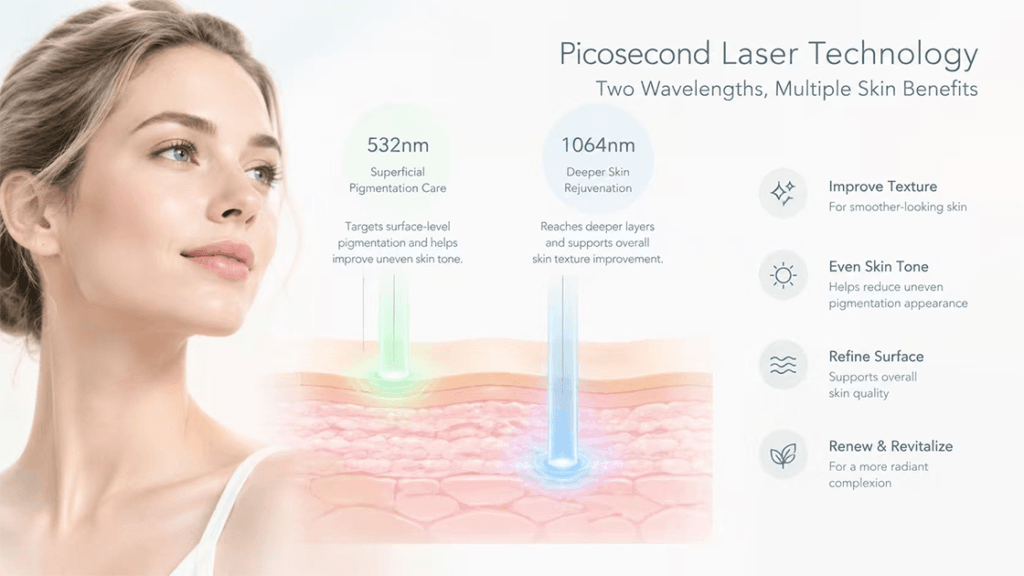
Dual-wavelength picosecond laser technology, including 532nm and 1064nm wavelengths, provides different penetration characteristics. The 532nm wavelength is commonly associated with superficial pigmentation concerns, while the 1064nm wavelength can reach deeper skin layers and support treatments involving deeper pigmentation and texture-related concerns.
1.3 Why Laser Technology Has Become Popular in Modern Aesthetic Care
Consumers today are increasingly interested in aesthetic solutions that provide personalized experiences. Instead of relying only on basic skincare products, many people explore professional technologies that address multiple aspects of skin appearance.
Laser skin resurfacing has gained attention because it combines precision, customization, and advanced energy control. Beauty professionals can adjust treatment approaches based on different skin conditions, goals, and individual preferences.
Modern aesthetic devices also integrate multiple functions, allowing professionals to provide broader skin improvement services. Technologies that combine laser energy, radiofrequency, and cooling support can help create more comprehensive beauty treatment environments.
2. How Picosecond Laser Treatment Supports Smoother-Looking Skin
Picosecond laser technology represents an important development in aesthetic laser applications. Its ultra-short pulse duration allows controlled energy delivery, making it suitable for professionals focusing on skin appearance improvement and texture refinement.
2.1 The Role of 532nm and 1064nm Wavelengths in Skin Appearance Care
Different wavelengths interact with skin tissue in different ways. The selection of wavelength allows professionals to focus on different types of skin concerns.
The 532nm wavelength is often used for superficial pigmentation concerns because it interacts strongly with melanin-related targets near the skin surface. This makes it suitable for supporting improvements related to uneven-looking skin tone and surface pigmentation appearance.
The 1064nm wavelength provides deeper penetration and is often considered for deeper pigmentation concerns and overall skin rejuvenation approaches. Its deeper energy delivery allows professionals to design treatment strategies based on specific skin appearance goals.
2.2 Supporting Skin Texture Refinement Through Controlled Laser Energy
Uneven skin texture is one of the reasons pores may appear more noticeable. When the surrounding skin surface looks irregular, pores can become visually emphasized.
Picosecond laser technology uses rapid energy pulses to create controlled stimulation within targeted areas. This approach focuses on improving the overall appearance of skin texture rather than directly changing the natural structure of pores.
Many aesthetic professionals consider laser resurfacing as part of a broader skincare strategy that includes proper cleansing, hydration, sun protection, and consistent skincare habits.
2.3 Combining Laser Technology With Comprehensive Skin Care Approaches
While laser technology provides an advanced option for skin appearance management, it works best as part of a complete skincare approach.
Professional beauty routines often combine different methods depending on individual needs. Laser resurfacing may be combined with radiofrequency technology, which uses controlled heat energy to support firmer-looking skin and improve the appearance of skin elasticity.
By combining different aesthetic technologies, professionals can create more personalized approaches for clients who want to improve overall skin quality, texture, and firmness.
3. Laser Treatment Applications for Different Skin Texture Concerns
Enlarged pores are often connected with other visible skin concerns, including uneven texture, dull appearance, and signs of aging. Modern laser technology allows professionals to consider multiple aspects of skin appearance during treatment planning.
3.1 Supporting Skin Appearance With Uneven Texture Concerns
Uneven skin texture can make the surface of the skin appear less smooth. Factors such as previous blemishes, environmental stress, and natural aging may influence how skin texture appears.
Laser resurfacing technology provides a way for professionals to focus on improving the overall appearance of the skin surface. By using controlled laser energy, aesthetic treatments can support a more refined and balanced-looking complexion.
For individuals interested in smoother-looking skin, laser technology can become part of a customized skincare plan designed around personal appearance goals.
3.2 Addressing Skin Appearance Changes Related to Aging
As people age, changes in collagen production and skin elasticity may influence how pores and texture appear. Reduced firmness can make pores look more noticeable.
Modern aesthetic technology combines different approaches to support youthful-looking skin. Picosecond laser systems focus on skin texture and tone, while radiofrequency-based technologies are commonly used in aesthetic settings to support skin tightening and firmness.
This combination allows professionals to consider both surface appearance and overall skin quality when creating beauty treatment plans.
3.3 The Importance of Personalized Laser Skin Care Plans
Every person’s skin has different characteristics, including texture, sensitivity, pigmentation patterns, and lifestyle influences.
Because of these differences, personalized treatment planning is an important part of modern aesthetic care. Professionals typically consider skin type, desired appearance goals, and current skin condition when selecting suitable technology settings.
Laser technology provides flexibility through adjustable energy parameters and wavelength options, allowing treatments to be adapted for different skin appearance concerns.
4. The Role of Advanced Aesthetic Technology in Modern Pore Care
As the beauty industry continues to develop, clients are increasingly looking for professional solutions that provide personalized skin appearance support. Modern aesthetic technology combines precision, customization, and advanced energy systems to help professionals create more comprehensive skincare experiences.
4.1 Integrating Picosecond Laser Technology Into Professional Beauty Services
Beauty clinics and aesthetic centers continue to expand their services by introducing advanced laser technologies that address different skin appearance concerns. Picosecond laser systems have become an important option for professionals who focus on skin rejuvenation, pigmentation management, and texture improvement.
The advantage of picosecond technology comes from its ability to deliver energy through extremely short pulses. This allows professionals to apply controlled laser stimulation while adjusting settings according to different skin conditions and treatment goals.
For clients concerned about visible pores, laser-based skin resurfacing approaches focus on improving overall skin quality. Instead of only focusing on pore size, professionals often consider the surrounding skin texture, tone, and firmness to create a more balanced-looking complexion.
4.2 The Connection Between Skin Firmness and Pore Appearance
Skin firmness plays an important role in how pores appear. When skin loses elasticity over time, pores may become more noticeable because the surrounding skin structure changes.
Radiofrequency technology is commonly used in aesthetic environments to support the appearance of firmer and smoother skin. By delivering controlled thermal energy, RF-based systems are designed to provide skin tightening support as part of modern anti-aging beauty routines.
When combined with laser skin resurfacing technologies, RF solutions allow professionals to approach skin appearance from multiple perspectives. Laser energy can focus on texture and tone, while RF technology can support firmness and overall skin quality.
4.3 Creating Personalized Skin Rejuvenation Experiences
Modern beauty consumers often prefer personalized treatment plans rather than general skincare solutions. Factors such as age, skin type, lifestyle, and personal beauty goals can influence the most suitable approach.
Advanced aesthetic devices allow professionals to customize treatments through different energy settings, wavelengths, and application methods. This flexibility helps create more targeted experiences for individuals with different skin appearance concerns.
For beauty clinics, offering customized laser skin rejuvenation services can help meet the growing demand for professional skincare solutions that focus on natural-looking improvements and long-term skin maintenance.
5. Choosing Modern Laser Technology for Enlarged Pore Appearance Management
The growing interest in laser skin resurfacing reflects a broader shift toward technology-supported beauty care. People are not only looking for temporary cosmetic changes but also for professional approaches that support healthier-looking and more refined skin appearance.
5.1 Understanding the Value of Advanced Laser Skin Resurfacing
Advanced laser technology provides beauty professionals with more options when designing skincare programs. Compared with traditional skincare methods, laser resurfacing offers controlled energy delivery that can target specific skin appearance concerns.
For individuals concerned about enlarged pores, the goal is usually not to eliminate pores completely, as pores are a natural part of skin structure. Instead, modern aesthetic approaches focus on supporting smoother-looking texture, balanced tone, and improved overall complexion.
Picosecond laser technology provides professionals with a precise tool for creating customized skin rejuvenation experiences. Its adjustable wavelength options allow professionals to consider different skin appearance needs.
5.2 How Technology Development Shapes the Future of Aesthetic Care
The beauty industry continues to move toward multifunctional and intelligent technology solutions. Clients increasingly expect treatments that combine efficiency, comfort, and personalized care.
Laser systems that combine multiple technologies, including picosecond laser, diode laser, radiofrequency, and cooling systems, provide professionals with broader service possibilities.
This trend allows aesthetic clinics to develop more diverse skincare programs while adapting to different client expectations. As technology continues to advance, laser-based beauty treatments may become an increasingly important part of modern skin management.
5.3 Important Considerations Before Laser Skin Treatments
Although laser technology provides advanced options for improving skin appearance, proper consultation and professional guidance remain important.
Skin characteristics vary from person to person. Factors such as skin type, sensitivity, lifestyle habits, and current skincare routines can influence how individuals respond to aesthetic treatments.
Before choosing any laser-based procedure, individuals should discuss their goals and expectations with qualified professionals. A personalized approach helps ensure that treatment plans match individual skin conditions and beauty objectives.
FAQ
Can laser treatment reduce the appearance of enlarged pores?
Laser treatments cannot remove pores because pores are a natural part of the skin. However, laser skin resurfacing technology can support smoother-looking skin texture and improve overall skin appearance.
What type of laser technology is commonly used for skin texture improvement?
Picosecond laser technology with different wavelengths, such as 532nm and 1064nm, is commonly used in aesthetic settings for skin rejuvenation and appearance improvement.
Is laser skin resurfacing only for enlarged pores?
No. Laser skin resurfacing is also used in professional beauty settings for concerns related to uneven skin tone, skin texture, and overall skin rejuvenation.
How does RF technology support aesthetic treatments?
RF technology uses controlled thermal energy and is commonly used in beauty treatments focused on supporting firmer-looking skin and improving skin appearance.
Can different laser technologies be combined?
Many aesthetic systems combine different technologies to provide more comprehensive beauty solutions. Professionals can select suitable approaches based on individual skin goals.
Is laser treatment suitable for all skin types?
Different skin types may require different settings and approaches. A professional consultation helps determine the most appropriate treatment plan.
결론
Laser treatment for enlarged pores represents a modern approach to improving skin texture and overall complexion appearance. With advanced technologies such as picosecond laser systems using 532nm and 1064nm wavelengths, beauty professionals can provide more personalized skin rejuvenation options based on individual needs. By combining laser resurfacing technology with other aesthetic approaches such as radiofrequency skin tightening, modern beauty clinics can create comprehensive skincare experiences focused on smoother-looking, balanced, and refreshed skin. As demand for personalized beauty solutions continues to grow, advanced laser technology will remain an important part of the future of professional aesthetic care.
References
Picosecond Laser Treatment in Dermatology: Principles and Clinical Applications
https://pubmed.ncbi.nlm.nih.gov/29461598
Laser Skin Resurfacing: Technology and Applications in Aesthetic Medicine
https://www.ncbi.nlm.nih.gov/pmc/articles/PMC3583884
Advances in Laser and Light-Based Skin Rejuvenation Technologies
https://www.ncbi.nlm.nih.gov/pmc/articles/PMC4291057
Radiofrequency Technology in Skin Rejuvenation and Tightening Applications
https://pubmed.ncbi.nlm.nih.gov/24409092
Energy-Based Devices in Cosmetic Dermatology: Current Applications and Future Directions