
소개
For competitive and recreational swimmers, managing unwanted back and shoulder hair can be a time-consuming part of personal grooming. Shaving and waxing offer temporary results but may require frequent maintenance and can sometimes cause skin irritation or ingrown hairs. Professional laser hair removal provides a longer-term option by gradually reducing hair growth through targeted light energy. By understanding how diode laser technology works, how to plan treatments around swimming schedules, and how to care for the skin before and after each session, swimmers can make informed decisions about their grooming routines.
1. Why Back and Shoulder Hair Removal Matters to Swimmers
1.1 The Challenges of Traditional Hair Removal
Shaving is a convenient way to remove unwanted body hair, but its results are temporary. Hair may become visible again within a few days, depending on individual growth patterns. Reaching the middle of the back can also be difficult without assistance, and repeated shaving may contribute to razor bumps, ingrown hairs, or skin irritation.
Waxing removes hair from the root and may keep the skin smooth longer than shaving. However, it can cause temporary redness, discomfort, and irritation. Depilatory creams provide another option, although certain ingredients may irritate sensitive skin if the product is unsuitable or used incorrectly.
For swimmers who train several times a week, repeatedly managing hair across large areas can become inconvenient. This is why many people explore long-term hair reduction methods that require less frequent maintenance.
1.2 Does Body Hair Affect Swimming Performance?
Body hair removal is common among competitive swimmers, particularly before important meets. Some athletes shave as part of their competition preparation, while others prefer the sensation of smoother skin in the water.
However, hair removal should not be presented as a guaranteed way to improve swimming speed. Performance depends on numerous factors, including technique, conditioning, and race conditions. Recreational swimmers do not need to remove body hair to swim effectively.
For most people considering back and shoulder laser hair removal, the primary motivations are personal preference, convenience, and confidence when wearing swimwear. Choosing a grooming method should reflect individual goals rather than the expectation of a specific athletic advantage.
1.3 Why the Back and Shoulders Need Individualized Treatment
The back and shoulders are relatively large treatment areas, and hair density can vary considerably between individuals. Some swimmers prefer substantial hair reduction, while others simply want to make regrowth less noticeable.
A professional consultation helps determine whether laser hair removal is suitable based on hair color, skin tone, hair thickness, and the areas being treated. A provider can also explain how many sessions may be needed and whether the back and shoulders should be treated together or as separate areas.
2. How Laser Hair Removal Works for the Back and Shoulders
2.1 Targeting Hair Follicles With Laser Energy
Laser hair removal uses concentrated light energy to target pigment, known as melanin, within the hair. When the pigment absorbs the light, the energy converts into heat and damages structures involved in hair growth. With an appropriate treatment plan, this process can gradually reduce the amount of hair that grows back.
Professional diode laser technology is widely used for hair reduction. An 810 nm wavelength is commonly associated with targeting pigmented hair follicles, while some professional systems offer additional wavelengths, such as 755 nm and 1064 nm, to accommodate different treatment considerations.
The appropriate wavelength and settings depend on factors such as skin tone, hair pigmentation, treatment location, and the practitioner’s assessment. Because the surrounding skin also contains melanin, proper parameter selection and operator training are essential to reduce the risk of burns and unwanted pigment changes.
2.2 Why Multiple Sessions Are Necessary
Hair grows in different phases, and laser treatment is most effective when the follicles are in a suitable growth phase. Since not all hairs are in the same phase simultaneously, a single session generally cannot treat every follicle effectively.
Most people require a series of treatments, with intervals determined by the provider. The American Academy of Dermatology explains that multiple sessions are usually necessary, and some patients need six or more treatments.
Over time, treated areas may develop less dense, finer, or slower-growing hair. However, results vary, and some regrowth may occur. Maintenance sessions can sometimes help manage returning hair.
For this reason, laser hair removal is best described as long-term hair reduction rather than a guarantee of permanent, complete hair removal.
2.3 The Role of Wavelength Options and Treatment Modes
Back and shoulder hair can differ in thickness, density, and distribution. Professional laser systems may offer multiple wavelength configurations and treatment modes to support individualized procedures.
Different wavelengths interact with melanin and penetrate tissue differently. For example, 755 nm, 810 nm, and 1064 nm wavelengths are used in certain hair removal systems, but they are not interchangeable in every situation. A qualified provider must consider the patient’s skin characteristics, hair color, and treatment goals before selecting an appropriate approach.
Advanced treatment controls can help practitioners adjust settings to the treatment area and individual needs. However, having more wavelengths or treatment modes does not automatically guarantee better results. Clinical judgment, appropriate settings, and consistent treatment planning remain essential.
2.4 How Integrated Cooling Supports Treatment Comfort
Treating a large area such as the back can involve repeated laser pulses across the skin. Professional diode laser systems may incorporate contact cooling, including sapphire cooling components, to help manage skin-surface temperature during treatment.
Cooling technology can improve comfort and help protect the skin’s surface, but it does not eliminate all treatment risks. Excessive energy, unsuitable settings, or insufficient operator experience may still lead to burns, blistering, or pigmentation changes.
Swimmers considering laser hair removal should ask their provider how the equipment manages skin temperature, how treatment settings are selected, and what precautions are used for their particular skin type.https://www.rheinlasers.com/
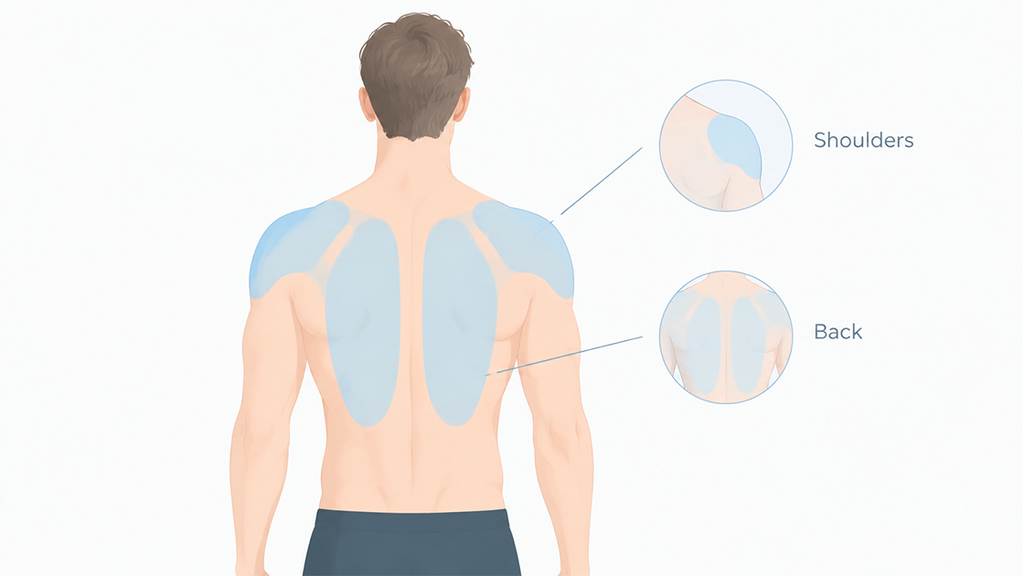
3. Laser Hair Removal vs. Shaving and Waxing
Choosing a hair removal method depends on personal preferences, budget, skin sensitivity, and the amount of maintenance a person is willing to undertake.
Shaving is generally inexpensive and convenient, making it suitable for occasional grooming. Its main limitation is that results are short-lived, and frequent shaving may cause razor bumps or irritation.
Waxing removes hair from the root, so the skin may remain smooth longer than after shaving. However, the procedure can be uncomfortable and may cause temporary redness or ingrown hairs. It also requires sufficient regrowth before the next appointment.
Depilatory creams dissolve visible hair and can be useful for some people who prefer not to shave. However, these products can irritate the skin, particularly when used on sensitive areas or left on longer than directed. A patch test and careful adherence to product instructions are important.
Professional laser hair removal takes a different approach by targeting hair follicles to reduce future growth. Although it requires multiple sessions and a higher initial commitment, it may reduce the need for repeated shaving or waxing over time.
For swimmers, the best choice depends on how often they want to manage body hair and whether they prefer temporary removal or longer-term reduction. People with white, gray, blonde, or many red hairs may respond poorly to conventional laser treatment because these hairs contain less suitable pigment. A professional consultation can help identify an appropriate alternative when necessary.
4. Planning Laser Hair Removal Around Swimming Training
4.1 Choosing the Right Treatment Schedule
Swimming regularly exposes the skin to pool water, chemicals, friction from swimwear, and sometimes direct sunlight. These factors should be considered when planning laser hair removal.
The treated skin may experience temporary redness, swelling, or sensitivity. Before scheduling an appointment, discuss your normal training routine, upcoming competitions, and whether you swim indoors or outdoors with your provider.
There is no single post-treatment waiting period that is appropriate for every swimmer. Follow the clinic’s aftercare instructions and avoid returning to activities that aggravate the treated area while the skin remains irritated. If you develop significant pain, blistering, or persistent redness, seek medical advice.
Planning sessions well ahead of major competitions can also provide flexibility if the skin needs additional time to recover.
4.2 Preparing the Skin Before Treatment
Proper preparation helps the provider assess the skin and may reduce avoidable complications. Follow the clinic’s instructions, which commonly include avoiding tanning and excessive sun exposure before treatment.
Waxing, threading, and plucking are generally discouraged for a period before laser hair removal because these methods remove the hair from the follicle, leaving less pigment for the laser to target. Providers commonly recommend shaving the treatment area according to their specific instructions.
It is also important to tell the practitioner about recent sun exposure, medications, previous reactions to cosmetic procedures, and any active skin conditions. If the back or shoulders are sunburned or recently tanned, treatment may need to be postponed.
4.3 Caring for the Skin After Each Session
Mild redness and swelling can occur after laser hair removal and often settle within a short period. Gentle skin care is generally preferable while the skin is recovering.
Follow the provider’s recommendations for sun protection, moisturizers, and other skin-care products. Avoid excessive sun exposure and postpone aggressive exfoliation or other potentially irritating treatments until the skin has recovered.
Swimmers should ask their provider when it is appropriate to return to the pool. Pool chemicals and friction may be uncomfortable for recently treated or irritated skin, but the appropriate timing depends on the skin’s condition and the clinic’s guidance.
If the skin develops blisters, severe pain, or unusual discoloration, do not resume training as though the reaction were normal. Contact a qualified healthcare professional for assessment.
5. Who Is a Suitable Candidate for Back and Shoulder Laser Hair Removal?
5.1 Understanding Skin Tone and Hair Color
Laser hair removal may be suitable for people with a wide range of skin tones when the technology and settings are selected appropriately. However, the best approach depends on both skin pigmentation and hair characteristics.
Dark, pigmented hair generally responds better because melanin absorbs the laser energy. White, gray, blonde, and many red hairs may respond less effectively, making conventional laser hair removal unsuitable or less predictable for some individuals.
People with darker skin tones may also be candidates, but selecting an experienced provider is particularly important. The practitioner should understand how to choose suitable settings and reduce the risk of burns or changes in skin pigmentation.
A consultation is the best opportunity to discuss expected results, treatment limitations, and whether the available technology is appropriate for the individual.
5.2 When Treatment Should Be Delayed
Laser hair removal should not be performed over skin that has not been properly assessed. Recent sunburn, significant tanning, an active rash, infection, or an open wound may require treatment to be postponed.
People with a history of abnormal scarring, pigmentation changes, or previous adverse reactions to laser procedures should discuss these concerns with their provider. Certain medications may also affect treatment planning, so a complete medication history is important.
Any changing, irregular, or unexplained skin lesion should be assessed by an appropriate medical professional rather than treated as a routine cosmetic concern.
5.3 Setting Realistic Expectations
The results of back and shoulder laser hair removal vary according to hair color, hair thickness, skin characteristics, the equipment used, and the number of sessions completed. Some individuals notice a reduction in hair growth after the initial treatments, but a full course is generally needed to assess the overall outcome.
The back and shoulders may respond differently because hair density and growth cycles are not always uniform. Certain areas may require additional sessions, and maintenance treatments may be useful if regrowth becomes noticeable.
The realistic goal is a reduction in unwanted hair and less frequent grooming, rather than a guarantee of completely hair-free skin. Before beginning treatment, discuss likely results, potential side effects, the number of sessions, and the total expected cost with a qualified provider.
6. Building a Long-Term Grooming Plan for Swimmers
A practical grooming plan should fit naturally into a swimmer’s lifestyle. Begin by identifying the areas you want to treat and deciding whether you prefer substantial hair reduction or a more natural appearance with less dense growth.
During the consultation, ask about the recommended treatment schedule, wavelength options, cooling features, the provider’s experience with your skin tone, and the expected number of sessions. Understanding these factors can help you evaluate whether professional laser hair removal suits your needs.
Finally, coordinate treatment with your swimming schedule. Avoid arranging a session immediately before a major competition or intensive outdoor training period unless your provider confirms that the timing is appropriate. Allowing time for the skin to recover can make the process easier to manage.
FAQ
Is laser hair removal effective for back and shoulder hair?
Yes, laser hair removal can reduce unwanted hair on the back and shoulders. Results vary depending on hair color, skin type, and the number of treatments.
How many sessions are needed for back and shoulder laser hair removal?
Most people need multiple sessions, often six or more. The exact number depends on hair density, growth cycles, and individual treatment response.
Can I swim immediately after laser hair removal?
It is best to follow your provider’s aftercare instructions and wait until the skin has settled before swimming. Avoid activities that irritate the treated area.
Does laser hair removal make swimmers faster?
Laser hair removal is not guaranteed to improve swimming speed. Many swimmers choose it for personal grooming preferences and convenience.
Is laser hair removal better than waxing for swimmers?
Laser hair removal offers longer-term hair reduction, while waxing provides temporary results. The best option depends on your budget, skin sensitivity, and grooming goals.
Does diode laser hair removal work on all hair colors?
No. Dark, pigmented hair generally responds better, while white, gray, blonde, and many red hairs may respond poorly.
Is laser hair removal suitable for darker skin tones?
It can be suitable when appropriate technology and settings are used. Choose an experienced provider who understands your skin type and potential treatment risks.
결론
Back and shoulder laser hair removal offers swimmers a potential long-term alternative to repeated shaving and waxing. Professional diode laser technology targets pigmented hair follicles to gradually reduce hair growth, while individualized treatment settings and integrated cooling may support treatment comfort. Results vary, and multiple sessions are usually necessary. By choosing a qualified provider, planning appointments around swimming schedules, and following appropriate skin-care instructions, swimmers can make informed decisions about long-term grooming while prioritizing skin health and realistic expectations.
References
- American Academy of Dermatology. Laser Hair Removal: FAQs.
https://www.aad.org/public/cosmetic/hair-removal/laser-hair-removal-faqs
- American Academy of Dermatology. Laser Hair Removal: Preparation.
https://www.aad.org/public/cosmetic/hair-removal/laser-hair-removal-preparation
- American Academy of Dermatology. Laser Hair Removal: Overview.
https://www.aad.org/public/cosmetic/hair-removal/laser-hair-removal-overview
- U.S. Food and Drug Administration. Medical Lasers.
https://www.fda.gov/radiation-emitting-products/surgical-and-therapeutic-products/medical-lasers
- Lepselter, J., & Elman, M. (2004). Biological and clinical aspects of laser hair removal. Journal of Dermatological Treatment, 15(2), 72–83.