
はじめに
A well-fitting pair of jeans can highlight the waist and create a balanced silhouette. However, localized fullness around the lower abdomen, uneven waist contours, or reduced skin firmness can make finding the right fit challenging. These concerns can persist even when someone maintains a stable weight and follows a regular fitness routine. Lower abdomen contouring offers an aesthetic approach for addressing selected areas of localized fullness, while skin-tightening technologies can help improve the appearance of skin firmness. Modern body contouring systems use targeted laser energy and radiofrequency (RF) technology to address different aspects of body shape. Understanding how these technologies work can help aesthetic professionals develop personalized treatment plans for the abdomen, waist, and flanks.
1. Understanding Lower Abdomen and Waistline Contouring
1.1 Why Is Lower-Abdomen Fullness So Common?
The lower abdomen contouring is influenced by several factors, including genetics, age, hormonal changes, and natural fat distribution. Some people may notice a small bulge below the navel even when their overall body weight remains relatively stable.
This area can be particularly noticeable in fitted clothing because denim often follows the natural contours of the waist and abdomen. A small amount of localized fullness may change how the waistband sits or how smoothly the fabric follows the body.
However, lower-abdomen fullness does not always indicate excess fat. Skin laxity, posture, abdominal muscle structure, and temporary bloating can also influence appearance. Identifying the main concern is an important first step before selecting a body contouring approach.
1.2 How the Waist, Flanks, and Hips Affect Overall Body Shape
The waistline is not defined by the abdomen alone. The flanks, hips, and surrounding tissues contribute to the overall silhouette.
Localized fullness around the sides of the waist may soften the transition between the abdomen and hips. Meanwhile, changes in skin firmness can make the waistline appear less defined, even when localized fat is not the primary concern.
For this reason, professional body contouring often considers the relationship between multiple treatment areas rather than focusing on one isolated measurement. A personalized assessment can help determine whether the main goal should be localized fat reduction, improved skin firmness, or a combination of both.
1.3 Why General Weight Loss May Not Address Every Contouring Concern
Diet and exercise are important for overall health and weight management. However, they do not guarantee that fat will decrease evenly across every body area.
Some localized deposits may remain noticeable despite consistent lifestyle habits. In other cases, the main concern may involve loose skin rather than the amount of underlying fat.
This distinction matters because fat-reduction and skin-tightening technologies have different purposes. Choosing an approach based on the actual concern can help set more realistic expectations and avoid unnecessary treatment.
2. How 1064 nm Laser Technology Supports Body Contouring
2.1 Understanding Targeted Laser Lipolysis
Certain non-invasive body contouring systems use 1064 nm laser energy to target localized fat in selected body areas. This wavelength is used in aesthetic applications designed to support changes in body contour without surgical incisions.
In laser-based body contouring, controlled energy delivery is intended to interact with targeted tissue while limiting unnecessary exposure to surrounding areas. The specific mechanism and treatment outcome depend on the device design, energy settings, applicator configuration, and treatment protocol.
This technology is commonly associated with aesthetic concerns involving the abdomen, waist, flanks, thighs, and other selected areas. It is intended for localized contouring rather than substantial weight loss.
2.2 Why Controlled Energy Delivery Matters
Body contouring requires more than simply applying energy to a target area. Treatment planning must account for the size of the area, the distribution of localized fullness, individual anatomy, and the intended outcome.
Professional systems may incorporate dedicated applicators, adjustable treatment parameters, and integrated cooling features. These design elements can support controlled energy delivery and help manage the treatment process when used according to the manufacturer’s instructions.
Cooling is particularly relevant when working with energy-based aesthetic equipment because it can help manage heat at designated contact areas, depending on the system’s design. It does not eliminate every risk or guarantee a particular outcome.
The objective is to select an appropriate treatment approach for the intended area rather than maximize energy exposure.
2.3 What Results Can Abdomen Contouring Aim to Achieve?
For suitable candidates, laser body contouring may help improve the appearance of selected localized bulges and create a more refined-looking silhouette.
For example, a treatment plan may focus on the lower abdomen or flanks when localized fullness is the main concern. The intended improvement is generally subtle contour refinement rather than a dramatic change in body weight.
Results vary between individuals. The treatment area, device characteristics, individual response, and consistency of the treatment plan can all influence the outcome. Changes may also take time to become apparent, so immediate appearance should not be treated as the final result.
3. The Role of Radiofrequency in Skin Tightening
3.1 How RF Technology Works
Radiofrequency technology uses electromagnetic energy to generate controlled heat within targeted tissue. In appropriate aesthetic applications, this heating can stimulate processes involved in collagen remodeling and may improve the appearance of skin firmness.
Collagen is an important structural protein that helps support the skin. Its characteristics change with age and other factors, which can contribute to reduced elasticity and a less firm appearance.
RF-based skin tightening is designed to address selected concerns involving skin firmness and texture. The extent of improvement depends on the technology used, the treatment protocol, and the individual’s skin condition.
3.2 Why Fat Reduction and Skin Tightening Are Different
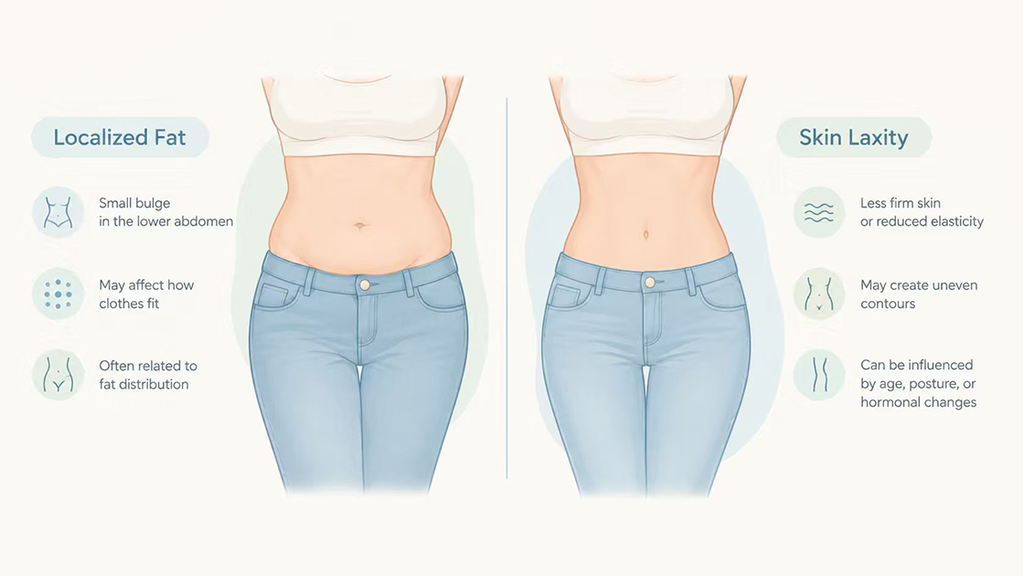
A localized fat deposit and loose skin may create similar visual concerns, but they require different considerations.
Laser-based fat-reduction systems are intended to address selected areas of localized fullness. RF skin-tightening technology focuses on improving the appearance of skin firmness.
If a person has localized fat with relatively firm skin, a fat-contouring approach may be more relevant. If the main concern is mild skin laxity, skin tightening may deserve greater attention.
When both concerns are present, a qualified provider may consider whether a combined treatment strategy is appropriate. However, combining technologies does not guarantee better results, and neither approach can reliably eliminate substantial excess skin.
3.3 Supporting a More Refined-Looking Waistline
The visual definition of the waist depends on several features, including localized fat distribution, skin firmness, and the natural relationship between the abdomen and hips.
When appropriately selected, energy-based aesthetic treatments may help address specific aspects of this appearance. The goal is not to create an identical body shape for every individual, but to support a more balanced-looking contour based on personal goals.
A thorough assessment is important before treatment. It helps determine which technology is relevant, whether multiple areas should be considered, and what degree of improvement is realistic.
4. Planning Body Contouring for the Lower Abdomen, Waist, and Hips
4.1 Lower Abdomen: Addressing Localized Fullness
The lower abdomen is often selected for contouring because localized fullness can be noticeable in fitted clothing. A suitable treatment plan should first establish whether the concern is related to subcutaneous fat, skin laxity, or another factor.
For individuals whose primary concern is localized fat, a professionally selected laser-based approach may be considered. If loose skin is more prominent, the treatment discussion may need to focus on skin quality instead.
Neither approach should be used to diagnose or treat unexplained abdominal swelling. A new bulge, painful lump, or suspected hernia requires appropriate medical assessment before cosmetic treatment is considered.
4.2 Waist and Flanks: Improving Contour Transitions
The flanks, sometimes called the love-handle area, can influence how the waist transitions into the hips. Localized fullness in this region may affect the visible outline of fitted trousers and other close-fitting garments.
Aesthetic professionals may assess the waist and flanks together when developing a contouring plan. The purpose is to identify the areas that contribute most to the concern and determine whether localized fat reduction, skin tightening, or another approach is appropriate.
Treatment planning should remain individualized. Natural anatomy, treatment-area size, and the person’s expectations all influence what can reasonably be achieved.
4.3 Hips and Upper Thighs: Maintaining Balanced Proportions
The hips and upper thighs also contribute to the overall body silhouette. Depending on the individual’s anatomy, a concern that appears to involve the waist may partly reflect the proportions of the surrounding areas.
Selected body contouring technologies can be used in different body regions according to their intended use and treatment protocols. However, they cannot change the underlying width of the pelvis or completely reshape natural skeletal proportions.
The aim of a professional treatment plan should be to address specific, appropriate concerns while maintaining realistic expectations about the body’s natural structure.
4.4 Why Individualized Treatment Planning Matters
No single treatment protocol is appropriate for every person or body area. The size of the target region, skin condition, medical history, and desired outcome should all be considered.
A professional consultation should clarify the purpose of the proposed technology, the expected treatment course, potential risks, and the time needed to evaluate results. It should also identify situations in which an energy-based procedure may be unsuitable.
Personalized planning helps connect the treatment method to the actual concern instead of relying on a one-size-fits-all approach.
5. What to Expect From Non-Surgical Body Contouring
5.1 Results Develop Over Time
Non-surgical body contouring is not generally intended to create an immediate, dramatic transformation. The visible outcome depends on the technology and the body’s response to treatment.
Some approaches require several weeks or longer before changes can be evaluated. Additional sessions may be considered when appropriate, but treatment frequency should follow the device instructions and the provider’s assessment.
A gradual evaluation process allows the provider to assess whether the original treatment goal is being met and whether any adjustments are appropriate.
5.2 Body Contouring Is Not a Weight-Loss Treatment
Localized contouring and overall weight management are different goals. A person may seek a more refined waistline without intending to lose a substantial amount of weight.
Non-surgical body contouring is not a substitute for weight management, physical activity, or balanced nutrition. It also cannot guarantee a specific waist measurement, clothing size, or body shape.
Maintaining realistic expectations helps distinguish a modest aesthetic improvement from a broader change in body composition.
5.3 Safety, Suitability, and Professional Guidance
Energy-based aesthetic procedures require appropriate screening and careful operation. Possible adverse effects vary by technology and may include temporary redness, swelling, discomfort, or other treatment-related complications.
Before treatment, the provider should review relevant medical history, medications, implanted devices, skin conditions, and other factors that may affect suitability. The equipment must be used according to its intended application and manufacturer instructions.
People should also understand that non-invasive does not mean risk-free. A qualified provider can explain the benefits, limitations, and alternatives before an individualized treatment plan is established.
6. How Advanced Body Contouring Technology Supports Aesthetic Practices
6.1 Multiple Treatment Areas With a Structured Approach
Professional body contouring systems can support treatment planning across several selected body areas, including the abdomen, waist, and flanks. This flexibility allows practitioners to tailor treatment areas to individual concerns rather than relying on a single standard approach.
The choice of applicator, treatment parameters, and procedure design should reflect the device’s specifications and intended use. A structured approach can help maintain consistency across treatment sessions while allowing appropriate individual adjustments.
6.2 Combining Contouring and Skin-Firmness Strategies
Some aesthetic systems integrate 1064 nm laser technology with RF-based skin-tightening functions. This combination is designed to address different aspects of body appearance within an overall treatment strategy.
The laser component is associated with localized fat-contouring applications, while RF technology is used to support skin-firmness goals. When both concerns are present, this approach may offer practitioners additional flexibility in treatment planning.
However, the technologies have distinct functions, and their combined use should depend on the specific system, its approved intended use, and the individual’s needs. A combination approach should never be presented as a guaranteed route to superior results.
6.3 Why Technology Specifications and Operator Training Matter
The performance of an aesthetic system depends on more than its energy source. Applicator design, energy control, cooling arrangements, operating procedures, and user training all contribute to how the equipment is used.
Practitioners should understand the system’s operating instructions, appropriate treatment parameters, contraindications, and maintenance requirements. Training and careful screening help support responsible treatment delivery.
For aesthetic practices, selecting technology that fits their service capabilities and treatment goals is an important part of developing a consistent body contouring program.
Frequently Asked Questions
What is lower abdomen contouring?
Lower abdomen contouring refers to aesthetic approaches designed to refine the appearance of the area below the navel. Depending on the concern, treatment may focus on localized fat or skin firmness.
Can 1064 nm laser technology help with localized abdominal fat?
Certain systems use 1064 nm laser energy for non-surgical localized fat-contouring applications. Suitability and results depend on the specific device, treatment protocol, and individual assessment.
What is the difference between laser contouring and RF skin tightening?
Laser-based contouring is intended to address selected localized fat concerns, while RF skin tightening focuses on improving the appearance of skin firmness. Their purposes are different.
Can body contouring guarantee a better fit in jeans?
No. Treatment may improve selected areas in suitable candidates, but clothing fit also depends on garment design, natural anatomy, and individual body proportions.
How soon can results be evaluated?
The timeline varies by technology and individual response. Some treatments require several weeks or longer before the outcome can be assessed.
Is non-surgical body contouring suitable for everyone?
No. Medical history, skin condition, treatment goals, and device-specific contraindications affect suitability. Professional screening is important before treatment.
結論
Lower abdomen contouring is one part of a broader approach to refining the waist, flanks, and overall body silhouette. For aesthetic professionals, targeted 1064 nm laser technology offers an approach to selected localized fat concerns, while RF technology addresses a different goal: improving the appearance of skin firmness. Systems that integrate these technologies can provide additional flexibility when planning individualized treatments, provided that their functions and limitations are clearly understood. Results depend on the specific device, treatment protocol, and individual suitability, so realistic expectations and professional assessment remain essential. By combining appropriate technology with careful planning and responsible operation, aesthetic practices can offer more targeted body contouring options for people seeking a more defined-looking waistline.
References
Kennedy J, Verne S, Griffith R, Falto-Aizpurua L, Nouri K. Non-invasive subcutaneous fat reduction: a review.
https://pubmed.ncbi.nlm.nih.gov/31168833/
A Multi-Site, Single-Blinded, Prospective Pilot Clinical Trial for Non-Invasive Fat Reduction of the Abdomen and Flanks Using a Monopolar 2 MHz Radiofrequency Device.
https://pubmed.ncbi.nlm.nih.gov/32621362/
Mechanisms and efficacy of heat and cold therapies for musculoskeletal injury.
https://pubmed.ncbi.nlm.nih.gov/25526231/
Noninvasive Body Contouring Technologies.