はじめに
Enlarged pores and uneven skin texture are common aesthetic concerns that affect facial smoothness and overall appearance. These conditions often develop due to excess sebum production, reduced collagen levels, sun exposure, and gradual skin aging. In modern aesthetic dermatology, laser skin resurfacing systems are widely used to improve skin texture, refine pores, and support collagen regeneration. Advanced medical aesthetic devices, such as fractional CO₂ laser systems and other dermatology-grade laser platforms, are designed to deliver controlled energy into the skin to promote renewal and long-term texture improvement. These technologies play an important role in non-invasive facial rejuvenation and professional skin quality management.
1. Understanding Enlarged Pores and Skin Texture Irregularities
1.1 Why Pores Become Enlarged
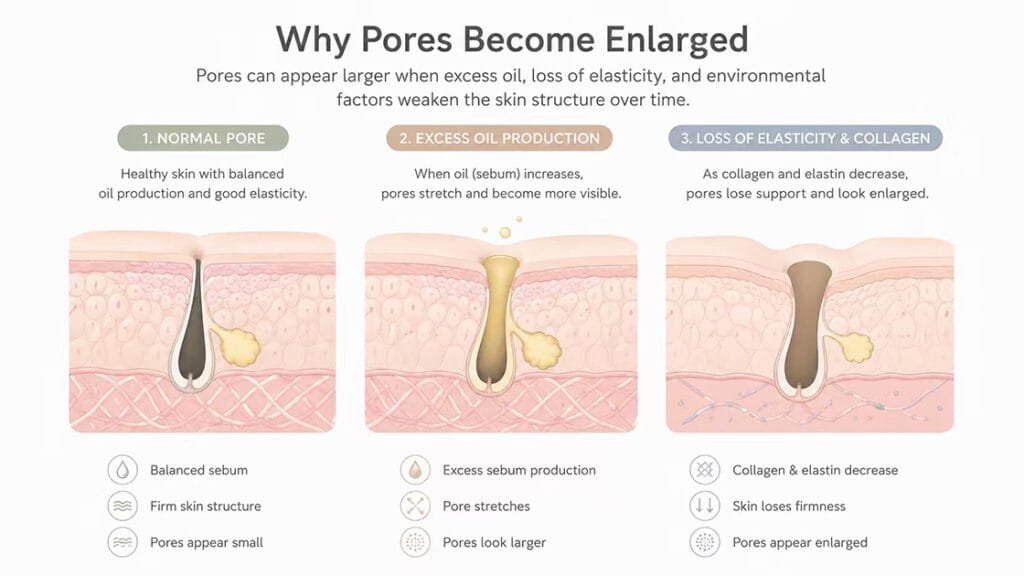
Pores become more visible when the skin produces excess oil or loses elasticity over time. As collagen and elastin levels decrease, the skin structure becomes less firm, causing pores to appear larger. Environmental factors such as pollution and UV exposure can also accelerate this process by weakening the skin barrier. Over time, these combined effects lead to more noticeable pores and uneven facial texture.
1.2 Causes of Uneven Skin Texture
Uneven skin texture is usually the result of multiple long-term factors. Sun damage, dehydration, acne scarring, and slowed skin cell turnover can all contribute to rough or irregular skin surfaces. When the skin’s natural renewal process slows down, dead skin cells accumulate, leading to dullness and a less refined appearance.
1.3 Impact on Facial Aesthetics
Skin texture plays a major role in facial aesthetics because it affects how light reflects on the skin. Even minor irregularities can make the skin appear less smooth and reduce overall brightness. As a result, many individuals seek professional aesthetic treatments to improve skin uniformity and achieve a more refined appearance.
2. How Laser Skin Resurfacing Improves Skin Texture
2.1 Fractional CO₂ Laser Technology
Fractional CO₂ laser systems are widely used in dermatology for skin resurfacing treatments. This technology delivers controlled laser energy into micro-columns of the skin, targeting damaged tissue while preserving surrounding areas. This process stimulates natural skin renewal and helps improve texture irregularities, fine lines, and pore visibility.
2.2 Collagen Remodeling and Skin Renewal
One of the key mechanisms of laser resurfacing is collagen remodeling. When laser energy penetrates the skin, it triggers a controlled healing response that stimulates new collagen formation. Over time, this process strengthens the skin structure, improving firmness and creating a smoother surface texture.
2.3 Controlled Thermal Effect for Skin Refinement
Laser systems used in aesthetic dermatology rely on precise thermal energy delivery. This controlled heat effect helps resurface the skin while encouraging regeneration of healthier tissue. As the skin heals, texture becomes more even and pores appear less prominent.
3. Why Laser Systems Are Effective for Enlarged Pores
3.1 Targeted Skin Resurfacing
Laser devices are effective for enlarged pores because they can directly target the superficial and deeper layers of the skin. By resurfacing uneven areas, laser energy helps refine skin texture and improve overall smoothness.
3.2 Oil Regulation and Skin Balance
Excess sebum production is one of the main contributors to enlarged pores. Laser treatments may help regulate sebaceous activity and improve skin balance, reducing oil-related pore visibility and enhancing overall skin clarity.
3.3 Long-Term Texture Improvement
Unlike temporary cosmetic solutions, laser resurfacing focuses on long-term skin restructuring. As collagen continues to rebuild over time, the skin becomes progressively smoother and more refined, with improved texture consistency.
4. Integrating Laser Treatments into Skin Care Strategy
4.1 Combining Professional and Daily Skin Care
Laser resurfacing treatments are most effective when combined with proper daily skin care routines. Cleansing, hydration, and sun protection help maintain skin health and support long-term treatment results.
4.2 Personalized Treatment Planning
Different skin types require different laser settings and treatment approaches. A professional assessment ensures that energy levels and treatment depth are adjusted according to individual skin conditions, maximizing safety and effectiveness.
4.3 Maintenance for Long-Term Results
Skin texture improvement is an ongoing process. Periodic maintenance treatments, combined with consistent skincare habits, help sustain smoother skin and prevent recurrence of texture irregularities.
5. Modern Trends in Aesthetic Laser Skin Treatment
5.1 Demand for Non-Invasive Rejuvenation
There is a growing preference for non-invasive aesthetic procedures that provide visible improvements without extensive downtime. Laser skin resurfacing aligns with this demand by offering controlled skin rejuvenation with minimal disruption.
5.2 Natural-Looking Skin Enhancement
Modern aesthetic goals focus on enhancing natural skin quality rather than creating artificial changes. Laser systems support this trend by improving skin texture, tone, and smoothness while preserving natural facial characteristics.
5.3 Advancement of Medical Laser Platforms
Medical-grade laser systems, including fractional CO₂ laser devices and other advanced dermatology lasers, continue to evolve. These technologies offer improved precision, safety, and customization, making them essential tools in modern aesthetic dermatology.
FAQ
What causes enlarged pores?
Enlarged pores are mainly caused by excess oil production, loss of skin elasticity, and environmental damage.
Can laser resurfacing improve skin texture?
Yes, laser resurfacing is commonly used to improve uneven skin texture and refine pores.
Is laser skin treatment invasive?
Most modern laser systems are minimally invasive or non-invasive, depending on the technology used.
How does laser treatment stimulate collagen?
Laser energy creates controlled skin micro-injury, which triggers natural collagen production during healing.
Who is suitable for laser skin resurfacing?
Individuals with enlarged pores, uneven texture, or dull skin appearance are often suitable candidates.
結論
Enlarged pores and uneven skin texture can significantly affect overall facial appearance, but modern laser skin resurfacing technologies provide effective solutions for skin refinement. Fractional CO₂ laser systems and other advanced dermatology laser platforms work by delivering controlled energy into the skin, stimulating collagen production and promoting long-term skin renewal. When combined with proper skincare maintenance, these technologies help achieve smoother, more even, and more refined skin texture, making them a key component of modern non-invasive aesthetic treatments.
References
Fractional CO₂ Laser Skin Resurfacing – Mechanism and Benefits
https://www.aad.org/public/diseases/cosmetic-skin-procedures/laser-skin-resurfacing
Enlarged Pores and Skin Texture – Causes and Care
https://www.mayoclinic.org/healthy-lifestyle/adult-health/expert-answers/pores
Laser Therapy in Dermatology – Collagen Remodeling
https://pubmed.ncbi.nlm.nih.gov
Non-Invasive Skin Rejuvenation Trends
https://www.healthline.com/health/skin/laser-skin-resurfacing
Professional Laser Skin Systems Overview