
Introduzione
Loose skin around the armpits can become more noticeable when wearing sleeveless tops, fitted dresses, swimsuits, or workout clothing. For some people, the concern appears as a soft fold between the upper arm and chest; for others, it involves fine wrinkles, reduced skin firmness, or fullness near the bra line. Although these concerns may look similar, they do not always have the same cause. Skin laxity, localized fat, natural anatomical folds, and changes in body composition can all affect the underarm contour. Understanding these differences is an important first step when considering underarm skin tightening. Radiofrequency (RF) treatments offer a non-surgical approach that uses controlled energy to warm deeper skin layers and support collagen remodeling, potentially improving the appearance of mild skin laxity. However, treatment suitability depends on the tissue a clinician addresses, the degree of looseness, and the characteristics of the treatment area.
1. Why Does Loose Skin Develop Around the Armpits?
The underarm area has a naturally flexible structure because it connects the upper arm, chest, and shoulder. Its appearance can change with age, genetics, body composition, and skin elasticity. Understanding the underlying cause helps determine whether skin tightening is likely to be useful.
1.1 Age-Related Changes in Skin Elasticity
Collagen and elastin help maintain skin firmness and flexibility. As their structure changes with age, skin may become thinner and less resilient. Around the armpits, these changes can make small folds or wrinkles more noticeable, particularly when you raise or extend your arms.
1.2 Weight Changes and Skin Laxity
Weight gain can stretch the skin, while significant weight loss may leave the tissue with less underlying volume to support it. If the skin does not fully adapt to the body’s new shape, loose folds may remain around the upper arms, chest, and underarm area. The degree of laxity varies according to age, genetics, and the amount of weight change.
1.3 Genetics and Natural Body Structure
Some people naturally have fuller tissue around the armpits or more visible folds where the upper arm meets the chest. This does not necessarily indicate poor skin quality or excess fat. Genetics, breast and chest anatomy, and the distribution of subcutaneous tissue can all influence the area’s appearance.
2. Loose Skin, Underarm Fat, or Natural Folds: What Is the Difference?
Not every underarm bulge is caused by loose skin. A visual fold may involve several types of tissue, and each requires a different approach. Identifying the main concern is essential before choosing an aesthetic treatment.
2.1 Skin Laxity
Skin laxity usually appears as soft, thin, or wrinkled tissue that does not feel particularly full. It may become more noticeable when the arm moves or when the skin is gently stretched. When mild to moderate laxity is the primary concern, RF skin tightening may be worth discussing with a qualified provider.
2.2 Localized Fat Deposits
Localized fat generally creates a fuller or thicker appearance rather than a thin, loose fold. It may remain noticeable even when the surrounding skin feels relatively firm. Skin tightening alone is not designed to remove substantial fat deposits, so a provider must distinguish between skin laxity and excess volume before recommending treatment.
2.3 Accessory Breast Tissue and Other Anatomical Concerns
Some fullness near the armpit may involve accessory breast tissue rather than ordinary fat or loose skin. A new lump, persistent swelling, tenderness, or a noticeable change on one side should not be treated as a cosmetic concern without medical evaluation. A healthcare professional can determine whether further assessment is needed.
3. How Radiofrequency May Support Underarm Skin Tightening
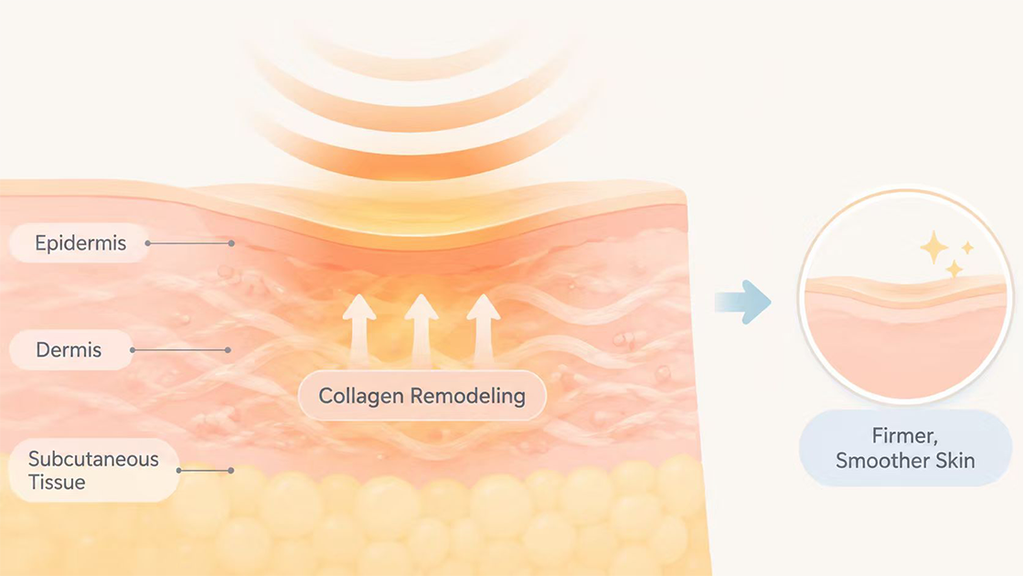
Radiofrequency technology is used in aesthetic treatments to deliver controlled thermal energy into targeted tissue. Rather than removing loose skin, it aims to create a thermal response that supports collagen remodeling and may gradually improve the appearance of skin firmness.
3.1 How RF Energy Works
RF devices generate electromagnetic energy that produces controlled heat within the skin. This thermal response can affect existing collagen fibers and stimulate the biological processes involved in collagen remodeling. Over time, these changes may help improve the appearance of skin texture and firmness.
The treatment is non-surgical and does not rely on cutting or removing tissue. Its results are generally gradual, and the degree of visible improvement depends on the individual’s skin condition and treatment parameters.
3.2 Why Temperature Control Matters
Consistent energy delivery is important when performing RF treatments. Some professional RF systems use controlled heating and temperature monitoring to help maintain an appropriate treatment range. The goal is to create a therapeutic thermal response without excessive heating or unnecessary discomfort.
The treatment temperature, energy level, movement of the applicator, and session duration should be selected by a trained provider. A higher temperature does not automatically mean better results.
3.3 What Improvements May Be Expected?
For individuals with mild to moderate skin laxity, RF treatment may help the underarm area look firmer and smoother. Improvements are usually more subtle than those achieved through surgery, and multiple sessions may be recommended depending on the treatment system and individual response.
RF should not be presented as a guaranteed solution for significant excess skin, prominent fat deposits, or underlying anatomical conditions.
4. Who May Consider Non-Surgical Underarm Tightening?
Underarm skin tightening may appeal to people who notice mild looseness and prefer to explore non-surgical aesthetic options. However, the right candidate is determined by the cause and severity of the concern rather than appearance alone.
4.1 Adults With Mild Skin Laxity
People with slightly loose or less firm skin around the upper arm and armpit may be candidates for an RF consultation. The treatment goal is generally to improve skin appearance gradually rather than remove large amounts of tissue.
4.2 People With Skin Changes After Weight Loss
After weight reduction, some individuals notice that their underarm skin does not feel as firm as before. RF may be considered when the remaining concern is mild skin laxity. Significant folds or substantial excess skin may require other options, including a surgical consultation.
4.3 People Seeking Non-Surgical Aesthetic Options
Individuals who want to avoid incisions or a lengthy surgical recovery may be interested in non-invasive skin treatments. RF can be discussed as one possible approach, provided the treatment area is appropriate for the specific device and the person’s medical history has been reviewed.
5. What to Consider Before an RF Underarm Treatment
The underarm is a sensitive anatomical area with skin folds, hair follicles, sweat glands, and nearby lymph nodes. It should not be treated like an ordinary flat body surface. Careful assessment and appropriate treatment planning are essential.
5.1 Choose the Right Treatment Area
A provider should first determine whether the concern involves loose skin, fat, accessory breast tissue, irritation, or another condition. The treatment applicator and device must also be appropriate for the intended area. Not every RF system is designed or cleared for direct use on the armpit.
5.2 Review Skin Health and Medical History
Active rashes, infections, open wounds, or unexplained lumps should be evaluated before cosmetic treatment. People with implanted electronic devices, certain metal implants, altered skin sensation, or other relevant medical conditions should disclose them during consultation. Contraindications vary by device and treatment protocol.
5.3 Understand the Treatment Timeline
Collagen remodeling takes time, so changes may not be immediately apparent. The number and spacing of sessions depend on the device, treatment settings, and individual response. Providers should explain realistic expectations, possible side effects, and follow-up recommendations before treatment begins.
FAQ
1. Can RF Tighten Loose Skin Around the Armpits?
RF may help improve the appearance of mild underarm skin laxity by supporting collagen remodeling. Results vary, and significant excess skin may require a different approach.
2. Is Underarm Fat the Same as Loose Underarm Skin?
No. Fat creates additional volume, while loose skin involves reduced firmness and elasticity. Some people have both, so professional assessment is important before choosing treatment.
3. How Many RF Sessions Are Usually Needed?
The number of sessions depends on the device, degree of skin laxity, and individual response. A qualified provider can recommend a treatment schedule after examining the area.
4. Is RF Underarm Tightening Painful?
Many RF treatments produce a warm sensation during energy delivery. Comfort varies with the device and settings, so treatment should be adjusted according to professional guidance and the individual’s response.
5. Can RF Remove Excess Skin After Major Weight Loss?
RF may offer modest improvement for mild laxity, but it cannot remove substantial amounts of excess skin. People with pronounced folds may benefit from discussing surgical options with a qualified specialist.
6. Is RF Suitable for Everyone?
No. Skin conditions, medical history, implanted devices, and the location being treated can affect suitability. A professional consultation is necessary before starting treatment.
7. Does RF Treatment Permanently Prevent Underarm Skin From Sagging?
No. Skin continues to change with age, weight fluctuations, and other biological factors. RF may improve firmness, but it cannot stop the natural aging process.
Conclusione
Loose skin around the armpits can result from aging, weight changes, genetics, or natural anatomical differences. Because underarm fullness may also involve localized fat or accessory breast tissue, identifying the cause is essential before selecting a treatment. For individuals with mild to moderate skin laxity, radiofrequency technology offers a non-surgical approach that uses controlled thermal energy to support collagen remodeling and potentially improve skin firmness. However, results are not guaranteed, and RF cannot replace surgery when substantial excess skin is present. A careful professional assessment, appropriate device selection, and realistic expectations are the foundation of a responsible underarm skin tightening plan.
References
1. American Academy of Dermatology – Many Ways to Firm Sagging Skin
https://www.aad.org/public/cosmetic/younger-looking/firm-sagging-skin
2. Radiofrequency and Skin Rejuvenation: A Systematic Review
https://pubmed.ncbi.nlm.nih.gov/35856592/
3. U.S. Food and Drug Administration – Non-Invasive Body Contouring Technologies
https://www.fda.gov/medical-devices/aesthetic-cosmetic-devices/non-invasive-body-contouring-technologies
4. Cleveland Clinic – Armpit Lump: Causes, Diagnosis and Treatment
https://my.clevelandclinic.org/health/symptoms/22745-armpit-lump
5. Radio Frequency Instrument – Technical Overview of RF Energy and Skin Tightening
https://www.rheinlasers.com/product-list/radio-frequency-instrument